


Ceremonial grade matcha isn't just another type of green tea. Think of it as the absolute pinnacle of quality, flavour, and tradition, specifically grown and prepared for mindful sipping. It's made from the youngest, most tender tea leaves, which are carefully shade-grown and then stone-ground into an incredibly fine, vibrant green powder. The result? A smooth, rich umami flavour with absolutely no bitterness.
The Essence of True Ceremonial Grade Matcha
To really get what makes ceremonial grade matcha so special, we need to look past the label and dive into the meticulous art and ancient practices behind it. This isn't just a drink; it's the heart of the traditional Japanese tea ceremony—a ritual deeply rooted in mindfulness, respect, and being present. It’s designed to be enjoyed on its own, letting its complex flavours and calming energy become the focus.
The journey starts long before the tea even gets to your cup, with a unique growing method called kabuse, or shade-growing. For about 20-30 days before the first spring harvest (ichibancha), the tea plants are carefully covered. Shielding them from direct sunlight forces the leaves to produce more chlorophyll and L-theanine, a powerful amino acid. This is the secret behind matcha's brilliant green colour, its natural sweetness, and that unique feeling of calm alertness it gives you.
From Tender Leaf to Silky Powder
Only the youngest, softest, and brightest leaves from the very top of the plant are hand-picked for ceremonial grade matcha. These leaves, called tencha, have the highest concentration of nutrients and the most delicate flavour. After being steamed and dried, the stems and veins are painstakingly removed, leaving only the purest part of the leaf.
Then comes the final, crucial step: the grinding.
True ceremonial grade matcha is traditionally ground using granite stone mills. This slow, deliberate method generates very little heat, which is vital for preserving the tea's delicate nutrients, colour, and aroma. It can take up to an hour to grind just 30 grams of matcha, creating a powder so fine—around 5-10 microns—that it feels like silk.
This intricate process is what gives you that velvety texture and rich, frothy head (o-usu) when you whisk it, setting it worlds apart from lower-quality teas.
Understanding the "Ceremonial" Label
It's important to know that the term 'ceremonial grade' isn't officially regulated. There's no universal industry standard, which has unfortunately allowed some brands to use it more as a marketing buzzword. Authentic ceremonial matcha, made following traditional Japanese methods, will always come from the youngest, shade-grown leaves, be stone-ground into an extremely fine powder, and sieved to prevent lumps. You can learn more about this distinction by watching this helpful explanation.
When you appreciate this meticulous journey from farm to cup, you start to understand why this tea is so revered. Ready to taste the difference for yourself? Start your journey by exploring our exquisite matcha powder collection.
Comparing the Different Grades of Matcha
Diving into the world of matcha can feel a little overwhelming at first, but figuring out the different grades is actually quite simple once you know what you’re looking for. The key thing to remember is that not all matcha is created equal; each grade has its own unique purpose.
Think of ceremonial grade matcha as a fine, single-origin espresso. It’s meant to be savoured on its own so you can appreciate its subtle complexities and incredibly smooth flavour. At the other end of the scale is culinary grade, which is more like a robust coffee blend that’s perfect for lattes, smoothies, and baking. Its stronger, more bitter flavour is designed to hold its own against other ingredients.
Knowing this distinction is the secret to getting the most out of your matcha, making sure you always pick the right type for the occasion.
The Three Main Tiers of Matcha Quality
To really appreciate the differences, it helps to understand how each grade is made and what you should look for. The quality all comes down to which leaves are used, how they’re processed, and the final colour, flavour, and texture of the powder.
The journey from a tender tea leaf to that vibrant green powder involves meticulous care, especially for the top grades. This diagram breaks down the key stages in producing authentic ceremonial grade matcha, from hand-picking the leaves to the final beautiful powder in your bowl.
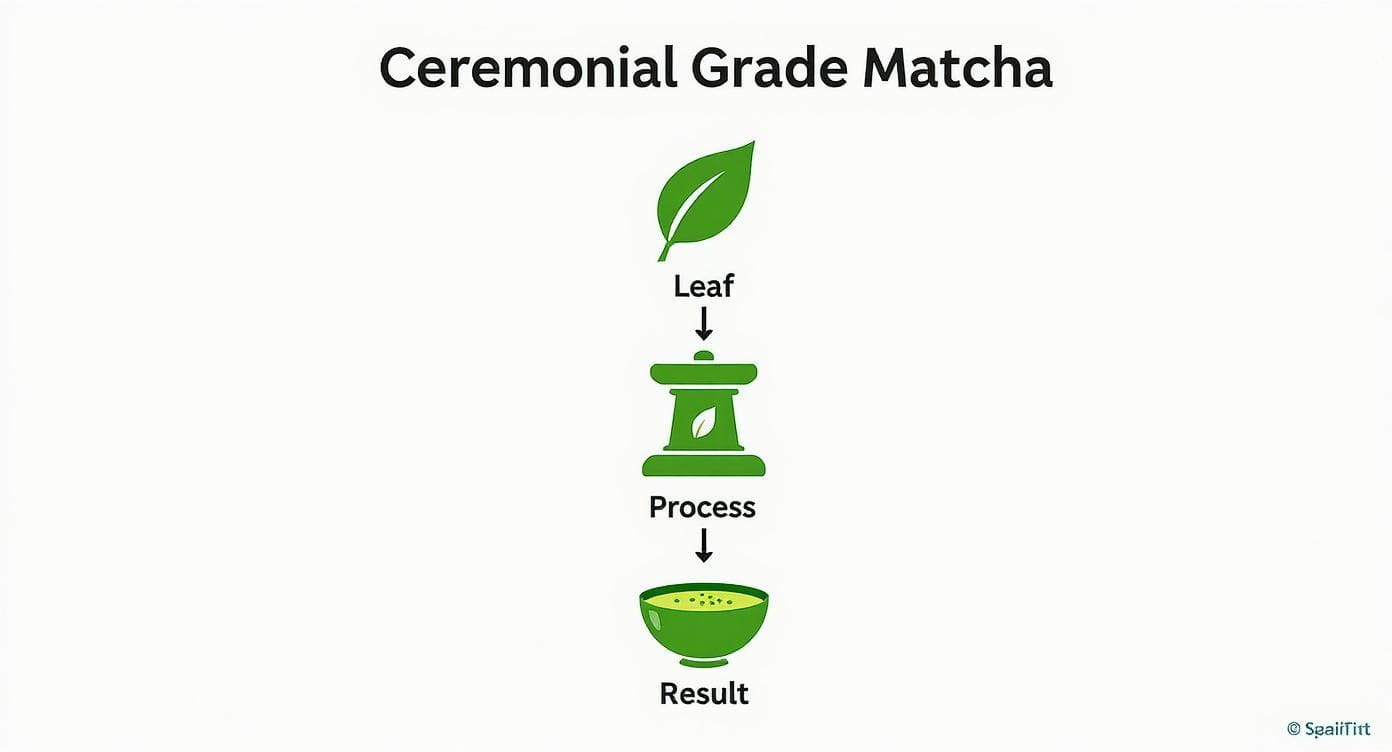
As you can see, every step is fine-tuned for quality. Only the very best leaves are chosen, the processing is slow and deliberate, and the final powder is exceptionally fine and vibrant. It's this painstaking process that truly sets ceremonial grade apart from all other types of matcha.
Matcha Grades At a Glance
Let's break down the key differences between the three main grades: Ceremonial, Premium, and Culinary. This quick comparison will help you spot quality and choose the perfect matcha, whether it's for a quiet morning ritual or a vibrant green smoothie.
For an even deeper dive, you can learn more about understanding the different grades of matcha and their uses in our detailed guide.
| Attribute | Ceremonial Grade | Premium Grade | Culinary Grade |
|---|---|---|---|
| Leaf Selection | Youngest, most tender leaves from the first harvest (Ichibancha). Sourced only from the very top of the tea plant. | Leaves from the first or second harvest. A blend of younger and slightly more mature leaves. | Mature leaves from later harvests (second or third). These leaves have been exposed to more sunlight. |
| Colour | Vibrant, electric jade green. This indicates high levels of chlorophyll from shade-growing. | A bright, clear green, but slightly less intense than ceremonial grade. | Dull, often yellowish or brownish-green. A sign of older leaves and less chlorophyll. |
| Taste Profile | Rich, smooth umami flavour with a naturally sweet finish and no bitterness. Delicate and complex. | A balanced flavour with mild umami and a slight hint of bitterness. Less complex than ceremonial. | Strong, robust, and noticeably bitter. The flavour is designed to complement other ingredients. |
| Texture | Silky-fine powder, similar to talcum powder. Stone-ground to 5-10 microns. | Fine powder, but slightly less delicate than ceremonial grade. Can be stone-ground or machine-ground. | Coarser texture. Almost always machine-ground, which can create friction and affect flavour. |
| Primary Use | Prepared traditionally with hot water and whisked. Best for savouring on its own in tea ceremonies. | A versatile option suitable for daily drinking, either traditionally or in high-quality lattes. | Intended for mixing into recipes like lattes, smoothies, baked goods, and other culinary creations. |
Ultimately, the right matcha really depends on how you plan to enjoy it. If you're seeking a pure, meditative tea experience that connects you with the authentic flavour of this ancient beverage, only ceremonial grade will do.
The Wellness Benefits of Ceremonial Matcha
Ceremonial matcha is so much more than a beautiful green drink; for many, it's the very cornerstone of a modern wellness routine. It’s celebrated for its unique ability to support both the mind and body, drawing its power from a rich concentration of compounds that work together to boost vitality, focus, and your overall sense of wellbeing.
Unlike coffee, which can often leave you with the jitters and an inevitable energy crash, ceremonial grade matcha offers a much smoother, more sustained lift. This is all thanks to a remarkable amino acid called L-theanine, which is found in high amounts due to the special shade-growing process.
L-theanine works in perfect partnership with matcha's natural caffeine, creating a state that many describe as 'calm alertness'. It essentially slows down your body's absorption of caffeine, providing you with hours of gentle energy and mental clarity without any of the usual anxiety or restlessness. This makes it the ideal companion for tasks that demand deep concentration or a clear, focused mind.
A Powerhouse of Antioxidants for Vitality
Beyond its calming effects, ceremonial matcha is absolutely packed with potent antioxidants called catechins. The most famous of these is Epigallocatechin gallate, or EGCG, which is renowned for its health-protective properties.
Because you drink the entire tea leaf when you prepare matcha, you’re getting a far greater dose of these amazing compounds compared to just steeping regular green tea. EGCG helps your body combat oxidative stress, which is linked to cellular damage and the ageing process. This antioxidant activity supports everything from skin health to your metabolism, contributing to an incredible feeling of overall vitality.
By bringing ceremonial matcha into your daily routine, you're giving your body a powerful tool to support cellular health, boost your metabolism, and enhance your body's natural defences.
It’s such a simple yet effective addition to any wellness-focused lifestyle. The value of a premium product like this has been recognised around the world, leading to a huge surge in demand. This popularity has seen the cost of high-quality ceremonial grade matcha climb quite a bit in recent years. If you're interested, you can explore detailed market analysis on matcha pricing to learn more.
Integrating Matcha into Your Wellness Rituals
The unique benefits of ceremonial grade matcha make it incredibly versatile for enhancing your daily wellness practices. Its ability to sharpen your mind while simultaneously calming the nervous system creates a perfect synergy for activities that need both focus and presence.
Imagine starting your morning with a warm bowl of matcha to centre your thoughts before settling onto one of our zabuton meditation cushions. This simple ritual can completely transform your meditation practice, helping you find a deeper state of mindfulness.
For those with active lifestyles, matcha is also an excellent source of clean, pre-workout energy. A serving before a yoga session or gym workout can improve your endurance and focus, helping you get the most out of your movement. To round out your nutritional intake, you can even create a powerful post-workout recovery drink by combining the benefits of matcha with one of our range of vegan protein powders.
This holistic approach allows you to seamlessly weave the profound benefits of ceremonial matcha into every part of your day, supporting a balanced and vibrant life from the inside out.
How to Prepare the Perfect Bowl of Matcha
Making a bowl of ceremonial grade matcha is so much more than just mixing up a drink. It's a chance to create a quiet, mindful moment in your day. This simple, traditional method transforms a high-quality powder into a smooth, frothy, and rejuvenating experience, letting you truly appreciate its delicate flavours.
Turning this preparation into a daily ritual can set a wonderfully positive and focused tone for the rest of your day. It’s a practice that invites you to slow down, be present, and just breathe.
The Essential Tools for Your Matcha Ritual
While you can definitely whip up matcha without them, using the traditional tools really elevates the process from a simple task into a beautiful ceremony. Each piece has a specific purpose, designed to bring out the very best in your tea.
- Chawan (Matcha Bowl): A wide, flat-bottomed bowl is perfect. It gives you plenty of room for whisking and helps the matcha cool to the ideal sipping temperature.
- Chasen (Bamboo Whisk): This is the secret to creating that signature delicate froth. Its fine, flexible tines are designed to aerate the tea and suspend the powder evenly in the water.
- Chashaku (Bamboo Scoop): This is traditionally used to measure out the perfect amount of matcha powder. One to two scoops is usually spot on for a single bowl.
- Sifter: A small, fine-mesh sieve is absolutely crucial for ensuring a smooth, clump-free consistency. No one likes a lumpy matcha!
These tools aren't just functional; they are part of a centuries-old tradition that honours the art of tea.
A Step-by-Step Guide to Traditional Preparation
With your tools and some high-quality matcha at the ready, you're all set to craft the perfect bowl. The process is simple, quick, and deeply rewarding.
-
Sift Your Matcha: Measure 1-2 scoops (about half a teaspoon or one gram) of ceremonial matcha with your chashaku and sift it into your chawan. This is the secret to getting a smooth, velvety texture, as it breaks up any small clumps that form naturally.
-
Add Hot Water: Heat fresh, soft water until it’s hot but not boiling—around 80°C is perfect. If the water is too hot, it can scorch the delicate tea leaves, leaving you with a bitter flavour. Pour about 60-70ml of the hot water over the sifted powder.
-
Whisk with Intention: Hold the chawan firmly with one hand. With the other, use your chasen to whisk vigorously in a quick 'M' or 'W' pattern. Try to whisk from the wrist, keeping the tines of the whisk just off the bottom of the bowl.
-
Create the Froth: Keep whisking for about 20-30 seconds. You'll know you're done when the tea is fully mixed and a beautiful, delicate layer of fine foam appears on the surface. That froth is the sign of a well-prepared bowl.
-
Savour the Moment: Drink your matcha straight away, while it's still warm and the powder is suspended. Take a moment to enjoy that rich umami flavour and the calm, focused energy it brings.
The goal of whisking isn't just to mix the tea, but to aerate it. That 'M' and 'W' motion is so effective because it suspends the fine powder in the water while creating the light, creamy froth that defines a perfect bowl of usucha (thin tea).
This mindful preparation helps you connect with the ancient tradition behind this incredible tea. For a more detailed walkthrough and some extra tips, you can explore our ultimate guide to mastering matcha at home, where we cover everything you need to know.
By following these simple steps, you can confidently create a flawless bowl of ceremonial matcha every single time. This daily practice is a wonderful way to cultivate a moment of peace, grounding your mind and nourishing your body before the day begins. It's a small investment of time that pays off in a big way.
How to Identify High-Quality Matcha
Diving into the world of matcha can feel a little overwhelming, especially when every brand claims to be the best. But here’s the secret: you don’t need to be a tea master to choose an exceptional ceremonial grade matcha. All you really need are your senses. A few simple checks can instantly tell you whether you’re looking at an authentic, high-quality matcha or a lower-grade imitation, turning you into a much more confident buyer.
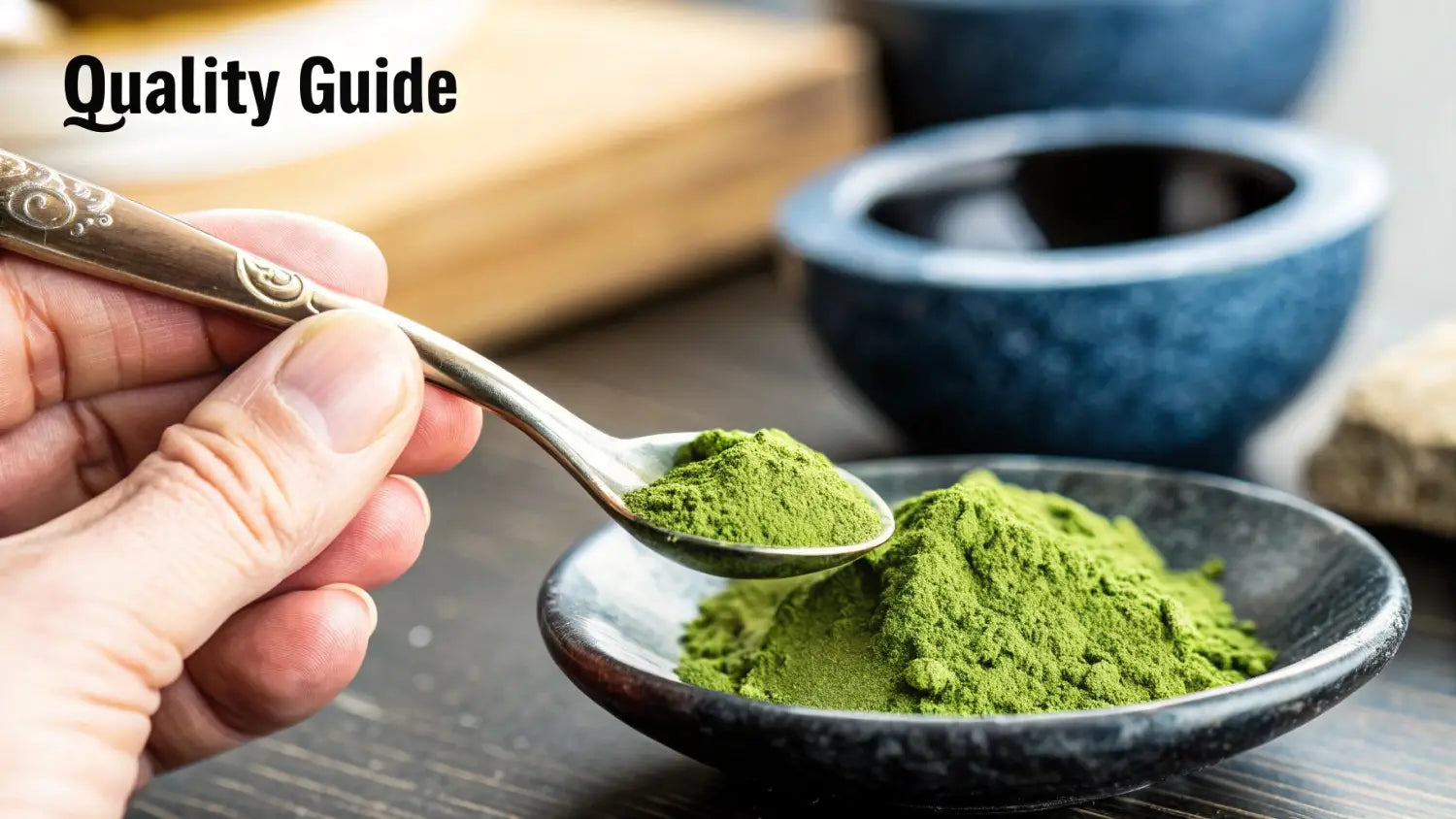
Think of this sensory checklist as your most trusted guide. By looking at the colour, feeling the texture, and taking in the aroma and taste, you can quickly get a sense of the powder’s quality. This knowledge is empowering, ensuring you invest in a product that delivers the genuine wellness experience you’re looking for.
The Sensory Checklist for Quality
Your first and most obvious clue is the colour. True ceremonial grade matcha has a vibrant, almost electric jade green hue. This stunning colour comes directly from the shade-growing process, which ramps up the chlorophyll in the young tea leaves.
If the powder looks dull, yellowish, or even brownish, it’s a red flag. That usually means it's a lower-grade product made from older, sun-exposed leaves, or it has oxidised from poor storage. That vivid green colour is absolutely non-negotiable for top-tier matcha.
Next, feel the texture. High-quality matcha is traditionally stone-ground into an incredibly fine powder, with particles measuring just 5-10 microns. When you rub it between your fingers, it should feel as silky and smooth as cornflour. A gritty or coarse texture is a sign of machine-grinding, which can create friction and heat that damages the delicate flavour.
The aroma is just as telling. When you open the tin, take a moment to breathe it in. You should notice a fresh, sweet, and slightly grassy scent with a hint of vegetal sweetness. A premium matcha will never smell stale, dusty, or bitter.
Finally, the taste is the ultimate test. When you whisk it properly with water, ceremonial matcha should have a rich, complex flavour. It’s defined by umami—that pleasant, savoury taste—which is beautifully balanced by a natural sweetness and a smooth, creamy finish. There should be no harsh bitterness or astringency at all.
Reading the Label and Understanding Origin
Beyond what your senses tell you, the packaging itself holds vital clues. Always look for key details that point to authenticity and freshness.
- Origin: The very best matcha comes from Japan. Keep an eye out for specific regions famous for their tea, like Uji (Kyoto), Nishio (Aichi), or Fukuoka.
- Harvest Date: Freshness is everything. A good label will show the harvest date. The most prized matcha comes from the first harvest, or ichibancha, which is typically picked in spring.
- Grinding Method: The packaging should clearly state that the matcha is "stone-ground" (ishiusu), confirming that the traditional, heat-free process was used to preserve its quality.
Authenticity has become so crucial that modern techniques are being developed to verify a matcha's origin. Advanced methods using fluorescence spectroscopy and machine learning can now distinguish genuine Japanese matcha with approximately 93% accuracy.
This level of detail in sourcing and processing is what truly sets an exceptional product apart. For a deeper look at what to watch for, our essential guide to spotting high-quality matcha has you covered. Armed with this knowledge, you can confidently choose a ceremonial grade matcha that will truly elevate your daily ritual.
Integrating Matcha Into Your Daily Rituals
Ceremonial grade matcha is so much more than just a traditional bowl of tea. Think of it as a versatile wellness tool, ready to enrich your modern lifestyle. By weaving it into your daily routines, you can turn simple moments into powerful rituals of self-care and focus.
A really effective way to start is by pairing your morning matcha with journaling. The calm alertness it brings creates the perfect mental space to set your intentions, reflect, and plan your day with clarity. This simple combination turns your morning drink into a catalyst for mindfulness.
Elevating Movement and Mindfulness
Matcha also works wonders as a pre-workout energiser. It gives you a sustained energy release, free from the jitters that coffee can cause, making it ideal for focused physical activity. Try preparing a bowl before you unroll one of our collection of yoga mats for a vinyasa flow. You'll likely notice better concentration and stamina right through your practice.
For an even greater wellness synergy, try blending your ceremonial grade matcha with powerful adaptogens. Combining it with products from our Teelixir nutrition supplements range can amplify its benefits, supporting your body’s resilience to stress while boosting vitality from within.
This creates a powerful fusion of ancient traditions, supporting both your mind and body.
Building a Complete Morning Routine
A holistic morning ritual can really set a positive tone for your entire day. You can build a complete wellness sequence with matcha as its cornerstone, creating a seamless flow from stillness to movement.
- Prepare with Presence: Start by mindfully preparing your bowl of ceremonial grade matcha. Focus on the simple, deliberate steps of the process.
- Find Your Centre: With your warm matcha in hand, settle onto a comfortable meditation cushion. Use this quiet time to find your centre and sip your tea with intention.
- Move Your Body: Energised and focused, it's time to transition into your physical practice. Whether it’s yoga, Pilates, or a light stretch, move your body in comfortable and stylish women's yoga activewear that supports every motion.
This structured approach shows how matcha can be the vibrant thread connecting various aspects of a healthy, balanced life. By integrating it into these small but meaningful rituals, you unlock its full potential to nourish your body, calm your mind, and uplift your spirit.
Common Questions About Ceremonial Grade Matcha
To help you feel confident as you begin your matcha journey, we've gathered answers to some of the most common questions. This guide clears up any lingering confusion, giving you the practical info you need to make every bowl a wonderful experience.
How Much Caffeine Is in Ceremonial Grade Matcha?
A standard serve of ceremonial grade matcha (about one gram) typically contains 35-70mg of caffeine. While this is less than your average cup of coffee, the way your body experiences it is remarkably different.
Thanks to the high concentration of the amino acid L-theanine, the caffeine is released slowly and steadily. This unique synergy creates a state of calm alertness—sustained energy and focus for hours, without the jitters or sudden crash often associated with coffee. It's the perfect companion for enhancing focus during work, meditation, or a yoga practice.
How Should I Store My Matcha to Keep It Fresh?
Matcha is delicate stuff. It’s highly sensitive to its environment, and things like oxygen, light, and heat can quickly degrade its vibrant colour, rich flavour, and nutritional potency.
To keep your ceremonial grade matcha in peak condition, you'll want to store it properly:
- Use an airtight container: Keep it sealed in an opaque, airtight tin to protect it from both light and air.
- Keep it cool: Store the container in the refrigerator to shield it from heat and humidity.
- Use it promptly: For the best flavour and freshest experience, it’s best to use your matcha within two months of opening the package.
Can I Use Ceremonial Grade Matcha for Lattes or Baking?
While you certainly can, it’s generally not the best use for it. The delicate, nuanced umami flavour of ceremonial grade matcha is its most prized quality, and it's best appreciated when prepared simply with hot water.
The complex, sweet, and savoury notes are easily lost when mixed with stronger ingredients like milk, sweeteners, or flour. For lattes, smoothies, and baking, a high-quality culinary grade matcha is a far more suitable and cost-effective choice. Its robust flavour is designed to stand up to other ingredients.
Is Ceremonial Grade Matcha Worth the Higher Price?
Absolutely—if you're looking for a premium tea experience intended for a mindful wellness ritual. The higher price is a direct reflection of the immense care and labour-intensive process that goes into producing it.
This involves meticulous shade-growing, hand-picking only the youngest, most tender leaves from the first harvest, and a slow, traditional stone-grinding method. This painstaking process results in a nutritionally superior product with an unparalleled smooth flavour, velvety texture, and vibrant green colour.
Ready to embrace the art of matcha? At Wellness Apothecary, we offer authentic, high-quality ceremonial grade matcha sourced to bring peace and vitality to your daily rituals.


