


If you’ve ever tried to meditate only to find yourself fidgeting, shifting, or focusing more on your aching back than your breath, you’re not alone. Discomfort is one of the biggest hurdles to building a consistent practice, and that’s exactly where cushion meditation makes all the difference. This isn't about adding a fancy accessory; it's about giving your body the foundational support it needs for proper alignment.
Unlock Deeper Meditation With the Right Support
Turning your meditation from a physical struggle into a peaceful sanctuary starts with stability. Using a purpose-built cushion elevates your hips, which allows your spine to hold its natural, gentle curve and takes the pressure right off your knees and ankles. Think of it as the key that unlocks the door to mental stillness, allowing you to sit for longer, go deeper, and have far more meaningful sessions.
This simple physical adjustment helps prevent the all-too-common distractions of numb legs or a sore lower back that often cut a session short. When your body is truly at ease and properly supported, your mind is finally free to do the real work—turning inward.
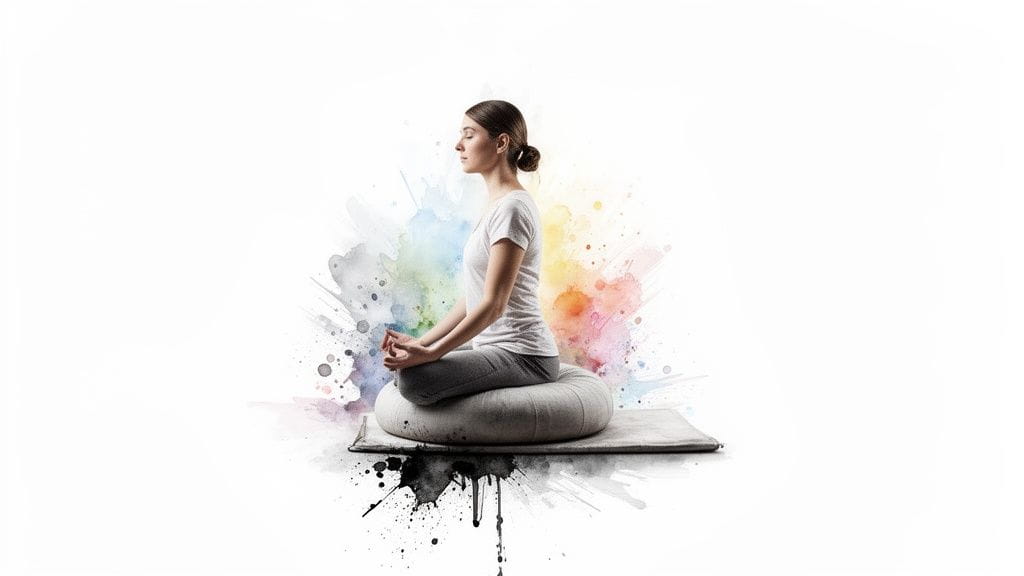
Why Ergonomic Support Matters
Ergonomic tools like a Zafu or Zabuton are essential for meditators at every level, from absolute beginners to seasoned practitioners. It's best to see them not as optional extras, but as fundamental tools for your practice. They create an accessible and stable foundation for anyone, no matter how flexible (or inflexible!) you might be.
The growing interest in mindfulness is undeniable. In Australia, the meditation cushion market is projected to grow significantly, which really shows a deepening appreciation for wellness practices among Aussies. This isn’t just a trend; it highlights a broader understanding that the right tools can completely reshape the journey toward inner peace.
By investing in proper support, you're really investing in the quality and consistency of your meditation practice. We genuinely believe that finding the perfect cushion is a crucial step in building a sustainable and rewarding mindfulness routine that you’ll want to return to day after day. A proper meditation cushion, paired with a consistent routine, can truly transform your well-being.
To get started on the right foot, it helps to understand the basics. For practical tips on posture and getting set up correctly, have a look at our guide on how to use a sitting meditation cushion. It’s packed with simple techniques to improve your comfort and focus right from day one, ensuring you get the most out of these supportive tools.
How Cushion Meditation Transforms Your Practice
Using a meditation cushion is about so much more than just comfort—it’s a simple change that completely shifts the mechanics of your posture, laying the groundwork for a deeper, more focused practice.
When you elevate your hips above your knees, the cushion encourages your spine to hold its natural, gentle curve. This simple lift helps you avoid that all-too-common slouch that puts unnecessary strain on your back and core muscles during your sit.
Good posture isn't just about preventing aches, either. It creates more space in your torso, allowing your diaphragm to move freely. This means deeper, more rhythmic breathing, which is one of the fastest ways to calm your nervous system and ease into a meditative state. Every deep breath sends a signal to your body that it's safe to relax, helping to quieten restlessness and mental chatter.
Think of your cushion as the foundation of your practice. Without a stable, level base, everything else feels a little shaky. A stable body helps foster a still mind.
A supportive posture, such as sitting on a cushion, prevents strain, reduces restlessness, and enables more fulfilling sessions. When your body is steady and supported, your mind can settle more easily, deepening your meditation.
From Physical Discomfort to Mental Clarity
Let's be honest, one of the biggest hurdles for anyone starting (or continuing) a meditation practice is physical distraction. An aching back, pins and needles in your legs, or sore hips can quickly pull your focus away from your breath.
A proper cushion meditation setup tackles these issues head-on by distributing your weight evenly and taking the pressure off your joints. This means you can sit comfortably for longer without constantly feeling the need to shift around.
Investing in one of our purpose-built Zabuton meditation cushions is really an investment in the quality of your mindfulness practice. It’s a small adjustment that delivers profound benefits, helping to turn your sessions from a battle against discomfort into an open invitation for stillness.
Building a Holistic Wellness Routine
To really amplify the benefits, you can integrate this physical support with other calming rituals. For instance, pairing your meditation with the soothing scent from one of our essential oil diffusers or enjoying a mindful cup of matcha green tea beforehand can signal to your brain that it’s time to unwind. For an added layer of nourishment, a daily supplement from the Teelixir mushroom collection can support overall vitality.
A key benefit of dedicated meditation is its ability to help you quiet mental chatter and focus. For further insights on this, you might explore this helpful resource on mindfulness for taming a busy mind. By creating a complete sensory experience, you build a powerful and consistent routine that nurtures both body and mind.
Zafu Versus Zabuton: Understanding the Perfect Pair
When you start exploring meditation accessories, things can feel a little complicated. But it all becomes much clearer once you get to know the two most important tools in the kit: the Zafu and the Zabuton. These two work together as a dream team, creating a complete support system for your practice.
Think of the Zafu as the supportive throne for your hips. It’s that dense, usually round cushion that gives you the lift you need, letting your hips sit higher than your knees. This little bit of elevation is the secret to tilting your pelvis forward just right, which helps maintain the natural curve of your spine and stops you from slouching.
The Zabuton, then, is like the plush carpet laid out beneath the throne. It’s the larger, flatter mat that gives your knees, shins, and ankles a soft place to rest. Its main job is to cushion your joints from the hard floor, preventing that distracting pins-and-needles feeling that can cut a good session short.
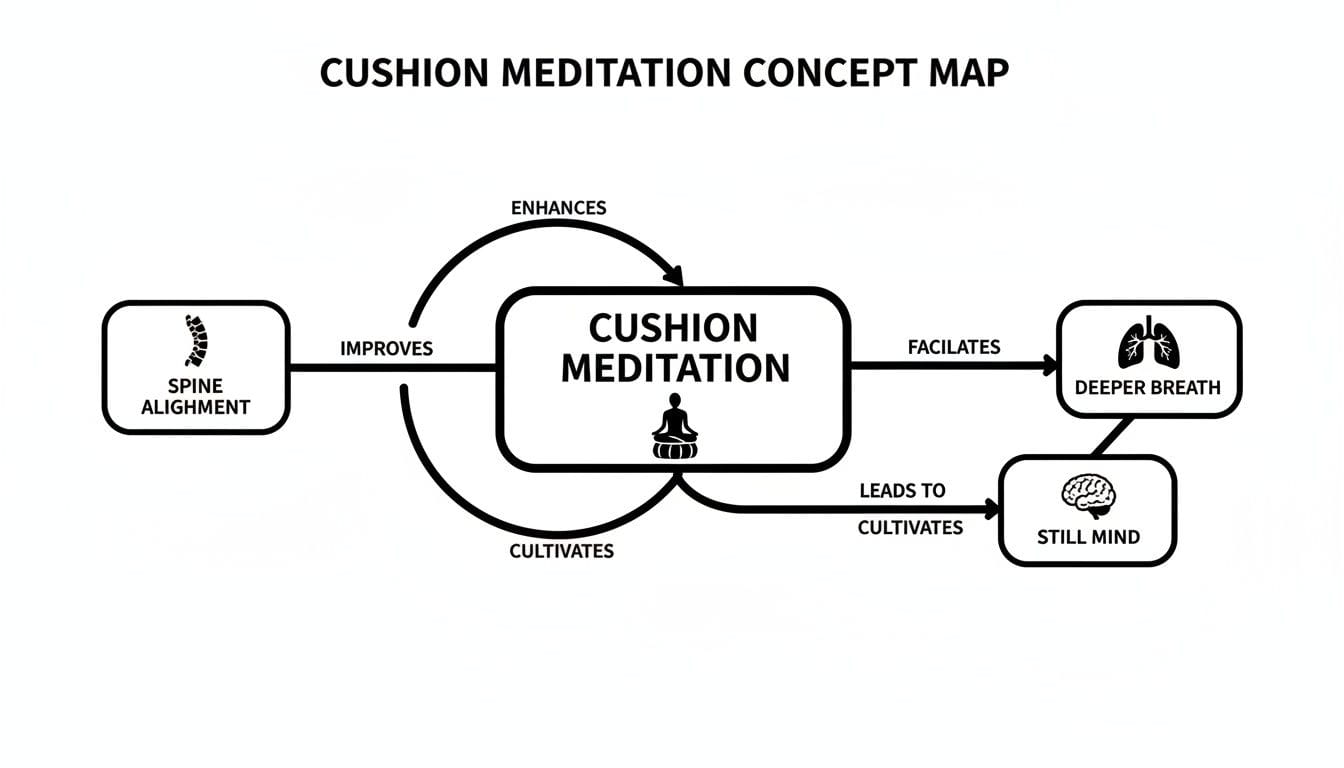
This simple diagram shows how getting the physical foundation right is the first step. Proper spine alignment makes way for deeper, more relaxed breathing, which in turn helps you find that quiet, still place in your mind.
Finding the Right Fit for Your Body
While the classic round Zafu is what most people picture, you’ll also find crescent-shaped ones. A crescent Zafu gives you a bit more space to tuck your heels in close, which can be a game-changer if you have flexible hips. The best choice really comes down to your own body and what feels the most stable and comfortable for you.
To really get into the details, you can learn more about what a Zafu meditation cushion is and how it works.
Now that you know their distinct roles, you can see why they work so well together. While you can definitely use a Zafu on its own, pairing it with a Zabuton takes your comfort to a whole new level. It’s this combination that allows you to settle in for longer, more focused sessions without fidgeting.
Zafu vs. Zabuton: Which Cushion Do You Need?
Here’s a quick breakdown to help you see the difference and decide what’s right for your practice.
| Feature | Zafu Cushion | Zabuton Mat |
|---|---|---|
| Primary Function | Lifts and supports the hips to align the spine. | Cushions the knees, ankles, and shins from the floor. |
| Shape | Typically round or crescent-shaped. | Large, flat, and rectangular. |
| Firmness | Dense and firm to provide stable elevation. | Soft and padded for joint comfort. |
| Best Used For | Seated meditation postures (e.g., Burmese, half-lotus). | Providing a comfortable base for any seated practice. |
| Can it be used alone? | Yes, especially on a soft surface like a carpet. | No, it doesn't provide the necessary hip elevation. |
Ultimately, while a Zafu is the essential starting point for posture, the Zabuton is what provides the deep comfort needed for a sustained practice. For most people, the pair is the perfect setup for a truly supportive meditation space.
How to Choose Your Ideal Meditation Cushion
Picking the right meditation cushion is a really personal journey. It’s all about listening to your body’s unique needs and considering the style of your practice. When you get down to it, making a great choice comes down to three key things: the fill, the fabric, and the size. These elements work together to give you a supportive base that can turn your meditation from a physical challenge into a restorative escape.
The perfect cushion isn’t just about being soft; it’s about providing stable, ergonomic support. When you find the right one, your body can finally relax completely, freeing up your mind to focus inward. Think of this choice as an investment in the quality and consistency of your daily wellness ritual.
Comparing Cushion Fillings
What’s inside your cushion makes the biggest difference in how it feels and performs. Each type of filling offers a distinct kind of support, so it really comes down to your preference for firmness and how much you want it to adapt to your shape.
Two of the most popular natural fillings are buckwheat hulls and kapok fibre.
- Buckwheat Hulls: These are small, firm hulls that mould perfectly to your body's shape, giving you solid, adjustable support. They feel incredibly grounded and stable, which makes them a fantastic choice if you need a firm foundation that won’t squish down over time. Many of our zabuton meditation cushions use this reliable filling.
- Kapok Fibre: If you’re someone who prefers a softer, plusher feel, kapok is a wonderful alternative. This silky, cotton-like fibre is surprisingly lightweight and buoyant, providing gentle yet resilient support. It offers more of a cloud-like comfort compared to the dense firmness of buckwheat.
Fabric and Maintenance
Beyond what’s inside, the outer fabric and how easy it is to clean are important for hygiene and making sure your cushion lasts. A durable, natural material like cotton is usually ideal because it’s both breathable and strong enough for daily use.
A cushion with a removable, washable cover is pretty much essential for keeping your meditation space fresh and inviting. A little bit of regular care ensures your cushion remains a supportive part of your practice for years to come.
Many people find that choosing materials that are simple to look after just makes their routine easier. After all, your wellness tools should be reducing your stress, not adding to it. For more on this, you might find it helpful Considering practical aspects like washability and fabric choice when thinking about long-term use.
Finding the Right Height and Size
Finally, let’s talk height. The height of your cushion is crucial for getting your spine aligned properly. The main goal is to lift your hips just enough so your knees can rest comfortably below them. This simple adjustment helps your lower back hold its natural curve without any effort.
Taller people or those with tighter hips often feel much better with a higher cushion (around 12-15 cm). That extra lift stops the lower back from rounding and takes the strain off. On the other hand, if you’re more flexible, a lower cushion (8-12 cm) might be all you need. The key is to find a height that lets you sit effortlessly, without any pinching, strain, or discomfort.
Creating Your Personal Meditation Sanctuary
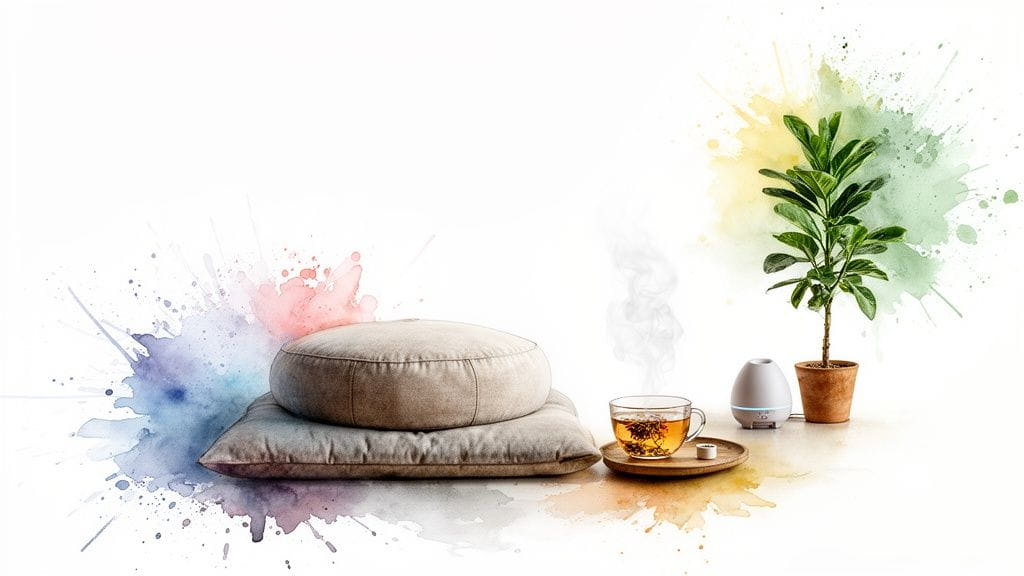
Your surroundings have a huge impact on your ability to quiet the mind and settle into a state of calm. Setting up a dedicated space for your practice, even if it’s just a quiet corner of a room, sends a powerful signal to your brain that it’s time to turn inward. This personal sanctuary doesn’t need much room; it’s all about creating a tranquil atmosphere that supports your cushion meditation journey.
When you intentionally layer a few sensory elements, you can really deepen the experience and make your practice something you truly look forward to. The goal is to design a space that feels like a gentle escape, helping you shift from the busyness of your day to a state of inner stillness.
Setting the Mood with Scent and Sound
Aromatherapy is one of the quickest ways to shift your mental state. Placing one of our essential oil diffusers in your space and adding a few drops of calming oils like lavender or sandalwood can instantly set a serene mood. The gentle aroma helps to soothe the nervous system before you even sit on your cushion.
In the same way, soft, ambient sounds—or even complete silence—can help minimise distractions. Some people find that listening to gentle nature sounds helps them tune out the noise from outside, enhancing their focus. The key is to experiment and find what works for you.
Creating a Pre-Meditation Ritual
A simple ritual can act as a powerful cue for your mind and body to wind down. Preparing a soothing cup of Blue Lotus tea is a beautiful way to begin. This gentle practice of mindfully brewing and sipping tea helps quiet all that mental chatter and prepares you for stillness.
By combining the physical comfort of your cushion with a serene atmosphere, you create a holistic ritual. This routine signals to your entire being that it's time to pause, breathe, and reconnect with yourself.
Your sanctuary can also be a place to weave in other wellness practices. Before or after your session, you might use the space for gentle stretching on one of our non toxic yoga mats in Australia or for a few minutes of journaling. To round out your routine, you could even add a scoop of vegan protein powder to a post-meditation smoothie for some physical nourishment.
By thoughtfully designing this space with elements that bring you peace, you build more than just a meditation corner—you create a reliable haven for your wellbeing. Explore the Wellness Apothecary collections to discover the perfect pieces for your personal sanctuary.
Mastering Your Posture for Effortless Sitting
So you’ve got the perfect meditation cushion – that’s a fantastic first step. But the real magic happens when you learn how to use it correctly. This is where you unlock that feeling of effortless sitting.
The whole point is to find a stable, sustainable posture that lets your body completely relax. When your body is supported, your mind is free to focus without all those little aches and pains pulling you away. We're aiming for an alignment that feels natural, not forced.
Here’s the single most effective trick: sit on the front third of your Zafu cushion.
It’s a simple shift, but it makes a world of difference. This little adjustment encourages your pelvis to tilt forward just enough, letting your spine settle into its natural 'S' curve. Your hips will be slightly higher than your knees, which allows them to drop open and release any built-up tension.
Once you have this stable base, you can start exploring different leg positions to see what your body likes best.
Finding Your Ideal Seated Position
There’s no single “correct” way to sit for meditation. Honestly, the best posture is whichever one lets you stay still and comfortable. Don't be afraid to experiment with these common positions to find out what suits your body and flexibility.
- Burmese Position: This is one of the most accessible cross-legged postures, making it a great starting point. Simply sit on your cushion and place one heel in front of the other, letting both feet rest flat on your Zabuton mat. It’s wonderfully gentle on the hips and knees.
- Half-Lotus (Ardha Padmasana): If you've got a bit more flexibility in your hips, the Half-Lotus is a classic for a reason. Place one foot on the opposite thigh and tuck your other foot underneath the opposite leg. This creates a really stable, grounded feeling.
You can enhance your practice space with a variety of Pilates accessories that support your journey toward physical and mental harmony.
Troubleshooting Common Discomfort
It's completely normal to feel a bit of discomfort when you first start out, especially in longer sessions. Think of things like knee pain or "pins and needles" as little messages from your body asking for a small adjustment.
The goal isn't to ignore discomfort but to address it with gentle support. Small props can make a world of difference, turning a distracting sensation into a feeling of complete ease.
If you find your knees are floating and don't quite touch your Zabuton, please don't force them down. Instead, grab one of our supportive yoga blocks and bricks and slide one under each knee. For recovery and managing physical stress, incorporating a portable ice bath into your wellness routine can also offer profound benefits.
This brings the ground "up" to meet you, taking all the strain off your hip and knee joints. Simple adjustments like this can completely transform your practice, paving the way for deeper relaxation and sustained focus.
Your Meditation Cushion Questions, Answered
Jumping into the world of meditation cushions can bring up a few practical questions. That's completely normal. Getting clear, simple answers is the best way to feel confident about finding the right support for your practice. Let’s tackle some of the most common queries to clear the path for a deeper, more comfortable journey.
What Height Should My Cushion Be?
The ideal height for your cushion comes down to one thing: your hip flexibility.
If your hips tend to be a bit tight, a taller cushion (12-15 cm) is your best friend. That extra lift helps your knees drop comfortably below your hips, which is the secret to keeping the natural, healthy curve in your lower back. You'll feel more supported, whether you're meditating or enjoying a moment of quiet reflection in your favorite women's yoga activewear.
On the other hand, if you're quite flexible, you might find a shorter cushion (8-12 cm) gives you all the support you need without feeling perched up too high. The goal is always to sit with a straight spine, without any rounding in your lower back or feeling of strain.
Can I Just Use a Regular Pillow?
You can definitely start with a regular bed pillow if that's all you have, but it’s not a great long-term solution. Standard pillows are simply too soft and squishy. They’ll collapse under your weight and won't give your spine the firm, stable support it needs for proper alignment.
Meditation cushions are built differently. They're specifically designed to be dense and supportive, especially those filled with materials like buckwheat hulls. This construction ensures your posture is held correctly through your entire session, preventing the kind of discomfort and fidgeting that can pull you out of your practice. Using the right tool, like a purpose-built meditation cushion, really does make a world of difference.
How Do I Clean My Meditation Cushion?
Keeping your cushion fresh and clean is simple, and it ensures it remains an inviting part of your wellness routine for years to come. Most quality cushions are designed with easy care in mind.
Most come with a removable outer cover that you can pop in the washing machine. Just unzip it, wash on a gentle, cold cycle, and then let it air dry to prevent any shrinking. The inner cushion holding the fill shouldn't go in the wash, but you can air it out in the sun every now and then to refresh it. Always give the product's care label a quick check!
At Wellness Apothecary, we believe that the right support can deepen your practice and enrich your life. From pure hydration with our chemical free water filters to foundational tools for mindfulness, we offer ethically sourced products to nurture your body, mind, and spirit.
Discover the perfect foundation for your practice in our collection of Zabuton Meditation Cushions.


