


Choosing an eco yoga mat in Australia is more than just a trend. It’s a conscious choice to align your practice with your values of health, wellbeing, and sustainability. As more of us deepen our practice, we’re looking for non-toxic, biodegradable mats that support both ourselves and the planet, moving on from the old standard of PVC.
Why Australian Yogis Are Choosing Eco-Friendly Mats
The yoga mat is the foundation of every practice. It’s our little sacred space where we connect with our breath, body, and mind. For a growing number of Australians, the integrity of this space now extends to the very materials it’s made from.
This shift towards eco yoga mats in Australia is part of a bigger movement towards mindful living. It's about making sure the tools we use are as clean and intentional as the practice itself.
It really comes down to two things: our health and our planet. Many conventional yoga mats are made from Polyvinyl Chloride (PVC), a type of plastic known to release harmful chemicals like phthalates. These aren't just bad for the environment; they can potentially be absorbed through your skin during your practice. Opting for a non-toxic alternative just makes sense—it creates a safer, healthier surface for your daily sun salutations.
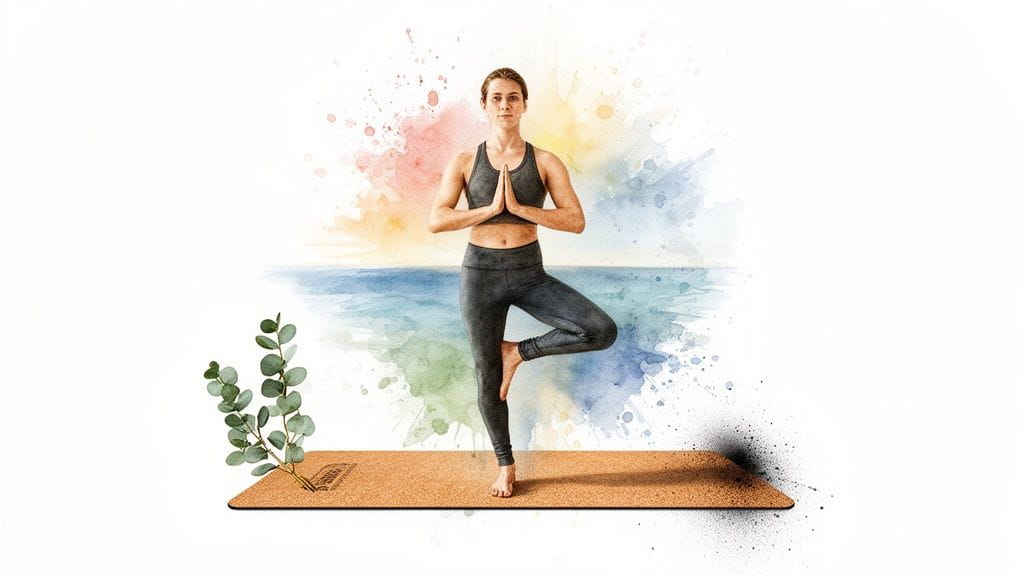
A Commitment to the Planet
Beyond our own wellbeing, the environmental impact of our gear is a huge driver. An eco-friendly mat made from natural rubber, cork, or jute is biodegradable. This means it will naturally return to the earth when it's done, unlike PVC mats that can sit in landfill for centuries.
This commitment to sustainability is a beautiful way to honour the yogic principle of Ahimsa, or non-harm, by minimising our footprint. For Aussies already embracing a more sustainable lifestyle, the logic behind choosing organic bedding for a healthier sleep aligns perfectly with selecting an eco yoga mat. You can find some great insights on this in this guide to Organic Bedding Australia.
The essence of this shift is realising that your yoga practice doesn't end when you step off the mat. It informs every choice you make, including the very ground you practice on. It’s a powerful way to vote with your dollar for a healthier world.
The Growing Demand for Sustainable Practice
The numbers back this up. With over 1.2 million Australians now practising yoga, the demand for gear has boomed. But it's not just any gear. A huge 68% of Aussie yogis now prefer sustainable mat options made from materials like natural rubber, cork, or TPE over traditional PVC.
This isn't just a niche preference anymore; it’s quickly becoming the new standard. If you want to dive deeper into specific mat types, check out our article on the Jade Harmony Yoga Mat. Choosing eco-friendly gear, from a high-performance mat to supportive meditation cushions, truly enriches your practice from the ground up.
Understanding Your Eco-Friendly Mat Materials
Choosing the right eco yoga mat is a bit like picking the perfect ingredients for a healthy meal—the materials really do matter. When you step away from those old-school, plastic-smelling PVC mats, you open up a world of natural, non-toxic alternatives that are so much kinder to you and the planet. Let’s break down the most popular materials for eco yoga mats in Australia so you can find the perfect foundation for your practice.
Each material has its own unique feel, a different set of benefits, and a distinct connection to the earth. Getting to know these differences is the secret to finding a mat that truly supports your flow, whether you're in a steamy studio in Darwin or practising on your balcony in Melbourne.
Natural Rubber: The Grounded All-Rounder
Sourced from the sap of rubber trees, natural rubber is a renewable and biodegradable resource. Think of it as the dependable workhorse of the eco-mat world, loved for its incredible grip and cushioning.
Its dense structure provides fantastic support for your joints, absorbing the impact during those dynamic sequences while offering a super stable, non-slip surface for holding poses like Downward Dog. This makes it an amazing choice for just about anything, from Hatha to Vinyasa. For practitioners who want a strong connection to the ground without giving up comfort, our collection of sustainable yoga mats has some premium rubber options.
Cork: The Hot Yoga Champion
Cork is harvested from the bark of the cork oak tree, a process that doesn’t harm the tree at all—in fact, it helps it grow stronger. This material has a secret weapon that makes it perfect for the Australian climate: its grip actually gets better with moisture.
Imagine a high-performance race car tyre that gets better traction as it warms up. That's a cork mat during a sweaty session. This unique quality makes it the undisputed champ for hot yoga, Bikram, or any vigorous practice where you’re likely to work up a serious sweat. It’s also naturally antimicrobial, which is a huge plus for keeping your mat fresh and clean.
A key benefit of cork is its ability to turn sweat from a slipping hazard into a grip enhancer. This provides incredible stability and confidence, allowing you to focus on your pose rather than your footing, especially in humid conditions.
To get the full story on this amazing material, check out our guide on the benefits of cork yoga mats. Honestly, it’s a game-changer for so many yogis.
Jute: The Earthy Texture
Jute is a natural plant fibre known for its durability and its earthy, woven texture. Practising on a jute mat feels incredibly grounding and gives you a really unique tactile experience.
It's often blended with other eco-friendly materials to create a surface that is both breathable and strong. The natural fibres offer a moderate level of grip that’s perfect for slower-paced styles like Yin or restorative yoga. If you appreciate a more organic feel and want a mat that tells a story of sustainability, jute is a wonderful choice. It also pairs beautifully with accessories like our sturdy yoga blocks and bricks.
TPE: The Recyclable Innovator
TPE, or Thermoplastic Elastomer, is a man-made material, but don't let that put you off. It's a non-toxic, recyclable, and biodegradable alternative to traditional PVC. TPE is celebrated for being incredibly lightweight while offering a soft, comfortable cushion.
Think of TPE as the modern, eco-conscious evolution of the classic foam mat. It’s free from latex, rubber, and PVC, which makes it an excellent hypoallergenic option for those with sensitivities.
A Quick Comparison of Eco Yoga Mat Materials
Still weighing up your options? This table breaks down the most popular sustainable yoga mat materials to help you find the perfect match for your practice.
| Material | Key Benefit | Best For | Sustainability Factor |
|---|---|---|---|
| Natural Rubber | Unmatched grip and cushioning | Vinyasa, Ashtanga, all-round daily practice | Renewable, biodegradable, sustainably harvested |
| Cork | Grip improves with sweat | Hot yoga, Bikram, sweaty and humid practices | Harvested from bark (tree is unharmed), antimicrobial |
| Jute | Earthy texture and durability | Yin, restorative, gentle flow | Natural, biodegradable plant fibre |
| TPE | Lightweight and hypoallergenic | Beginners, travel, sensitive skin | Recyclable, biodegradable, and non-toxic |
By getting to know these core materials, you're in a much better position to find the eco yoga mat that not only supports your physical practice but also reflects your commitment to a healthier, more conscious lifestyle here at Wellness Apothecary.
How to Choose the Perfect Eco Yoga Mat
Choosing an eco-friendly yoga mat is about more than just picking a sustainable material. To find the right partner for your practice, you need to think about the nitty-gritty features that will actually support your flow. It’s a personal thing—matching the mat’s performance to your body and style of yoga, so every practice feels grounded and confident.
Investing in a quality mat isn’t just buying another piece of gear; it’s laying a foundation for your wellbeing. The right grip, cushioning, and durability can completely change your sessions, making your mat feel less like an accessory and more like an extension of yourself.
Let’s break down what really matters.
Grip And Traction
Grip is, without a doubt, the most important feature of any yoga mat. It's the difference between holding a powerful Warrior II and sliding right out of it. A mat with poor traction is not just distracting; it can be unsafe, stopping you from sinking into poses with total confidence.
Different materials offer different kinds of grip. Natural rubber gives you a fantastic "dry grip" right out of the box, while cork mats have this brilliant quality of getting grippier the more you sweat. When you're looking at eco yoga mats in Australia, think about your local climate and how much you tend to perspire during practice.
This is a huge reason the Aussie eco yoga mat market is tipped to hit AUD 78 million by 2031. A massive driver for this is that 74% of Australian yoga teachers recommend mats made from natural materials. They know these mats have superior grip for our humid climates and are impressively biodegradable—decomposing in just 2-5 years, a world away from the 100+ years a PVC mat can clog up landfill. You can dive deeper into these Australian market insights to see the trend for yourself.
Thickness And Cushioning
Thickness is all about comfort and how much support your mat gives your joints. It’s measured in millimetres (mm) and usually ranges from a paper-thin 1.5mm for travel to a cushy 6mm for extra padding.
- Thin Mats (1.5-3mm): These give you a stronger connection to the floor, which is fantastic for tricky balancing poses. They’re super lightweight and easy to carry but don't offer much in the way of joint protection.
- Standard Mats (4-5mm): This is the sweet spot for most people. A 4-5mm mat strikes the perfect balance, offering comfortable cushioning for your knees and wrists without making you feel wobbly in standing poses.
- Thick Mats (6mm+): Perfect for restorative, Yin yoga, or anyone with sensitive joints. While they feel incredibly plush, they can sometimes make balancing a little more challenging.
A beginner might love a 5mm mat for that extra bit of support, whereas a seasoned vinyasa yogi might prefer a 3-4mm mat to feel more grounded and stable.
This little decision tree makes it easy to choose a material based on what you need most: sweat-proof grip or soft cushioning.
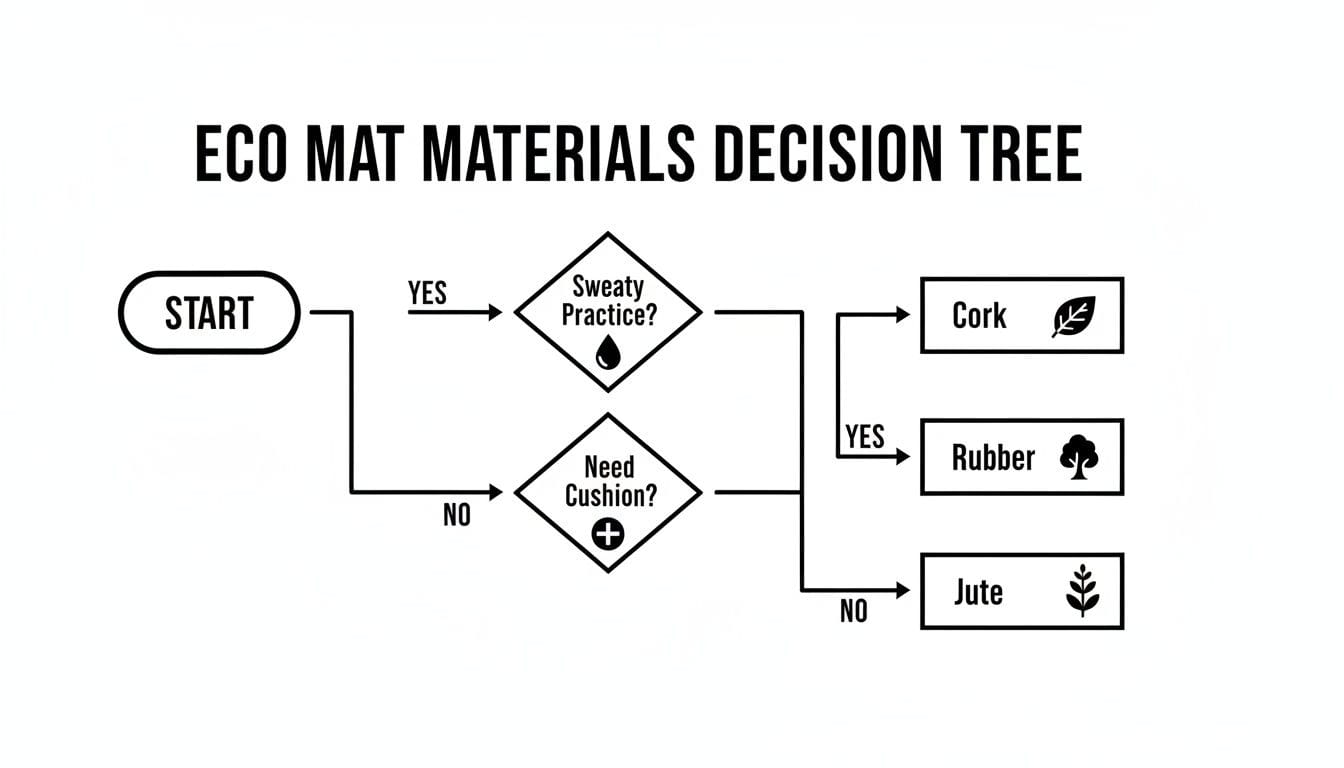
As you can see, if you have a sweaty practice, cork is your best bet. If not, your choice comes down to how much cushioning you prefer, pointing you toward either rubber or jute.
Durability And Portability
A top-quality eco mat should be an investment that lasts. Durability really comes down to the material's density and how it’s made. Densely packed natural rubber and tough jute blends are famous for their resilience, easily holding up to a daily practice for years.
A truly sustainable choice is one that lasts. By investing in a durable mat and caring for it properly, you reduce consumption and waste, which is a core principle of a mindful, eco-conscious lifestyle.
Portability is the other piece of the puzzle, especially if you’re hauling your mat to a studio, the park, or on your travels. Lighter materials like TPE and thinner profiles are much easier to roll up and carry.
To make life even easier, you can pair your mat with one of our high-quality yoga straps and carry bags, designed for convenience and style. Ultimately, finding your perfect mat from our collection of non-toxic yoga mats in Australia is all about balancing these practical features with what your personal practice truly needs.
Caring For Your Mat to Ensure It Lasts
You've invested in a high-quality eco yoga mat, which is a fantastic commitment to both your practice and the planet. To really honour that choice, a little bit of care goes a long way. Think of it like this: simple maintenance not only keeps your mat clean and hygienic but also dramatically extends its life, making your decision even more sustainable.
Of course, different natural materials need slightly different TLC, especially with our unique Aussie climate. Whether you’re navigating the humidity of a Brisbane summer or the dry heat of Perth, these tips will help keep your mat's grip, integrity, and beauty intact for years to come.
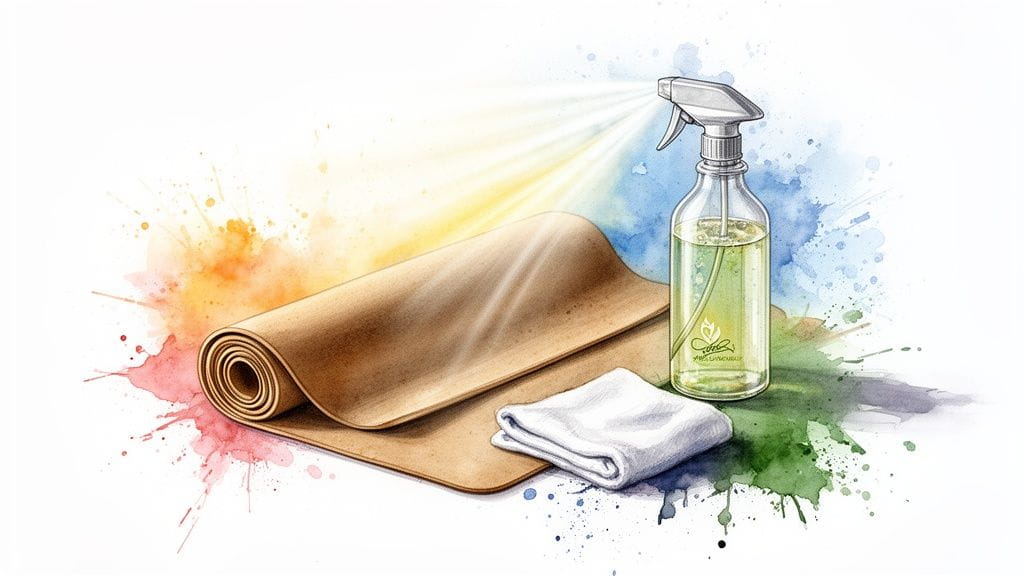
Everyday Cleaning and Maintenance
The absolute best way to keep your mat fresh is with a quick, light clean after each session. It stops sweat and oils from building up, prevents bacteria from making a home, and preserves that all-important natural texture and grip.
For most eco mats (Rubber, Jute, TPE):
- Wipe Down: Give your mat a light spritz with a gentle, natural cleaner and wipe it down with a soft, damp cloth. Easy.
- Air Dry: This is crucial! Always let your mat air dry completely before you roll it up. You can lay it flat or hang it over a chair, just be sure to keep it out of direct sunlight.
For Cork Mats:
- Keep it Simple: Cork is a bit of a wonder material—it’s naturally antimicrobial, so it needs far less cleaning. Usually, a quick wipe with a damp cloth is all it takes.
- Embrace Moisture: Don't forget, a little bit of moisture actually improves cork's grip, so a damp cloth does the trick perfectly.
You can easily whip up your own beautifully scented cleaner with a simple DIY spray. It's also the perfect excuse to pop on one of our elegant essential oil diffusers to set a calming mood for your practice.
DIY Natural Mat Cleaner Recipe
In a spray bottle, just combine:
- 3 parts filtered water (using our chemical-free water filters gives you a pure base)
- 1 part white vinegar (a brilliant natural disinfectant)
- 5-10 drops of essential oils like tea tree (antibacterial), lavender (calming), or eucalyptus (refreshing)
Give it a good shake before each use. It’s a simple, non-toxic way to show your mat some love.
Deep Cleaning and Storage
Every few months, or after a particularly sweaty session, your mat might need a deeper clean. We’ve put together a more detailed guide on this, which you can read right here to learn how to properly clean and maintain your yoga mat.
When it comes to putting your mat away, try to avoid leaving it in a hot car or directly in the sun. The intense Australian sun can be especially harsh on natural rubber, causing it to go brittle and fade over time.
Instead, roll your mat with the top side (the bit you practice on) facing outwards. This little trick helps it lie nice and flat when you unroll it for your next session. Storing it in a cool, dry place will preserve its materials and ensure it’s ready to go when you are. In a way, caring for your mat is a practice in mindfulness itself, making sure it can support your journey for many years.
Building Your Complete Sustainable Yoga Kit
Your eco yoga mat is the sacred ground for your practice, but what about the rest of your gear? Building a complete, sustainable yoga kit can deepen your experience and support every aspect of your journey. The right accessories don’t just help with alignment and safety; they extend the principles of mindfulness to your entire toolkit. It's about creating a holistic practice space where every single element is chosen with intention.
From finding stability in a tricky pose to sinking into a deeper meditation, accessories are like trusted friends supporting your flow. When you choose props made from conscious materials like cork, organic cotton, and recycled fibres, you’re making sure your entire practice aligns with your values.
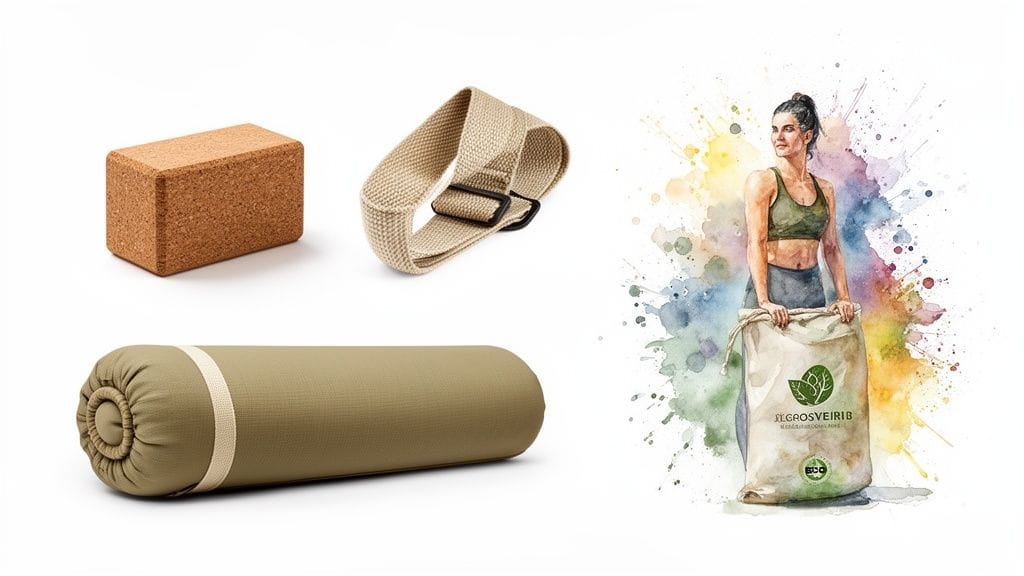
Finding Stability with Yoga Blocks and Bricks
Yoga blocks are invaluable, whether you're a seasoned yogi or just starting out. Think of them as a way to bring the floor a little closer to you, giving you the stability and support you need while your flexibility is still developing. They help you hold proper alignment in poses like Triangle Pose (Trikonasana) or Half Moon Pose (Ardha Chandrasana), preventing strain and letting you explore the posture safely.
Our collection of yoga blocks and bricks is crafted from high-density cork, a fantastic sustainable choice. Cork is sturdy, durable, and has a comfortable, non-slip texture that feels secure in your hand. Using a block isn't a sign of weakness—it’s a sign of wisdom, allowing you to build strength and confidence with integrity.
Choosing sustainable accessories is an act of mindfulness. Each cork block or organic cotton strap represents a commitment to conscious consumption, creating a practice environment that is as nurturing for the planet as it is for your body and spirit.
Deepening Your Stretch with Yoga Straps
A yoga strap is your best friend for safely dialling up your flexibility. It acts as an extension of your arms, helping you reach your feet in a seated forward fold or bind your hands in more complex poses. This simple tool lets you gently work into deep stretches without compromising your form or risking injury.
For instance, in a Reclining Hand-to-Big-Toe Pose (Supta Padangusthasana), a strap helps you keep your leg straight while you ease into that hamstring stretch. Look for straps made from durable organic cotton—it’s soft on the skin yet strong enough to provide reliable support. Our durable yoga straps are designed to be a lasting part of your kit.
Creating Comfort for Mindfulness with Meditation Cushions
The shift from the movement of asana to the stillness of meditation is a crucial part of a complete practice. A comfortable seat is absolutely essential for maintaining focus and allowing your mind to settle. This is where a dedicated meditation cushion can make all the difference.
Our Zabuton meditation cushions provide a soft, supportive base that cushions your knees and ankles, making long periods of sitting so much more comfortable. Pair one with a Zafu for height, and you've got a setup that helps you maintain a healthy posture, allowing your energy to flow freely.
Dressing the Part with Sustainable Activewear
Finally, what you wear can also be a part of your sustainable practice. As you build your kit, look for high-quality, eco-friendly pieces like bamboo viscose yoga pants. Our own range of women's yoga activewear focuses on comfort, style, and fabrics that move with you, completing your eco-conscious setup from head to toe.
By thoughtfully selecting each piece of your yoga kit from our main collections, you create a practice that feels truly holistic.
Taking Your Practice Beyond the Mat
The principles you cultivate on your eco yoga mat don’t have to disappear the moment you roll it up. Choosing to practise on a non-toxic surface is a beautiful first step, but it’s really just the beginning of a much wider commitment to your wellbeing. It’s about weaving those same intentions into every corner of your life, creating a complete wellness ecosystem that supports you from the inside out.
Thinking beyond the asana means building rituals that nourish your body, mind, and spirit long after your final Savasana. It’s about recognising how every small, conscious choice adds up to a greater sense of health and balance.
Building Your Personal Wellness Ecosystem
Your yoga practice is a powerful anchor, but the right complementary habits can amplify its benefits tenfold. This is where you can truly start to build a supportive wellness lifestyle that feels completely your own.
- Post-Practice Recovery: After a strong flow, help your body recover and build resilience with cold therapy. A quick session in one of our portable ice baths can help soothe inflammation and leave you feeling seriously energised.
- Mindful Nutrition: What you put into your body is just as important as how you move it. Fuel your recovery with a scoop of premium vegan protein powder for muscle repair, or find your centre with the adaptogenic power of Teelixir supplements to support your body’s natural balance.
- Cultivating Calm: Your practice space should feel like a sanctuary. Using one of our essential oil diffusers with calming scents like lavender or frankincense can set a serene tone for meditation or a gentle Yin session.
Rituals for a Deeper Connection
When you start to integrate these elements, they become more than just habits—they become meaningful daily rituals. For instance, winding down after an evening practice with a calming cup of Blue Lotus tea can deepen that sense of peace and prepare you for a truly restful night’s sleep.
Likewise, swapping your morning coffee for a vibrant bowl of ceremonial-grade matcha green tea offers a more mindful start to the day. It provides a sustained, gentle energy and focus that will carry you through your morning practice and whatever comes next.
The real goal here is to connect the dots between what you do and how you feel. When your post-yoga smoothie, your meditation space, and even the clothes you wear all reflect your core values, you create a powerful, self-reinforcing cycle of health.
We’ve curated everything you need to support this journey. From supportive meditation cushions for moments of stillness to comfortable and stylish women's yoga activewear that moves with you, every piece is chosen with intention. By extending your practice into these other areas of your life, you build a foundation of wellness that is truly sustainable.
A Few Final Questions You Might Have
Picking the right mat is a big decision, and it’s natural to have a few last-minute questions. To help you feel completely confident, we’ve put together answers to some of the most common queries we hear from yogis across Australia.
Are Eco Mats as Tough as the Old PVC Ones?
Yes, absolutely. A well-made eco yoga mat crafted from something like dense natural rubber or a sturdy jute blend is built to last. With the right care—like keeping a rubber mat out of direct sunlight—it will often outlive its cheaper PVC counterparts. Think of it as a better long-term investment for your practice.
What’s the Best Mat for Sweaty Yoga in Humid Weather?
For steamy sessions or hot yoga, especially in humid Aussie climates like Queensland, a cork mat is an absolute game-changer. Its grip cleverly gets better with moisture, giving you incredible stability right when you need it most. Cork is also naturally antimicrobial, which helps keep your mat feeling fresh, practice after practice. It's a brilliant choice for a demanding flow.
For anyone serious about hot yoga, a cork mat is a game-changer. Its unique ability to turn sweat into an advantage provides a level of safety and confidence that allows you to focus purely on your posture and breath.
I Have Sensitive Knees. Which Thickness Should I Get?
If you need extra cushioning to look after your joints, we recommend an eco mat that's between 5mm and 6mm thick. Natural rubber at this thickness offers fantastic shock absorption and comfort for your knees, wrists, and spine during floor poses, but without making you feel wobbly in balancing postures.
How Do I Get Rid of That New Rubber Smell?
That faint, earthy scent from a brand-new natural rubber mat is completely normal and non-toxic—it’s actually a good sign of its authentic, natural origins! The smell will fade pretty quickly on its own. To speed things up, just unroll your mat and let it air out for a day or two in a well-ventilated room, away from direct sunlight. Wiping it down with a damp cloth can also help.
At Wellness Apothecary, we've hand-picked a collection of the finest eco-friendly yoga mats to support every part of your practice. Find the perfect foundation for your flow by exploring our full range today.


