


When you're weighing up an evaporative cooler vs an air conditioner, the core difference is actually quite simple: evaporative coolers use water and fresh air to create a natural, humid breeze, while air conditioners use refrigerants to remove heat and humidity from sealed, indoor air. Your choice really comes down to whether you prefer a fresh, open-air feeling or precise, powerful cooling.
Choosing Your Ideal Home Climate for Wellness
Creating a sanctuary at home starts with the very air you breathe. The debate between an evaporative cooler and an air conditioner isn't just about dropping the temperature; it's about crafting an environment that truly supports your health and wellbeing.
Whether you're flowing through a yoga sequence on your yoga mat or settling onto a meditation cushion, the quality of your indoor climate can either elevate your practice or get in the way.
An evaporative cooler is like inviting a gentle, lakeside breeze right into your living space. It works by drawing in fresh outdoor air and passing it over water-saturated pads. This beautiful, natural process cools the air while adding a touch of humidity, creating a refreshing atmosphere that can be particularly soothing for your respiratory system. It’s an open system, meaning it needs a window or door to be ajar to ensure a constant flow of fresh oxygen.
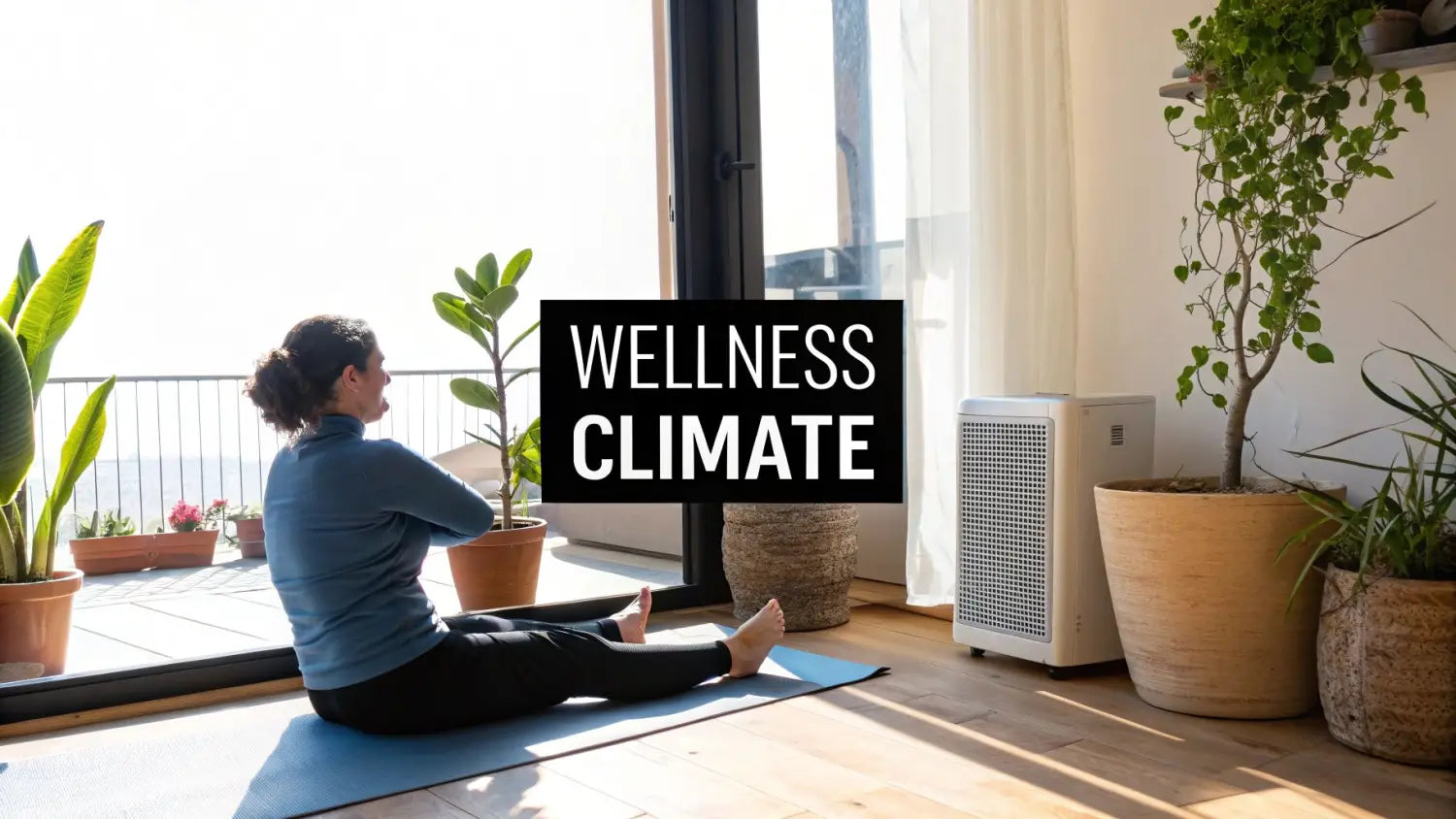
On the other hand, an air conditioner is a powerful climate controller. It seals your space from the outside and uses a refrigeration cycle to efficiently strip away both heat and humidity. This creates a crisp, dry, and consistently cool environment—perfect for those high-intensity workouts or for anyone needing guaranteed relief from sweltering heat and oppressive humidity.
As you consider your options, it's also worth looking into other strategies for cooling a room without AC, which can offer great alternatives or complementary methods.
Quick Comparison At a Glance
To make the decision a little easier, let's break down the fundamental differences in how each system shapes your wellness space. Getting your head around these key distinctions is the first step toward making the right choice for your home.
| Feature | Evaporative Cooler | Air Conditioner |
|---|---|---|
| Cooling Method | Natural evaporation (adds moisture) | Refrigeration cycle (removes moisture) |
| Air Quality | Brings in constant fresh, outdoor air | Recirculates and filters indoor air |
| Ideal Climate | Best for dry, less humid areas | Effective in all climates, including humid |
| Environment | Requires open windows for ventilation | Works in a sealed, enclosed room |
The choice ultimately shapes your personal sanctuary. An evaporative cooler cultivates a fresh, breathable atmosphere ideal for mindful practices, while an air conditioner delivers controlled, crisp comfort for intense activity and guaranteed relief.
This guide will help you navigate the nuances of each option, ensuring your decision aligns perfectly with your wellness goals. If you'd like to get a bit more technical, you can learn more about what an evaporative cooler is and how it functions.
When you get down to the nuts and bolts of how an evaporative cooler works versus an air conditioner, you start to see just how differently they shape the feeling of your home. It’s not just about mechanics; these two systems create fundamentally different atmospheres, and each one has its own implications for your wellness.
An evaporative cooler is beautifully simple. It works by drawing warm, dry outside air through water-soaked pads—think of that refreshing, cool breeze you feel near a lake. This process both chills and humidifies the air, bringing a continuous flow of fresh, oxygen-rich air inside. It's the kind of environment that feels amazing for deep breathing during a meditation session or for helping your body settle after a plunge in a portable ice bath.
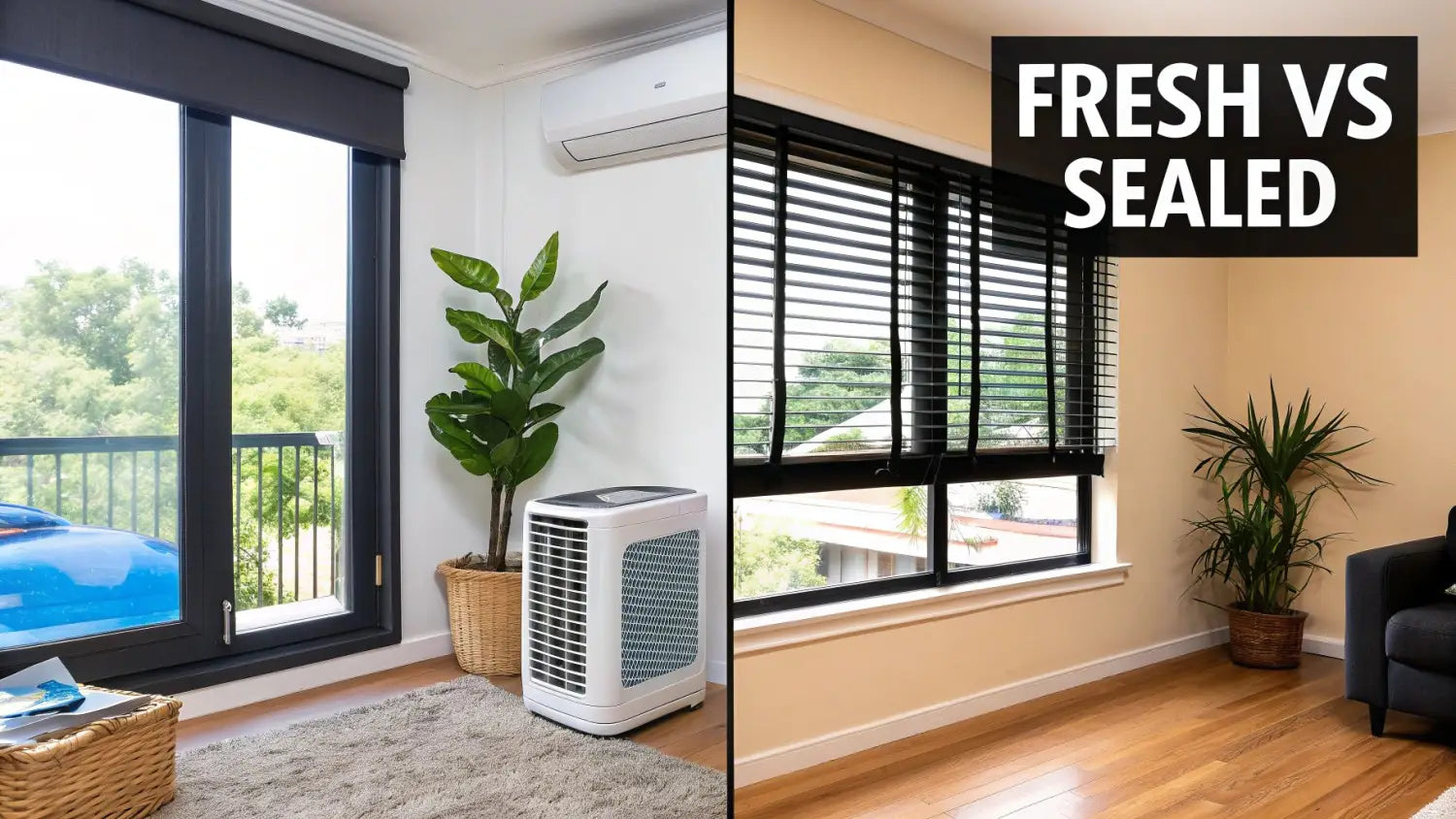
An air conditioner, on the other hand, is a completely sealed, closed-loop system. It uses a chemical refrigerant to pull heat and moisture out of the air that’s already in the room, which it then filters and recirculates. This gives you powerful, consistent, and highly controlled cooling in a dehumidified space.
The Air You Breathe: Fresh vs. Filtered
The biggest point of difference is how each system treats the air. An evaporative cooler is an open system, which means it needs a window or door cracked open to work properly. This creates a constant exchange of air, keeping your home from feeling stuffy and stagnant.
Of course, this fresh air approach has its pros and cons. While it keeps things fresh, it can also pull in outdoor allergens like pollen. If you're mindful about what's in your air, it's worth exploring all aspects of your indoor environment, including learning whether diffusing essential oils is safe for your lungs. Air quality is a cornerstone of wellness, after all.
Because it's a closed system, an air conditioner is brilliant at filtering and cleaning the air it recirculates. This is a huge win for allergy sufferers, as the filters trap dust, pollen, and other irritants, creating a purified bubble inside your home.
An evaporative cooler fosters an environment of natural, humid airflow akin to being outdoors, while an air conditioner crafts a sealed sanctuary of crisp, dry, and filtered air.
Humidity and Respiratory Comfort
The amount of moisture in the air plays a massive role in how comfortable you feel. An evaporative cooler actively adds humidity, which is a game-changer in many of Australia’s dry climates. That extra moisture can help soothe dry skin, irritated sinuses, and sore throats—common complaints when the air is arid.
In contrast, an air conditioner is basically a powerful dehumidifier. By stripping moisture from the air, it delivers that crisp, dry coolness that feels so relieving in humid, tropical parts of the country. The flip side is that in an already dry climate, it can sometimes make the air too dry, potentially aggravating respiratory issues for sensitive people.
Your choice of cooling goes far beyond just managing the temperature. It deeply impacts your indoor air quality, something people often don't think about until they consider getting professional air quality tests for your home. Getting a handle on these key differences is the first step toward choosing a system that truly supports your personal wellness goals.
A Detailed Comparison for the Wellness-Conscious Home
When it comes to choosing between an evaporative cooler and an air conditioner, the decision is about more than just temperature. For a home centred around wellness, you're really choosing the kind of atmosphere you want to live and breathe in. This comparison breaks down the core differences across four crucial areas that directly affect your health, peace, and daily rituals.
Indoor Air Quality and Respiratory Wellness
The most significant difference between these two systems is how they treat the air in your home. An evaporative cooler is an open system. It’s constantly drawing fresh air from outside, passing it through water-soaked pads, and then circulating that gently humidified air throughout your space.
This process introduces a steady flow of fresh, moistened air. If you live in one of Australia's drier regions or practice deep breathing exercises on your yoga mat, this added moisture can be a game-changer. It helps prevent that dry-throat feeling, soothes irritated sinuses, and can even calm itchy skin, promoting real respiratory comfort.
An air conditioner, on the other hand, is a closed system. It works by sealing your space and recirculating the same indoor air over and over, pulling it through filters to strip out heat, humidity, and airborne particles like dust and pollen.
This makes AC the clear winner for allergy sufferers. By trapping irritants and working with the windows shut, it creates a purified sanctuary. The trade-off is that this process also removes moisture from the air, which can sometimes lead to excessive dryness, especially in already arid climates. While AC is brilliant for air purity, it doesn't offer the constant replenishment of fresh oxygen that an evaporative cooler does.
Energy Consumption and Eco-Friendliness
From an environmental and cost perspective, these two are worlds apart. Evaporative coolers are incredibly energy-efficient, often using up to 80% less electricity than a comparable air conditioning unit.
Their mechanism is wonderfully simple, relying on just a fan and a small water pump. This translates directly to much lower running costs—sometimes just a few dollars a day. This minimal energy draw means a significantly smaller carbon footprint, making it the go-to choice for an eco-conscious household.
Air conditioners are much more power-hungry. The refrigeration cycle, which involves compressing and expanding chemical refrigerants, demands a substantial amount of electricity. While modern units are far more efficient than their predecessors, their energy consumption is still considerably higher than an evaporative cooler's. This results in bigger electricity bills and a larger environmental impact.
Key Insight: Choosing an evaporative cooler is not just a decision for personal comfort; it's a commitment to lower energy consumption and a more sustainable lifestyle. The significant savings on utility bills reflect a much lighter touch on the planet.
The Feeling of Comfort and Ambiance
The kind of "cool" each system produces creates a completely different feeling in your home. An evaporative cooler delivers a gentle, natural-feeling breeze, almost like the refreshing sensation you get near a lake or the ocean. It creates a soft, breathable atmosphere rather than an intense, artificial chill.
This subtle cooling is perfect for spaces dedicated to relaxation and mindfulness. The gentle air movement can even enhance the experience of using essential oil diffusers, helping to disperse calming aromas throughout your space without them becoming overpowering.
An air conditioner provides a powerful, crisp, and totally controlled coolness. It excels at hitting a precise temperature, no matter what’s happening outside. This intense, dry chill is often exactly what you want on a sticky, humid summer day or after a sweaty workout. It creates a predictable and stable indoor climate, which is crucial for comfort in tropical regions. However, some find this refrigerated air to feel harsh or unnatural. If the humidity in your sealed space becomes an issue, a dedicated air purifier and dehumidifier can help restore balance.
Noise Profile and Creating Tranquility
Finally, the sound each unit makes can have a real impact on the tranquility of your wellness sanctuary. A quiet environment is essential for meditation, restorative yoga, or just unwinding after a long day.
Evaporative coolers typically produce a consistent, low-level humming from the fan. Many people actually find this sound soothing, like a form of "white noise" that can mask distracting background sounds and help deepen focus during meditation.
Air conditioners, especially ducted systems, can be very quiet indoors. The catch is that they operate on a cycle. The sound of the compressor kicking on and off can create intermittent changes in noise that some people find more disruptive than a steady hum. The outdoor unit can also generate significant noise, which might be a factor if it’s placed near a bedroom or a quiet outdoor deck. Window units are often the loudest of all.
To make things even clearer, here’s a quick rundown of how these two systems stack up against each other on the factors that matter most for a wellness-focused home.
Evaporative Cooler vs Air Conditioner At a Glance
| Feature | Evaporative Cooler | Air Conditioner |
|---|---|---|
| Air Quality | Fresh, humidified outdoor air | Recycled, filtered, dehumidified indoor air |
| Best For | Dry climates, respiratory comfort, fresh air flow | Humid climates, allergy sufferers, air purification |
| Energy Use | Very low (up to 80% less than AC) | High (requires a powerful compressor) |
| Running Cost | Minimal, often just a few dollars per day | Significantly higher electricity bills |
| Feel of Cool | Natural, gentle, breezy feel | Crisp, intense, dry chill |
| Sound Profile | Consistent, low-level "white noise" hum | Can be very quiet, but cycles on and off |
| Eco-Friendliness | High - low carbon footprint | Low - higher energy use and emissions |
This table shows that the "better" choice really depends on your personal priorities, your local climate, and the specific atmosphere you want to cultivate in your home.
Matching Your Cooler to the Australian Climate
Australia’s sheer size and diverse climates mean there's no single cooling solution that works for everyone. When it comes to the evaporative cooler vs. air conditioner debate, your postcode is probably the biggest factor. What brings blissful relief in one city could be a sticky, useless mess in another.
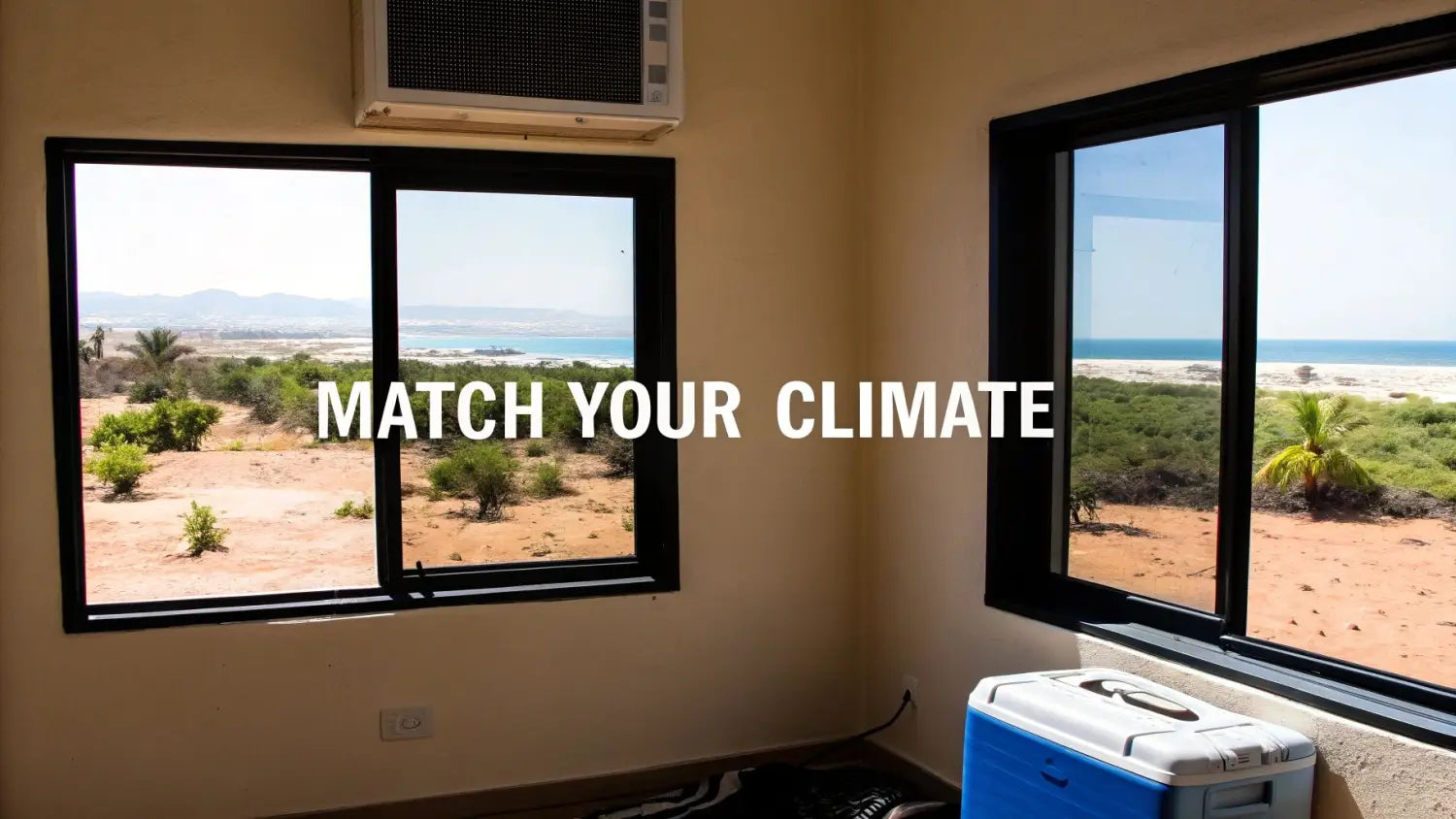
It all comes down to the relationship between temperature and humidity. An evaporative cooler’s performance is directly tied to how dry the air is, while an air conditioner cools effectively no matter how much moisture is in the air.
The Dry Climate Champion: Evaporative Coolers
In parts of Australia defined by that classic dry heat, an evaporative cooler isn't just a good choice; it's a wellness champion. Think Perth, Adelaide, and inland areas of New South Wales and Victoria. These places swelter through summers where the air is hot but the humidity is low.
This is where evaporative cooling really comes into its own. The system pulls in that hot, dry air, passes it over water-saturated pads to infuse it with moisture, and pushes out a beautifully cool, natural-feeling breeze. This process can drop the felt temperature significantly while also helping with the side effects of arid air, like dry skin and irritated sinuses.
For these climates, an evaporative cooler creates the perfect setting for at-home wellness. Whether you're doing a workout in your favourite activewear or settling into a quiet meditation, the fresh, gently humidified air supports better breathing and feels genuinely revitalising.
The Humid Climate Essential: Air Conditioners
Head into Australia’s humid and tropical zones, and the story completely flips. The effectiveness of an evaporative cooler plummets in places like Brisbane, Darwin, the Gold Coast, and Far North Queensland, where the air is already heavy with moisture.
Trying to use an evaporative cooler here is a recipe for discomfort. It just adds more water to already damp air, leaving you with a sticky, swampy feeling and very little cooling. In these high-humidity regions, an air conditioner is non-negotiable for genuine relief.
Air conditioners work by actively removing humidity, a critical function in tropical weather. They create a crisp, dry indoor space that provides a real escape from the oppressive heat outside. If you live in these areas, an AC is the only way to create a cool, comfortable sanctuary at home.
Key Takeaway: Your location is everything. Evaporative coolers are fantastic in the dry heat of cities like Adelaide and Perth. Air conditioners are essential for cutting through the thick humidity of Brisbane and Darwin.
Navigating Temperate and Mixed Climates
Cities with more varied weather, like Sydney and Melbourne, make the decision a little more complex. Their summers can swing between periods of dry heat and days of high humidity.
In these "in-between" zones, your personal preference and tolerance for humidity start to play a bigger role. An air conditioner gives you guaranteed cooling power on every single hot day, no matter the conditions. An evaporative cooler, on the other hand, offers brilliant energy efficiency and fresh airflow on those drier days.
Data from Australian consumer reports really highlights this split. Evaporative coolers can drop temperatures by an impressive 5–8°C in low-humidity environments like Perth. But they just can't compete in Brisbane's typical 65–75% summer humidity, where air conditioners are king. It’s clear that evaporative systems simply aren’t designed for wet, tropical climates. To explore this topic further, you can read more about the performance of each system across Australia's diverse climates on Wikipedia.
When you're creating a sanctuary at home, the upfront price of a cooling system is just the first chapter. The real story unfolds over years of electricity bills and upkeep.
To truly understand the cost, you have to look at the whole picture. While a ducted evaporative system can have a similar installation price to an air conditioner, its true value shines through in its remarkably low running costs over its lifetime.
Upfront Investment and Installation
At first glance, the initial cost for both systems can look surprisingly alike, particularly for whole-home ducted options.
But when you start digging into the numbers here in Australia, evaporative coolers often present a more manageable starting point. Most industry reports put the installation cost for a standard evaporative system somewhere between $2,500 and $3,500. This is often on par with, or even a little less than, a refrigerated air conditioning system of a similar size. For a deeper dive, you can find more insights on home cooling systems on Wikipedia.
The Power of Lower Running Costs
This is where the two cooling systems take completely different paths. Evaporative coolers are incredibly energy efficient.
Their whole operation relies on a simple fan and a small water pump, which means they barely sip electricity. An air conditioner, on the other hand, needs a power-hungry compressor to run its refrigeration cycle.
- Evaporative Cooler: A typical household unit uses just 0.3-0.7 kW/h, which brings the annual running cost to around $200-$300.
- Air Conditioner: A standard AC unit needs a hefty 1.5-4.0 kW/h, pushing yearly running costs to $400-$600 or even more.
In drier climates, this can add up to energy savings of up to 80%. Think about what that means—the money you save on power bills can be redirected into other areas of your wellbeing, like stocking up on premium Teelixir supplements or beautiful organic matcha powder to nourish your body from the inside out.
Maintenance and System Lifespan
How long a system lasts and what it takes to keep it running are huge factors in its total lifetime cost.
Evaporative coolers are known for their mechanical simplicity, which usually translates to better durability and cheaper repairs. Their design is straightforward, with fewer complex parts that can break down. Annual maintenance is often something you can do yourself: a quick clean, a check of the water pump, and replacing the cooling pads every few seasons. This keeps maintenance costs low and predictable.
Air conditioners, with their intricate compressors and sealed refrigerant lines, almost always need a professional to service them properly. While they're built to last, a major breakdown like a compressor failure can be a huge, unexpected hit to your wallet. For the health-conscious household, the sheer simplicity of an evaporative cooler often makes it a more financially sustainable choice over the long haul.
Making the Final Choice for Your Wellness Sanctuary
So, after weighing up all the details, how do you make the final call? The choice between an evaporative cooler and an air conditioner isn't about which one is "better" in general. It's about which one is better for you—your personal wellness goals, your home, and the climate you live in.
Let’s get specific. Imagine you’re a dedicated yogi living in dry Adelaide. You need a space that feels fresh and breathable to support your practice. An evaporative cooler is a natural fit. It gently introduces cool, humidified air, which feels incredible during deep breathing exercises and helps create a revitalising, earthy atmosphere.
Now, picture an urban professional in humid Brisbane who needs a quiet, sealed-off room for deep focus or post-workout recovery. An air conditioner is the clear winner here. It gives you precise temperature control while actively removing that sticky humidity, creating a consistently comfortable and distraction-free zone.
Situational Recommendations for Your Lifestyle
To help you decide, let's look at a few common scenarios:
- For the Allergy Sufferer: An air conditioner is almost always the better choice. Its closed-loop system and powerful filters are brilliant at trapping dust, pollen, and other airborne irritants, helping you create a purified indoor haven.
- For the Eco-Conscious Consumer: The evaporative cooler stands out. It uses a fraction of the energy of an air conditioner and avoids chemical refrigerants entirely. This means a much smaller carbon footprint and significantly lower running costs.
- For Families with Young Children: In a dry climate, an evaporative cooler can be wonderful. The added moisture in the air can help soothe sensitive little respiratory passages. On those dangerously hot days, however, an AC provides more powerful and reliable cooling to keep everyone safe.
Here in Australia, where heating and cooling can make up 20% to 50% of a home's total energy use, making the right choice has a huge impact. In the dry heart of the country, evaporative coolers are a game-changer. They avoid harmful refrigerants and offer a powerful, cost-effective way to cool your home that truly supports holistic health. You can find more great insights on choosing the right cooling system from Sustainability Victoria.
This decision tree helps visualise the choice if your main focus is on cost.
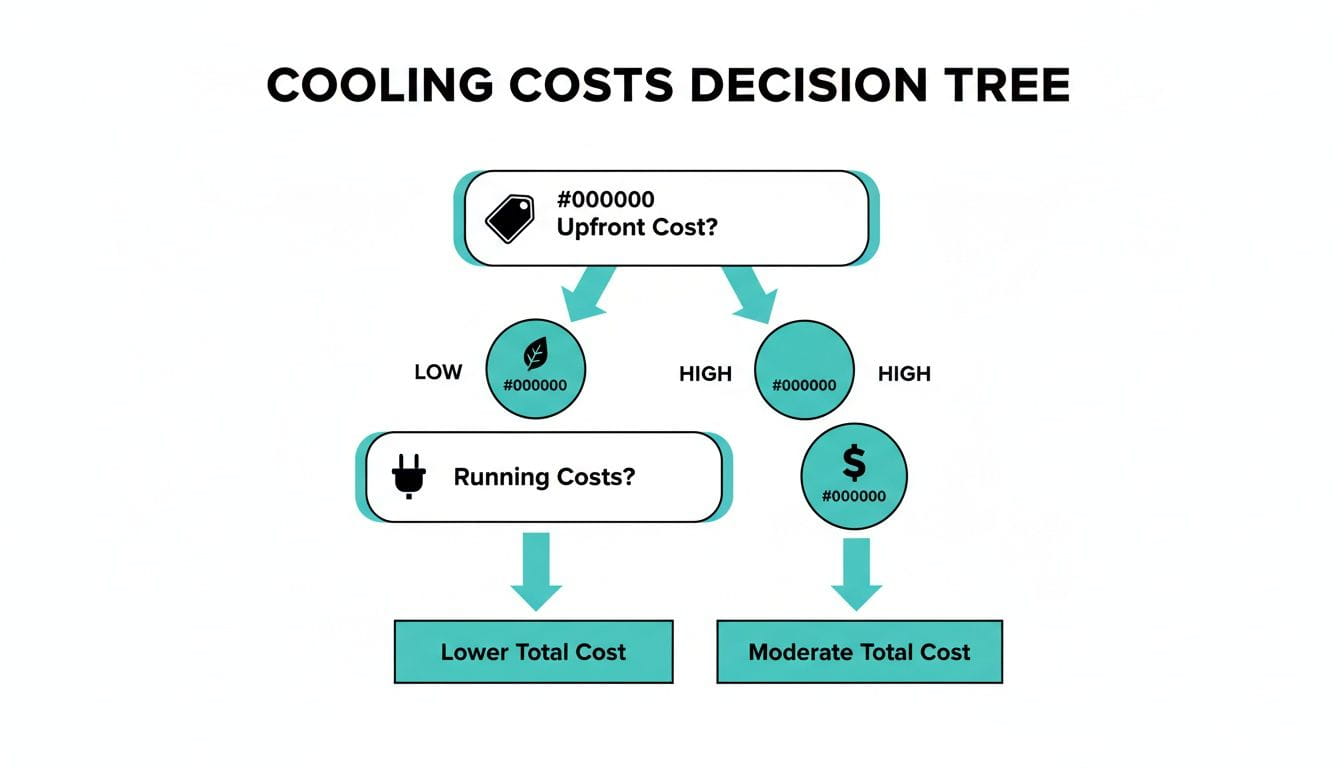
As you can see, while the initial purchase price might be similar, the long-term running expenses are where these two systems really part ways—with evaporative coolers coming out far ahead.
The ultimate goal is to empower you to align your cooling system with your unique health priorities. By making an informed choice, you transform your house into a true home sanctuary that nurtures your wellbeing.
Once you’ve decided on your ideal cooling method, you can enhance your space even further. If you go with an AC in a dry area, you might want to add one of our humidifiers to bring back some balance. Or, to complement the fresh, natural breeze from an evaporative cooler, try diffusing some calming Blue Lotus.
A Few Common Questions
When you're weighing up an evaporative cooler against an air conditioner, a few practical questions always seem to pop up. Let's tackle some of the most common ones we hear, helping you match your choice to your wellness-focused lifestyle here in Australia.
Can I Use an Essential Oil Diffuser with an Evaporative Cooler?
You absolutely can. In fact, they work beautifully together. Because an evaporative cooler is constantly bringing fresh air into the room, it's the perfect partner for aromatherapy. The gentle, humid breeze will naturally carry the scent from one of our essential oil diffusers, spreading it evenly without letting it become too strong or cloying.
This pairing creates a wonderfully fresh and therapeutic atmosphere, perfect for deepening your meditation practice or just bringing a sense of calm to your home.
Which System Is Better for Sleep Quality?
This one really comes down to your local climate and what you personally need to sleep soundly.
An evaporative cooler adds moisture to the air, which can be a game-changer if you suffer from a dry throat or stuffy nose at night, especially in arid parts of the country. Plus, its gentle, steady hum can act as a soothing white noise, drowning out other disturbances.
On the other hand, an air conditioner gives you complete control over the temperature. If you're someone who needs a consistently cool, dry room to get proper rest—particularly in humid coastal areas—then an AC is definitely the better choice for creating that perfect sleep sanctuary.
Are Evaporative Coolers Too Noisy for a Meditation Space?
Most people find the sound of an evaporative cooler quite helpful for mindfulness. It produces a consistent, low-level fan noise that many describe as a form of "white noise." This steady hum is fantastic for masking distracting background sounds, helping you sink deeper into your practice.
It's generally far less jarring than the sudden starting and stopping of an air conditioner’s compressor. For many, that consistent sound provides a much better backdrop for staying focused on your meditation cushions.
At Wellness Apothecary, we believe the right climate in your home is the foundation for genuine wellbeing. If you're ready to bring fresh, natural comfort into your sanctuary, explore our curated collection of evaporative coolers.


