


A high-quality filter for water is so much more than a kitchen gadget; it's a foundational tool for your entire wellness practice. Think of it this way: pure water ensures that every sip you take, every meal you cook, and every ritual you perform is supported by the cleanest possible base, free from anything that gets in the way of your wellbeing.
Why Pure Water Is Your Ultimate Wellness Foundation
Every wellness journey, whether you're recovering in a portable ice bath or finding your centre on a meditation cushion, really begins with the simple act of hydration. But not all water is created equal.
Standard Australian tap water, while safe, often contains chlorine, sediment, and other trace contaminants that can subtly affect its taste and purity. For those of us dedicated to a clean lifestyle, these impurities can easily interfere with the delicate flavours of our favourite daily rituals.
Viewing pure water as a clean canvas for your wellness masterpieces isn't an exaggeration. Using filtered water makes a noticeable difference in a few key areas:
- Enhanced Flavours: When you're brewing a premium matcha green tea powder, chlorine-free water allows those delicate, earthy notes to truly shine through, without any distracting chemical aftertaste.
- Improved Supplement Efficacy: Mixing your Teelixir supplements or vegan protein powder with pure water ensures you're not adding any unwanted elements that could hinder absorption.
- Better Overall Hydration: Let's be honest—when water tastes crisp and clean, you're naturally going to drink more of it. This supports everything from your post-yoga recovery in our women's yoga activewear to your daily energy levels.
The Growing Demand for Purity
This shift towards prioritising water quality isn't just a niche trend; it's a real movement that reflects a deeper commitment to personal health. The Australian water purifier market hit a value of USD 1,196.00 million recently, and projections show it could skyrocket to USD 2,496.43 million by 2033.
This isn't just about sales figures. This growth highlights a cultural shift where clean water is seen as an essential, non-negotiable part of achieving balance and wellbeing.
This guide is your first step toward choosing a filter that aligns with our vision for holistic health here at Wellness Apothecary. We'll demystify the science behind it all and guide you towards ensuring every single sip contributes positively to your wellness journey. To get started, you can learn more in our detailed guide on how to choose a water filter.
To really get why a good water filter is a game-changer, it helps to peek behind the curtain and see what's actually happening inside. The world of water filtration can sound a bit technical, but the core concepts are surprisingly simple. Once you understand the basics, you'll know exactly how each method cleans up your water, making it perfect for everything from your morning coffee to mixing your favourite Teelixir supplements.
Let's break down the most common technologies and what they're best at tackling.
Activated Carbon: The Contaminant Magnet
Think of activated carbon as a super-powered sponge with a massive, porous surface. It’s typically made from natural materials like coconut shells that are heated to create millions of microscopic pores. This process, known as adsorption, makes the carbon incredibly good at grabbing onto and trapping certain contaminants.
As water flows through an activated carbon filter, chemicals like chlorine and other organic compounds get stuck to its surface, kind of like how lint clings to a velvet jacket. This is why carbon filters are brilliant at making tap water taste and smell so much better. They’re fantastic at removing those chemical notes that can ruin the delicate flavour of an herbal tea or your daily matcha.
But here’s the thing: while they're great for improving the sensory experience, standard carbon filters don't remove minerals, salts, or dissolved inorganic stuff. That means you get great-tasting water without stripping out beneficial minerals like calcium and magnesium.
Reverse Osmosis: The Ultimate Gatekeeper
If activated carbon is a magnet, then Reverse Osmosis (RO) is more like an ultra-exclusive bouncer at a nightclub. This technology uses a special semipermeable membrane—a barrier with pores so ridiculously tiny that only water molecules can get through.
Imagine high pressure pushing tap water up against this membrane. The water molecules are small enough to squeeze through to the other side, but bigger molecules like salts, heavy metals (lead and arsenic come to mind), and a whole host of other dissolved solids are left behind and flushed away.
This level of purification is incredibly thorough, often removing over 99% of total dissolved solids (TDS). It’s the go-to choice for anyone after the absolute highest level of purity in their drinking water.
Because RO is so powerful, it also removes beneficial minerals along with the bad stuff. To counter this, many modern RO systems have a remineralisation stage that adds healthy minerals like calcium and magnesium back into the water after it's been purified. You end up with exceptionally clean water that still has a pleasant, balanced taste.
UV Purification: The Microbial Neutraliser
UV (Ultraviolet) purification isn’t really a filter in the traditional sense; it’s more of a steriliser. It works by zapping water with a specific wavelength of UV light—basically, a concentrated blast of sunlight that messes with the DNA of microorganisms.
Instead of physically removing contaminants, this process scrambles the genetic code of bacteria, viruses, and other nasty microbes, destroying their ability to reproduce and make you sick. It’s a fantastic, chemical-free way to ensure your water is microbiologically safe. UV systems are often used alongside other filters, like carbon or sediment filters, which clear out particles first so the UV light can do its job on crystal-clear water. It offers incredible peace of mind, especially for anyone on tank or bore water.
Ceramic Filters: The Intricate Maze
Ceramic filters are one of the oldest and most trusted methods out there. They're made from a natural ceramic material that’s packed with a complex web of minuscule pores.
Picture a microscopic, intricate maze that only the smallest travellers—water molecules—can find their way through. As water slowly passes through the ceramic shell, bigger contaminants like bacteria, protozoa, and sediment get trapped in the winding passages. Many ceramic filters are also infused with silver, which acts as a natural disinfectant to stop mould or algae from growing inside the filter itself.
This makes them a really durable and long-lasting option. By getting a handle on these key methods, you can confidently browse our collection of chemical free water filters and find the perfect technology to match your wellness goals.
A Quick Look at Water Filtration Technologies
To make things even clearer, here’s a simple table comparing these common methods. It’s a great way to see at a glance what each one removes and how it might fit into your wellness-focused home.
| Filtration Method | What It Removes | Best For | Simple Analogy |
|---|---|---|---|
| Activated Carbon | Chlorine, pesticides, VOCs, bad tastes, and odours. | Improving the taste and smell of municipal tap water. | A powerful magnet that attracts and holds onto chemicals. |
| Reverse Osmosis | Heavy metals, salts, fluoride, nitrates, and most dissolved solids. | Achieving the highest level of water purity. | An exclusive gatekeeper that only lets water molecules pass. |
| UV Purification | Bacteria, viruses, protozoa, and other microorganisms. | Disinfecting water without using chemicals. | An intense ray of sunlight that neutralises harmful germs. |
| Ceramic | Bacteria, cysts, sediment, and suspended solids. | A reliable, long-term solution for removing pathogens. | A complex maze that traps particles and lets water through. |
Choosing the right filter really comes down to what's in your local water and what you want to remove. Hopefully, this breakdown gives you the confidence to pick the one that's perfect for you.
Why Water Filter Certifications Matter for Your Health
With so many brands making bold claims, how can you be sure a water filter actually does what it says on the box? The secret lies in independent certifications. Think of them as your guarantee of performance and safety.
These certifications aren't just fancy logos; they’re your proof that a filter has been put through rigorous, third-party testing to verify it removes the contaminants it claims to. Without them, you're really just taking a company's marketing at face value. For anyone serious about their health, understanding these standards is the key to making a confident choice.
Decoding NSF/ANSI Standards
The most trusted and recognised certifications in the world of water filtration come from NSF International (the National Sanitation Foundation). It’s an independent organisation that sets the benchmark for public health standards. When you see an NSF/ANSI certification, it means a filter has survived extensive testing to prove it works as advertised.
It helps to see these certifications as different levels of protection, each one targeting specific water quality issues. The two most common standards you'll come across are:
- NSF/ANSI 42: Aesthetic Effects: This one is all about the things that affect the taste, smell, and look of your water. It’s the standard that confirms a filter is effective at reducing chlorine, which is often the main culprit behind that distinct “tap water” taste.
- NSF/ANSI 53: Health Effects: This is the more serious standard, tackling contaminants with known health risks. Filters certified to NSF/ANSI 53 are proven to reduce nasty substances like lead, mercury, cysts (like Giardia), and volatile organic compounds (VOCs).
Choosing a filter with these certifications means you're investing in a product that has been scientifically proven to make your water cleaner and safer. This image gives a simple overview of some common filtration methods these standards are designed to test.
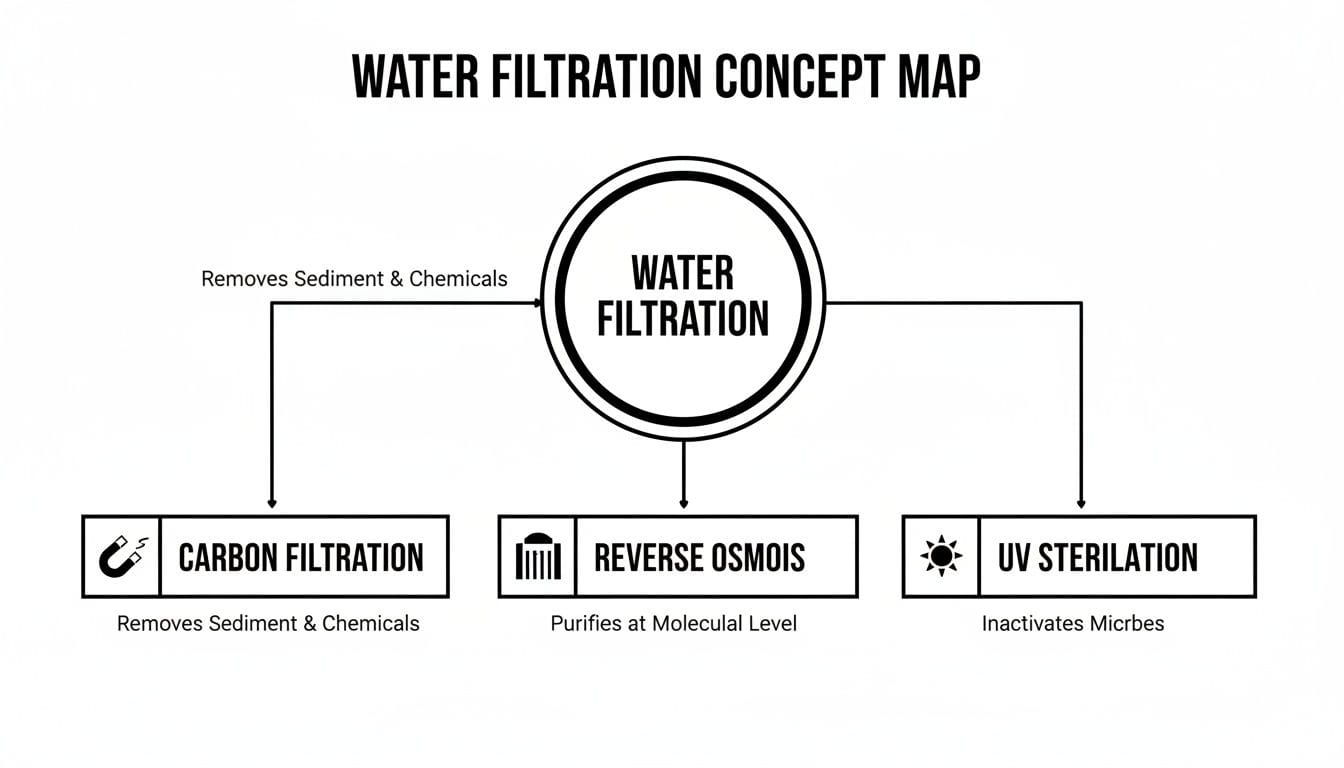
As you can see, different technologies like Carbon, Reverse Osmosis, and UV are designed to tackle very different impurities, from chemicals and heavy metals to microscopic organisms.
Why This Matters for Your Wellness Rituals
This verified performance has a direct and positive impact on your daily wellness routines. For instance, using certified pure water is essential for creating the perfect mist in your essential oil diffusers, ensuring it’s free from mineral buildup that can clog and damage the unit over time.
When you choose a certified filter, you're not just buying a product; you're investing in peace of mind. You can trust that the water you use for everything—from your morning herbal tea to filling your portable ice baths—is genuinely contributing to your wellbeing.
By making certified products a priority, you ensure every single drop of water in your home supports your health goals. It allows you to see past the marketing hype and choose from a complete range of trusted water filters that have earned their credentials the hard way—through tough, independent testing.
Finding the Perfect Water Filter for Your Lifestyle
The best water filter isn't necessarily the most expensive or complex one—it's the one you'll actually use day in and day out. What works for a homeowner looking to purify every drop might not be practical for a renter in a small flat.
By matching a filter to your space, how comfortable you are with installation, and your overall wellness goals, you can make sure every sip of water is supporting your health.
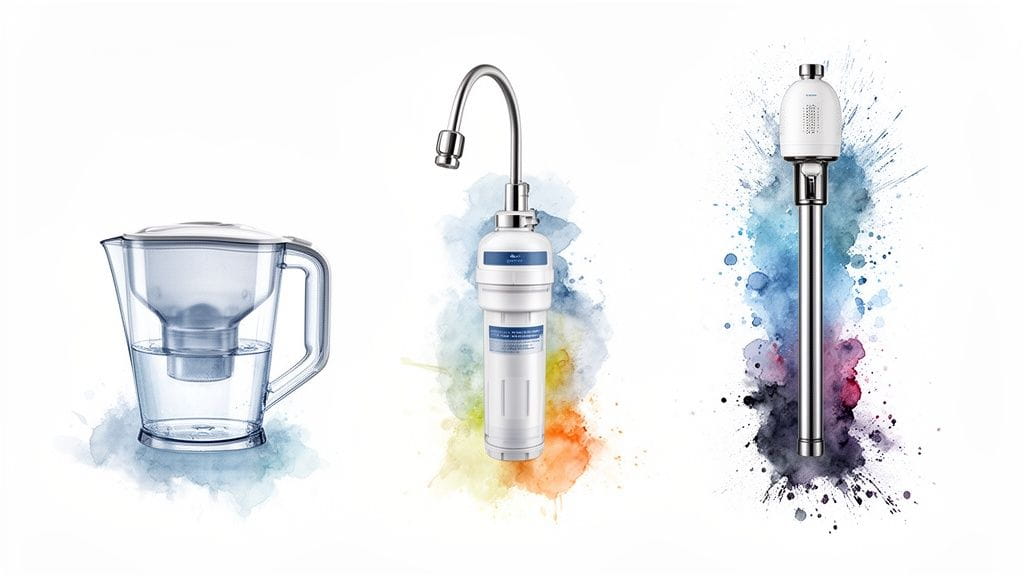
Let's walk through the most common types of home water filters to help you find the perfect match for your routine.
Countertop Filters for Ultimate Flexibility
Countertop filters are the champions of convenience. These systems simply sit on your benchtop next to the sink and usually connect straight to your existing tap. Installation is a breeze—often no tools or permanent plumbing changes are needed.
This makes them a fantastic choice for renters or anyone who wants a serious filtration solution without the commitment. Plus, they’re portable, so you can easily take it with you if you move.
They’re perfect for filling the kettle for your morning brew or having pure water on hand for your daily rituals. Some of the more advanced models can remove up to 99% of contaminants like chlorine and heavy metals, which is ideal for getting the purest flavour from herbal teas or mushroom powders.
Under-Sink Systems for a Clutter-Free Kitchen
If you're after a more permanent, out-of-sight solution, an under-sink water filter is an excellent choice. As the name suggests, these systems are installed in the cupboard beneath your kitchen sink, delivering filtered water through a separate, dedicated tap.
While they do require a bit more effort to install compared to a countertop model, the payoff is a clean, clutter-free benchtop and instant access to purified water on demand. This makes them perfect for busy kitchens and anyone who loves a minimalist aesthetic.
Imagine effortlessly filling a large pot for cooking pasta or mixing your favourite vegan protein powder with beautifully clean water, straight from its own dedicated tap. It seamlessly integrates a major wellness upgrade right into your home.
Whole-House Filters for Total Protection
For those wanting the most comprehensive solution, a whole-house filter—also known as a point-of-entry system—is the ultimate investment. Installed where the main water line enters your home, this system purifies every single drop of water flowing to every tap and appliance.
This means you get the benefits of filtered water not just for drinking and cooking, but for showering, bathing, and even doing the laundry. It offers total peace of mind and consistency in your wellness practices throughout your entire home.
When you’re ready for this level of purity, a whole house water filtration system ensures that from your morning shower to your evening tea, you're surrounded by cleaner, healthier water.
Speciality Filters for Targeted Wellness
Beyond the main kitchen systems, specialty filters can elevate other parts of your daily routine by addressing specific needs around the house.
Choosing the right filter is less about finding the 'best' technology and more about identifying the best fit for your home, habits, and health aspirations.
Here are a few popular options to consider:
- Shower Filters: These little wonders attach easily to your existing showerhead to reduce chlorine and other chemicals. Because chlorine can strip your skin and hair of their natural oils, using a shower filter can lead to noticeably softer skin and healthier hair.
- Refrigerator Filters: Many modern fridges come with built-in filters for their water and ice dispensers. These typically use activated carbon to improve the taste and odour of your water, removing common impurities.
- Water Filter Pitchers and Bottles: For maximum portability, these are great for personal use at the office, the gym, or while travelling. They offer a basic level of filtration, perfect for making tap water taste better wherever you are.
Ultimately, a good filter makes your wellness routine feel effortless. Having purified water ready to go makes preparing a nourishing tea in an iron teapot with a built-in filter an even more delightful experience.
The goal is to make pure water a natural part of your day, whether you're hydrating after a yoga session using one of our yoga blocks or settling onto your zabuton meditation cushions with a calming cup of tea. By thinking about your space and lifestyle, you can confidently find a system that feels like it was made just for you.
A water filter is a real investment in your long-term health, but its true value really comes down to consistent upkeep. Understanding the practical side of ownership—from installation to routine maintenance—is what ensures you get years of pure, clean water from your system.
Whether you have a simple countertop unit or a more involved under-sink system, every filter requires a little care to keep it performing at its best. Getting a handle on this practical side of things helps you choose a sustainable system that provides pure water for everything from daily hydration to post-workout recovery.
The Critical Role of Filter Changes
The single most important part of looking after any water filter is changing the cartridges on time. It's an easy thing to forget, but letting this simple task slide can make your entire system pretty much useless.
Think of a filter cartridge like a microscopic net. Over time, this net gets clogged with all the contaminants it has captured. Once it’s full, it can’t trap any new impurities. In some cases, it might even release particles it previously caught back into your water—the exact opposite of what you want.
Following the manufacturer's recommended replacement schedule isn't just a suggestion—it's essential for guaranteeing the water you drink is actually clean. A neglected filter is often no better than having no filter at all.
This commitment to maintenance ensures your system continues to provide the high-quality water you need to support your yoga practice with sustainable yoga mats and other wellness activities.
Calculating the Total Cost of Ownership
To really get a feel for the value of a filter for water, it helps to look beyond the initial price tag. The total cost of ownership includes both the upfront cost of the system and the ongoing expense of replacement cartridges.
While some systems might seem cheaper at first, they could require frequent and pricey filter changes. On the flip side, a more expensive initial system could have long-lasting filters that actually make it more economical over several years.
Here’s a simple way to break it down:
- Initial System Cost: The price of the unit itself, whether it's a pitcher, countertop model, or under-sink system.
- Replacement Filter Cost: The price of each new cartridge.
- Filter Lifespan: How many litres of water a filter can purify or how many months it lasts.
- Annual Cost: A quick calculation of (cost per filter) × (number of filters needed per year).
This straightforward approach helps you budget properly and choose a system you can comfortably maintain. The market definitely shows a preference for convenience, with countertop models leading the way because of their plug-and-play setup that avoids any plumbing work. It's interesting to see that even advanced public filtration systems are now using Granular Activated Carbon and ion exchange, which really highlights the value of that extra purification step. You can learn more about the Australian water purifier market trends to see how the technology is evolving.
Making Maintenance an Effortless Ritual
Turning filter maintenance into a regular habit doesn't have to be a chore. Just set a recurring reminder on your calendar or phone for the day your filter needs changing. Many modern filters even come with indicator lights that tell you exactly when it's time for a swap.
By making this a simple, predictable part of your routine, you ensure your investment continues to pay off for your health. For more tips on living a balanced and healthy life, you can always read more on the Wellness Apothecary blog. A little bit of consistent care guarantees a constant supply of pure water, which is really the foundation of any wellness journey.
Elevating Your Daily Wellness Rituals with Pure Water
So, we've covered the nuts and bolts of water filtration. But let's bring it back to what really matters: your daily wellness journey. Knowing how a filter for water works is great, but seeing its impact in your day-to-day life is where the magic happens. This is where you get to taste, feel, and experience the difference.
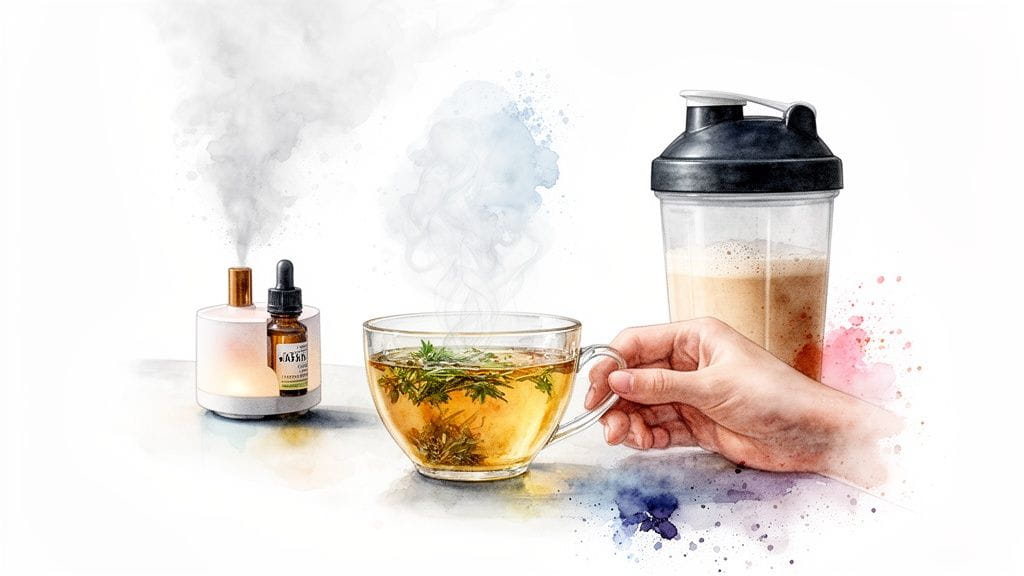
Think of pure water as the unsung hero of your rituals. It’s the clean canvas that allows the true character of your favourite wellness products to shine, free from the dulling effects of unwanted tastes or odours.
A Noticeable Difference in Every Ritual
The improvements are often subtle, but they're absolutely profound. Imagine brewing a cup of delicate Blue Lotus tea and finally tasting all its vibrant floral notes because there’s no chlorine getting in the way. It’s a completely different experience.
Your go-to Teelixir powders and other supplements will also mix more smoothly and be absorbed more readily by your body when they aren't competing with contaminants. Even the mist from your diffuser will be cleaner, free from the pesky mineral buildup that leaves white dust on your furniture and can shorten the device's life.
Pure water is the unifying element that quietly supports every aspect of a healthy lifestyle. It’s the invisible ingredient that makes everything else better.
From your post-workout recovery shake to the simple, mindful act of staying hydrated after a session on our non toxic yoga mats in Australia, filtered water ensures you’re getting the absolute best from your efforts.
The Foundation of Holistic Wellbeing
This commitment to purity goes far beyond just what’s in your glass. It’s about creating a consistently clean and supportive environment for your body. The water you use to wash your face, prepare your food, and brew your morning tea should all be contributing to your health, not taking away from it.
- Purer Brews: Unlock the full, intended flavour profile of every cup of tea or coffee.
- Enhanced Nutrition: Mix cleaner, more effective protein shakes and supplement drinks.
- Better Hydration: Enjoy crisp, refreshing water that actually encourages you to drink more throughout the day.
Investing in a quality water filter is a powerful, foundational step in your commitment to holistic wellbeing. To make your pure water rituals even better on the go, our double-wall glass tea infuser bottle is the perfect companion for enjoying delicious infusions anywhere.
Frequently Asked Questions About Home Water Filters
Finalising your decision on a water filter often comes with a few last-minute questions. To help you choose with complete confidence, we’ve put together clear, straightforward answers to some of the queries we hear most often.
How Often Should I Really Change My Water Filter?
This is one of the most critical questions, and the answer really depends on your specific filter and how much you use it. As a general rule of thumb, you should aim to replace cartridges every two to six months, but always, always follow the manufacturer's guidelines first.
A few things can affect how often you’ll need a new filter:
- Filter Type: A simple pitcher filter will naturally need changing more often than a large, comprehensive under-sink system.
- Household Size: A family of four will go through water much faster than a single person, putting more demand on the filter.
- Local Water Quality: If your tap water is heavy with sediment or chlorine, your filter has to work that much harder and will need replacing sooner.
The easiest trick? Just set a recurring reminder on your phone or calendar. It’s a simple way to stay on top of this essential bit of maintenance.
Can a Water Filter Effectively Remove Fluoride?
Yes, but it's important to know that not all filters are designed for this job. Your standard activated carbon filters—which are fantastic for getting rid of chlorine and improving taste—won't remove fluoride.
To effectively reduce fluoride, you need a more specialised filtration technology. Reverse osmosis (RO) systems are the gold standard here, capable of removing over 90% of fluoride along with a whole host of other contaminants. Certain gravity-fed systems with special fluoride-reduction elements are also excellent options. Before you buy, always check the product specs and look for independent testing that verifies fluoride removal.
Is Bottled Water a Safer Alternative to a Home Filter?
While bottled water is often marketed as the purest choice, using a good home filter has some pretty significant advantages for both your health and the environment.
For starters, bottled water creates a huge amount of plastic waste and has a much larger carbon footprint from transportation. Plus, recent studies have raised concerns about microplastics potentially leaching from the plastic bottles into the water over time. A high-quality home filter for water gives you a sustainable, cost-effective solution and puts you in complete control of your water quality.
Keep in mind that for your home filtration system to work its best, it helps to sort out any underlying plumbing issues. This can include solving main water pressure issues.
At Wellness Apothecary, we believe that pure water is the cornerstone of a vibrant, healthy life. Choosing the right filter is a powerful step towards elevating your daily rituals and supporting your overall wellbeing. Explore our curated selection and find the perfect system to begin your journey to cleaner, better-tasting water today. Discover our complete range of wellness essentials.


