


Bringing a humidifier for a newborn into your nursery is one of the simplest and most effective ways to create a soothing space, helping your little one breathe more easily and sleep more deeply. The sweet spot for humidity in a baby's room is between 40% and 60%. This gentle moisture keeps their tiny nasal passages from drying out and can ease congestion, a real lifesaver in homes where heating or air conditioning is always running.
Creating a Nurturing Nursery Environment
When you welcome a newborn home, your focus shifts to creating a safe, comfortable space where they can rest, grow, and breathe with ease. One of the most underrated tools in crafting this little sanctuary is a quality humidifier. A baby's respiratory system is incredibly delicate, and the dry air so common in Australian homes—thanks to constant heating and cooling—can be quite harsh on them.
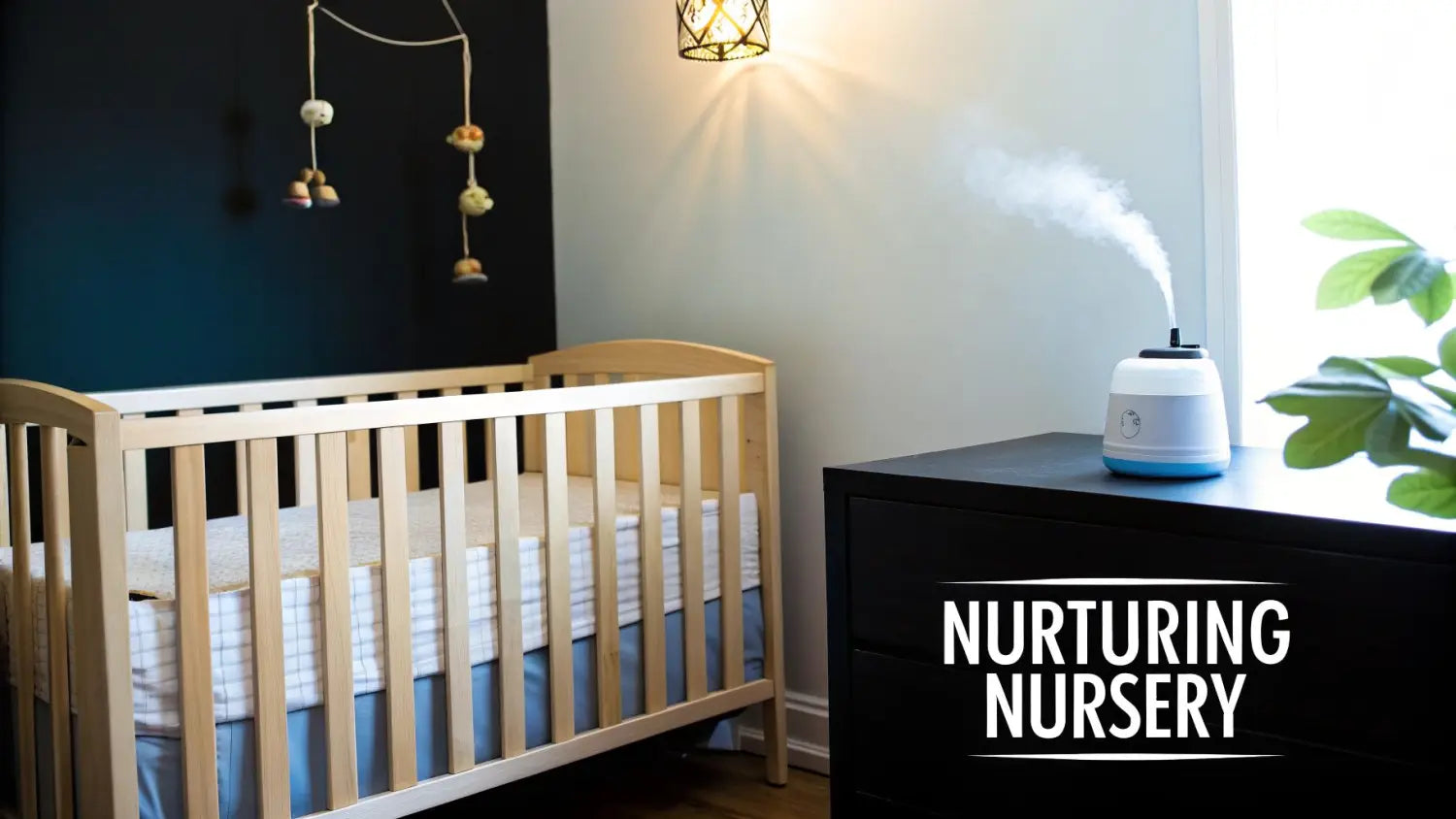
Getting the humidity level just right can transform your nursery from just a room into a true haven. It promotes better sleep, eases stuffiness, and ultimately leads to a calmer baby. Think of it as cultivating the perfect indoor ecosystem for your little one to thrive in.
The Importance of a Balanced Atmosphere
A balanced environment is about so much more than just comfort; it's a cornerstone of your newborn's wellness. When the air becomes too dry, it can kick off a chain of little issues that disrupt a baby's peace.
- Respiratory Comfort: Dry air can easily irritate a newborn's tiny nasal passages, leaving them feeling stuffy and uncomfortable.
- Skin Health: A baby's skin is incredibly thin and loses moisture fast. Proper humidity helps keep it soft and prevents dryness and irritation.
- Better Sleep: It’s a simple truth: a comfortable baby is a sleepy baby. By soothing potential irritants like a dry throat or a stuffy nose, a humidifier helps support longer, more restful sleep cycles for everyone in the house.
This focus on creating a supportive atmosphere is really catching on. In Australia, the baby humidifier market is booming, with sales revenue hitting $76 million in recent years. It's projected to climb to $104.5 million by the end of the decade, which just shows a growing awareness among parents. Health data even suggests that around 15-20% of infants under six months experience respiratory discomfort linked to low humidity—an issue that humidifiers directly address.
A Holistic Approach to Nursery Comfort
Crafting the perfect sleep space isn't just about one thing; it's about managing several environmental factors. Beyond humidity, understanding and maintaining the optimal baby room temperature is crucial for a truly nurturing environment that promotes safe, sound sleep.
A well-managed nursery environment is one of the first acts of wellness you can provide for your child. It's about proactively creating conditions that support their delicate system as it adapts to the world.
For families wanting to take air quality a step further, pairing a humidifier with an air purifier can create the ultimate clean-air zone. For example, some of our advanced models work to remove airborne particles like dust and allergens, making sure the air your baby breathes is not just moist, but pure too. This comprehensive approach is how our curated collection of humidifiers can become a cornerstone of your family's wellness journey.
Why Newborns Breathe Easier in Humidified Air
A newborn’s world is one of constant adjustment. Their tiny bodies are incredibly sensitive to their new environment outside the womb, and one of the biggest challenges for their delicate respiratory system is dry air. This is a common issue in Australian homes, thanks to year-round heating and air conditioning. It’s exactly why a quality humidifier for a newborn becomes an indispensable part of a truly comfortable nursery.
Picture your baby's nasal passages—they are unbelievably small and narrow. When the air lacks moisture, these passages can become dry and irritated in no time. This irritation often leads to congestion, making it tough for your little one to breathe properly, which then disrupts crucial things like feeding and sleeping. We all know a congested baby is often a fussy, unhappy baby.
By introducing a gentle, cool mist into the room, a humidifier simply adds that missing moisture back into the air. This one simple action can have a profound effect.
How Optimal Humidity Soothes Tiny Airways
Think of a plant in a dry, arid spot versus one in a lush, humid greenhouse. The second one thrives, its leaves supple and vibrant. It's much the same for a baby's respiratory system—it just functions better in a balanced atmosphere. The ideal humidity level for a nursery is between 40% and 60%. Keeping the air in this sweet spot offers several key benefits.
- Keeps Nasal Passages Moist: Humidified air prevents the delicate lining of your baby's nose from drying out. This reduces irritation and even helps lower the risk of those minor, scary-looking nosebleeds.
- Thins Mucus Naturally: When your baby inevitably catches a cold, moist air helps to thin out their mucus. This makes it so much easier for them to clear their airways, providing real relief without having to reach for medication.
- Soothes Dry Coughs: A scratchy, dry cough can be particularly distressing for a newborn and can ruin a good night's sleep. The added moisture in the air soothes their throat and airways, calming the cough and helping everyone get more rest.
The gentle, consistent hum of a unit like our Devanti Aroma Diffuser Aromatherapy Humidifier not only balances the air but also provides a soothing white noise, adding another layer of peace to the nursery environment you've worked so hard to create.
A well-humidified room acts like a gentle, invisible hug for your baby's respiratory system. It’s a simple, natural way to help them breathe with greater comfort and ease, day and night.
More Than Just Breathing a Sigh of Relief
While the breathing benefits are huge, the positive effects of a humidifier extend to another of your newborn's most sensitive organs: their skin. A baby’s skin is significantly thinner than an adult’s and loses moisture much faster, making it incredibly prone to dryness and irritation.
Dry, centrally heated or cooled air can strip the natural moisture from your baby's skin, leading to flaky patches, redness, and general discomfort. For little ones with conditions like eczema, low humidity can be a major trigger for flare-ups. This is where a humidifier can also be a game-changer. For parents looking for more ways to manage this common issue, there are some excellent guides available to help soothe baby dry skin.
By maintaining that optimal 40-60% humidity level, you’re creating an environment that helps your baby's skin hold onto its natural hydration. This proactive step supports a soft, healthy skin barrier, making your baby more comfortable all over. It’s another way a humidifier contributes to a holistic sense of wellness, ensuring your nursery is a true sanctuary for growth and rest.
Cool Mist vs Warm Mist Nursery Humidifiers
When you're choosing a humidifier for a newborn, it really comes down to one key decision that makes all the difference for safety and comfort: cool mist or warm mist. While both do the same job of adding moisture back into the air, they work in completely different ways. Getting to know these differences is the first step to picking the perfect one for your baby's room.
Here at Wellness Apothecary, we always, always recommend cool-mist humidifiers for any space your little one will be in. The reason is simple: safety. Warm-mist models use a heating element to boil water and create steam. While it sounds soothing, this means there's boiling water and hot steam in the nursery, which is a major burn risk if a curious toddler pulls it over. Cool-mist humidifiers completely remove that danger, giving you total peace of mind.
This little decision tree can help you figure out if a humidifier is the right next step for your baby's comfort.
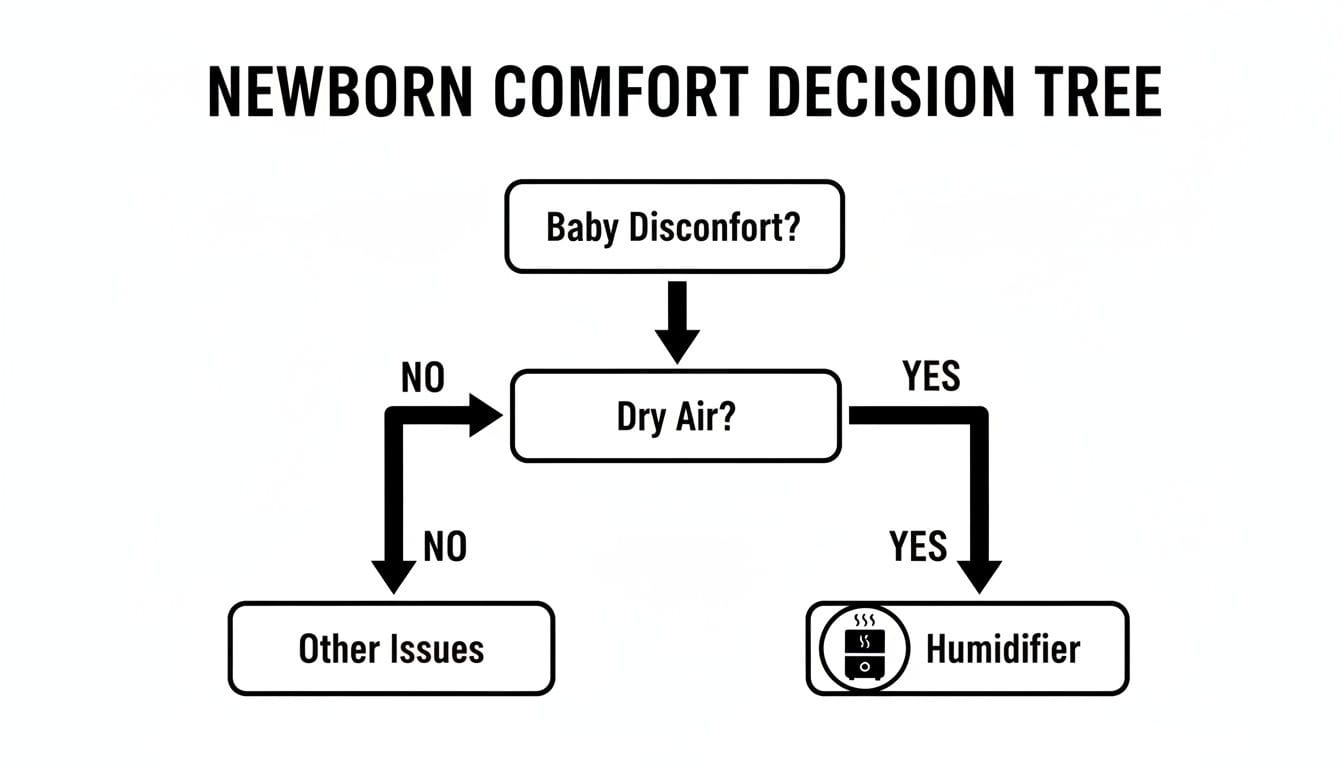
As you can see, if your baby seems unsettled and you suspect the air is dry, a humidifier is a simple, direct way to help.
Understanding Cool Mist Humidifiers
Cool-mist humidifiers are the safest and most popular pick for nurseries. They generally come in two main types: ultrasonic and evaporative. Each has its own way of getting moisture into the air, but the key thing is that neither of them uses heat.
- Ultrasonic Humidifiers: These are usually the quietest you can find. They work with a tiny vibrating plate (a nebuliser) that moves so fast you can't hear it. These vibrations break water down into a fine, visible mist that's released into the room. Because they're almost silent, they're perfect for light sleepers.
- Evaporative Humidifiers: This type works a lot like nature does. A fan pulls dry air from the room and blows it through a wet filter. As the air passes through, it naturally picks up moisture and circulates it as invisible, humidified air. They're a bit louder because of the fan, but they are great at self-regulating so you don't have to worry about making the room too humid.
Another bonus is that these models won't heat the room, which is a huge plus during Australia's warmer months.
The Warm Mist Alternative Explained
Warm-mist humidifiers, sometimes called steam vaporisers, work a lot like a kettle. They have a heating element inside that boils water to create hot steam, which is then released into the air to raise the room's humidity.
While some people feel the warm mist is more soothing for a stuffy nose, cool-mist humidifiers are just as effective at moistening airways and helping to thin mucus. The boiling process in a warm-mist unit does kill off waterborne bacteria, but the burn risk is still the most important factor, making them a less ideal choice for a child’s room.
To make the choice crystal clear, here’s a quick comparison of the two types.
Cool-Mist vs. Warm-Mist Humidifiers for a Nursery
| Feature | Cool-Mist Humidifier (Ultrasonic/Evaporative) | Warm-Mist Humidifier |
|---|---|---|
| Safety | Safest option. No heating element means no burn risk for children. | Potential burn risk. Contains boiling water and releases hot steam. |
| Energy Use | Generally more energy-efficient as it doesn't need to heat water. | Uses more energy due to the internal heating element. |
| Noise Level | Ultrasonic models are whisper-quiet. Evaporative models have a fan noise. | Quiet boiling sounds, similar to a kettle simmering. |
| Cleaning | Requires regular cleaning (daily rinses, weekly disinfecting) to prevent mould. | Also requires regular cleaning, but boiling helps reduce bacteria. |
| Room Temp | Can slightly cool the room, which is great for warmer climates. | Can slightly warm the room, which may be a downside in summer. |
| Effect on Congestion | Equally effective at soothing airways and relieving congestion. | Effective, and some find the warmth extra comforting. |
Ultimately, while both humidifiers add moisture to the air, the cool-mist option delivers all the benefits without the safety risks, making it the clear winner for a nursery setting.
Why Air Quality Matters So Much
In modern Australian homes, we're becoming more and more aware of indoor air quality. Over 90% of Aussies live in cities, and our air-conditioned homes often have humidity levels that are unhealthily low. This has led to an 18% rise in paediatric sinus consultations during dry seasons. On the flip side, studies show babies in properly humidified rooms have 25% fewer eczema flare-ups—a common issue for 10-15% of Australian newborns in dry environments. If you want to dive into the data, you can explore more about the medical humidifier market.
Choosing a cool-mist humidifier isn’t just a preference; it’s a proactive safety measure. It delivers all the respiratory and skin benefits your newborn needs without introducing any unnecessary hazards into their sanctuary.
This focus on safety and real-world effectiveness is why our collection here at Wellness Apothecary is exclusively made up of cool-mist humidifiers. We believe in offering solutions that truly support your family's wellbeing without compromise, helping you create the safest, most comfortable nursery possible.
Essential Features of a Newborn Humidifier
Once you’ve settled on a cool-mist model, the next step is digging into the specific features that make a humidifier for a newborn genuinely great. It’s not just about pumping moisture into the air; it's about doing it safely, quietly, and with as little fuss as possible.
Think of this as your checklist for finding a unit that slots seamlessly into your life and your baby's nursery. The best humidifiers for babies are designed with parents in mind, focusing on peace of mind and minimal effort. Because let's be honest, the last thing any new parent needs is another complicated gadget to figure out.
Whisper-Quiet Operation
A sleeping baby is a precious thing, and we all know how easily that peace can be shattered. That's why the noise level of a nursery humidifier is a non-negotiable. Look for models described as "whisper-quiet" or those that run on ultrasonic technology.
Ultrasonic humidifiers use high-frequency vibrations to create a fine mist, a process that’s virtually silent. This means you can keep the nursery air perfectly comfortable all night without any annoying humming or gurgling that might stir a light sleeper. Many parents even find the gentle, barely-there sound acts as a subtle form of white noise.
Long Runtime and Large Water Tank
Waking up in the middle of the night just to refill a humidifier is a hassle no one needs. A unit with a generous water tank and a long runtime is your best friend for uninterrupted, all-night operation.
- Look for a tank size of at least one litre, which usually provides eight hours or more of continuous mist. This is typically enough to run from bub's bedtime right through until their morning wake-up call.
- A larger tank also means less frequent refilling during the day, freeing you up to focus on more important things (like cuddles).
This feature is all about convenience. You can set it, forget it, and rest easy knowing your baby is breathing comfortable, moisturised air until sunrise.
Automatic Shut-Off for Peace of Mind
Safety is priority number one in any nursery. An automatic shut-off is one of the most critical safety features a humidifier can have. It’s a simple but brilliant function that delivers complete peace of mind.
This feature uses a sensor to know when the tank is empty and automatically turns the unit off. This prevents the humidifier from running dry, which could otherwise damage the motor or, worse, become a potential hazard. With auto shut-off, you can sleep soundly knowing the device will safely power down on its own.
Choosing a humidifier with an automatic shut-off feature isn’t just about protecting the device; it's about adding a crucial layer of safety to your baby's environment. It’s one less thing to worry about during those early, sleep-deprived months.
BPA-Free Materials and Filter Options
What a humidifier is made of is just as important as how it performs. Since the mist it produces will be dispersed into the air your baby breathes, you want to be certain the materials are completely safe. Always opt for a model made from BPA-free plastic to avoid any unwanted chemicals.
Next, you'll want to consider the filter system.
- Filterless (Ultrasonic) Models: These are wonderfully easy to maintain, but they can sometimes produce a fine "white dust" if you use hard tap water. This is simply the mineral content from your water.
- Filtered (Evaporative) Models: These use a wick filter to trap minerals before the water is turned into vapour, preventing white dust and ensuring only clean moisture is released. The trade-off is that these filters need to be replaced regularly.
For those who value purity and the option of aromatherapy, a dual-function unit can be a great choice for other areas of the home. For instance, the Devanti Aroma Diffuser Aromatherapy Humidifier combines gentle humidification with a separate tray for essential oils. While you wouldn't use oils in a newborn's room, it's perfect for creating a calming atmosphere elsewhere once your baby is older and it’s deemed safe. The humidifiers in our collection at Wellness Apothecary are specifically selected with these exact features in mind, making them an ideal choice for health-conscious families.
Your Guide to Safe Humidifier Use and Maintenance
Bringing a humidifier into your nursery is a brilliant move for creating a comfortable, soothing space for your newborn. But to make sure it stays a wellness tool and not a source of trouble, proper use and regular cleaning are non-negotiable. Think about it: an uncleaned humidifier can become a breeding ground for mould and bacteria, which is the last thing you want floating around your baby.
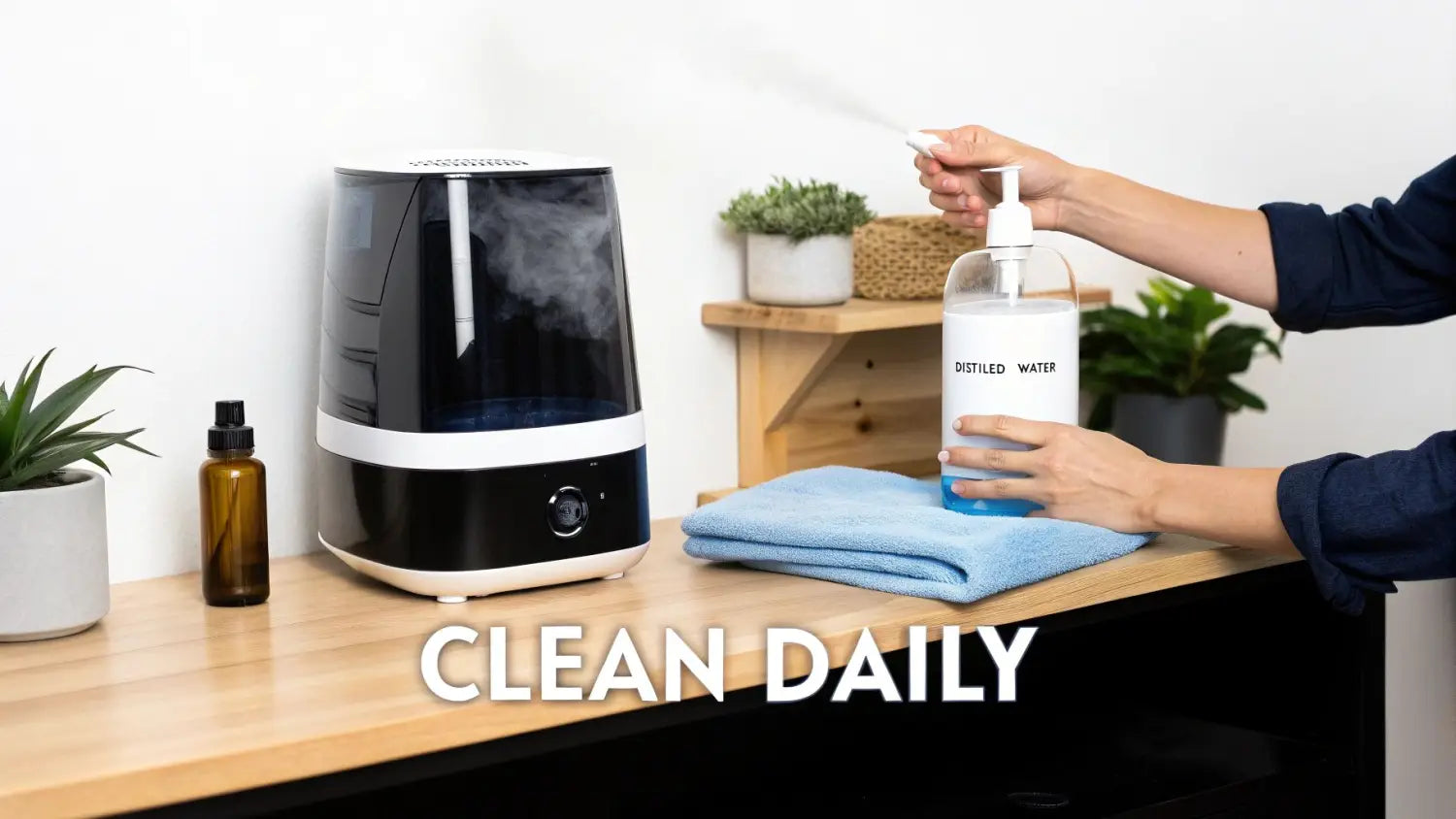
I like to compare it to a reusable water bottle—you wouldn't just keep refilling it for days on end without giving it a good wash. The same logic applies here. A consistent cleaning routine ensures the mist your little one breathes is pure and beneficial, supporting their delicate respiratory system without adding any unwanted nasties to the air.
Your Simple Cleaning Schedule
The secret to keeping your humidifier for a newborn in top shape is a simple, consistent routine. It doesn’t need to be a huge chore. Here’s a straightforward daily and weekly schedule that’s easy to stick to.
Daily Routine (Takes 60 Seconds):
- Empty and Rinse: First thing in the morning, pour out any water left in the tank and base.
- Air Dry: Give the tank a quick wipe with a clean cloth and let it air dry completely before you use it again. This is one of the easiest and most effective ways to stop slime and mould from taking hold.
- Fresh Water Only: Before you turn it on for the night, fill the tank with fresh water.
Weekly Deep Clean (5-10 Minutes):
- Disassemble: Unplug the unit and take apart any removable pieces, like the tank or mist nozzle.
- Vinegar Soak: Mix a solution of one part white vinegar to one part water. Fill the tank with it and let it sit for at least 20 minutes. This will work wonders on dissolving any mineral buildup (that chalky white residue).
- Scrub and Rinse: Grab a small, soft brush and gently scrub the inside of the tank and the base. Rinse every part thoroughly with clean water until you can’t smell the vinegar anymore.
- Dry Completely: Let all the components air dry fully before putting the humidifier back together.
Keeping your humidifier clean is the single most important part of using one safely. A consistent cleaning schedule ensures you're only adding pure, healthy moisture to your nursery's air.
Best Practices for Optimal Placement and Use
Beyond cleaning, where and how you use your humidifier makes a huge difference. Following a few simple guidelines will help you get the most out of it while keeping your nursery a safe haven.
Use the Right Water
If you can, always use distilled or demineralised water. Tap water, especially in areas with hard water, is loaded with minerals. When an ultrasonic humidifier turns this water into mist, those minerals can be released into the air as a fine "white dust." This dust can settle on your furniture and, more importantly, be inhaled. Using purified water avoids this problem entirely.
Find the Perfect Spot
Placement is key for both safety and effectiveness.
- Up High and Level: Place the humidifier on a firm, flat, waterproof surface, like a dresser or a solid shelf.
- Keep Your Distance: The unit should be at least a metre away from the cot. You never want the mist blowing directly onto your baby or making their bedding damp.
- Out of Reach: Most importantly, make sure the humidifier and its cord are well out of reach of curious little hands.
Monitor the Humidity
Remember, more moisture isn't always better. The sweet spot is that 40-60% humidity range. If you start seeing condensation on the windows or notice surfaces feel a bit damp, the air is too moist. This can encourage mould to grow, so it’s best to turn the unit off for a while.
The Question of Essential Oils
It’s a question we get all the time: can you pop a few drops of essential oil into a humidifier for a newborn? The answer from us is almost always a firm no. A baby’s respiratory system is incredibly sensitive, and strong fragrances can be overwhelming or even irritating for them.
Plus, the oils themselves can damage the plastic and internal parts of most standard humidifiers, causing them to break down and voiding your warranty. If you want to create a calming aroma in other parts of your home, it’s much safer to use a device built for the job, like one of our essential oil diffusers. You can learn more about the important things to consider by reading our guide on whether it's safe to breathe essential oils from a diffuser. This way, you can manage humidity and scent completely separately, keeping the nursery a pure and simple sanctuary for your baby.
Common Questions About Humidifiers For Newborns
Even after you've done all the research, it's totally normal to have a few more questions pop up. We get it! Here are the most common queries we hear from new parents, with clear, reassuring answers to give you complete confidence.
What Is The Ideal Humidity Level For a Newborns Room?
Most paediatricians agree that the sweet spot for a baby's room is between 40% and 60% humidity. This is the perfect range to keep their tiny, delicate nasal passages comfortably moist, which helps prevent congestion and irritation.
If the air gets too dry (below 40%), it can lead to a stuffy nose and dry skin. On the flip side, if it's too damp (above 60%), it creates an environment where mould can grow. A humidifier with a built-in humidistat is a lifesaver here, as it automatically maintains that perfect balance for you.
Can I Use Essential Oils In My Babys Humidifier?
This is a big one, and the short answer is almost always no. You should never add essential oils directly to a standard humidifier's water tank unless the manufacturer has specifically designed it as a dual-function model. A newborn’s respiratory system is incredibly sensitive, and concentrated oils can be too much for their little lungs.
If you’d like to create a calming atmosphere with a gentle scent, we recommend using a separate device like one of our beautiful essential oil diffusers. Placing it a safe distance from the cot allows you to control the humidity and aroma independently, giving you the best of both worlds without the risk.
How Often Do I Need To Clean The Humidifier?
Keeping your humidifier clean isn't just a suggestion—it's absolutely crucial for your baby's safety. A little daily and weekly care is all it takes.
Every day, you should give the tank a quick rinse and refill it with fresh, distilled water. This simple step prevents bacteria from getting a foothold. Once a week, it's time for a deeper clean. A solution of white vinegar and water is perfect for disinfecting the tank and base and getting rid of any mineral buildup. Always check your unit's specific cleaning instructions to keep it running safely and effectively.
Proper hygiene is the most critical part of using a humidifier safely. A clean unit delivers pure, soothing moisture, while a dirty one can do more harm than good. Think of this simple routine as your best tool for peace of mind.
Should I Run The Humidifier All Night For My Baby?
Yes, letting the humidifier run all night can be incredibly helpful, especially during dry winter months or in rooms with air conditioning. Overnight is often when congestion gets worse, so maintaining consistent humidity helps ensure your baby breathes comfortably and gets longer, more restful stretches of sleep.
The key is to do it safely. Look for a model from our humidifiers collection with a large water tank that can run for at least 8-10 hours. An automatic shut-off feature is non-negotiable—it means the unit will turn itself off when the water runs out, so you can rest easy, too.
Creating a nurturing, comfortable space is one of the best gifts you can give your newborn. At Wellness Apothecary, our curated collection of humidifiers is designed with your family's health and safety as the top priority. Explore our collection today and find the perfect humidifier to help your little one breathe easier and sleep sounder.


