


Your yoga mat is so much more than a piece of equipment; it's the literal foundation of your practice. Think of it as your own personal, sacred space for both movement and stillness. Choosing the right one is about creating the stability and comfort you need to truly connect your mind, body, and spirit.
Finding Your Foundation For Practice
In a world that’s constantly pulling for our attention, stepping onto your mat is a powerful act. It’s a deliberate choice to carve out time just for you, whether you’re flowing through a dynamic Vinyasa or settling into a quiet meditation. This small rectangular space becomes your anchor, a familiar territory where you can explore your limits, find your centre, and just be present.
The quality of your mat directly impacts the quality of your practice. It’s true. A mat that slips and slides during Downward Dog yanks you out of your breath, while one that doesn’t offer enough cushion can make kneeling poses downright uncomfortable.
The right mat, on the other hand, almost disappears beneath you. It allows you to move with confidence and ease, becoming an extension of your intention. It supports you physically so you can go deeper mentally and emotionally.
The Growing Importance of a Quality Mat
Here in Australia, wellness isn't just a trend; it's a way of life. This is perfectly mirrored in the yoga mat market, which has seen some pretty incredible growth. The market value shot up from around AUD 45 million in 2019 and is on track to hit AUD 78 million by 2033, all thanks to a thriving fitness culture.
As of 2023, over 2.8 million Australians regularly practice yoga. That’s a huge number, and it highlights a nationwide commitment to mindful movement.
This boom really shows a collective desire for products that support a healthy, conscious lifestyle. We're all looking for mats that deliver on performance while also giving us peace of mind.
Just as a stable yoga mat provides a physical foundation, exploring powerful grounding techniques can help you feel more centered and rooted in your practice.
Aligning Your Mat with Your Lifestyle
Choosing a mat is a genuine investment in your wellbeing. It’s all about finding a surface that feels right for you and aligns with your values.
For many of us, that means seeking out high-quality eco yoga mats that are durable, non-toxic, and sustainably sourced. The ideal mat complements a holistic lifestyle, serving as a cornerstone for a routine that nurtures you from the inside out.
This guide will walk you through everything you need to know—from materials and maintenance to finding the perfect mat for your specific practice. Let's find the perfect foundation for your journey.
Decoding Yoga Mat Materials
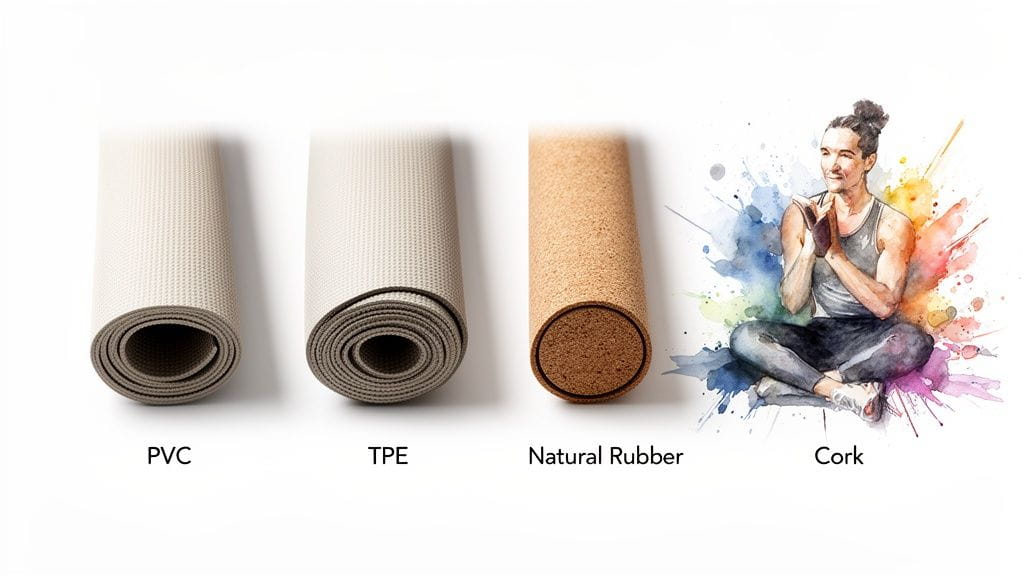
The material of your yoga mat is probably the single most important choice you'll make. It’s what defines its grip, how it feels under your hands and feet, and how long it will last. Think of it like choosing the right tyres for a car; the material dictates how your mat will perform on the "road" of your practice.
Let's break down the most common options to help you find your perfect match.
The Classic: Pvc (Polyvinyl Chloride)
First up is PVC, the classic "sticky mat" material that has been a studio staple for decades. If you’ve ever borrowed a mat at a gym or studio, chances are you’ve used one.
PVC is known for its impressive durability and reliable grip on dry surfaces, which makes it a fantastic, no-fuss option for beginners. It’s affordable and built to last. The main drawback? Its production process isn't the kindest to the planet, and it isn't biodegradable. For a general Hatha or slow-flow class, it’s a dependable workhorse.
Modern And Eco-Conscious Alternatives
A more modern and popular choice is TPE (Thermoplastic Elastomer). This human-made blend of plastic and rubber polymers is a great middle-ground option for the everyday yogi.
TPE mats are typically lightweight, offer a soft and cushioned feel, and are often recyclable, making them a step up in sustainability from PVC. They provide good grip and are a great all-rounder for Vinyasa, Hatha, or home-based practices. While not quite as indestructible as high-end rubber, they offer a brilliant balance of performance and eco-consciousness.
The Performance Powerhouse: Natural Rubber
For yogis who put performance above all else, natural rubber is often the holy grail. Sourced directly from rubber trees, this material offers an elite, almost magnetic grip that keeps you locked in place, even during a vigorous, sweaty practice.
Natural rubber mats are biodegradable, making them a fantastic choice for the environmentally aware practitioner. Their superior traction makes them ideal for dynamic styles like Ashtanga and Power Yoga, where stability is absolutely paramount.
The Sustainable Standout: Cork
Finally, there’s cork, a truly unique and sustainable option. Harvested from the bark of cork oak trees (without harming the tree), it's a renewable resource with some incredible natural qualities.
Cork is inherently antimicrobial, which helps keep your mat feeling fresh and clean. Its most amazing feature, though, is that its grip actually improves with moisture. This makes it the perfect companion for hot yoga or for anyone who tends to sweat a lot. It’s also durable and provides a firm, grounded feel. If you're looking for a non-toxic foundation for meditation, a cork mat offers a pure, earthy connection.
Want a deeper dive? You might be interested in our article comparing cork yoga mat versus traditional options.
To make it even simpler, here’s a quick comparison of these popular materials.
Yoga Mat Material Comparison
| Material | Grip | Durability | Eco-Friendliness | Best For |
|---|---|---|---|---|
| PVC | Good (when dry) | Very High | Low | Hatha, Beginners |
| TPE | Good | Medium | Medium | Vinyasa, Home Practice |
| Natural Rubber | Excellent | High | High | Ashtanga, Power Yoga |
| Cork | Excellent (improves with sweat) | High | Very High | Hot Yoga, Sweaty Practices |
Ultimately, the best material for you will align with your practice style, your budget, and your personal values on sustainability.
Finding Your Sweet Spot For Thickness And Density
When you’re looking at a new yoga mat, thickness and density are two of the most important things to get right. They have a huge impact on your comfort and stability during practice. Think of mat thickness like the suspension on a bike—too little, and you’ll feel every single bump in the road; too much, and you lose that crucial connection to the ground beneath you.
The trick is to find that perfect balance that cushions your joints without making you feel like you're balancing on a sponge.
For most people, a standard mat around 4-5mm thick is the versatile sweet spot. It offers just enough padding for your knees and wrists in poses like Cat-Cow or a long-held Plank, but it’s still firm enough to give you a stable base for standing poses. It’s the perfect all-rounder for a varied practice.
Tailoring Thickness To Your Practice
If you’re a yogi who’s always on the go, or if you really want to nail your balance, a thinner mat (1-3mm) could be your best friend. These are fantastic for travel because they’re lightweight and give you a much stronger connection to the floor. That direct feedback is brilliant for mastering Tree Pose or Warrior III, but be warned—they offer very little cushioning, so they might not be the best choice if you have sensitive joints.
On the flip side, you have the plush, thicker mats (6mm or more). These are a dream for restorative yoga, Yin, or even Pilates, where you spend a lot of time holding poses on the floor. While they feel incredibly comfortable, their sponginess can sometimes turn balancing poses into a wobbly challenge. If this sounds like what you need, check out our guide on how to choose a thick yoga mat for more detailed advice.
Why Density Is The Secret Ingredient
Beyond just how thick it is, the density of a mat is the real unsung hero. A dense mat, no matter its thickness, will always give you better support and last longer. It’s what stops your knees, elbows, or ankles from sinking straight through to the hard floor underneath. A squishy, low-density mat just can’t compete with that solid foundation.
It’s interesting to see how our priorities are shifting. In Australia, the residential sector is set to take a massive 60.4% market share for yoga mats in 2024, which really shows how much home wellness has become a part of our daily lives. This is a huge consideration when picking a mat for a home studio, where you might be mixing yoga with other workouts. You can read more about these global yoga mat market trends and see how they reflect our focus on at-home wellness.
For a truly well-rounded routine, it's worth thinking about how other tools can support your practice. For example, adding post-session recovery with a portable ice bath can do wonders for soothing tired muscles, perfectly complementing the support your new mat gives you during your flow.
Matching Your Mat to Your Yoga Practice
Just as you wouldn't wear hiking boots to a ballet class, different yoga styles call for different types of mats. Think of choosing a mat as finding the right partner for your practice—it's one of the best ways to get more out of every session.
Your mat should be a silent supporter, helping you move with confidence without ever becoming a distraction. Let's dive into how you can pair the perfect mat with your favourite style of yoga.
For Dynamic and Flowing Practices
If you're drawn to Vinyasa, Power Yoga, or Ashtanga, you know these practices are all about fluid, continuous movement. Grip is everything here. There's nothing more frustrating than feeling your hands start to slip in Downward Dog or your feet lose their grounding in Warrior II.
For these energetic styles, a mat with exceptional grip is non-negotiable. It gives you the stability and confidence to flow without hesitation. Natural rubber and high-quality TPE mats are top contenders, offering the reliable traction you need to hold poses securely.
For Heated and Sweaty Sessions
Love the intensity of Hot Yoga or Bikram? Or maybe you just naturally sweat a lot during practice. In these conditions, the wrong mat can become dangerously slick. This is where cork mats really shine.
Cork has a fascinating quality: its cellular structure actually increases its grip when wet, making it the ideal surface for sweaty flows. Another fantastic solution is a high-quality yoga towel placed over your mat. It soaks up moisture while adding an extra layer of traction.
For Restorative and Gentle Yoga
In slower-paced practices like Restorative, Yin, or gentle Hatha, the focus shifts from intense grip to deep comfort. You'll be holding poses for longer stretches, often while seated or lying down on the floor.
A thicker, more cushioned mat—think 6mm or more—is perfect for these styles. It provides plenty of soft padding to protect your joints from the hard floor, allowing your body to fully relax and release into each posture.
For Meditation and Mindfulness
While any comfortable spot can work for meditation, creating a dedicated, peaceful space can truly deepen your practice. Pairing your favourite yoga mat with a zabuton meditation cushion creates a supportive and almost sacred foundation for finding stillness.
Don’t forget your gear, either. Comfortable, flexible women's yoga activewear ensures you can sit or move without restriction, helping you stay present in the moment.
It’s clear that high-performance mats are in demand across Australia, particularly in commercial spaces. Yoga and fitness clubs are the biggest buyers, making up 40% of the market share in 2024, as they need durable, hygienic mats for their members. You can discover more about Australia's yoga mat market dynamics and the trends influencing what studios choose.
Essential Yoga Accessories to Elevate Your Practice
Once you've found your mat, a few thoughtfully chosen accessories can completely change your practice. These props aren't just fancy extras; they're tools that help you find better alignment, unlock deeper stretches, and bring your mind into a more focused state. By adding them to your routine, you start to build a true wellness ritual.
For many people, elevating their practice starts with supporting the body in new ways. Yoga blocks, for instance, are incredibly versatile. Think of them as extensions of your own limbs. They can bring the floor closer in standing poses, offer steady support in restorative postures like a supported bridge, or even add a new challenge to your core work. They simply make difficult poses feel more approachable.
Building A Complete Wellness Toolkit
Likewise, a simple yoga strap or carry bag can be a total game-changer for your flexibility. It lets you gently work into those deeper stretches without forcing anything or risking an injury, which is key for making steady, safe progress. Using a strap in a seated forward fold, for example, helps you keep a straight spine while encouraging your hamstrings to release gradually.
To really transform your space into a sanctuary of calm, think about adding an essential oil diffuser to your setup. The simple act of diffusing calming scents like lavender or frankincense can signal to your brain that it’s time to unwind. It’s a small addition that creates a multi-sensory environment, helping you shift from a busy day to a mindful practice.
This simple flowchart can help guide your mat selection based on your main yoga style.
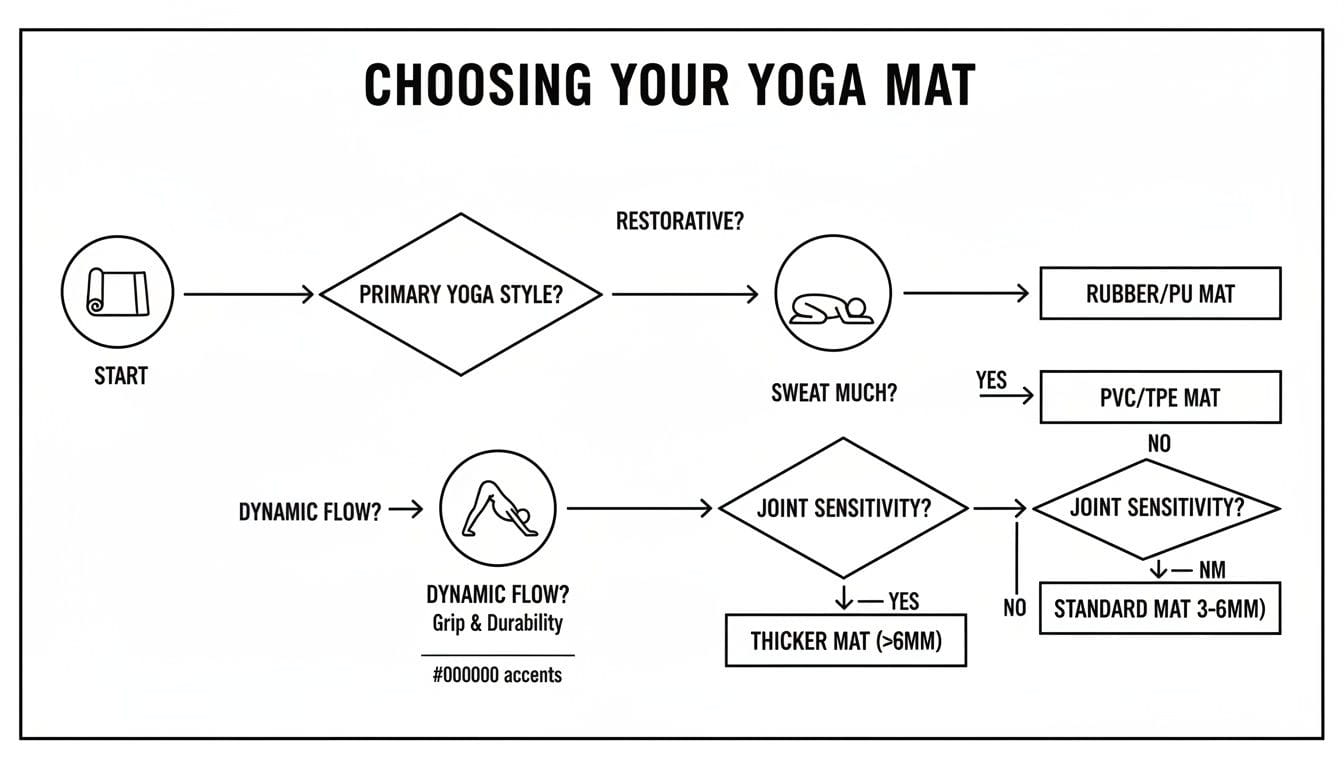
As you can see, dynamic practices demand great grip, while restorative styles prioritise cushion. This helps you find the best foundation for your movement. If you find yourself sweating a lot during practice, you might also want to read up on the benefits of using a yoga mat towel.
Your wellness journey doesn't end when you roll up your mat. True wellbeing is about nurturing your body from the inside out, creating a cycle of nourishment and recovery that supports your efforts on the mat.
Finally, complete your ritual by focusing on what’s happening on the inside. After your practice, replenish your system with powerful Teelixir superfoods blended into a smoothie, or settle down with a calming cup of Blue Lotus tea. All these elements work together, creating a complete routine that nurtures your entire being—both on and off the mat.
Caring For Your Yoga Mat And Your Wellbeing
Think of your yoga mat as more than just a piece of equipment; it's the foundation for your practice. Keeping it clean doesn't just help it last longer—it ensures your sacred space is hygienic and inviting every time you unroll it. A clean mat means you can breathe deeply into your poses without worrying about dust or bacteria.
A little care goes a long way. For most mats, all you need is a simple mix of water and a few drops of a gentle, non-abrasive soap. It’s a great habit to give your mat a quick wipe-down after every session, especially after a sweaty flow. Just make sure to let it air dry completely before rolling it up, as storing it damp can lead to funky smells and break down the material over time.
Whatever you do, steer clear of harsh chemical cleaners or abrasive sponges. These can strip the surface of your mat, ruining its grip and causing the material to degrade much faster. You'll be cutting the life of your investment short.
Integrating Wellbeing Beyond The Mat
Your commitment to wellness doesn't stop when you step off the mat. True wellbeing is about how you care for your body and mind throughout the day. The way you nourish and recover is just as important as the practice itself.
Hydration is key. Staying properly hydrated is non-negotiable for muscle function and overall health. Using high-quality water filters is a simple way to ensure the water you’re drinking is pure and free from any unwanted extras.
Post-practice recovery is where the real magic happens, helping your muscles repair and your energy stores replenish. A smoothie boosted with a scoop of nourishing vegan protein powder is a fantastic way to support your body after a challenging flow.
Or, perhaps you prefer to wind down and transition from your active practice to a state of restful awareness. A relaxing cup of matcha green tea can be the perfect ritual to calm your mind.
This holistic approach creates a powerful, self-sustaining cycle of wellbeing. By taking care of your equipment, like the products in our collection of high-quality mats, and taking care of yourself, you support your wellness journey from every angle.
Common Questions About Yoga Mats
Even after you've weighed up all the options, a few last-minute questions can pop up. Let's run through some of the most common queries I hear from students about choosing, using, and looking after their mat. This should help you feel completely confident in your final choice.
How Often Should I Replace My Yoga Mat?
The lifespan of a mat really comes down to its material, how well it was made, and how often you get on it. A top-quality mat can easily last for several years if you look after it, but you need to keep an eye out for the tell-tale signs of wear.
You’ll start to see obvious things like flaking, cracking, or patches that have worn thin where your hands and feet usually land. A more subtle sign is losing grip—if you find yourself slipping in poses you used to hold with ease, your mat's surface is probably past its prime. Another giveaway is a funky smell that just won't wash out.
As a general guide, someone practicing daily might need a new mat every 1-2 years, while those who practice less frequently can get much more time out of theirs.
What Is The Best Yoga Mat For Sweaty Hands?
If you get sweaty hands and feet, grip is everything. There’s nothing more distracting or unsafe than sliding around when you’re trying to hold a pose. For this, cork and natural rubber mats are absolute game-changers.
- Cork: This material has a really clever trick up its sleeve—it actually gets grippier the wetter it gets. This makes it a fantastic choice for hot yoga or for anyone who tends to sweat a lot during their practice.
- Natural Rubber: Famous for its incredible, almost magnetic non-slip feel, natural rubber offers a superior dry grip that also holds up beautifully against moisture.
Another great strategy is to use a yoga towel. These are specifically designed to soak up sweat and add an extra layer of traction, which can turn almost any mat into a reliable non-slip surface.
Can I Use My Yoga Mat For Other Exercises?
Yes, you absolutely can, but you’ll want to be a bit selective. A standard yoga mat is perfect for low-impact floor-based workouts like Pilates, stretching, and most bodyweight exercises. It gives you a comfortable, clean space for these kinds of movements.
However, I’d avoid using your yoga mat for high-impact interval training (HIIT) or any workout where you’re wearing shoes. The constant pounding and the abrasion from your trainers can shred a yoga mat in no time, especially softer ones like TPE. For those more intense sessions, a thicker, more durable fitness mat is a much better investment—it’ll protect both your joints and your yoga mat.
Ready to find the perfect foundation for your practice? Explore the curated selection of high-performance, eco-friendly mats at Wellness Apothecary and find your next high-quality mat here.


