


If you've ever found yourself slipping in Downward Dog or wishing for a bit more cushioning under your knees, you know that not all yoga mats are created equal. A natural rubber yoga mat is a world away from those flimsy, synthetic options. It's a premium practice surface crafted from the sustainably tapped sap of rubber trees.
Unlike its plastic counterparts (like PVC), a natural rubber mat delivers unbeatable grip, dense cushioning that your joints will thank you for, and it's fully biodegradable. It's the go-to choice for yogis who refuse to compromise on performance, safety, or their eco-conscious values.
What Makes Natural Rubber an Ideal Yoga Mat Material
When you step onto your mat, you’re looking for a foundation of stability, comfort, and a clean space to support your practice. A natural rubber yoga mat ticks all these boxes, standing in stark contrast to the petroleum-based plastics that make up most conventional mats.
The story of a natural rubber mat starts with the Hevea brasiliensis, the rubber tree. The milky white sap is tapped in a careful process that doesn't harm the tree, making it a genuinely renewable resource. This natural origin is the secret behind its incredible performance.
Key Benefits for Your Practice
- Exceptional Grip: The open-cell structure of natural rubber creates a grippy, non-slip surface that gives you unshakeable confidence in every pose, from a sweaty vinyasa flow to a challenging Warrior III. The best part? The grip often gets even better with a bit of moisture.
- Optimal Cushioning: It provides a dense, firm kind of support that’s fantastic for protecting your knees, wrists, and spine. Unlike thin PVC mats, it gives you a solid, grounded feeling without ever sacrificing comfort.
- Health-Conscious Choice: Natural rubber is inherently non-toxic. This means you can breathe deeply knowing you’re avoiding direct contact with nasty chemicals like phthalates, heavy metals, and BPA that are often lurking in cheaper plastic mats.
This commitment to a healthier practice and a healthier planet is exactly why so many yogis are making the switch. By choosing a mat made from sustainable materials, you’re aligning your physical practice with the mindful principles of yoga itself.
This single choice often ripples out into a wider wellness-focused lifestyle. It might lead to using meditation cushions for deeper relaxation or adding vegan protein powder for post-practice recovery.
For a deeper look into this, check out our guide on the best non toxic yoga mats in Australia. It’s all about creating a holistic routine that nurtures you from the inside out, starting with the very foundation you practise on.
The Unbeatable Grip and Performance
The real test of any yoga mat isn't how it looks, but how it holds up when your practice gets tough. This is exactly where a natural rubber yoga mat shines. Its secret is a unique, open-cell structure that works a bit like thousands of tiny suction cups gripping your hands and feet. This creates an almost magnetic hold that keeps you locked in place.
What does this mean for your practice? It means you can hold those demanding poses—like Downward Dog or Warrior II—with complete confidence. Instead of your mind drifting to "am I going to slip?", you can focus on deepening your posture, correcting your alignment, and just being in the moment. Even when things get sweaty in a heated class, that incredible grip stays with you.

More Than Just Grip
While the traction is what gets all the attention, there’s more to the story. A good natural rubber yoga mat also provides dense, supportive cushioning that’s a lifesaver for your joints, but without that squishy, unstable feeling. We've all been on those flimsy PVC mats that leave your knees and wrists screaming. Rubber is different; it offers a firm yet forgiving surface that keeps you grounded and connected to the floor, which is vital for balance.
This powerful combination of steadfast grip and responsive support is why our premium eco yoga mats are a game-changer for a safe and effective practice. For anyone looking to nail down their form, pairing a solid mat with essential yoga blocks and bricks can give you that extra stability to master new poses.
Natural rubber yoga mats have become the go-to for health-conscious yogis, and it’s not just hype. They’re chosen specifically for their standout grip, cushioning, and durability—the holy trinity of mat performance.
The numbers back this up. The natural rubber segment is on track to have the fastest compound annual growth rate at 4.8% in the coming years, leaving other materials in the dust. This shift towards high-performance, natural materials isn't just a trend; it shows a real desire for quality and sustainability in the wellness space.
Ultimately, this level of performance gives you peace of mind. It allows you to move freely and explore what your body is capable of. To see how these features stack up in a specific model, you might want to check out our deep dive on the Jade Harmony Yoga Mat. When you can trust your gear, your focus stays right where it belongs: on your breath and your movement.
A Conscious Choice for Your Health and the Planet
Choosing a natural rubber yoga mat is more than just buying a piece of equipment; it's a decision that echoes the very principles of yoga. It's about creating alignment between your practice, your health, and your impact on the world. This story doesn't start in a factory but in a forest, with the incredible Hevea brasiliensis tree.
This amazing material is harvested sustainably. The tree's bark is gently tapped, allowing its milky sap to be collected without harming the tree itself. This method supports healthy, thriving forests and is a world away from how synthetic mats are made.
The Problem with PVC
Most yoga mats you see in big-box stores are made from Polyvinyl Chloride, or PVC. It’s a type of plastic with a pretty heavy environmental and health footprint. Its creation involves a cocktail of toxic chemicals, and once it's made, it's basically here forever, clogging up landfills for centuries because it simply doesn't biodegrade.
By choosing a non-toxic yoga mat made from natural rubber, you avoid direct skin contact with some questionable additives often found in PVC, like phthalates and heavy metals. It's a deliberate choice for your health, much like seeking out non-toxic alternatives for other products in your home.
This kind of mindful choice fits perfectly into a holistic wellness routine. It’s a decision that sits alongside other healthy habits, like staying hydrated with pure, chemical free water filters or nourishing your body with organic matcha green tea powder before you roll out your mat.
This shift towards sustainability is reshaping the entire yoga industry. Eco-friendly materials like natural rubber and cork are now taking centre stage, as people increasingly want products that reflect a broader cultural move toward environmental responsibility.
In fact, the demand for sustainability has created a clear divide in the market. Eco-friendly mats made from biodegradable materials are now earning greater customer loyalty. Companies have responded by introducing PVC-free mats, eliminating harmful chemicals and adopting sustainable manufacturing.
Ultimately, opting for a natural rubber mat is an empowered choice. You’re not just investing in a superior product that enhances your practice; you're actively looking after your own wellbeing and the health of our planet. This single decision transforms your mat from a simple accessory into a symbol of your commitment to a more conscious, balanced life, aligning perfectly with our full range of sustainable yoga mats.
How to Find Your Perfect Natural Rubber Mat
With so many fantastic options out there, picking the right natural rubber yoga mat can feel like a big decision. But the good news is, it's not that complicated. Finding your perfect match is really just about lining up the mat's features with your personal practice style and priorities.
Let's break down the key things to look at: thickness, density, and texture. These three elements work together to define how the mat feels under your hands and feet, which affects everything from your stability in standing poses to your comfort during floor work.
When you're putting together a personal workout space, a natural rubber yoga mat is a cornerstone piece, right up there with other essential home gym equipment.
This little decision tree can help you get clear on what matters most to you—joint support or planet-friendliness—and point you in the right direction.
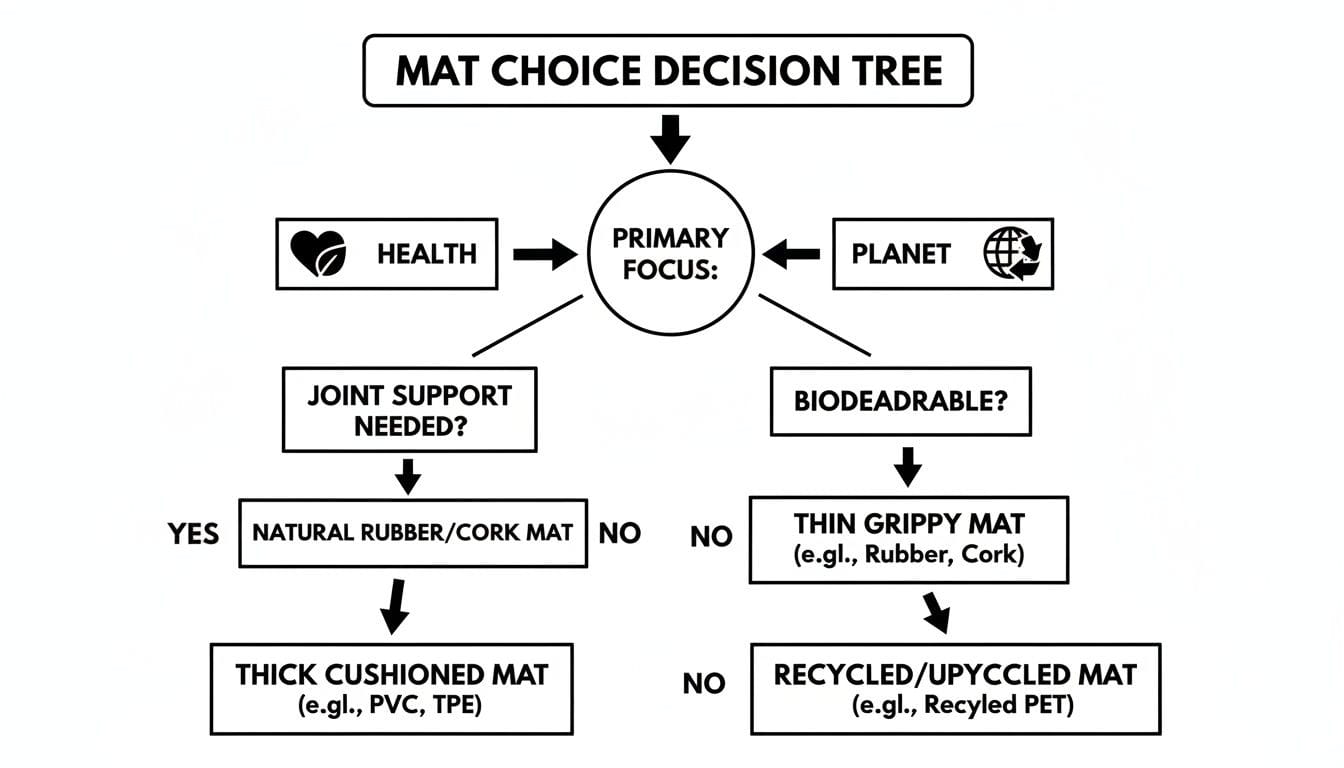
As you can see, both paths lead to a high-quality natural rubber mat, so you can feel good knowing you don’t have to compromise.
Choosing the Right Thickness
Thickness is all about striking a balance between cushioning and stability. While a beefier mat gives you more padding for sensitive joints, a thinner one offers a more direct, grounded connection to the floor.
- 3mm-4mm: This is a versatile sweet spot for most people. It offers enough cushioning for a comfortable practice while keeping you stable in balance poses. It’s a great all-rounder.
- 5mm+: If you love restorative, yin, or gentle yoga where you spend a lot of time on the floor, this is for you. The extra padding is a real blessing for knees, hips, and the spine. For the ultimate comfortable setup during seated meditation, pairing a thicker mat with our zabuton meditation cushions creates an incredibly supportive sanctuary.
Think of it like choosing running shoes. A trail runner needs thick, protective soles for rugged terrain, while a track sprinter wants light, minimalist shoes to really feel the ground. Your yoga practice has similar needs.
Texture and Surface Finish
The surface of a natural rubber mat also plays a huge part in your experience. Some mats have a smoother, almost velvety finish, while others have a more pronounced texture for extra grip. Neither is better than the other; it just comes down to personal preference and how much traction you need.
Your mat is the foundation of your practice. Its texture should feel supportive, not distracting, allowing you to focus on your breath and alignment without a second thought.
Consider the style of yoga you do most often. For dynamic, sweaty flows, a grippier texture is a game-changer. For slower practices, you might find a smoother surface more pleasant. Explore our collection of high-performance yoga mats to find the feel that’s just right for you.
And to complete your setup, our stylish and functional women's yoga activewear is designed to move with you through every pose, ensuring you feel comfortable and confident from start to finish.
How to Clean and Care for Your Mat
A high-quality natural rubber yoga mat is a real investment in your practice. When you get it right, it becomes a trusted partner that offers incredible grip and support for years to come. But just like any good relationship, it needs a bit of care to keep it at its best. Looking after your mat properly not only keeps it hygienic but also preserves the integrity of the natural rubber, ensuring it stays grippy and supportive through every downward dog and warrior pose.
The golden rule here is to be gentle. Natural rubber is a fantastic material, but it's also porous and can be a bit sensitive. It really doesn't like harsh chemicals or too much sun. Think of it like your skin – direct sunlight will cause it to dry out, become brittle, and lose that signature grip you love. Always let your mat air dry in a shady, well-ventilated spot.
Simple Cleaning Steps
For a quick clean-up after your session, a simple homemade spray is all you need. This is a much better approach than using store-bought cleaners, which often contain oils or other chemicals that can break down the rubber over time.
- Create Your Solution: Grab a spray bottle and fill it mostly with water. Then, add just a few drops of a gentle, non-acidic soap. A little touch of a mild essential oil like lavender or tea tree works beautifully too, adding a calming scent to your next practice.
- Lightly Spray: Give the surface of your mat a light misting. You don't want to soak it—too much water can get trapped in the open-cell structure and be tough to dry out.
- Wipe Down: Take a soft, damp microfibre cloth and gently wipe down the entire surface. This is perfect for lifting away any sweat, oils, or dust from your practice.
- Air Dry Completely: Hang your mat over a chair or lay it flat to dry. The most important part is making sure it's 100% dry before you roll it back up.
Taking care of your mat is a mindful practice in itself. By cleaning it gently, you're honouring the natural material and extending its life, making sure it remains a clean and sacred space for every session. For a deeper dive, you can learn more about how to properly clean and maintain your yoga mat in our dedicated guide.
To keep your mat protected while you're on the go, a good carry bag is a game-changer. Storing your mat rolled up inside one of our yoga straps and carry bags prevents it from getting scuffed up and keeps it clean between practices. It's a simple step that really preserves its condition for the long haul.
Yoga is Getting Back to its Roots
It’s no secret that the wellness community is becoming more mindful. We’re seeing a massive shift away from cheap, disposable products toward things that are made to last and kind to the planet. The boom in natural rubber yoga mats is a perfect example of this.
This isn't just about buying a "better" mat; it’s about a deeper connection to the core principles of yoga. Think of Ahimsa, the principle of non-harming. Yogis are now extending this concept beyond how they treat themselves and others, applying it to how they treat the Earth. It's a beautiful evolution, and it’s completely reshaping the yoga industry.
More Than Just a Mat, It's a Statement
Today's yogis want their gear to reflect their values. Choosing an eco-friendly mat turns your daily practice into something more—it’s a conscious act that honours the link between your personal wellbeing and the health of our environment.
This holistic view is at the heart of everything we do. We believe in finding balance, both on and off the mat. It’s about building a lifestyle where every choice feels intentional and harmonious. This could mean adding Teelixir supplements to your morning smoothie for a vitality boost or sinking into a portable ice bath to recover after a tough session.
The global yoga mat market has exploded, and natural rubber is leading the charge as the fastest-growing material. It’s a clear sign that sustainability is no longer an afterthought for consumers—it's a top priority, often even more important than price. You can dive into the numbers in this market analysis on yoga mat trends.
Ultimately, it all comes down to making choices that feel right for you and the world. Whether it’s choosing a mat made from a renewable resource, brewing a cup of calming Blue Lotus tea before meditation, or setting a peaceful mood with essential oil diffusers, each small action adds up. It’s how you build a wellness journey that truly nurtures you from the inside out.
A Few Common Questions
Here are some quick, clear answers to the most common questions people ask about natural rubber yoga mats. Hopefully, they’ll help you decide with a bit more confidence.
Do Natural Rubber Yoga Mats Have A Strong Smell?
Yes, when you first unroll a new natural rubber yoga mat, it often has a distinct, earthy scent. This is totally normal and a non-toxic sign of its natural origins. Think of it less as a chemical smell and more like that "new car" scent, but for an eco-friendly product.
The smell usually fades quite a bit within a few days, or a couple of weeks at most. To help it along, just unroll your mat and let it air out in a well-ventilated spot, but keep it out of direct sunlight. Before you know it, the scent will be gone, and you'll just have a fantastic surface to practice on.
Are These Mats Safe For People With Latex Allergies?
This is a really important one. Because natural rubber comes from the latex sap of the Hevea tree, it does contain latex proteins.
If you have a known latex allergy, you should avoid using a natural rubber yoga mat altogether to prevent a potential allergic reaction. The good news is there are plenty of high-quality, non-toxic alternatives out there made from materials like TPE or cork. Always double-check the product details if you have any sensitivities.
Is A Natural Rubber Mat Good For Hot Yoga?
Absolutely. In fact, you’d be hard-pressed to find a better choice for a hot, sweaty practice. The open-cell structure of the rubber gives it an incredible grip that actually gets even better with a bit of moisture.
While a standard PVC mat can turn into a dangerously slick surface when wet, a natural rubber mat helps you feel stable and secure in your poses, even when the humidity in the studio is cranked up. Just remember to wipe it down and let it air dry completely after each session to keep it in great shape for your next flow.
How Do I Clean My Mat Without Damaging It?
Keeping your mat clean is simple and doesn't call for any harsh chemicals. For a regular clean-up, just mix a solution of mostly water with a few drops of a gentle, non-acidic soap.
Lightly spray the surface and wipe it down with a soft, damp cloth. Try to avoid soaking the mat, using vinegar, or leaving it in direct sunlight, as these can break down the natural material and make it less grippy over time.
For a lovely, soothing aroma, you can even add a single drop of a gentle essential oil—it’s a perfect way to bring the calming vibe from your essential oil diffusers right onto your mat.
Ready to feel the difference a premium, eco-friendly mat can make? At Wellness Apothecary, we offer a curated collection of high-performance yoga mats and accessories designed to support your practice and your values. Explore our range and find the perfect foundation for your wellness journey. https://wellnessapothecary.au


