


If you've ever wobbled through a Triangle Pose or felt your hips crying out in Pigeon, you’ve probably reached for a yoga block. Traditionally, these were simple foam rectangles, but there's a more grounded, sturdy, and sustainable option gaining traction: cork yoga blocks.
So, what exactly are they? Cork yoga blocks are props made from the bark of cork oak trees. They're designed to give you a lift, support your body, deepen stretches, and help you find better alignment in your practice. Their firm texture and eco-friendly origins make them a favourite for yogis who want both performance and principle on their mat.
Why Cork Blocks Are Becoming a Staple in Australian Yoga
Across Australia, our approach to wellness is deepening. Yoga isn't just a workout anymore; it’s a powerful way to connect mind and body. Yogis are looking for tools that truly enrich their practice and support their journey towards greater strength, stability, and mindfulness.
This shift has brought yoga props out of the shadows. Once seen as a bit of a crutch for beginners, props like yoga cork blocks are now celebrated for what they are: essential tools. They’re cleverly designed to help you achieve safer alignment, build foundational strength, and unlock new levels of flexibility you might not have thought possible.
The Mindful Choice for Australian Yogis
The growing love for cork aligns perfectly with the values of the modern, eco-conscious Australian yogi. Cork is a pretty remarkable material—it's sustainable, incredibly sturdy, and has a natural, earthy feel that’s grounding to the touch. Unlike foam or plastic, cork connects your practice to nature in a very real way.
Yoga is a huge part of the wellness fabric here, with nearly 10% of the population—that’s around 2.5 to 3 million of us—rolling out their mats regularly. As this community grows, so does the demand for quality, sustainable gear. The market for yoga accessories is set to expand, and cork’s renewable nature and suitability for our often-humid climates make it a clear winner. You can see just how big the trend is in this Yoga Times infographic.
More Than Just a Prop
Choosing a cork block is a conscious decision. It’s an investment in a tool that won’t bend, slip, or falter when you lean on it. This reliability gives you the confidence to explore poses more deeply, knowing you have solid support right where you need it. A pair of quality blocks, often paired with a comfortable meditation cushion, can transform a simple space into a dedicated sanctuary for practice.
A good pair of cork blocks can help you:
- Bring the floor closer to you: Making tricky poses like Triangle or Half Moon more accessible without messing up your form.
- Build active strength: They provide a firm surface to press against, helping you engage your muscles more effectively.
- Support deep relaxation: Offering stable, unwavering support in restorative poses, allowing your body to fully let go and release tension.
By bringing cork yoga blocks into your routine, you’re not just adding another accessory. You're embracing a smarter, more effective, and mindful approach to your personal wellness. It’s a choice that supports your body, respects the planet, and elevates your practice from the ground up.
Understanding The Benefits Of Cork Yoga Blocks
When you're building your yoga practice, the foundation you use matters. A lot. Trying to deepen a pose on a wobbly, unstable prop is like building a house on sand – your alignment gets shaky, and your confidence can take a hit. This is where yoga cork blocks really shine, offering a foundation that feels as solid and dependable as the earth itself.
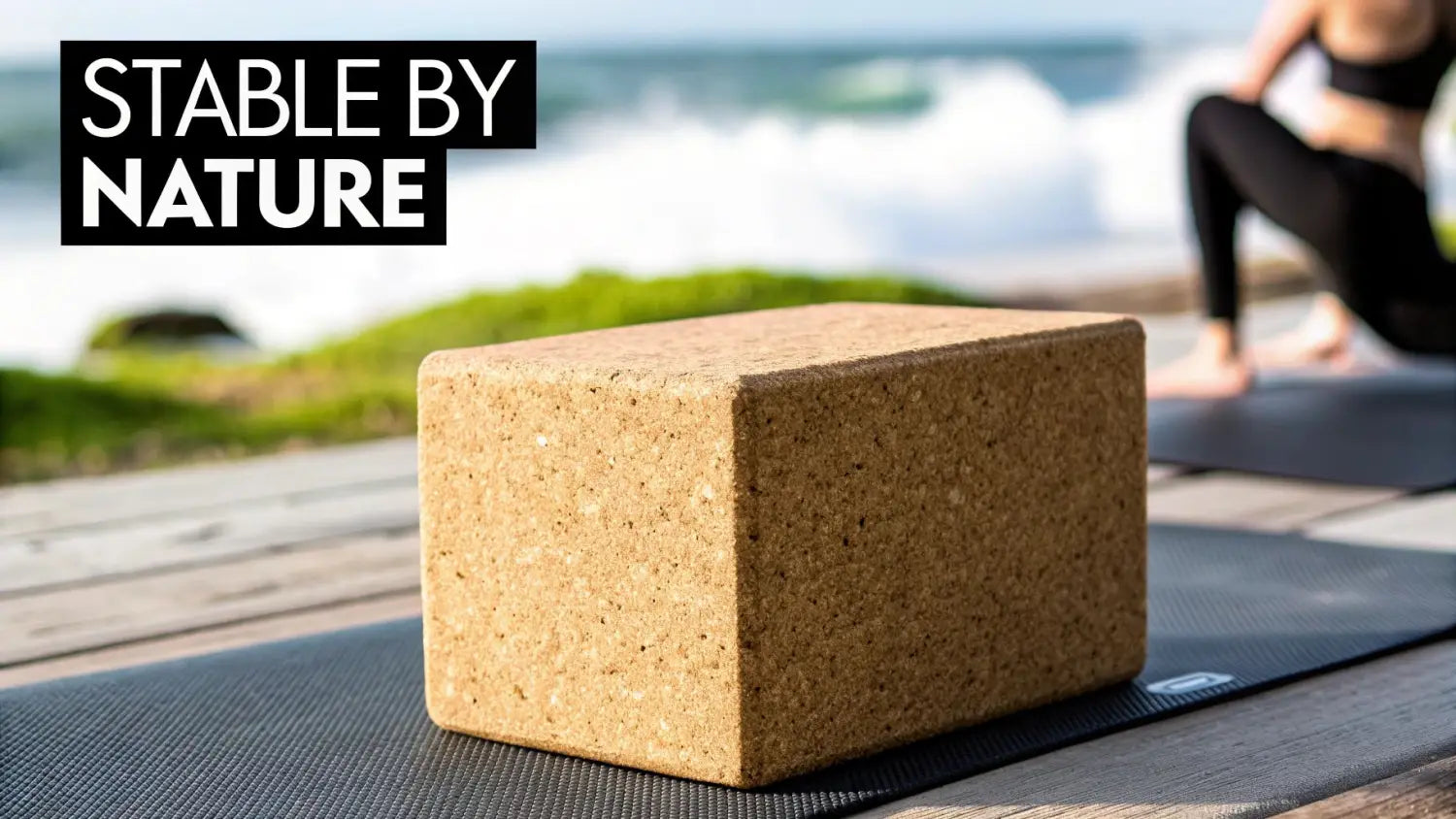
Unlike their squishy foam counterparts, cork blocks just don't compress under pressure. They give you a dense, reliable surface that will completely support you, whether you're pressing your hand into it in Triangle Pose or resting your hips on it for a supported bridge. This steadfast support is what allows you to move deeper into poses safely and with total trust in your props.
Unshakeable Stability and Support
The biggest win for cork is its incredible density. In your practice, this translates to unparalleled stability, giving you the confidence to explore challenging balancing poses like Half Moon (Ardha Chandrasana) without worrying about your block tipping over or squishing beneath you.
But this firmness isn't just about balance; it's about activating your muscles correctly. When you press into a cork block, it gives you feedback—it pushes back. This gentle resistance helps you engage the right muscles, building functional strength and reinforcing proper alignment from the ground up. The result? A practice that feels more active, intentional, and transformative.
A Grip That Holds True
One of the most common frustrations with yoga props is that slippery feeling you get during a sweaty session. Cork has a brilliant, natural solution for this. Its porous texture creates a secure, non-slip surface that actually gets grippier with a bit of moisture.
This means you can keep your focus where it belongs: on your breath and alignment, not on a slipping hand. This reliable grip is a game-changer in dynamic flows or hot yoga classes, where stability is absolutely key to preventing injury and staying in the moment. When you pair a cork block with one of our high-grip yoga mats, you're creating the ultimate foundation for a secure and confident practice.
Naturally Clean and Eco-Conscious
Beyond its performance on the mat, cork is a true champion of sustainability. It’s harvested from the bark of the Cork Oak tree, a process that doesn't harm the tree at all. The bark simply regenerates, making cork a completely renewable resource that fits perfectly with a mindful, eco-aware lifestyle.
Cork also has natural antimicrobial properties. This means it inherently resists the growth of bacteria, mould, and odours, helping your props stay fresher for longer. A simple wipe-down is usually all it takes to keep them clean, making them a wonderfully low-maintenance and hygienic choice for your wellness toolkit.
The use of props was famously popularised by B.K.S. Iyengar to make yoga more accessible and improve alignment for every body type. This innovation helped democratise the practice, and the modern preference for firm, non-slip cork blocks continues this legacy by enhancing safety and support for all practitioners. You can read more about the history of yoga props here.
Comparing Your Options
To truly get why cork is so special, it helps to see how it stacks up against the other common materials. Each type of block has its place, but for us, cork strikes the perfect balance of performance, feel, and sustainability.
Here’s a quick comparison of the key features of cork, foam, and wood yoga blocks to help you choose the best fit for your practice.
Yoga Block Material Comparison
| Feature | Cork Blocks | Foam Blocks | Wood Blocks |
|---|---|---|---|
| Stability | Excellent; dense and firm with no compression. | Fair; lightweight and can compress under weight. | Excellent; very dense and completely rigid. |
| Grip | Excellent; natural texture provides a non-slip surface. | Good; can become slippery when wet. | Poor; smooth surface can be very slippery. |
| Weight | Medium; substantial enough to be stable but portable. | Very Light; extremely easy to transport. | Heavy; provides maximum stability but is less portable. |
| Sustainability | High; made from a renewable, biodegradable resource. | Low; petroleum-based and not biodegradable. | Medium; depends heavily on sourcing and forestry practices. |
| Feel & Comfort | Grounding and natural, with slightly rounded edges. | Soft and forgiving, ideal for restorative poses. | Very hard and unforgiving; can be harsh on joints. |
Ultimately, choosing yoga cork blocks is about more than just selecting a prop. It's about investing in stability for your body, confidence for your mind, and a sustainable choice for the planet.
How To Choose Your Perfect Yoga Cork Blocks
Picking the right yoga cork blocks might seem a bit technical at first, but it’s actually pretty simple once you know what to look for. Think of it like finding the perfect womens yoga activewear—the best ones are those that fit your unique body and support your goals. When you choose with confidence, you build your practice on a foundation of stability and trust.
Let's break down the key things to consider: size, density, and weight. Each of these plays a big part in how the block supports you, whether you’re reaching for the floor in Triangle Pose or melting into a restorative stretch.
Decoding Size and Dimensions
Most cork yoga blocks come in a standard size, which is around 9 x 6 x 4 inches (or about 23 x 15 x 10 cm). This isn't a random set of numbers; it's a clever design that gives you three different height options to work with.
- Low Height (4 inches): This is perfect for tucking under your hips in seated poses. It helps tilt your pelvis forward, making it much easier to sit up straight and tall.
- Medium Height (6 inches): A fantastic all-rounder. Use this height to bring the floor a little closer in standing forward folds or to support your knees.
- High Height (9 inches): When you need the most support, this is your go-to. It's ideal for placing under your hand in Triangle Pose (Trikonasana) or Half Moon Pose (Ardha Chandrasana).
While this standard size works brilliantly for most people, think about your own body. If you're a bit taller or have tighter hamstrings, a standard block on its highest setting will give you the lift you need to practice safely without overstretching or compromising your alignment.
Understanding Density and Weight
This is where cork blocks really shine. Unlike their super-light foam counterparts, cork blocks have a satisfying heft to them. This weight isn't a downside; it’s a feature that makes them incredibly stable. A denser, heavier block is far less likely to wobble or tip over when you lean on it.
Imagine trying to balance on a hollow plastic box versus a solid piece of wood. The solid block offers unwavering support. That's exactly the feeling a dense cork block gives you, building the confidence to fully commit to a pose without worrying about your foundation.
This density also means cork won’t compress under your weight. It provides firm, reliable feedback that helps you engage your muscles and fine-tune your alignment. That slight weightiness, usually around one kilogram per block, is what makes them feel so grounded and secure under your hands or hips.
Why You Should Always Buy a Pair
One block is useful, but two are a game-changer. Yoga is so much about symmetry and balance, and using just a single block can sometimes throw that off. Buying blocks in a pair ensures you can support your body evenly on both sides.
Think about these common scenarios where two blocks are essential:
- Supporting both hands in a wide-legged forward fold (Prasarita Padottanasana).
- Placing one under each knee for gentle support in Reclining Bound Angle Pose (Supta Baddha Konasana).
- Creating a stable, even base for your shoulders in a supported backbend like Fish Pose (Matsyasana).
Investing in a set of two organic cork yoga blocks is one of the smartest things you can do for your practice. It just opens up so many more possibilities for symmetrical alignment, deeper release, and balanced support.
Putting Your Cork Blocks Into Practice
Alright, you've picked out the perfect pair of yoga cork blocks. Now for the fun part: getting them on the mat. These solid, earthy props are so much more than just chunks of cork; think of them as trusted partners in your practice. They’re here to support you, challenge you, and help you find new space in poses you thought you knew inside and out.
The real beauty of a block is how it meets you exactly where you are on any given day. Feeling a bit tight and creaky? Your blocks can offer a lift. Feeling strong and ready to go deeper? They can help with that, too. This versatility makes them one of the most essential tools you can own.
For Beginners: Bringing the Floor a Little Closer
When you're just starting out, it can sometimes feel like your arms are too short or the floor is just too far away. This is where a cork block becomes your best friend. It literally brings the floor up to meet you, so you can hold poses with good alignment while your body gently opens up.
Take Triangle Pose (Trikonasana), for instance. Instead of collapsing your chest and rounding your spine just to touch the floor, place a block on its highest setting just outside your front foot. Resting your hand there gives you a stable base, allowing you to keep your spine long and your heart open. You get all the benefits of the pose without compromising your form.
For Intermediate Yogis: Going Deeper and Holding Stronger
Once you've got the basics down, yoga cork blocks become tools for deepening your practice. They offer the stability you need to hold poses a little longer, giving your muscles time to release and your flexibility a chance to improve.
Pigeon Pose (Eka Pada Rajakapotasana) is a classic example. It’s a powerful hip opener, but if your front hip is hovering in the air, you might be tempted to twist your body to compensate, which can put a strain on your lower back. By sliding a block under that hip, you create a solid foundation. This lets you square your hips towards the front of the mat and sink into a safer, much more effective stretch.
In a similar way, popping a block under your sitting bones in a seated forward fold can help tilt your pelvis forward. This simple trick creates more room for your hamstrings to lengthen, helping you to fold deeper with a nice, straight spine.
A yoga block isn’t a crutch; it’s a tool for intelligent practice. It provides the feedback your body needs to engage the right muscles, maintain integrity in a pose, and progress with awareness and safety.
For Advanced Practitioners: Finding Your Flight
For the more seasoned yogis, cork blocks are fantastic for building the strength and stability needed for arm balances and inversions. Their solid, unwavering nature provides a trustworthy platform to press into, helping you fire up your core and build the confidence to lift off.
Working on Crow Pose (Bakasana)? Try placing your feet on blocks. That little bit of extra height can make it so much easier to stack your knees securely onto your upper arms. It might be the tiny adjustment you need to find your tipping point and get that first feeling of flight. You can also use them under your hands to build strength in your wrists and shoulders.
This infographic breaks down what to look for when choosing the right blocks for your practice.
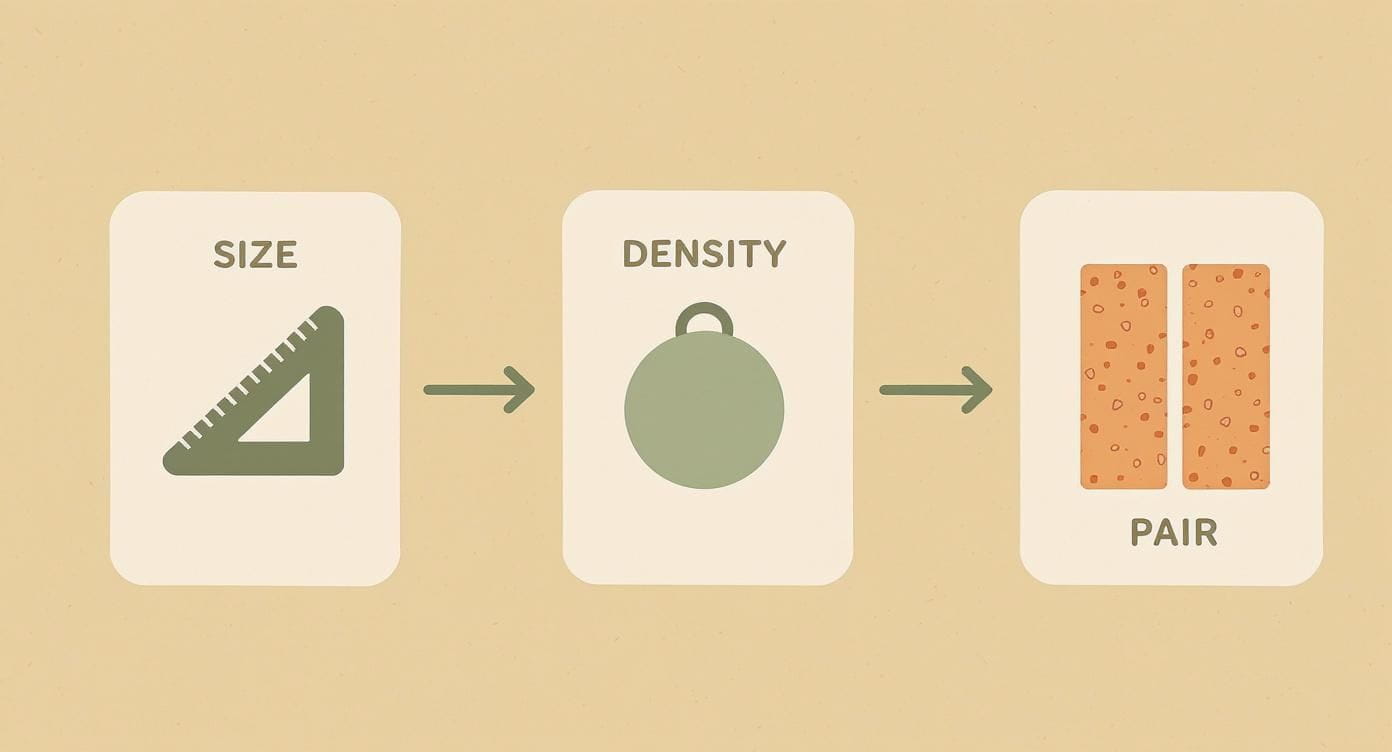
As the visual guide shows, it really comes down to three things: getting the right size for your body, ensuring they have enough density for stability, and always working with a pair.
For Everyone: Unwinding With Restorative Yoga
Perhaps one of the most rewarding ways to use cork blocks is in restorative yoga, where the aim is total relaxation. Here, the blocks are used to completely support the body, allowing your nervous system to calm right down and your muscles to release deeply held tension.
In a Supported Fish Pose (Matsyasana), you can place one block lengthwise under your spine and a second one under your head. This setup creates a gentle, supported backbend that opens up the chest and heart—the perfect antidote to a day spent slouching over a keyboard or phone. The solid feel of the cork makes you feel completely held, so you can truly let go. For an even deeper release through the back and hips, you might also like exploring a yoga and Pilates wheel, which offers a similar, yet more dynamic, kind of support.
Caring For Your Cork Yoga Blocks
Your yoga cork blocks are an investment in your practice, and the good news is, they're incredibly low-maintenance. With just a little care, they'll be a beautiful, supportive part of your routine for years to come. One of the best things about cork is its natural resilience; it practically takes care of itself.
Unlike porous foam blocks that can trap sweat and smells, cork is naturally antimicrobial and water-resistant. This means it actively fights off bacteria, mould, and mildew, keeping your blocks feeling and smelling fresh, even after a tough hot yoga session.
A Simple Cleaning Routine
Keeping your cork blocks in top shape is wonderfully easy and doesn't require any harsh chemicals. A gentle, natural approach is all you need to maintain the material's integrity.
For a quick refresh after your practice, simply wiping the blocks down with a damp cloth is usually enough to handle any surface sweat or dirt.
If your blocks need a bit more love after a while, just follow these simple steps:
- Create a gentle solution: Mix some warm water with a few drops of a mild, eco-friendly soap. A little splash of white vinegar works well too.
- Wipe them down: Dip a soft cloth into the solution, wring it out so it's damp (not dripping!), and gently clean all the surfaces of your block.
- Rinse lightly: Use another cloth dampened with plain water to wipe away any leftover soap.
- Air dry completely: Let your blocks air dry completely before putting them away. It's really important to not use direct heat or leave them in the sun, as this can make the cork dry out and become brittle.
By sticking to a simple, natural cleaning process, you protect the block's texture and durability. This focus on longevity ensures your cork blocks remain a reliable and grounding presence on your mat for years to come.
Smart Storage for Lasting Durability
How you store your blocks is just as important as how you clean them. Good storage habits will protect them from accidental chips, dings, and discolouration, keeping their surfaces smooth and edges clean.
Find a dry, cool spot away from direct sunlight. A dedicated shelf, a corner of your yoga space, or even a storage basket is perfect. Just try to avoid piling heavy things on top of them, as this can cause unnecessary pressure and wear over time.
To complete your serene practice environment, think about pairing your freshly cleaned props with one of our beautiful essential oil diffusers. The combination of clean, natural props and a calming aroma creates a truly mindful atmosphere, helping you to sink deeper into your practice and find your centre.
Why a Quality Cork Block Is a True Wellness Investment
Picking out a high-quality yoga cork block is so much more than just grabbing another piece of gear. Think of it as a conscious choice, one that brings your physical practice into alignment with a more mindful and sustainable way of living. It's a decision that says you're committed not just to better poses, but to a better, more thoughtful approach to your own wellbeing.
The solid, firm support you get from cork makes a real difference to a safer, more effective practice. When you can truly trust the prop under your hand or supporting your back, you can move with so much more confidence. It gives you the freedom to explore your edges, deepen into stretches, and build strength from the ground up, without that nagging worry of your support wobbling or compressing—a common complaint with softer foam blocks.
A Commitment to Personal and Planetary Health
Beyond what it does for you on the mat, choosing cork is a powerful statement. It signals a deep respect for your own health and the health of our planet. Cork is a renewable, biodegradable material that's harvested without ever harming the tree, making it a choice that feels as good for your conscience as it does for your body.
This blend of values is especially important for the thoughtful Australian consumer who cares just as much about principle as performance. It’s not just a feeling, either; the numbers back it up. The global market share for cork yoga blocks hit 27% in 2022 and is set to keep growing, largely driven by people wanting natural, durable, and eco-friendly gear. That’s a sentiment that resonates deeply within Australia’s wellness community. You can explore more on this market trend if you're curious.
More Than a Prop, It’s a Partner in Your Practice
Ultimately, a quality cork block becomes a genuine partner on your wellness journey. Its earthy, natural texture provides a grounding sensory experience every time you touch it, while its unwavering support empowers you to progress safely and mindfully. It’s a tool that respects your body’s limits and reflects your commitment to a more thoughtful way of being.
If you appreciate the sustainable and performance benefits of cork, you might also be interested in our guide that explores the benefits of cork yoga mats.
Investing in a high-quality cork block is an investment in yourself. It’s a deliberate choice to build your practice on a foundation of stability, sustainability, and mindful intention, supporting a more conscious and fulfilling wellness journey from the ground up.
This purchase isn’t just another addition to your yoga kit; it's an affirmation of what you value. It’s a tool that will be there for your physical practice for years, all while reinforcing a deeper connection to a holistic and sustainable lifestyle. Every time you place it on your mat, it serves as a quiet reminder of the conscious choices that nurture your body, mind, and spirit.
Frequently Asked Questions
Stepping into the world of yoga props can bring up a few questions. To help you feel completely confident in choosing the right tools for your practice, we’ve put together answers for the most common queries we hear about yoga cork blocks.
Are Cork Yoga Blocks Better Than Foam Blocks?
When it comes to stability and sustainability, cork blocks are in a league of their own. They offer a much firmer, more dependable base for balancing poses compared to foam, which can compress under your weight and feel wobbly.
Plus, cork is a natural, renewable material that’s harvested without harming the tree, making it a far more eco-friendly choice. Its natural antimicrobial properties also mean it resists odours and bacteria, helping to keep your props fresh and clean.
Will Cork Blocks Get Slippery With Sweat?
Not at all—in fact, this is one of cork's best features. The unique texture of a cork block provides an excellent grip that actually improves with a little bit of moisture.
This means that even during a heated or fast-paced yoga session, you can trust your block to stay put. That reliability gives you the confidence to hold your alignment without ever worrying about your hands or feet slipping.
Do I Need One Or Two Yoga Blocks?
We always recommend getting a pair of yoga cork blocks. While one is certainly helpful, having two opens up a much wider range of possibilities for support, symmetry, and finding your best alignment.
Many poses, like supporting both hands in a forward fold or placing a block under each knee in a restorative pose, really need two blocks to be done correctly and safely. Using a pair ensures your body is evenly supported, which prevents imbalance and helps you deepen into each posture.
How Heavy Are Cork Yoga Blocks?
Cork blocks have a satisfying heft that really adds to their stability. They’re denser and heavier than foam blocks but still lighter than solid wood blocks.
A standard cork block usually weighs around 1 kilogram. This weight is just right—substantial enough that it won't tip over while you're using it, but still perfectly portable for carrying to the studio or moving around your mat.
At Wellness Apothecary, we believe in providing tools that support both your practice and your principles. Our high-quality cork blocks offer the stability, grip, and sustainability you need to deepen your wellness journey with confidence.
Explore our collection of premium yoga essentials at https://wellness Apothecary.au.


