


Choosing a yoga mat can feel surprisingly complicated, but it's really about finding a personal space for your practice. Think of it less like equipment and more like the foundation where you connect with your breath, find your balance, and cultivate a bit of stillness.
The right mat truly elevates your entire experience, turning each session into something more grounded and intentional.
The Modern Yogi's Essential Tool
The humble yoga mat is the cornerstone of any modern wellness routine. It’s a dedicated space for movement, meditation, and self-discovery.
It defines your personal area in a busy class and provides the supportive surface you need to flow with confidence at home. For many of us, simply unrolling our mat is a ritual—a signal to shift from the chaos of daily life to a moment of intentional calm. It’s the first step in creating a routine that genuinely serves your mind and body.
This deep connection is why the yoga mat market is booming. Valued between USD 12.1 billion and USD 16.0 billion recently, it's projected to reach up to USD 24.2 billion by 2034. That growth is fuelled by over 300 million practitioners globally who see yoga and meditation as essential tools for managing stress and improving their health. You can explore more about these market trends and what’s driving them.
More Than Just a Surface
A high-quality mat does more than just protect your knees from a hard floor. It offers a grippy, stable surface that's crucial for maintaining alignment and preventing injury, especially in dynamic poses.
Imagine trying to hold a strong Warrior II or a balanced Tree Pose on a slippery or unstable surface; the right foundation makes all the difference. This guide will walk you through every key consideration, including:
- Material and Feel: From eco-friendly cork to classic rubber, we'll explore how different materials affect your practice.
- Optimal Thickness: Discover the perfect balance between joint-cushioning comfort and floor-connecting stability.
- Grip and Texture: Learn how surface texture can boost your confidence in challenging postures.
- Sustainability: Find a mat that aligns with your personal values and supports a healthier planet.
Laying Your Foundation for Wellness
Ultimately, your mat is your partner in practice. It’s there to support you during a challenging vinyasa flow and comfort you during a restorative Savasana.
Pairing your practice with other wellness essentials, like a soothing essential oil diffuser or a warm cup of matcha green tea powder, can transform your space into a true sanctuary. Let's demystify the options and help you choose the perfect foundation for your unique journey.
Understanding Different Yoga Mat Materials
Choosing the right yoga mat material isn’t just about colour or price—it shapes everything from your grip in downward dog to how your practice aligns with your personal values. It’s the very foundation of your practice.
Each material comes with its own unique feel and set of trade-offs. We're talking durability, cushioning, stickiness, and of course, its environmental footprint. Getting to know these differences is the first real step to finding a mat that not only supports you but feels like an extension of your own ethos.
Let’s break down the most common options out there: PVC, TPE, natural rubber, cork, and jute. By comparing their key features, you'll be able to confidently choose a high-quality, non-toxic yoga mat that truly suits your style.
PVC (Polyvinyl Chloride)
For a long time, PVC mats were the go-to standard in yoga studios everywhere. Why? They offer excellent durability and a reliably sticky surface, which is great when you're just starting out. They’re built to last for years.
The downside, however, is their environmental and health impact. PVC often relies on chemicals like phthalates that can off-gas VOCs (volatile organic compounds). Over time, they can also shed microplastics, which is a growing concern for many of us. This is why many people now look for non toxic yoga mats in Australia.
TPE (Thermoplastic Elastomer)
TPE mats are a blend of plastic and synthetic rubber, creating a wonderfully lightweight and cushioned feel underfoot. They’re often pitched as a safer, more eco-conscious alternative to PVC because they typically don’t contain nasty chemicals like BPA or phthalates.
While they are a step up, it's good to remember they're still synthetic and not biodegradable. They're a solid middle-ground option, especially for travel or a gentler home practice.
The diagram below beautifully illustrates how your mat is the base for the core elements of your yoga practice: breath, balance, and stillness.
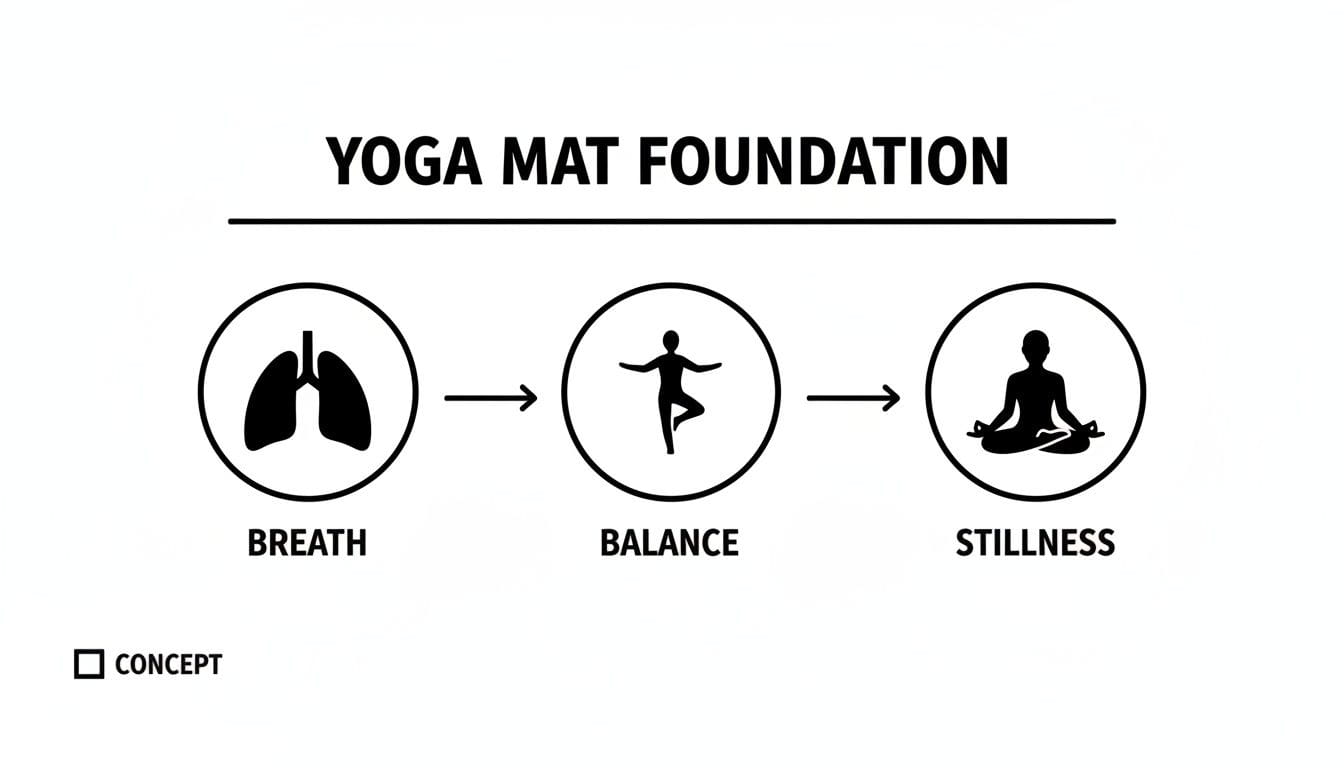
This connection is what transforms a simple workout into a mindful practice.
To help you decide, here’s a quick comparison of the materials we’re covering.
Yoga Mat Material At a Glance
| Material | Key Benefit | Best For | Eco-Friendliness |
|---|---|---|---|
| PVC | High durability & low cost | Budget-conscious beginners | Low – relies on petrochemicals |
| TPE | Soft cushioning & lightweight | Travel and light practice | Moderate – no BPA but still synthetic |
| Natural Rubber | Superior grip & stability | Dynamic flows and hot yoga | High – biodegradable and renewable |
| Cork | Antimicrobial & non-slip when wet | Sweaty sessions and eco-conscious yogis | Very High – sustainably harvested |
| Jute | Earthy texture & durability | Grounding and eco-minded yogis | High – natural and biodegradable |
This table gives you a snapshot, but the real magic is in finding the material that feels right for you.
Natural Rubber
Natural rubber mats are an absolute game-changer for anyone who prioritises grip. Sourced from the sap of rubber trees, they offer an incredible, almost magnetic grip that gives you a super stable base for your poses.
These mats are fully biodegradable and often have a faint, earthy scent that fades over time. On the flip side, they can be a bit heavier to carry around, and it might take a few sessions to 'break in' the surface to its full sticky potential.
Cork
Cork is a fantastic natural material that has a surprising superpower: it gets even grippier when it’s damp. This makes it an absolute dream for hot yoga or anyone who tends to sweat during a vigorous practice.
What’s more, its surface is naturally antimicrobial, which means it resists bacteria and odours without needing any harsh cleaning chemicals. Cork mats are firm yet lightweight, though you'll want to be mindful on rough surfaces to prevent uneven wear.
Jute
If you love a more tactile, earthy connection to your mat, jute might be for you. These mats blend natural jute fibres with a polymer base, offering an organic texture with solid durability.
- Texture: The woven feel provides gentle, grounding feedback during your poses.
- Support: It’s firm underfoot, making it great for restorative styles and alignment-focused practices.
- Sustainability: Jute is a fast-growing, natural plant fibre that is fully biodegradable.
Ultimately, every material offers a different blend of stickiness, comfort, and eco-credentials. A dynamic Vinyasa flow demands a mat with serious grip, while a slow, restorative session is much nicer with plush cushioning.
Think about your lifestyle, too. Do you need something lightweight for travel? And what about the mat’s end-of-life? Does it align with your sustainability goals?
“Choosing a mat material that aligns with your practice and values can transform your yoga journey from a simple exercise into a holistic ritual.”
For a deeper look into sustainable choices, be sure to check out our complete guide on eco yoga mats in Australia. With a clear understanding of what’s out there, you can pick a mat that will support your body, your practice, and the planet for years to come.
Choosing the Right Thickness for Comfort and Stability
Finding the perfect mat thickness is a bit like tuning an instrument—you need enough give to protect your joints but enough firmness to stay grounded. Your ideal choice comes down to how your body feels in each pose and the style of yoga you love.
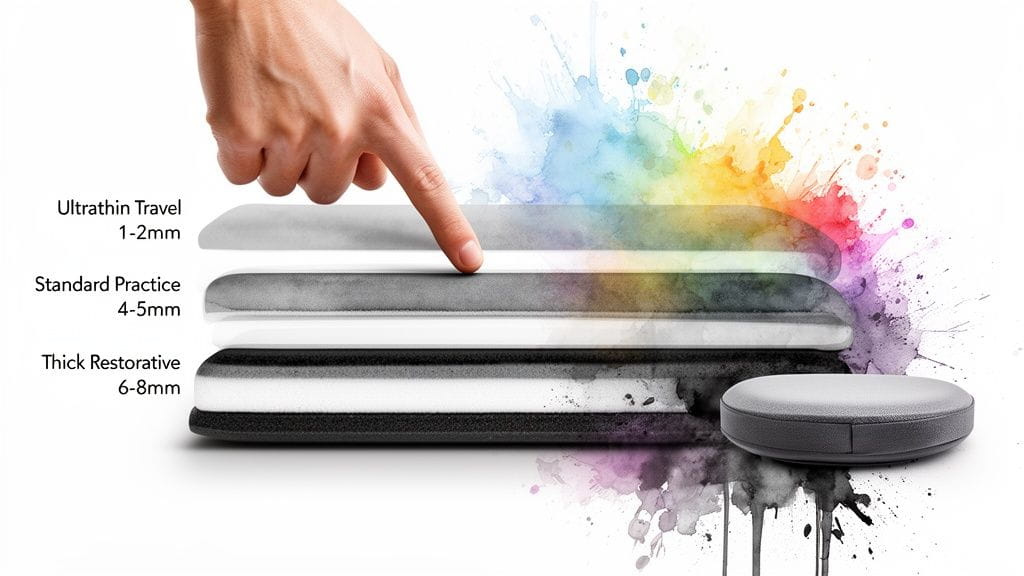
Strike the right balance and you’ll move smoothly through transitions without wrist or knee pain. Too much cushion, and your stability suffers; too little, and discomfort creeps in.
The Standard All-Rounder (4-5mm)
A mat in the 4mm to 5mm range is the workhorse of yoga mats. It cushions your joints during a dynamic vinyasa flow yet remains firm enough for balancing poses like Tree or Warrior III.
- Protects wrists and knees in movement-heavy classes
- Delivers dependable grip for standing and seated work
- Rolls up easily for storage or travel
If you’re just starting out, this mid-range thickness is hard to beat. For a deeper look at mats with extra cushioning, check out our detailed guide.
Thick And Cushioned Mats (6mm+)
When your practice leans toward yin or restorative styles, a mat 6mm or thicker feels like a cloud under your body. This extra layer softens the impact on joints during long holds and gentle stretches.
However, that plushness comes at a cost: it can dull the sensory feedback you need for precise alignment and balance. These mats shine for relaxation but aren’t the first choice for fast-paced flows.
For a truly restorative setup, combining a thick mat with supportive meditation cushions can elevate your comfort, allowing for deeper release and focus.
Ultra-Thin Travel Mats (1-2mm)
At the other extreme, ultra-thin travel mats—usually 1mm to 2mm thick—excel in portability. They slip into backpacks or suitcases with ease, making them perfect for on-the-go yogis.
You sacrifice cushioning for a rock-solid connection to the floor. These mats offer superb grip but minimal padding, so your joints feel every inch of the surface beneath you.
Why Mat Density Matters Just As Much
Thickness tells only half the story—density determines how your mat supports you under weight. Think of the difference between a fluffy kitchen sponge and a dense block of memory foam.
- High-Density Mats: Firm, stable and long-lasting. They resist compression so your wrists won’t sink uncomfortably in Downward Dog.
- Low-Density Mats: Initially soft but prone to “squishiness” over time. They can develop indentations and undermine balance.
In the end, listen to your body. A Vinyasa enthusiast may find a dense 4mm mat perfect for stability, while someone with sensitive knees might choose a plush 6mm mat for restorative comfort. The best mat is the one that keeps you steady in every pose—and eager to unroll it again tomorrow.
How Grip, Texture, and Size Impact Your Practice
Beyond the material and thickness, the two things that will really shape your confidence on the mat are its grip and its size. A good grip means you can hold a strong Downward Dog without your hands sliding forward, and the right dimensions give you the space to expand fully into every posture. It’s these little details that turn a simple mat into your personal practice space.
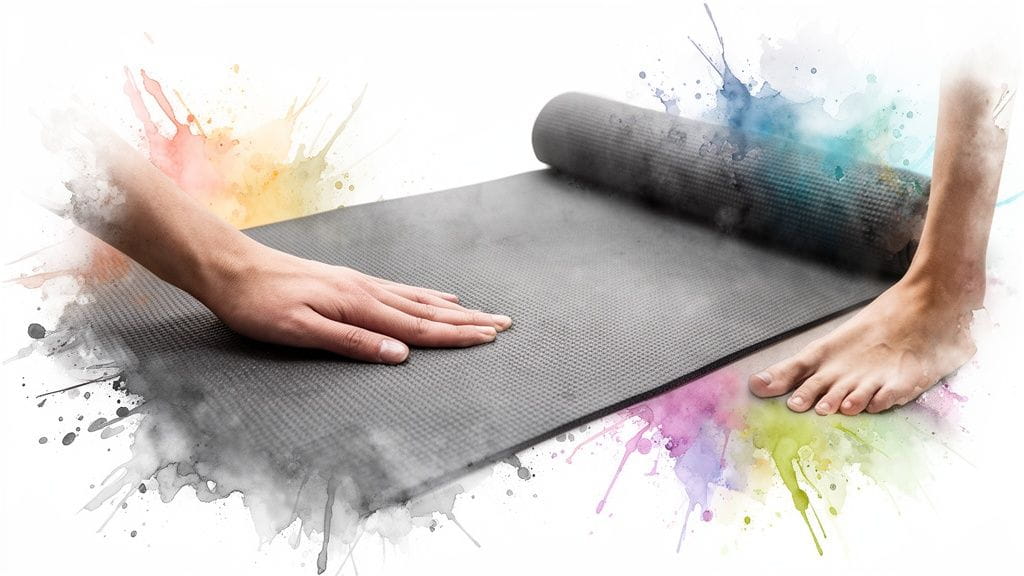
A mat’s traction comes down to two things: the natural properties of its material (like the amazing tackiness of rubber) and its surface texture. Getting your head around the difference between a "sticky" mat and a "grippy" one is a game-changer, especially if you love a heated class where sweat can become a real issue.
Decoding Grip: Sticky vs. Grippy Surfaces
When it comes to your yoga mat, not all grip is created equal. The words "sticky" and "grippy" might sound the same, but they describe two very different kinds of traction that suit different practices.
A sticky mat, which is often made from PVC, literally feels tacky to the touch. This stickiness gives you a reliable hold in dry conditions, which is why it’s a great choice for beginners or anyone in a slower-paced class. The only catch is that moisture can make these surfaces surprisingly slippery.
A grippy mat, on the other hand, gets its traction from texture and clever material science. Think of the open-cell surface of natural rubber or the unique feel of cork. These mats often perform even better when they get a little damp, as moisture actually activates their grip. This makes them perfect for hot yoga or a dynamic vinyasa flow.
Your mat’s grip is your direct connection to stability. It should empower you to move deeper into poses with confidence, not make you hold back for fear of slipping.
Materials like cork are particularly clever, using moisture to their advantage. The cellular structure of cork becomes even more secure when wet, giving you better traction exactly when you need it most. Many of our sustainable yoga mats have been chosen specifically for these advanced grip properties.
Finding the Right Size and Weight
Most yoga mats come in a standard length of around 173cm (or 68 inches), but your height really does matter here. If you're on the taller side, you might find your hands or feet slipping off the edges in poses like Downward Dog or during Savasana.
- Standard Size (approx. 173cm x 61cm): This works beautifully for most people up to about 5'10". It offers plenty of space for a wide range of poses without being too bulky to carry around.
- Extra-Long (approx. 180cm+): We highly recommend this for taller yogis. An extra-long mat ensures your whole body stays grounded and supported, so you’re not constantly having to shuffle back into place.
The mat's weight is another practical thing to think about, especially if you’re commuting to a studio. A heavy natural rubber mat feels incredibly stable for a home practice but can be a bit of a mission to lug around. A lighter TPE or travel mat, however, is far more portable. Let your lifestyle guide you. A robust mat is perfect for a dedicated home practice, especially when paired with other wellness tools from Wellness Apothecary.
Ultimately, the goal is to find a yoga mat that feels both secure and spacious. When a mat fits your body and your practice, you can stop worrying about the surface beneath you and focus on what truly matters: your breath and your movement. Adding essential props like yoga blocks and bricks or supportive straps can do wonders for your alignment and help take your practice to the next level.
How to Clean and Store Your Yoga Mat
Taking care of your yoga mat is about more than just making it last longer; it's about keeping your practice space a clean, inviting, and hygienic sanctuary. A simple, consistent care routine protects your investment and ensures your mat feels fresh and ready for every session.
When you neglect your mat, it's easy for bacteria, oils, and sweat to build up. This not only leads to unpleasant odours but can also break down the material itself, compromising its grip over time. By adopting a few easy habits for cleaning and storage, you can keep your mat in prime condition, ready to support you whenever you step onto it.
Simple and Effective Cleaning Methods
You really don't need harsh chemicals to keep your yoga mat clean. In fact, many commercial cleaners can actually damage natural materials like rubber and cork. A simple DIY solution is often the most effective—and safest—choice.
For a basic, all-purpose cleaner, just mix equal parts white vinegar and water in a spray bottle. Vinegar is a natural disinfectant that cuts through grime and neutralises odours without leaving any sticky residue. Feel free to add a few drops of essential oils like tea tree or lavender for their antimicrobial properties and a lovely scent. Getting chemical free water filters can also ensure you're using pure water for your cleaning solutions.
A regular cleaning schedule is key. A light wipe-down after every sweaty practice and a deeper clean once a week will prevent build-up and keep your mat feeling brand new.
Material-Specific Cleaning Tips
Different mat materials need slightly different cleaning approaches to preserve their integrity and performance. Here’s a quick rundown.
- PVC and TPE Mats: These materials are quite resilient. You can simply spray them with your DIY vinegar solution, wipe them down with a soft cloth, and let them air dry completely before rolling them up.
- Natural Rubber Mats: It's best to avoid vinegar here, as its acidity can break down the rubber over time. Instead, use a very mild soap diluted in a generous amount of water. Gently wipe the surface, rinse with a clean, damp cloth, and hang it to dry away from direct sunlight.
- Cork Mats: Cork is naturally antimicrobial, which is great because it requires less frequent deep cleaning. For a quick refresh, a simple wipe with a damp cloth is all you need. For tougher spots, a gentle, pH-neutral soap and water solution will do the trick.
For a more comprehensive breakdown of mat care, you can also check out our guide on how to properly clean and maintain your yoga mat.
The Best Way to Store Your Mat
How you store your mat is just as crucial as how you clean it. The right storage helps it maintain its shape, prevents damage, and keeps it ready for your next flow.
Always roll your mat with the top side (the side you practice on) facing outwards. This simple trick helps ensure the corners lie flat when you unroll it, preventing them from curling up and getting in your way during practice.
Direct sunlight is the enemy of almost every yoga mat material. UV rays can cause colours to fade and materials to become brittle and crack over time. It’s best to store your mat in a cool, dry place away from windows. Using a quality yoga strap and carry bag not only makes transport easier but also protects your mat from dust, dirt, and sun exposure.
This dedication to quality and performance is reflected across the wellness industry. The Australian yoga mat market is a key contributor to the Asia-Pacific wellness sector, one of the fastest-growing regions globally. This growth is driven by Australia's strong health culture, with practitioners seeking high-quality mats that offer superior grip and comfort for diverse practices. Learn more about the yoga mat market trends.
Common Yoga Mat Questions Answered
Even after you’ve explored materials, thickness, and grip, a few practical questions might still be floating around. That’s perfectly normal. Choosing the right yoga mat often brings up day-to-day concerns about how to care for it, how long it will last, and how it will perform over time.
To help you feel completely confident in your choice, we’ve put together answers to some of the most common queries we hear from yogis. Think of this as your practical guide to everything from breaking in a new mat to knowing when it’s finally time for an upgrade.
How Do I Break In a New Yoga Mat?
Some of the best yoga mats, especially those made from PVC or natural rubber, have a short ‘break-in’ period before they reach their peak grippiness. This isn't a flaw; it's often a sign of a high-quality, durable surface that needs a little time to settle in.
For PVC mats, a gentle scrub using a sea salt paste or a very mild soap can help wear away the initial slippery film left over from manufacturing. For natural rubber mats, the best approach is simply to practice on it. The natural oils and texture from your hands and feet will condition the surface over time, personalising the grip just for you. Just be sure to avoid any harsh chemicals, as they can break down the material and shorten your mat's life.
The more you practice, the more your mat adapts to you. Think of it as building a relationship—it just gets better with time and consistent connection.
What Is the Difference Between a Yoga Mat and an Exercise Mat?
At a glance, they might look alike, but a yoga mat and a general exercise mat are designed for two very different jobs. A yoga mat is engineered specifically for grip and stability, keeping you from slipping as you flow through poses or hold them for several breaths. They tend to be thinner to give you a solid, stable connection to the floor, which is crucial for balance.
Exercise or fitness mats, on the other hand, are all about cushioning. They’re usually much thicker and spongier to protect your joints during high-impact workouts like HIIT, crunches, or other floor exercises. That extra padding, however, can make them feel wobbly and unstable during yoga, turning balance poses into a frustrating challenge. Using the right mat for your practice isn’t just about performance—it’s about safety.
My Yoga Mat Smells Bad. What Should I Do?
A funky smell on your yoga mat is usually caused by a build-up of sweat, body oils, and bacteria. The best fix is regular, proper cleaning. A simple DIY spray made from equal parts water and white vinegar works wonders, as vinegar is a natural antibacterial. To give it a fresher scent and extra antimicrobial benefits, add a few drops of tea tree or lavender essential oil. You can find beautiful essential oil diffusers to help keep your entire practice space feeling fresh and clear.
The most important step? Always let your mat air dry completely before you roll it up. Trapping even a little bit of moisture will only encourage bacteria to grow and make the smell worse. It’s also worth remembering that new natural rubber mats have a distinct, earthy smell that will fade over time as you air it out. After your practice, a calming cup of herbal tea with an ingredient like blue lotus can help you continue your journey into relaxation.
How Often Should I Replace My Yoga Mat?
There’s no hard and fast rule here—the lifespan of your mat depends on its material, quality, and how often you practice. However, there are a few clear signs that it’s time to invest in a new one to keep your practice safe and enjoyable.
Keep an eye out for visible signs of wear and tear, like:
- Thinning or Pitting: Can you see worn-out patches or feel depressions where your hands and feet usually go in Downward Dog?
- Flaking: Is your mat shedding little bits of material onto your clothes or the floor?
- Loss of Grip: This is the most important one. If you find yourself sliding in poses where you used to feel secure, the surface has likely worn down.
- Lack of Support: If you can feel the hard floor through the mat and it no longer provides enough cushioning, it’s time for a replacement.
A high-quality mat can last for several years with the right care. But once its key features—grip and support—are compromised, replacing it is the best way to prevent potential injury and get the most out of your time on the mat. Consider upgrading to one of the premium eco yoga mats in our collection for long-lasting performance. To keep your body fuelled for practice, high-quality supplements like those from the Teelixir nutrition range can also make a world of difference.
At Wellness Apothecary, we believe the right tools can deepen your connection to your practice and yourself. Explore our curated selection of yoga and wellness essentials designed to support your journey, from the ground up.
Discover Your Perfect Yoga Mat and Wellness Essentials Today


