


Choosing the right yoga mat is so much more than just picking a colour you like; it’s about creating a sacred space for your practice. A great mat gives you the stability and comfort you need to really get the most out of your session, whether you're just starting out or you’ve been on the mat for years. This guide is here to help you find a mat that not only enhances your practice but also aligns with your personal wellness values.
Finding Your Foundation for Mindful Practice
Think of your mat as the literal foundation for every single pose. It’s where you find your balance, build your strength, and connect with your breath. The surface beneath you can make a huge difference to your focus and physical alignment, turning a simple routine into a deeply grounding experience. A supportive mat gives you the confidence to hold a tough pose for just a little longer, or to sink that much deeper into a restorative stretch.
This growing appreciation for quality yoga gear isn't just a local trend. The yoga mat market in the Asia-Pacific region, which includes Australia, has seen incredible growth, making it the largest global market for yoga accessories. This is all thanks to a rising number of practitioners and a growing health consciousness, especially among younger people. You can learn more about these global yoga market trends and see just how much the community is expanding worldwide.
More Than Just a Prop
For many of us, a yoga mat is the one piece of equipment that is truly our own. It becomes a personal sanctuary, a little portable space where you can switch off from the outside world and reconnect with yourself. It's a key part of a bigger wellness journey that might also include refuelling post-practice with a good vegan protein powder or setting a calm mood with an essential oil diffuser.
The right mat supports you in a few crucial ways:
- Provides stability: A non-slip surface is non-negotiable for holding your balance and preventing injuries, especially when you’re flowing through sequences.
- Offers cushioning: Proper padding protects your joints—think knees, wrists, and spine—from the pressure of a hard floor.
- Defines your space: It creates a clear boundary for your practice, helping you to stay focused and present in your own little bubble.
- Reflects your values: Choosing from our collection of sustainable yoga mats means your practice can also align with a commitment to looking after our planet.
Your mat is where the physical and spiritual sides of yoga meet. It’s the ground that holds you, the space that centres you, and the tool that supports your growth, breath by breath.
In this guide, we'll get into everything from eco-friendly materials to the perfect thickness for your unique style. Our goal here at Wellness Apothecary is to help you choose a foundation that feels like a true extension of your practice.
Understanding Your Mat Materials Thickness and Grip
Choosing the right yoga mat is a bit like finding the perfect pair of running shoes; what works for a marathoner isn't necessarily right for a casual jogger. It's all about finding the right blend of material, support, and grip for your unique practice. The three things that really matter are the mat's material, its thickness, and its surface texture.
These elements are the foundation of your practice, influencing everything from your stability in Warrior II to your comfort in Savasana. It’s easy to get caught up in colours and patterns, but looking past the aesthetics to focus on performance is the secret to finding a mat that truly supports you.
Decoding Yoga Mat Materials
The actual stuff your mat is made from dictates its grip, weight, durability, and how eco-friendly it is. Each material has a completely different feel under your hands and feet, making it better suited for certain styles of yoga and personal preferences.
Let's break down some of the most popular options you’ll find in our collection.
- Natural Rubber: Prized for its incredible grip that won’t quit, even during a sweaty, dynamic flow. It’s sourced from rubber trees, making it a durable and biodegradable choice, though it does tend to be a bit heavier than its synthetic cousins.
- Sustainable Cork: Cork is a dream for anyone who sweats. Its natural properties mean the grip actually gets better with moisture, making it a hero for hot yoga. It's also naturally antimicrobial, which helps keep odours and bacteria from settling in.
- TPE (Thermoplastic Elastomer): TPE is a fantastic all-rounder. It’s lightweight, often more affordable, and offers a great balance of cushioning and grip. Plus, it's recyclable, which makes it a more conscious choice than old-school PVC mats.
This simple flowchart helps put you and your practice at the centre of the decision, cutting through the noise to find what you truly need.
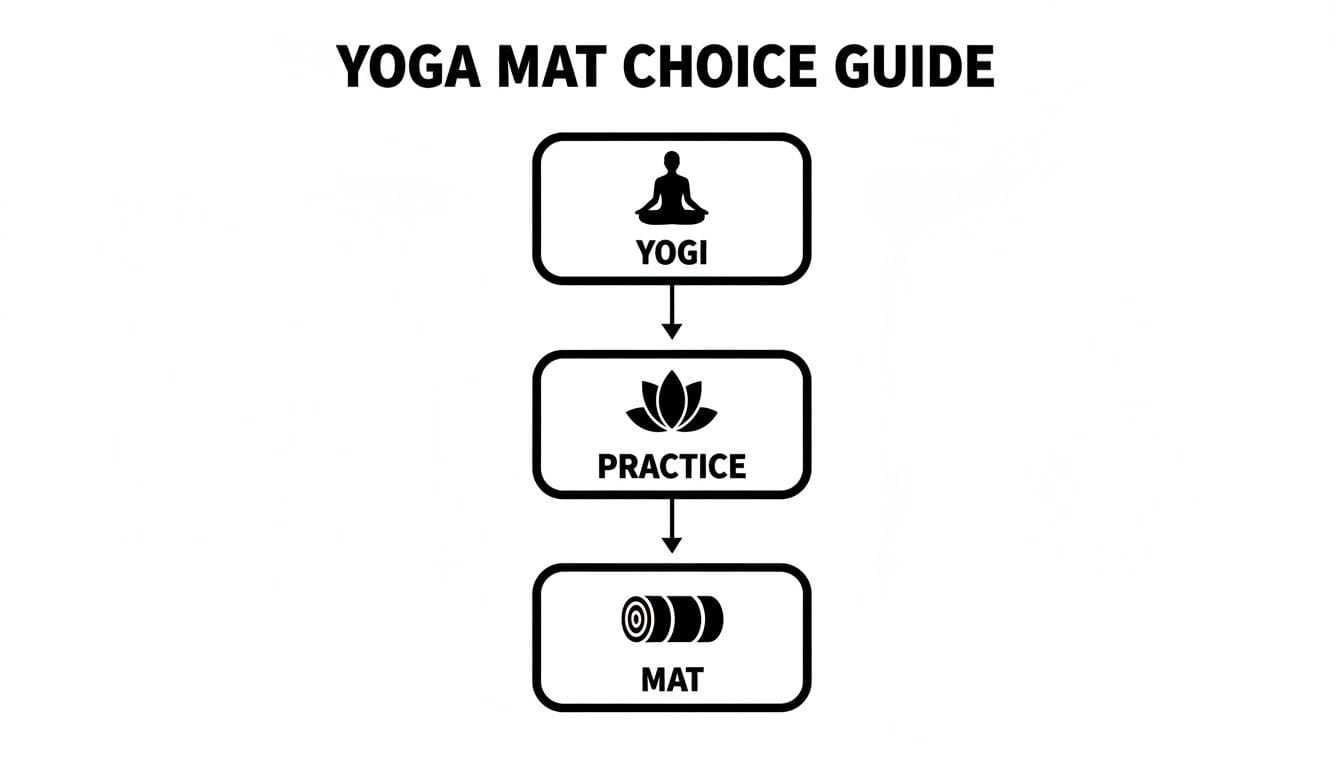
Ultimately, the chart shows that the best mat is a direct extension of your personal needs and practice style.
Yoga Mat Material Comparison
To make things even clearer, here’s a quick rundown of how our favourite mat materials stack up against each other. Think of it as a cheat sheet to help you narrow down your options based on what’s most important to you—whether that’s sticky grip, eco-credentials, or pillowy comfort.
| Material | Key Benefit | Best For | Eco-Friendliness |
|---|---|---|---|
| Natural Rubber | Superior non-slip grip | Vinyasa, Power Yoga | Biodegradable, sustainable source |
| Sustainable Cork | Antimicrobial, gets grippier with sweat | Hot Yoga, Bikram | Renewable, biodegradable, natural |
| TPE | Lightweight and versatile | All-round practice, beginners | Recyclable, non-toxic |
Each material brings something unique to the mat. Your choice really comes down to matching the material’s strengths with the demands of your practice and your personal values.
Finding The Right Thickness For Your Body
Mat thickness, measured in millimetres (mm), is a constant balancing act between comfort and connection. A thicker mat gives your joints more cushioning, while a thinner one provides better stability and a more grounded feeling. For a deep dive into all the options, this guide to the best exercise and yoga mat is a fantastic resource that covers various materials and thicknesses.
There’s a common misconception that thicker is always better. In reality, the perfect thickness depends on your body's needs and the floor you’re practicing on.
Think of it like this: a plush 6mm mat is a soft cushion, perfect for restorative yoga or if you have sensitive knees and wrists. It absorbs pressure beautifully, making floor-based poses much more enjoyable. The downside? That extra squish can feel a bit wobbly in standing balance poses. If you want to learn more, you might find our article on the importance of thick yoga mats for joint protection helpful.
On the other end of the spectrum, a slim 2-3mm mat is brilliant for travel and for practices like Ashtanga that demand a strong connection to the floor. You'll feel incredibly stable and grounded, but there's much less padding for your joints.
For most people, the sweet spot is a balanced 4-5mm mat. It offers a happy medium of both comfort and stability, making it a versatile workhorse for daily practice.
Matching Your Mat to Your Unique Yoga Style
The perfect yoga mat should feel like an extension of your own body, moving with you and supporting you exactly where you need it most. It’s a bit like choosing the right pair of shoes—you wouldn’t wear hiking boots for a long-distance run, and you wouldn't wear racing flats to climb a mountain. The same logic applies to your yoga mat.
Choosing a mat that lines up with your practice isn't just about feeling good; it’s about creating a safe, effective foundation for your flow. The demands of a hot yoga class are worlds apart from what someone needs in a gentle, restorative session. When you match your mat to your style, you set yourself up for a practice that’s more focused, enjoyable, and injury-free.
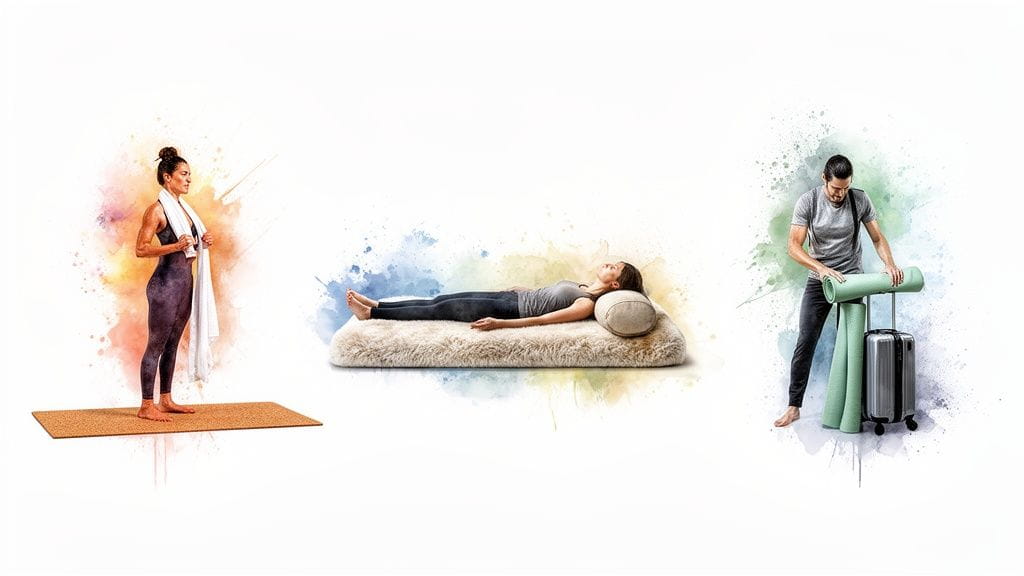
For the Hot Yogi and Dynamic Vinyasa Flow
If you thrive in a sweaty, high-energy class like Bikram or a fast-paced Vinyasa flow, then grip is your absolute number one. As you start to sweat, a standard mat can quickly turn into a slippery hazard. This is where mats made from materials like cork or natural rubber really prove their worth.
- Cork Mats have a clever trick up their sleeve: they actually get grippier with moisture. Their natural, antimicrobial properties are also a huge plus, helping to keep your mat feeling fresh session after session.
- Natural Rubber Mats offer an exceptional "dry grip" that gives you rock-solid stability from your very first downward dog.
These dynamic practices demand a surface that lets you transition smoothly without ever losing your hold. A reliable mat gives you the confidence to move fluidly, knowing you won’t slip as you jump from Chaturanga to Upward-Facing Dog.
For the Restorative and Yin Practitioner
When your practice is all about slowing down, holding poses, and surrendering to gravity, comfort and cushioning become the main event. In styles like Restorative, Yin, and gentle Hatha, you’re spending a lot of time on the floor, putting pressure on your knees, spine, and hips.
A thicker mat, usually in the 5mm to 6mm range, provides a plush, supportive cushion that protects your joints from the hard floor beneath. This added softness lets you relax more deeply into poses without being distracted by discomfort, making your practice far more meditative.
The right mat for a restorative practice isn’t just about physical support; it's about creating a nurturing space where your body feels safe enough to completely let go and release tension.
For the Travelling Yogi
For those of us who take our practice on the road, a standard yoga mat can feel bulky and impractical. The solution? A dedicated travel mat where the key features are being lightweight and foldable.
Most travel mats are super thin, usually around 1.5mm to 2mm, which allows them to be folded into a neat little square that slips easily into a suitcase or carry-on. You do sacrifice some cushioning, but you gain the incredible freedom to practise anywhere—from a hotel room to a beach at sunrise.
If you’re weighing up your options, our guide to choosing the best yoga mat in Australia has some great insights that can help you decide.
Completing Your Practice Setup
Your mat is the foundation, but a few key accessories can deepen and support your practice in massive ways. They help with alignment, allow you to hold poses for longer, and make your practice more accessible, no matter where your flexibility is at today.
Consider adding these essentials to your kit:
- Support and Alignment: Our collection of yoga blocks and bricks helps bring the floor closer to you in standing poses and provides stable support in seated ones.
- Convenience and Portability: A great bag makes getting to and from class a breeze. Our range of yoga straps and carry bags offers both style and function, while straps themselves are invaluable for safely deepening stretches.
Choosing Sustainable and Non-Toxic Yoga Mats
Yoga is so much more than the poses we hold on the mat. It’s an awareness that filters into every part of our lives, right down to the surface we practise on. When you choose a mat that’s kind to your body and the planet, your practice becomes a truly mindful act, weaving your movements together with a deeper commitment to well-being.
Think about it: your yoga mat is an intimate space. You breathe deeply into it, rest your face on it, and connect with the ground through it. When you realise how close you get to your mat, the material it’s made from suddenly becomes incredibly important.
Many of the cheaper, mass-produced mats are made with PVC (polyvinyl chloride), a type of plastic that can release harmful chemicals and often contains nasty additives like phthalates and heavy metals. By choosing to practise on non toxic yoga mats in Australia, you can breathe easy, knowing your foundation is as pure as your intention.
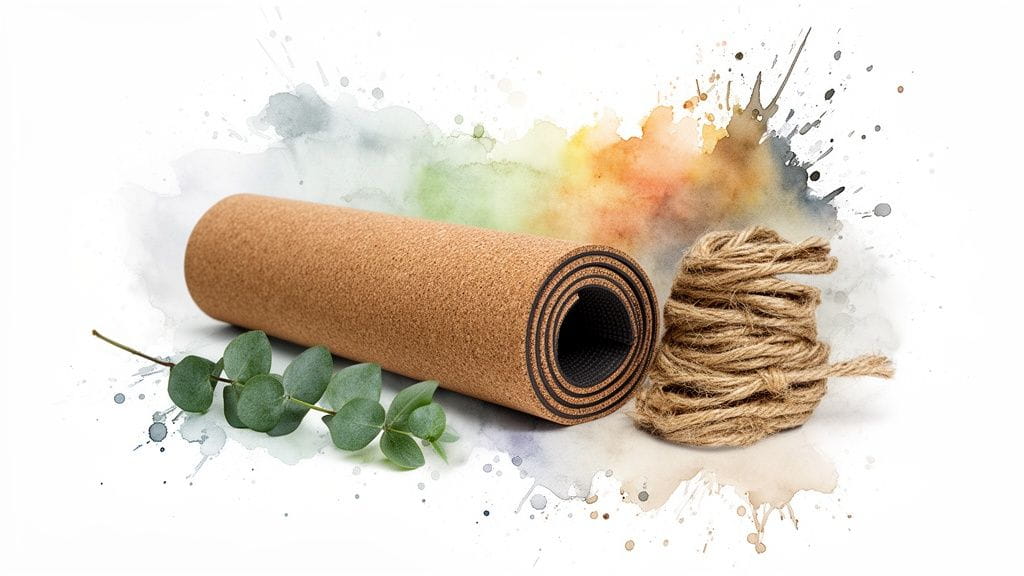
Environmental and Health Impacts
The life of a standard PVC yoga mat, from its creation to the day it's thrown away, leaves a pretty heavy environmental footprint. In stark contrast, sustainable materials offer a much cleaner, cyclical journey.
- Natural Rubber: Sourced from rubber trees, this material is completely biodegradable. It also offers amazing grip without needing any synthetic chemicals.
- Organic Cork: This is one of my favourites. Cork is hand-harvested from the regenerating bark of cork oak trees, making it a truly renewable resource. Plus, it’s naturally antimicrobial, which helps keep your mat smelling fresh.
- Jute: This hardy, plant-based fibre is durable, breathable, and biodegradable. It gives the mat a lovely textured surface that provides excellent traction during your flow.
This philosophy of purity connects perfectly with a holistic wellness lifestyle. It’s the same reason you might use chemical free water filters to ensure what you drink is pure—choosing a non-toxic mat makes your practice space just as clean. It’s all about creating a supportive environment where every element nurtures your health. Our handpicked collection of sustainable yoga mats is built around this very commitment.
The Rise of Conscious Consumerism
These days, yogis are more informed and intentional with their purchases than ever before. This is showing up in the market, where e-commerce has become the fastest-growing channel for yoga mat sales, projected to grow at a CAGR of 6.8%.
This shift is being led by people who are deeply conscious about what they bring into their homes and practices, largely due to health concerns. It’s why detailed online product information and real-world reviews have become so valuable. If you want to dive deeper into the data, you can read the full market research on yoga mat sales.
Choosing a non-toxic, sustainable mat is an act of ahimsa (non-harming) not just towards yourself, but towards the planet. It’s a powerful statement that your practice is rooted in compassion for all living things.
This growing awareness pushes the selection process beyond simple things like grip and colour. It encourages us to ask bigger questions: Where did this come from? What is it truly made of? What happens to it at the end of its life?
By asking these questions, we deepen our practice, ensuring that our time on the mat contributes to a healthier world, one breath at a time.
Proper Care for a Long-Lasting Yoga Mat
Your yoga mat is more than just equipment; it's an investment in your wellbeing and a personal space that grounds you through every practice. Like any valued tool, it needs a little care to keep it hygienic, grippy, and supportive for years to come.
Looking after your mat not only extends its life but also ensures it remains a clean and inviting foundation for your wellness rituals. A consistent cleaning routine is simpler than you might think and really just boils down to two things: a quick daily wipe-down and a more thorough deep clean every so often.
Daily Care Versus Deep Cleaning
After each practice, especially a sweaty one, a quick wipe-down is a non-negotiable. This isn’t just about hygiene; it’s about preserving the integrity of your mat’s surface. A simple spray and wipe remove sweat and oils before they have a chance to set in, keeping your mat fresh for your next session.
A deep clean, on the other hand, is something you'll want to do every few weeks or once a month, depending on how often you practise. This is where you get rid of any accumulated grime and fully sanitise the surface. Think of it as the difference between tidying your kitchen each night and giving it a proper scrub on the weekend.
A clean mat is a safe mat. Regular cleaning prevents the buildup of bacteria and maintains the non-slip properties crucial for preventing injuries and holding poses with confidence.
A Natural Approach to Cleaning
You don’t need harsh chemicals to keep your mat pristine. In fact, a simple, homemade solution is often the best choice, particularly for mats made from natural materials. Creating your own cleaning spray is incredibly easy and lets you infuse your cleaning ritual with calming, natural scents.
For an effective DIY spray, just mix the following in a spray bottle:
- Three parts filtered water (using water from your chemical-free water filters ensures no impurities are left behind)
- One part white vinegar (a brilliant natural disinfectant)
- 5-10 drops of essential oils like lavender or tea tree oil for their lovely scent and antimicrobial properties
This simple act of care can become a mindful moment in itself, especially if you use the same calming aromas you already enjoy in your essential oil diffusers.
Storing Your Mat Correctly
How you store your mat is just as important as how you clean it. To prevent cracking, fading, and those annoying permanent creases, always roll your mat loosely with the top side facing outwards. This simple habit helps it lie flat and ready for your next practice.
Try to avoid leaving your mat in direct sunlight or a hot car. Extreme temperatures can damage the material, making it brittle and less effective over time. A cool, dry spot is the perfect place to keep your mat safe between sessions. For more in-depth tips, you might like our guide on how to properly clean and maintain your yoga mat.
Even with the best care, your mat will eventually show signs of a life well-lived. When you start noticing thinning patches, a persistent odour, or a loss of grip, it's a sign that it’s time to retire your old friend. When that day comes, you can explore the beautiful and durable eco yoga mats at Wellness Apothecary to find your next perfect foundation.
Building Your Complete Wellness Sanctuary
Your yoga mat is the heart of your practice, but it's really the centrepiece of a much larger wellness ritual. When you expand your focus beyond just the mat, you start to create a complete sanctuary. This can deepen your experience, turning a simple workout into a restorative journey for your mind and body. The right tools and routines before, during, and after your session build a supportive ecosystem that nurtures you from every angle.
This is all about crafting moments of peace and recovery that extend far beyond your time on the mat. By thoughtfully combining these supportive elements, you create a holistic practice where every part works together, helping you build resilience and find balance.
Pre-Practice Rituals for Mindful Preparation
How you arrive on your mat really sets the tone for your entire practice. Instead of rushing straight into your first pose, try taking a few moments to transition from the busyness of your day into a state of mindful presence.
Slipping into comfortable and flexible womens yoga activewear signals to your body that it’s time to move. It’s a simple act, but it can be a powerful mental cue. To truly build a complete wellness sanctuary, it helps to incorporate other approaches for mental calm, including practicing meditation or enjoying the calming effects of blue lotus, alongside your physical practices.
Enhancing Your Time on the Mat
While your eco yoga mats provide the foundation, a few key accessories can unlock deeper levels of your practice. Using props isn’t a sign of weakness; it’s a smart way to support your body and explore poses more fully and safely.
- For Deeper Stillness: Transitioning from an active flow to seated meditation becomes seamless when you have supportive props. A dedicated meditation cushion allows you to sit comfortably for longer, maintaining proper posture without getting distracted by discomfort.
- For Aromatic Calm: The simple act of diffusing calming scents can completely transform your space. A few drops of lavender or frankincense in an essential oil diffuser can help quiet the mind and deepen your focus during your practice.
Your sanctuary is a personal space designed to support every facet of your wellbeing. It’s where movement, stillness, and nourishment come together to create a powerful, self-sustaining wellness loop.
Post-Practice Recovery and Rejuvenation
What you do after your final Savasana is just as important as the practice itself. This is your chance to replenish your body and integrate all the benefits of your movement. True recovery is an active process that supports muscle repair and calms the nervous system.
A nourishing shake made with high-quality vegan protein powder is excellent for muscle repair and refuelling your energy. For a more calming transition, a warm cup of ceremonial matcha green tea powder can help maintain that state of relaxed alertness you've just cultivated.
For the ultimate rejuvenation, many people are discovering the powerful benefits of cold therapy. A quick session in a portable ice bath can significantly reduce inflammation and speed up recovery, leaving you feeling completely invigorated. By building these supportive rituals around your core practice, your yoga mat becomes the anchor for a truly comprehensive wellness lifestyle.
Your Yoga Mat Questions, Answered
Over the years, we've heard just about every question there is when it comes to finding the perfect yoga mat. To make things a little easier, we’ve gathered the most common ones right here. Think of this as your personal guide to choosing and caring for the foundation of your practice.
How Often Should I Clean My Yoga Mat?
For good mat hygiene, a quick wipe-down after every session is a great habit, especially after a sweaty class. For a deeper clean to keep it in top shape, aim for every few weeks.
A simple spray bottle with filtered water and a few drops of your favourite essential oil will do the trick and keep it smelling fresh. It’s the perfect way to complement the calming atmosphere you might already be creating with your essential oil diffusers.
What Is the Best Yoga Mat for Beginners?
If you're just starting out, you'll want a mat that strikes a good balance between cushioning and stability. Something around the 4-5mm thickness mark is usually the sweet spot.
Materials like TPE or natural rubber are fantastic choices because they offer great grip and support as you're learning the poses. Some of the mats in our yoga mats collection even feature alignment lines, which are a huge help for getting your posture and form right from day one.
A common mistake beginners make is grabbing a mat that's too thick. While it feels super comfy, it can actually make it harder to hold balancing poses. Hitting that 4-5mm sweet spot is key!
Can I Use My Yoga Mat for Other Workouts?
Absolutely—with a small catch. Yoga mats are perfect for low-impact exercises like stretching, Pilates, and bodyweight circuits.
However, if you're doing high-intensity workouts or anything that involves wearing shoes, a standard mat might wear out a bit faster. To make sure you can move freely no matter the workout, pair your mat with some flexible and comfortable womens yoga activewear.
How Do I Stop Slipping on a New Yoga Mat?
That slippery feeling on a brand-new mat is totally normal. It's usually just a thin film left over from the manufacturing process.
To "break it in," simply wipe it down with a mild solution of water and vinegar, then let it air dry completely. If you know you'll be doing a lot of sweaty practices, we highly recommend checking out our eco yoga mats. Materials like cork or natural rubber are brilliant because their grip actually gets better with a bit of moisture.
At Wellness Apothecary, we truly believe the right mat can transform your practice. Explore our curated selection to find the perfect foundation for your wellness journey. Discover Your Perfect Yoga Mat Today


