


Picture this: you walk through your front door after a long, taxing day, and a gentle, calming scent immediately greets you, melting away the stress. That's the simple magic of an aromatherapy oil diffuser. These clever devices use ultrasonic vibrations or a gentle stream of air to transform pure essential oils into a fine, fragrant mist, filling your space and preserving the natural goodness of the oils. It’s the easiest way to turn your home into a genuine sanctuary.
Creating a Sanctuary in Your Home
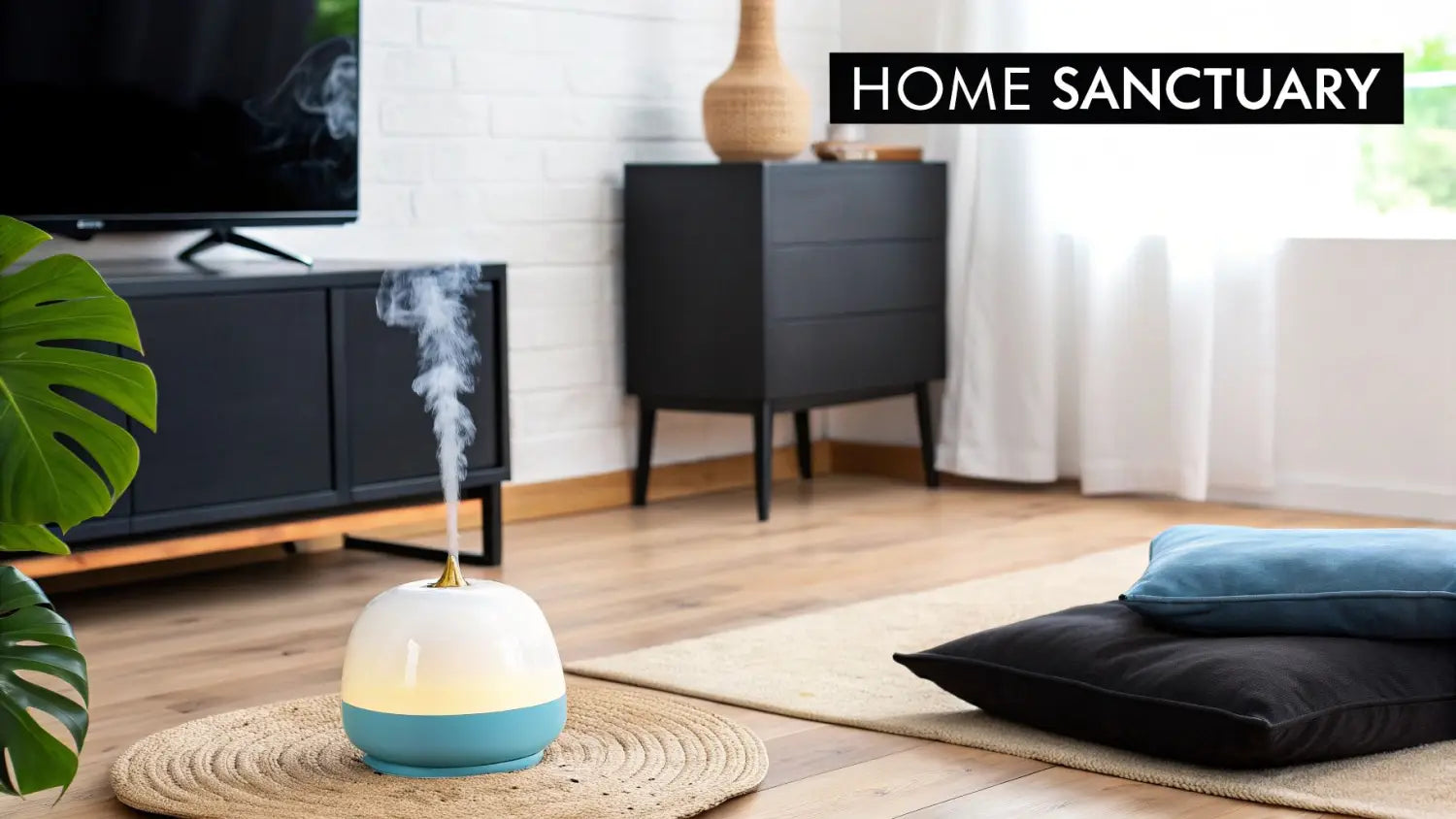
The idea of a 'home sanctuary' is so much more than just nice decor; it’s about crafting an atmosphere that truly nurtures your wellbeing. This is where home aromatherapy shines. With an oil diffuser, you get to curate the entire sensory experience of your environment, turning any room into a tranquil retreat designed for relaxation, focus, or a much-needed energy boost.
Think of this guide as your complete resource for getting to know these wonderful devices. We’ll walk through everything from how they work to choosing the perfect oils to support your wellness goals.
Why Aromatherapy Matters Now
In a world that feels like it’s always ‘on,’ carving out moments of genuine peace is more important than ever. The scents you bring into your home can have a surprisingly profound impact on your mood and mental state. A carefully chosen aroma can act as a signal to your brain, telling it that it's time to unwind and disconnect from the day's pressures.
An aromatherapy oil diffuser is the centrepiece of modern wellness rituals, allowing you to seamlessly integrate the benefits of essential oils into your daily routines.
For instance, diffusing a little lavender oil in the evening can usher in a sense of calm before bed, while a bright citrus blend can help energise your morning. Learning how to blend different scents lets you tailor your environment to exactly what you need in that moment. If you're curious about creating the perfect vibe, you might want to explore our guide on what essential oils make a house smell good.
A Tool for Every Lifestyle
The real beauty of an aromatherapy oil diffuser is its versatility. It’s a tool that adapts to your unique lifestyle and wellness practices, not the other way around.
- For the Yoga Practitioner: Deepen your practice by diffusing grounding scents like frankincense or sandalwood. Just place the diffuser near your yoga mat or meditation cushion to create a focused, sacred space for movement and stillness.
- For the Busy Professional: Combat that mid-afternoon mental fatigue and create a productive work-from-home space with focus-boosting oils like rosemary and peppermint. A diffuser on your desk can help you stay sharp and calm, even when deadlines are looming.
- For the Health-Conscious Individual: Create an inviting living space that feels clean and healthy. Diffusing oils like tea tree or eucalyptus can help purify the air, making your home feel wonderfully fresh and welcoming. Paired with a daily serving of nutrient-dense matcha powder, you're nurturing your body from the inside out.
How an Aromatherapy Oil Diffuser Works
At its core, an aromatherapy oil diffuser has one powerful job: to break down essential oils into a fine, fragrant mist, spreading their natural goodness throughout your space. Unlike candles or incense that burn oils and can damage their delicate compounds, a diffuser keeps the oil's chemical structure intact. This means you get the full therapeutic benefits, turning any room into a true sensory sanctuary.
The most common diffusers you’ll see today—including many in our essential oil diffusers collection—are ultrasonic. Think of an ultrasonic model as a tiny, personal cloud machine. It cleverly uses water and high-frequency vibrations, not heat, to do its work. It's a hugely popular method, and for good reason: it scents your air while also acting as a gentle humidifier.
This simple technology is a big reason behind the wellness boom. Right now, Australia's essential oils market is valued at USD 586.98 million, and it's set to grow by a huge 11.31% each year until 2032. The demand for aromatherapy, particularly through diffusers, is a cornerstone of modern wellness for everyone from yogis to those just wanting a more peaceful home. You can read more about this incredible market growth.
The Ultrasonic Process Unpacked
So, what’s actually happening inside an ultrasonic diffuser? It’s a neat little piece of science, all taking place in the water tank. The real star of the show is a small ceramic disc sitting at the bottom.
When you switch the diffuser on, that disc starts vibrating at an "ultrasonic" frequency—a speed so fast you can't hear it. These super-fast vibrations churn up the water and essential oil mix, breaking them down into millions of microscopic particles.
This action creates a cool, super-fine mist that rises out of the top. Because there’s no heat, the essential oils aren’t degraded or changed in any way. You get to breathe in the oil in its purest, most natural form.
Key Components of Your Diffuser
To get a clearer picture, let's look at the main parts that come together to create that beautiful, soothing mist:
- Water Reservoir: This is the main chamber where you add water and a few drops of your favourite essential oils. You'll almost always see a "max" line to stop you from overfilling it.
- Ultrasonic Disc: The small but mighty plate at the base of the reservoir. It’s the engine that vibrates to make the mist.
- Lid and Nozzle: This fits over the top to contain the water and guide the mist out into your room for even distribution.
- Power Source: A simple cord and adapter that supplies the low-voltage electricity needed to run the disc and any light features.
Once you understand these parts, the whole process feels much less mysterious. It’s not some complicated machine, but a simple, elegant system built to bring the benefits of nature indoors. It's perfect for enhancing everything from a morning meditation on your zabuton cushion to your wind-down routine at night.
This basic knowledge helps you truly appreciate the quiet power of your diffuser. It's doing more than just making the room smell lovely; it's actively sending therapeutic molecules into your environment for you to inhale. With that understood, you're ready to explore the different types of diffusers out there and find the perfect one for your lifestyle.
Choosing the Perfect Diffuser for Your Lifestyle
Picking the right aromatherapy oil diffuser is a bit like choosing a signature scent—it’s a deeply personal decision. With so many models out there, each working in its own unique way, the perfect match really comes down to your space, your daily routine, and what you hope to achieve.
Think of it this way: not all diffusers are created equal. The technology inside each one dictates the kind of aromatic experience you'll get. Some create a powerful, therapeutic cloud of scent, while others offer a more subtle, humidifying mist. Let's break down the four main types to help you find the one that just clicks.
The Four Main Types of Aromatherapy Diffusers
Each diffuser uses a completely different method to get those beautiful essential oil molecules into the air. Understanding how they work is the key to finding your ideal fit, whether you're looking to create a calm sanctuary or simply add a lovely background fragrance to your home.
Here’s a quick rundown of what you’ll find:
A Quick Comparison of Aromatherapy Diffuser Types
To help you see the differences at a glance, here’s a simple table comparing the four main technologies. It’s a great starting point for figuring out which one aligns with your wellness goals.
| Diffuser Type | Method of Diffusion | Best For | Pros | Cons |
|---|---|---|---|---|
| Ultrasonic | Uses water and electronic vibrations to create a cool, fine mist. | General daily use, adding humidity to dry rooms, bedrooms, and living areas. | Quiet operation, acts as a mini-humidifier, uses less oil. | Requires regular cleaning, aroma is less potent as it's diluted with water. |
| Nebulising | Uses pressurised air to atomise essential oils directly from the bottle. No water needed. | Therapeutic applications, large open-plan spaces, and scent purists. | Most potent, undiluted aroma; preserves the oil's full chemical profile. | Can be noisy, uses oil much faster, often more expensive. |
| Heat | Gently warms the essential oil, causing it to evaporate into the air. | Creating a subtle background scent in a small, enclosed space like an office or bathroom. | Silent, simple to use, very affordable. | Heat can alter the therapeutic properties of some oils. |
| Evaporative | A small fan blows air across a pad or filter soaked in essential oil. | Quick and simple scent dispersion, personal spaces, and travel. | Disperses scent quickly, very portable and easy to use. | Lighter oil notes evaporate first, leading to an unbalanced aroma. |
As you can see, each type has its unique strengths. An ultrasonic diffuser might be perfect for your bedside table, while a powerful nebuliser could be just the thing for your main living area.
Here's a simple flowchart that shows just how easy it is to get started with most common models.
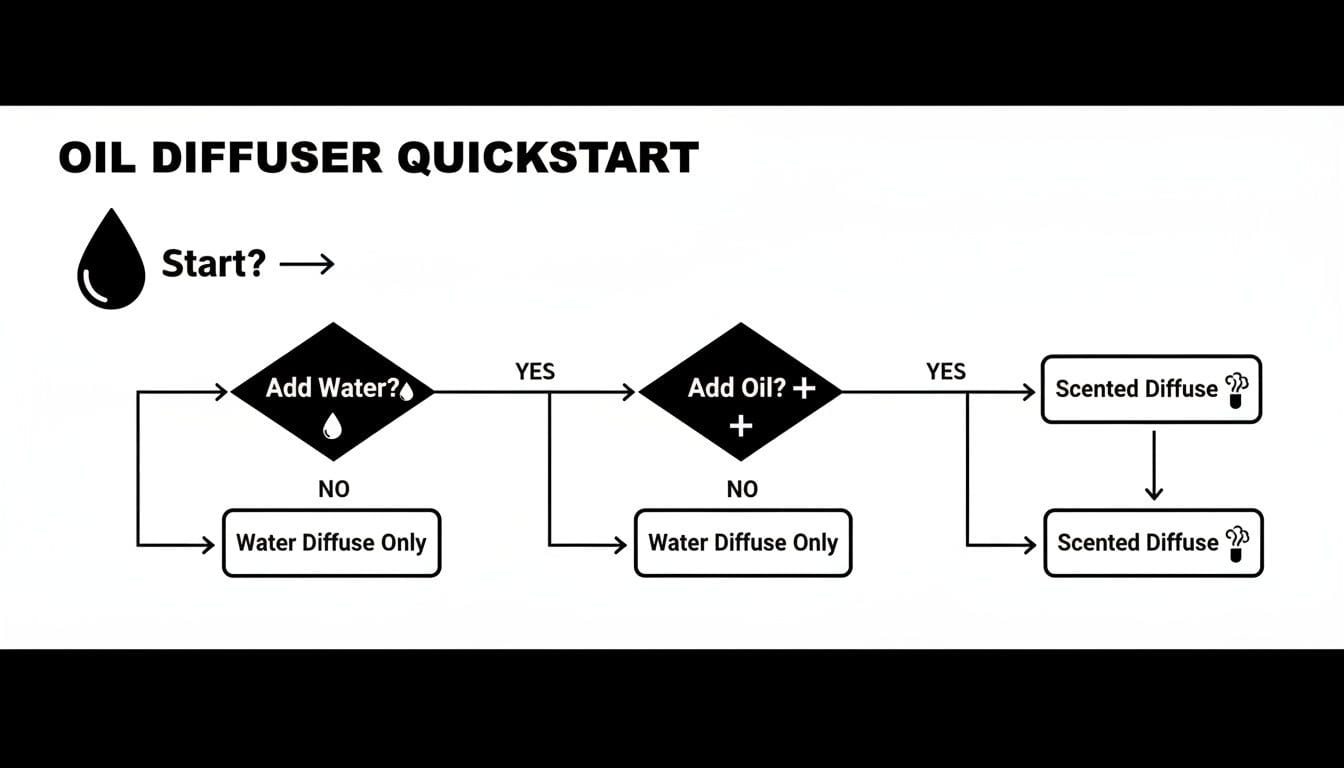
This visual guide really confirms how straightforward most diffusers are, making them an incredibly accessible wellness tool for just about anyone.
Making the Right Choice for Your Space
Ultimately, your lifestyle and the room you plan to use it in are the biggest clues to which diffuser you should choose. A quiet ultrasonic model is a dream for a meditation corner or bedroom, while a potent nebuliser is brilliant for filling a large, open-plan living room with fragrance.
The most important question to ask yourself is: what is my main goal? Am I looking for deep therapeutic benefits? A beautiful background scent? Or a device that also adds a little moisture to the air? Your answer will instantly point you in the right direction.
Don't forget about maintenance, either. Ultrasonic and heat diffusers often need a quick wipe-down more frequently to prevent residue buildup. Nebulisers, on the other hand, just need their glass components cleaned occasionally. It's a small detail, but one that makes a difference in day-to-day use. For those who enjoy exploring the world of luxury home fragrance, you might find this guide to the Dr Vranjes diffuser experience an interesting read.
At the end of the day, understanding these key differences means you can choose a diffuser with confidence, knowing it will perfectly complement your wellness journey. For a deeper dive into specific features like timers, lighting, and materials, be sure to check out our detailed guide on what to look for when buying a diffuser.
Integrating Essential Oils Into Your Wellness Routines
Your aromatherapy oil diffuser is so much more than a simple air freshener. Think of it as a powerful tool for personalising your space to support your wellbeing. By thoughtfully selecting and blending essential oils, you can create specific atmospheres that align perfectly with your daily rituals, turning mundane moments into mindful experiences.
It's a bit like scent alchemy. You get to mix and match aromas to craft the exact mood you need—whether that's focus for your workday, calm for meditation, or rejuvenation after a workout. This is where your diffuser stops being a device and starts becoming part of a truly holistic lifestyle.
Across Australia’s vibrant wellness scene, the aromatherapy market has blossomed, now valued at around AUD 80 million. A huge part of this comes from people in cities like Sydney, Melbourne, and Brisbane turning to natural solutions like diffusers for stress relief. This trend sits perfectly with the holistic health values already embraced by our community of yoga practitioners and meditators.
A Blend for Meditation and Mindfulness
Creating a dedicated space for mindfulness is key, and scent is an incredibly powerful anchor for this practice. The right aroma can signal to your mind that it’s time to quieten down, turn inward, and just be present. For this, grounding, earthy, and resinous oils work wonders.
To deepen your time on a zabuton meditation cushion, try this blend designed to foster a profound sense of tranquility and focus.
- 4 drops Frankincense: Revered for centuries, this oil helps quieten mental chatter and invite a meditative state.
- 3 drops Sandalwood: A rich, woody oil that helps to ground your energy and soothe the nervous system.
- 2 drops Bergamot: Adds a light, uplifting citrus note to prevent the blend from feeling too heavy, gently easing away stress.
This combination creates a serene, almost sacred atmosphere that supports deep reflection and stillness, helping you get the most out of your practice.
A Blend for Post-Workout Recovery
After a challenging session on your yoga mat or an invigorating dip in a portable ice bath, your body and mind need to shift gears into recovery mode. An aromatherapy diffuser can fill your space with scents that feel both refreshing and restorative, helping that transition along.
This blend is designed to awaken your senses while helping to ease muscle tension and promote a feeling of clean, cool relief.
Post-Workout Recovery Blend Recipe:
- 4 drops Eucalyptus: Known for its crisp, clean aroma that helps your breath feel deeper and clearer.
- 3 drops Peppermint: Provides an energising, cooling sensation that feels incredible after physical exertion.
- 2 drops Rosemary: Helps to improve focus and can help shake off any lingering feelings of fatigue.
Diffusing this as you stretch or rehydrate can transform your post-workout routine into a truly holistic recovery ritual. Don't forget to refuel with a high-quality vegan protein powder to support muscle repair.
A Blend for Stress Relief and Calm
For many of us, the home office is a hub of productivity, but it can also be a major source of stress. Placing a diffuser on your desk can help create a beautiful boundary between work pressure and personal calm.
This blend is perfect for those days when you need to stay focused yet relaxed, using oils known for their ability to soothe anxiety and lift your mood. To support your wellbeing even further, especially when it comes to restorative rest, you might also look into specific oils for different needs. For example, you can learn more about the 5 best essential oils for sleep apnea as part of a wider approach to wellness.
Stress-Relief & Calm Blend:
- 5 drops Lavender: The classic oil for relaxation, renowned for its ability to calm the nervous system.
- 3 drops Bergamot: A lovely citrus oil that is both uplifting and calming, perfect for easing feelings of frustration.
- 1 drop Ylang Ylang: Adds a touch of sweet floral to promote a more positive outlook.
When you pair these simple practices with other wellness habits, like taking Teelixir supplements, you create a powerful synergy for nurturing your body and mind from the inside out. Your diffuser truly becomes a daily partner in your wellbeing journey.
Your Guide to Safe and Effective Diffuser Use
Getting the most out of your aromatherapy oil diffuser really comes down to using it safely and mindfully. When you nail the best practices, you can be sure every session is filling your space with pure, beautiful aroma without any worries. Think of it as turning your home into a genuine wellness retreat.
These simple, practical tips will help you use your device effectively and responsibly, every single time.
The most important step, right from the start, is choosing the right oils. Always, always go for 100% pure, high-quality essential oils instead of synthetic fragrance oils. While those fragrance oils might smell nice, they’re typically made from artificial compounds that have zero therapeutic properties. Worse, they can even damage the delicate ultrasonic parts inside your diffuser.
Understanding Diffusion Times and Cycles
Here’s one of the biggest myths in aromatherapy: running your diffuser 24/7 gives you more benefits. The truth is, it’s actually the opposite. Your sense of smell gets used to an aroma over time—a phenomenon called olfactory fatigue—which means you stop noticing the scent and its wonderful effects.
To get around this, it's much better to diffuse intermittently.
- Optimal Cycle: A cycle of 30-60 minutes on, followed by at least 30-60 minutes off, is the sweet spot.
- Benefits: This approach stops your senses from getting overwhelmed, helps you conserve your precious essential oils, and ensures you feel the full therapeutic impact each time you switch it on.
Thankfully, most modern aromatherapy oil diffusers have built-in timers, making it super easy to set these healthy cycles and just forget about them.
Safety Considerations for Your Home
While aromatherapy is generally very safe, a little bit of mindfulness goes a long way, especially if you have children or pets at home. Their systems are much more sensitive, so it’s important to adjust your diffusing habits accordingly.
Good ventilation is your best friend. Make sure the room has some airflow, even just an open door or a slightly cracked window. This simple step prevents the aroma from becoming too concentrated and overpowering, creating a lovely, subtle scent experience for everyone.
Simple Cleaning for a Pure Aroma
Keeping your diffuser clean is a non-negotiable. Oil residue can build up over time, which not only affects how much mist comes out but can also muddle the scent of your beautiful blends. A quick, simple cleaning routine is all it takes to keep your device running perfectly.
A clean diffuser delivers a pure aroma. Neglecting maintenance can lead to a muddled scent and may even shorten the lifespan of your device.
Here’s a simple step-by-step guide to keep your diffuser in top condition:
- Unplug the Unit: Always disconnect your diffuser from its power source before you start cleaning. Safety first!
- Empty the Reservoir: Pour out any leftover water from the side opposite the air outlet to avoid getting water into the electronics.
- Wipe It Down: Grab a soft cloth or a cotton swab, dip it in a little rubbing alcohol or white vinegar, and gently wipe the inside of the reservoir. Pay extra attention to the little ultrasonic plate at the bottom.
- Rinse and Dry: Rinse the reservoir with clean water (again, avoiding the electronics!) and wipe it completely dry with a soft cloth.
Doing this quick clean every few uses will keep your aromatherapy oil diffuser working just like new. For a more detailed walkthrough, you can check out our complete guide on how to use an essential oil diffuser.
Got a few questions before you dive in? We get it. Starting something new always comes with a bit of curiosity. Here are the most common queries we hear, answered to help you get the most out of your new aromatherapy oil diffuser from day one.
Think of this as your quick-start guide to a smooth, safe, and beautiful aromatherapy experience.
Can I Use Any Essential Oil In My Diffuser?
This is a big one. It’s absolutely crucial to use high-quality, 100% pure essential oils. Steer clear of synthetic fragrance oils – they don't have any therapeutic benefits and their chemical makeup can clog and damage your diffuser’s internal mechanics over time.
While most pure essential oils are fine, some thicker, more resinous oils like sandalwood or vetiver might mean you need to clean your device a bit more often to prevent buildup. Always start with the number of drops recommended in your diffuser's manual to keep things safe and effective.
How Often Should I Clean My Aromatherapy Oil Diffuser?
For the best performance and the cleanest scent, a quick clean after every few uses is a great habit to get into. Then, aim for a deeper clean about once a month. Good maintenance is the secret to a long-lasting diffuser.
- A quick clean is as simple as rinsing the water tank and wiping it completely dry with a soft cloth.
- A deep clean involves using a cotton swab dipped in a little white vinegar or rubbing alcohol to gently dissolve any stubborn oil residue on the ultrasonic plate.
This simple routine ensures you're always enjoying the pure, unadulterated aroma of your beautiful essential oil blends.
Is It Safe To Leave My Diffuser On All Night?
It’s actually better to use your aromatherapy oil diffuser in cycles rather than leaving it running for hours on end. We suggest running it for 30-60 minutes, then giving it (and your nose) a break for at least an hour. This helps avoid "olfactory fatigue," which is just a fancy way of saying your nose gets used to a scent and you stop noticing it.
Intermittent use means you get the full therapeutic benefits without being overexposed, and it helps your precious oils last longer. For bedtime, look for a diffuser with a built-in timer you can set for an hour or so as you drift off.
What Is The Difference Between A Diffuser And A Humidifier?
Ah, a classic question! The main job of a diffuser is to break down essential oils into tiny particles and disperse them into the air for aromatherapy. As a side effect, it adds a tiny bit of moisture to the room.
A humidifier, on the other hand, is built specifically to add a significant amount of moisture to the air to combat dryness. You should never put essential oils into a standard humidifier, as the oils can eat away at the plastic and ruin the machine. An aromatherapy oil diffuser is designed to handle essential oils safely, though some hybrid models can be found in our humidifiers collection.
Ready to transform your home into a sanctuary of calm and wellbeing? At Wellness Apothecary, we have curated a stunning collection of high-quality diffusers to suit every style and need. Explore our range and find the perfect aromatherapy oil diffuser to support your wellness journey today.


