


The benefits of cold water therapy are seriously impressive, ranging from razor-sharp mental focus and quicker muscle recovery to a stronger immune system and a noticeable lift in your mood. When you intentionally expose your body to the cold, you kickstart some powerful physiological responses that can reduce inflammation, boost your alertness, and build some serious resilience to stress.
Why Everyone Is Talking About Cold Water Therapy
Cold water therapy, sometimes called cryotherapy, has absolutely exploded in popularity across Australia. You’ll find everyone from professional athletes looking for that competitive edge to wellness seekers wanting a natural way to boost their vitality giving it a go.
The practice is simple: you immerse your body in cold water (usually around 10-15°C) for a short burst of time. It’s a way of challenging your body in a controlled way to stimulate some pretty amazing adaptations. The idea is simple but profound: what doesn't freeze you makes you stronger.
This isn’t just some fleeting trend; it’s a powerful biohacking tool that uses your body's own survival instincts for modern wellness. When you plunge into the cold, your blood vessels clamp down. Then, as you warm up, they open wide. This flushing action helps clear out metabolic waste from your muscles, cuts down on swelling, and rushes fresh, oxygenated blood right where it’s needed most. It’s a big reason why so many people feel incredibly refreshed and energised afterwards. For a more detailed look at the science, check out this deep dive into cold plunge therapy.
The Core Advantages
A huge part of the appeal of a cold plunge is how its benefits touch both your physical and mental health. While that initial shock of the cold can feel intense, sticking with it actually trains your nervous system to handle stress more effectively, leaving you feeling calmer and more centred in your day-to-day life.
Many people bring this practice into their routine for specific goals.
- For the Athlete: It's an absolute game-changer for managing that post-workout soreness and speeding up muscle repair.
- For the Professional: It offers a potent mental reset, clearing away brain fog and boosting focus like nothing else.
- For Overall Wellbeing: It’s a fantastic way to support your immune system and can even improve your sleep quality over time.
The shock of the cold temperature on the body results in less inflammation in the muscles, which is a primary cause of soreness after exercise. This is why it has become a cornerstone of recovery protocols.
Cold Water Therapy Benefits at a Glance
To give you a clearer picture, here’s a quick summary of the main advantages people get from regular cold water immersion. This table breaks down what you can expect and who might find it most useful.
| Benefit Category | Primary Effect | Best For |
|---|---|---|
| Physical Recovery | Reduces inflammation and muscle soreness (DOMS). | Athletes, gym-goers, and anyone with an active lifestyle. |
| Mental Acuity | Boosts alertness, focus, and mood-regulating hormones. | Professionals, students, or anyone needing a mental edge. |
| Immune Support | Stimulates the production of white blood cells. | Individuals looking to strengthen their natural defences. |
| Stress Resilience | Trains the nervous system to better manage stress. | Anyone experiencing daily stress or seeking greater mental calm. |
Ultimately, making this practice a consistent part of your routine is key. Having a portable ice bath at home makes it easier than ever to access these benefits whenever you need them.
How Your Body Responds to an Ice Bath
Ever wondered what’s actually happening inside your body when you take that chilly plunge? It’s not just a shock to the system. It’s a powerful chain reaction that kicks off a whole host of benefits, starting the second the cold water hits your skin.
Imagine your muscles after a tough workout. They're like a dirty sponge, soaked with metabolic by-products like lactic acid that make you feel sore and tired.
When you step into that icy water, your body’s first priority is to protect your vital organs by keeping your core warm. This triggers something called vasoconstriction, where the blood vessels near your skin and in your limbs clamp down and get narrow. It’s like your body is squeezing that dirty sponge, pushing out all the old, stagnant fluid full of metabolic waste.
The Rebound and Refresh Effect
But the real magic happens when you get out. As you start to warm up, the opposite kicks in: vasodilation. Your blood vessels open back up, often wider than before, creating a powerful rebound.
Suddenly, fresh, oxygenated, nutrient-rich blood rushes back into those tissues. This circulatory "rebound" is what recovery is all about. It delivers everything your muscles need to repair and rebuild, while efficiently flushing away the waste you just squeezed out. It’s this rapid exchange that helps dial down inflammation and soothe those aching muscles.
This infographic breaks down how this simple process leads to major benefits for your focus, recovery, and immune strength.
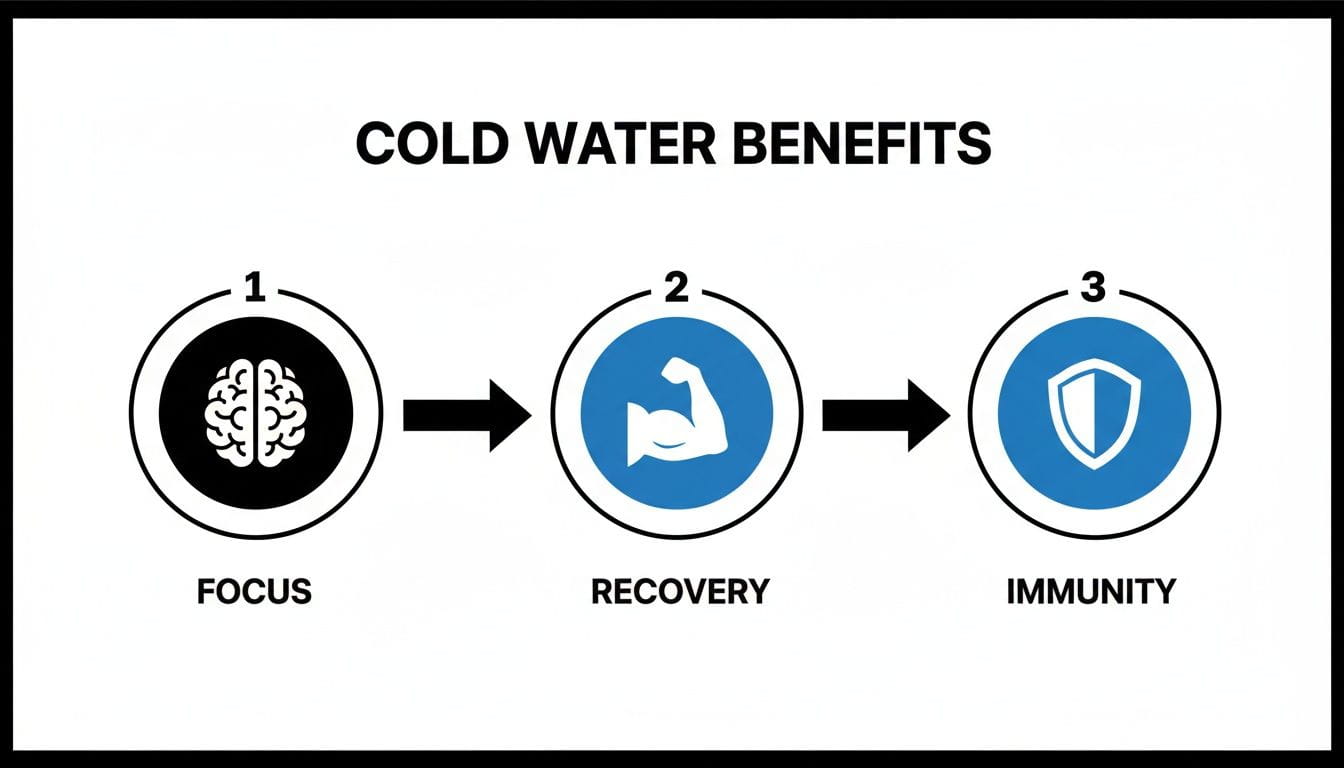
As you can see, that initial shock sets off a positive cascade, starting with mental alertness and flowing right through to physical repair and a stronger, more resilient system.
The Hormone Rush That Boosts Your Mood
It's not just a physical flush, either. The cold shock sends a major signal to your nervous system. That abrupt temperature drop tells your brain to release a flood of powerful chemicals, especially a neurotransmitter called norepinephrine.
Norepinephrine is a big player in focus, attention, and mood. A huge spike in this chemical can leave you feeling incredibly alert and even euphoric. It's a key reason so many people report feeling unbelievably clear-headed and energised after a cold plunge. If you want to dive deeper into this, check out our guide on why you feel so good after an ice bath.
This rush of norepinephrine doesn't just sharpen your mind; it also helps reduce inflammation throughout the body, directly linking the mental buzz to the physical recovery process.
Building Resilience Through Controlled Stress
This whole experience is a brilliant example of a biological principle known as hormesis. The core idea is that exposing your body to a small, manageable dose of a stressor can trigger adaptations that make you stronger and more resilient.
Think about it like lifting weights. You apply a measured stress to your muscles, creating tiny tears. Your body doesn't just patch them up; it rebuilds them stronger than before so it can better handle that same stress next time.
Cold water therapy does the exact same thing for your nervous system, circulatory system, and even your immune system. Every time you brave the cold, you're training your body to manage stress more efficiently. This resilience isn't just about handling cold; it translates to how you handle everyday psychological and emotional stressors, leaving you feeling calmer and more in control. Making this a regular practice with a convenient portable ice bath is a great way to consistently build this resilience right from home.
Building a Bulletproof Immune System and a Calmer Mind
Beyond the immediate rush and faster muscle repair, some of the most powerful benefits of cold water therapy happen deep inside your body’s core systems. Regular plunges can seriously upgrade your immune defences and completely change how you handle stress, building a more resilient, unflappable you.
Think of this practice as a training camp for your body, getting it ready to face whatever physical or mental challenges come your way.
Fortifying Your Body's Defences
Imagine your immune system as a personal security detail, always on the lookout for threats. A dip in cold water is like putting that team through an intense, high-alert training drill. The initial shock is thought to kickstart the production of leukocytes—your white blood cells—which are the frontline soldiers that hunt down viruses and bacteria.
By introducing your body to this controlled stress, you’re essentially telling it to stay on its toes. Over time, this can lead to a stronger, more responsive immune system. This isn't just a nice theory; it’s something many people notice firsthand, reporting they get sick far less often throughout the year.
One major study showed just how effective this can be. A systematic analysis from the University of South Australia discovered that people who took short, cold showers every day for 30 days had a 29% reduction in taking sick days from work. It’s a compelling link between consistent cold exposure and a more robust immune response. You can read the full findings from the UniSA study to learn more.
Training Your Nervous System for Calm
Stress is a non-negotiable part of life, but how your body reacts to it is something you can absolutely train. Cold water therapy is one of the best tools for building this kind of resilience. The moment you step into an ice bath, your sympathetic nervous system—the "fight-or-flight" response—hits the panic button. Your heart races, you gasp, and every muscle tenses.
The goal, however, is to consciously take back control. By focusing on slow, deliberate breathing, you activate your parasympathetic nervous system, often called the "rest-and-digest" system. This is what brings a wave of calm over your body.
Practicing this switch from a state of panic to a state of calm, all while under the controlled pressure of an ice bath, is like lifting weights for your nervous system. You're building mental muscle.
This skill doesn't just stay in the ice bath; it follows you into your daily life. When you're hit with a stressful situation at work or at home, your body is better prepared to handle the physiological storm. Instead of letting stress take over, you have the practiced ability to stay calm, think clearly, and respond with intention. The same UniSA review found that cold water immersion offers real, short-term mental health boosts, including a significant drop in self-reported stress for hours after a plunge.
Making this a regular habit is easy when you have the right gear. A portable ice bath at home means you can consistently build that stress-resilience muscle without any fuss. Try pairing your plunge with a few minutes of quiet focus on a meditation cushion beforehand to get your mind right, creating a powerful ritual for both mental and physical strength.
Accelerating Muscle Recovery for Peak Performance
If you’re someone who pushes your physical limits, whether you're a dedicated gym-goer or a competitive athlete, you know that recovery isn't an optional extra—it's everything. This is where cold water therapy really comes into its own, acting as a powerful ally for soothing your muscles after a tough session.
The science is actually quite straightforward. When you train hard, you create microscopic tears in your muscle fibres, which is what triggers inflammation and that all-too-familiar post-workout ache.
The sharp cold of an ice bath causes your blood vessels to constrict (a process called vasoconstriction), which helps dial down the swelling and inflammation in your muscles almost immediately. By calming that initial inflammatory response, you’re essentially giving your body a head start on the repair process, helping you manage the aches that follow a big workout.
Conquering Delayed Onset Muscle Soreness
One of the biggest hurdles to consistent training is Delayed Onset Muscle Soreness (DOMS). It’s that familiar stiffness and pain that tends to peak 24 to 48 hours after you’ve pushed yourself. This is where cold water therapy becomes incredibly practical.
Regular cold plunges have been shown to seriously lessen the severity of DOMS. By helping to flush out metabolic waste products and taming that post-exercise inflammation, you can bounce back much faster. That means less time feeling stiff and sore, and more time getting ready for your next session. To get a deeper understanding of the science, you can explore the therapeutic effects of ice baths on muscle recovery in our detailed guide.
This isn’t just a theory; it’s a strategy used by professional athletes all over the world to stay in peak condition. They count on ice baths to recover between demanding training days and competitions, making sure their bodies are always ready to perform.
The shock of the cold forces the body to reduce inflammation in the muscles, which is a primary cause of soreness after exercise. It's become a cornerstone of recovery for a reason.
Crafting Your Complete Recovery Ritual
While an ice bath is a game-changer for recovery, its effects are even more powerful when it’s part of a complete post-workout ritual. Think of the plunge as hitting the reset button—your body still needs the right fuel and comfort to fully rebuild and get stronger.
Here’s how you can build a well-rounded routine:
- The Plunge: After your workout, take a dip in your portable ice bath. This is your first and best line of defence against inflammation.
- Refuel and Repair: Following your plunge, it's the perfect time to refuel. A post-workout shake with a high-quality vegan protein powder gives your muscles the essential amino acids they need to repair those micro-tears.
- Warm Up and Relax: Once you’re dry, slip into something comfortable. Our soft and flexible women’s yoga activewear is perfect for letting your body re-warm naturally, signalling that it's time to shift from stress to recovery mode.
By combining the immediate benefits of cold therapy with smart nutrition and comfort, you create a recovery system that lets you train harder, recover faster, and consistently hit your peak.
How to Start Cold Water Therapy Safely
Jumping into the world of cold water therapy is an exciting step, but the key is to start smart. Forget any wild ideas about having to endure an arctic plunge on day one. A slow, progressive approach is far more effective—and sustainable—in the long run.
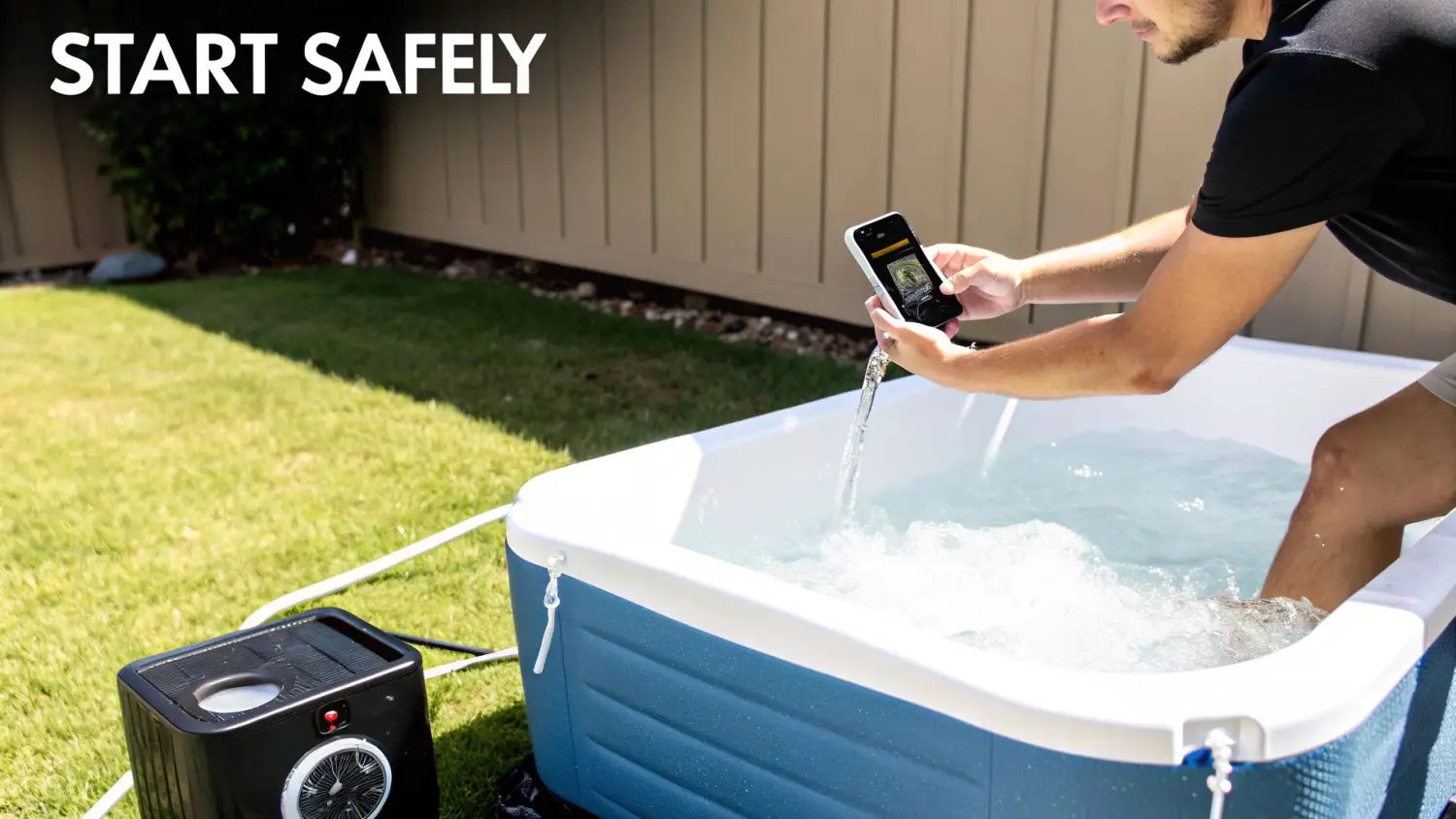
The best place to begin isn't in a dedicated ice bath, but right in your own shower. It's the simplest way to introduce your body to the cold without completely overwhelming your system. By gradually building your tolerance, you make the whole process feel more approachable and set yourself up for long-term success.
Your First Steps Into the Cold
The goal here is simple: teach your body and nervous system to stay calm under the initial stress of the cold.
- Start with Cold Showers: Finish your normal warm shower with just 30 seconds of cold water. Your main focus should be on your breathing. Slow, deep breaths are your best tool for calming that initial fight-or-flight shock.
- Gradually Increase Duration: Once 30 seconds feels manageable, push it to 60 seconds, then 90, and eventually work your way up to two or three minutes. Consistency is way more important than intensity at this stage.
- Listen to Your Body: Pay close attention to how you feel. A sharp, intense shock at the start is normal. Feeling dizzy, faint, or experiencing severe, painful shivering is not. If that happens, it’s your cue to get out.
The real aim for a beginner isn't to see how long you can endure the cold. It’s to learn how to control your breath and calm your mind when that cold hits. Master this, and you’ve built the foundation for a safe and effective practice.
Graduating to an Ice Bath
Once you're comfortable with a few minutes of a cold shower, you might be ready for the full immersion experience. This is where the practice really deepens.
Having a dedicated setup like a portable ice bath makes it incredibly convenient, allowing you to control the conditions and build a consistent routine right at home.
For your first plunge, stick to these guidelines for a positive and safe experience.
- Ideal Temperature: Aim for water between 10–15°C. You absolutely don't need it to be near freezing to get the benefits. Starting closer to 15°C is a sensible first step.
- Optimal Duration: For your first few sessions, stay in for just 2–5 minutes. Research shows this is a great window for triggering the good stuff physiologically without pushing your body too far.
- Focus on Breathing: Just like with the showers, your breath is your anchor. Before you even get in, take a few deep, calming breaths. Once you’re in the water, concentrate on keeping that slow, steady rhythm to manage the shock.
If you're looking for a more detailed walkthrough, check out our complete guide on how to do an ice bath at home.
Important Safety Considerations
While cold water therapy offers some incredible benefits, it simply isn't for everyone. Your safety has to come first.
The practice has become hugely popular across Australia, embraced by everyone from athletes to wellness communities. One report noted that around 82.6% of regular users were plunging 5–7 times a week. However, researchers are quick to warn of the risks for people with certain health conditions (like cardiovascular disease) and are calling for more standardised safety protocols. You can discover more about these findings on Athlete Sanctuary.
If you have any of the following conditions, you should be extremely cautious or avoid cold immersion altogether:
- Cardiovascular conditions (e.g., high blood pressure, heart disease)
- Raynaud's disease
- Pregnancy
- Cold urticaria (an allergy to cold)
Always, always listen to your body’s signals. The goal is to challenge yourself, not punish yourself. By starting slow and prioritising safety, you can confidently join the growing number of Aussies embracing the chill for better health.
Common Questions About Cold Water Therapy
Diving into cold water therapy for the first time? It’s natural to have a few questions. Let's walk through some of the most common ones to help you feel confident and ready to take the plunge.
How Often Should I Take an Ice Bath?
When you're starting out, consistency is far more important than intensity. Think of it like building any new habit.
Aiming for 3-5 sessions a week is a fantastic goal. This regular exposure is what helps your body adapt and is the real secret to unlocking the benefits of cold therapy. As you get more comfortable, you might want to increase the frequency. Many seasoned pros enjoy a daily dip, but the golden rule is always to listen to your body and find a rhythm that feels sustainable for you.
What Is the Best Temperature for Cold Water Therapy?
You don't need to dive into arctic-level temperatures to get the positive effects. In fact, research points to a sweet spot.
The most effective temperature range for cold water therapy is between 10-15°C. If you’re just beginning, it's a great idea to start on the warmer end of that scale, maybe around 15°C. As your body adapts, you can gradually decrease the temperature. Using a portable ice bath is perfect for this, as it gives you total control to find that perfect temperature that challenges you without overwhelming your system.
What Should My Post-Plunge Routine Look Like?
What you do after your plunge is a crucial part of the process. Your first instinct might be to jump into a scorching hot shower, but it's best to resist. That sudden temperature swing can be a big shock to your system.
Instead, focus on letting your body re-warm itself naturally. Here’s a simple routine:
- Dry Off: Start by gently patting yourself dry with a towel.
- Get Dressed: Slip into something warm and comfortable. Our soft women’s yoga activewear is perfect for this, letting your skin breathe as you warm up.
- Warm from Within: Your body is designed to generate its own heat, so let it do its job. You can help it along with some light movement or by sipping on a warm drink like a nourishing matcha green tea.
Can I Combine This with Other Wellness Practices?
Absolutely! Cold water therapy pairs beautifully with other wellness rituals, often making the whole experience even more powerful.
Many people find that spending a few minutes doing focused breathwork on a meditation cushion right before getting in can calm the mind and prepare the body for the cold shock. It’s also helpful to explore how different modalities work together; for example, by understanding the differences between heat therapy and cold therapy, you can create a personalised routine that supports your body and mind in a truly holistic way.
Ready to embrace the chill and experience these benefits for yourself? The Wellness Apothecary Portable Ice Bath makes it simple and convenient to start your cold water therapy journey from the comfort of your own home. Take control of your recovery and resilience today.


