


If you've ever wondered how a simple scent can soothe anxious feelings, the answer is beautifully simple: your nose has a direct line to your brain's emotional control centre. When you inhale a calming aroma like lavender or bergamot, those scent molecules go on a journey, triggering a relaxation response that can help quiet a racing mind and invite a sense of peace.
Finding Your Calm With Essential Oils
In our non-stop world, finding a moment of genuine calm can feel like an impossible task. Anxiety, stress, and that constant feeling of being overwhelmed are all too common. This is where aromatherapy comes in, not as a magic fix, but as a wonderfully practical and gentle tool to help you navigate the pressures of daily life. It’s less about masking feelings and more about creating an environment that supports your mental and emotional wellbeing.
The whole practice is centred on using concentrated plant extracts—essential oils—to promote a state of balance. When you breathe in the mist from an essential oil diffuser, those tiny scent molecules travel straight to the brain's emotional core. This can have a real, tangible effect on your mood, helping to lower stress and even influence physical responses like your heart rate and breathing.
A Natural Approach to Easing the Mind
Using essential oils for anxiety is really about tapping into that profound, primal link between our sense of smell and our emotions. It’s an incredibly simple practice to weave into your day, whether it’s during a quiet moment of reflection on your meditation cushion or as part of your wind-down routine after a long day. Combining aromatherapy with other wellness practices, like sipping on calming matcha or using Blue Lotus for relaxation, creates a holistic approach to managing stress.
Aromatherapy works so well because it’s a low-risk, low-tech, and low-cost way to manage symptoms effectively. It gives you a straightforward method to support your mental state without needing complicated steps or expensive equipment.
Here in Australia, aromatherapy is a popular complementary approach, with lavender essential oil often leading the way. In fact, a major review of 11 clinical trials involving 972 people found that 10 of those studies reported statistically significant drops in anxiety levels after participants inhaled lavender oil. You can read the full research about these findings to see just how effective it can be.
While essential oils are a fantastic tool, they work best as part of a bigger picture. Exploring other techniques for how to calm anxiety naturally can create a more complete and supportive approach to your overall wellness.
How Aromas Influence Your Mind and Body
Have you ever caught a whiff of a particular scent and been instantly transported back to a childhood memory? That’s the power of your sense of smell, which acts like a direct hotline to your brain's emotional control centre. This area, known as the limbic system, is where we process emotions, memories, and even our state of arousal.
When you breathe in the aroma from an essential oil, its tiny molecules travel up your nose and connect with your olfactory receptors. These receptors then send an immediate signal straight to the limbic system. This "scent signal" can prompt the brain to release crucial neurotransmitters like serotonin, often called the "feel-good" chemical, which is vital for regulating your mood and creating a sense of wellbeing.
This diagram breaks down just how quickly and powerfully inhalation can create a calming effect.
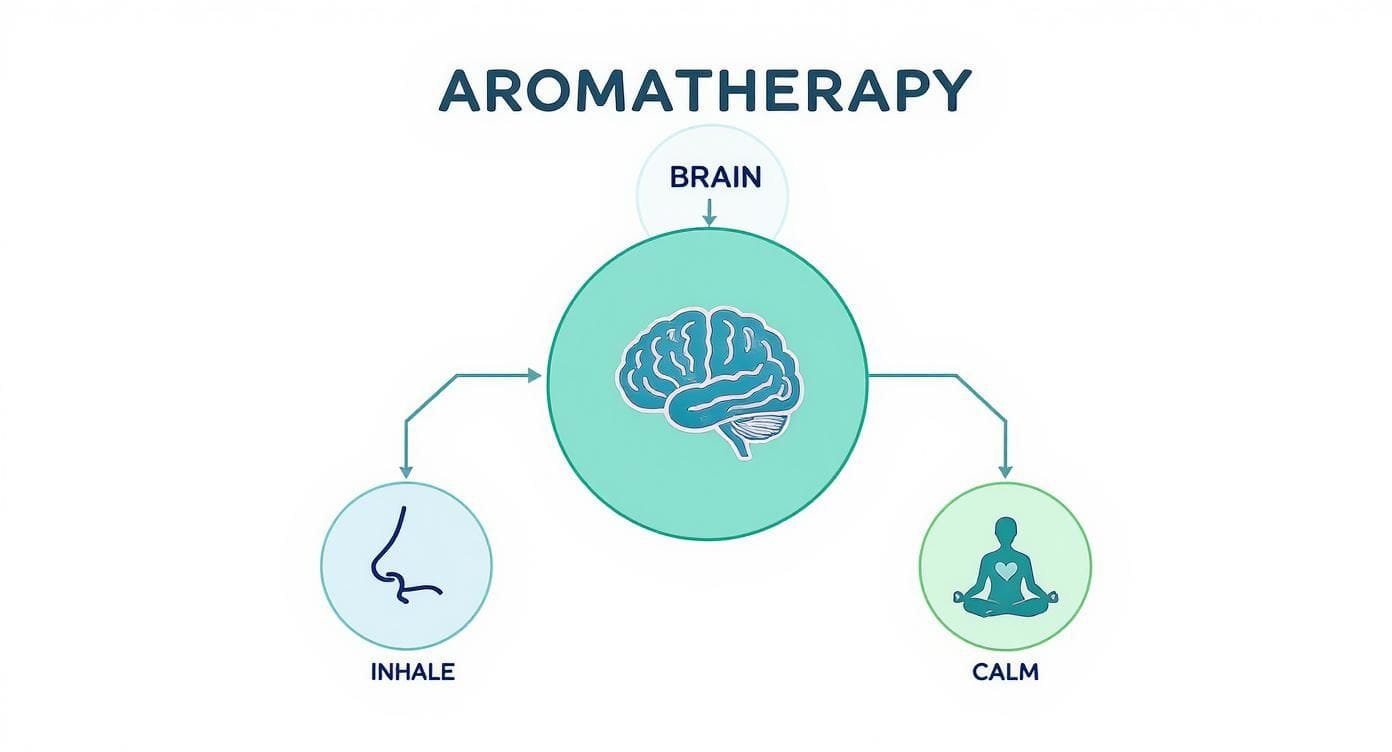
It’s a simple yet profound process: inhaling an aroma directly signals the brain, kickstarting a cascade that leads to both mental relaxation and physical calmness.
The Science of Scent and Stress
This biological process is far more than just a pleasant experience; it triggers real, measurable changes in your body. For example, those calming signals can help dial down the production of cortisol, our primary stress hormone. High cortisol levels are closely linked with feelings of anxiety, so bringing them down can make a noticeable difference in how you feel.
At the same time, this process influences your autonomic nervous system—the part that controls involuntary functions like your heart rate and breathing. Soothing aromas can help shift you out of the frantic "fight-or-flight" state (the sympathetic nervous system) and into the restorative "rest-and-digest" mode (the parasympathetic nervous system).
This shift is precisely why you might notice your breathing deepen, your heart rate slow, and your muscles unclench when you diffuse a calming essential oil. It’s your body responding directly to these aromatic cues.
This powerful connection shows that aromatherapy isn't just wishful thinking; it's a practice grounded in biology. It uses the body's own wiring to create tangible shifts in your mental and physical state. For a deeper dive into the practice, you can explore what aromatherapy is and how it fits into a balanced lifestyle.
The Best Essential Oils for Soothing Anxiety
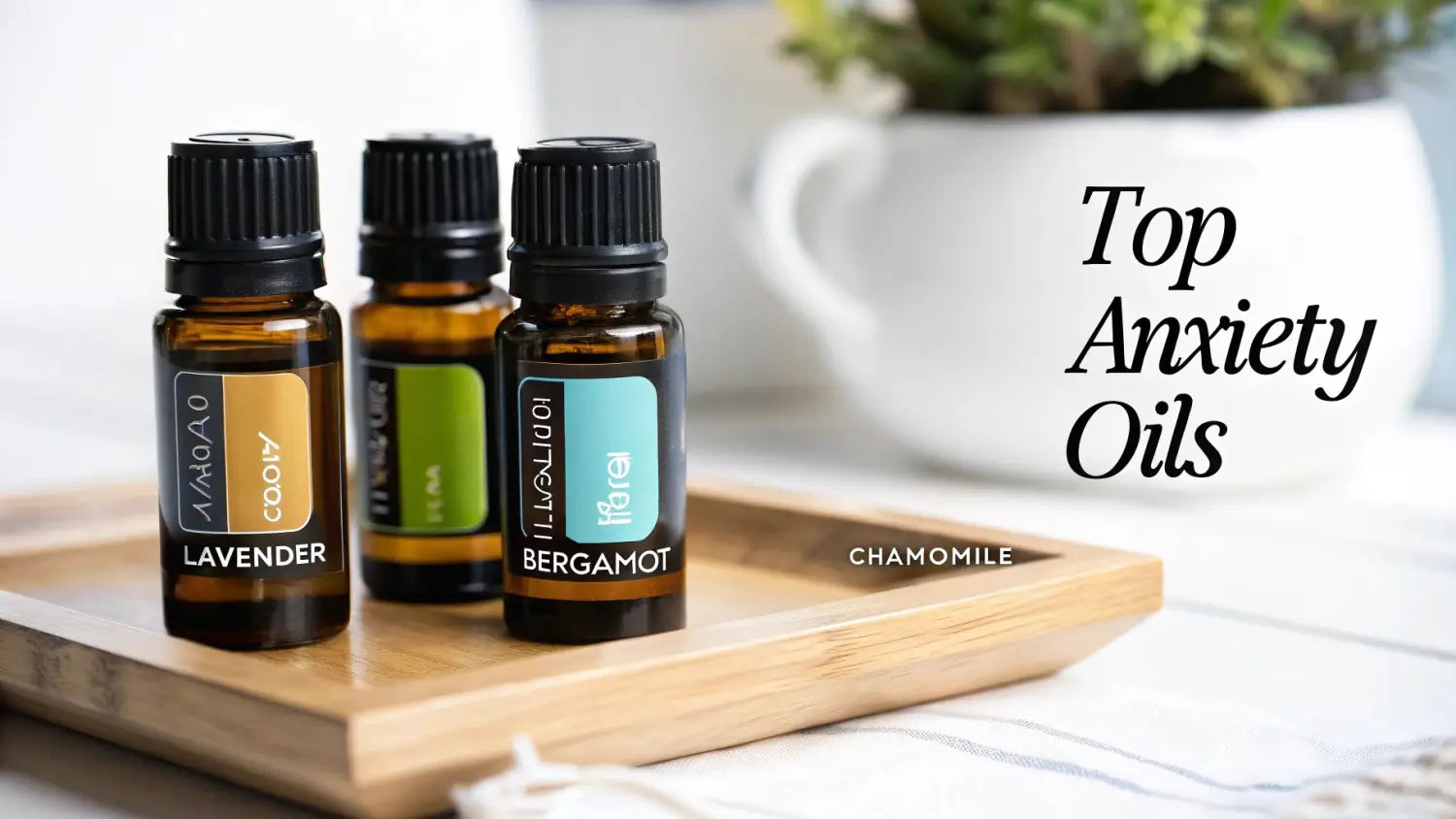
With so many beautiful oils out there, choosing the right one can feel a little overwhelming at first. But the truth is, a small handful of oils have consistently proven their worth when it comes to creating a sense of calm and easing those anxious feelings.
Think of each oil as having its own unique personality. Some are like a warm, cosy blanket, perfect for winding down at the end of the day. Others offer a brighter, gentler calm that helps you navigate a stressful afternoon. Let's get to know the top performers for anxiety relief.
Lavender: The Classic Calmer
When you think of calming essential oils, lavender is probably the first one that comes to mind—and for good reason. It’s arguably the most studied and well-known oil for stress and anxiety. Its soft, floral aroma is instantly recognisable and deeply relaxing.
Lavender is particularly brilliant at quieting a busy mind and soothing the nervous system. This makes it a go-to for improving sleep. If you find your thoughts racing just as your head hits the pillow, diffusing a little lavender can create the serene atmosphere you need for deep, restorative rest.
- Scent Profile: Floral, sweet, and herbaceous.
- Best For: Promoting sleep, easing restlessness, and creating a peaceful wind-down routine.
- How to Use: Add a few drops to your essential oil diffuser about an hour before you plan to go to bed.
Bergamot: The Uplifting Soother
Bergamot is such a special citrus oil. While most of its citrus cousins are known for being purely energising, bergamot has this wonderful dual ability to be both uplifting and calming at the same time. It’s a fantastic choice for tackling daytime anxiety.
Its bright, zesty aroma helps to lift your mood and dissolve feelings of worry or sadness, but without making you feel sleepy. This makes it perfect for diffusing in your office or during those moments when you need to feel both focused and at ease.
Roman Chamomile: The Gentle Reassurer
Just like sipping a warm cup of chamomile tea, this essential oil offers a deeply comforting and gentle sense of peace. Its sweet, almost apple-like scent is incredibly soothing, especially when you're dealing with nervous tension or irritability.
Roman Chamomile is like a warm hug in a bottle. It's the one I reach for when feeling emotionally fragile or overwhelmed. It just helps to calm frayed nerves and instil a feeling of gentle reassurance.
Its gentle nature makes it a wonderful option for creating a tranquil space for mindfulness. Try diffusing it while you sit on your meditation cushion to deepen your practice and quiet internal chatter.
Frankincense: The Grounding Meditator
With a rich history steeped in spiritual and ceremonial practices, Frankincense has a warm, spicy, and woody aroma that encourages a profound sense of grounding. It doesn’t just calm the mind; it helps to centre it.
This oil is an incredible companion for meditation, a gentle yoga flow on your favourite yoga mat, or any practice that calls for focus and a quiet mind. It naturally encourages slower, deeper breathing, helping you connect to the present moment and cut through anxious thoughts about the past or future.
Ylang-Ylang: The Joyful Relaxer
Ylang-Ylang has an exotic, intensely sweet floral aroma that is often associated with feelings of joy, even euphoria. It has a powerful ability to ease stress, frustration, and anger while promoting a more positive, open-hearted outlook.
While it's quite potent, even a small amount can help soothe nervous tension and settle a racing heart, making it a powerful ally against those acute feelings of anxiety. It blends beautifully with citrus oils like Bergamot, which helps to balance its rich floral notes and create a wonderfully balanced, mood-boosting aroma.
Safe and Effective Ways to Use Essential Oils
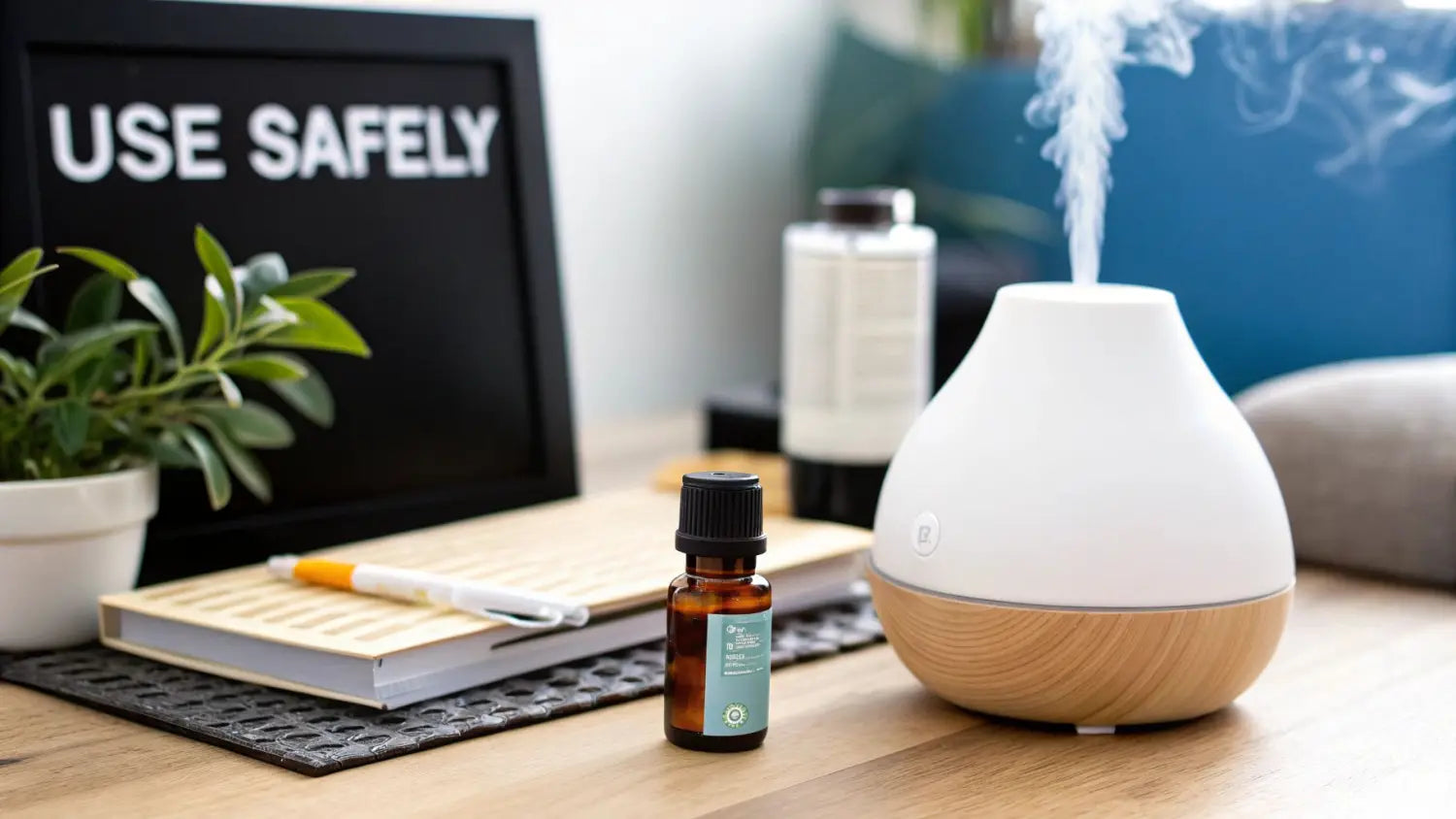
To really get the most out of your essential oils for anxiety, knowing how to use them is just as important as choosing the right one. When handled correctly, these potent plant extracts can become incredible allies in your daily self-care routine.
The two best and most common methods are aromatic diffusion and topical application. Each one offers a unique way to experience the calming properties of the oils, letting you tailor your approach to whatever you need in the moment. Let’s dive into how to get started safely.
Aromatic Use: Creating a Calm Atmosphere
One of the simplest ways to invite a sense of calm into your space is through diffusion. An ultrasonic essential oil diffuser is the perfect tool for the job. It uses water and vibrations to create a fine, cool mist, gently dispersing the aroma into the air without using heat, which helps preserve the oil's therapeutic qualities.
This is a fantastic, low-effort way to manage ambient stress during the day or to set a relaxing mood for meditation or winding down before sleep. Just add a few drops of your chosen oil to the water, switch it on, and breathe.
It’s good to know that not all oils are friends with every diffuser. To protect your device and ensure you're being safe, it's worth taking a moment to learn more about what essential oils should not be used in a diffuser.
Here in Australia, aromatherapy is a huge part of the complementary medicine landscape. A national survey found that about 11% of adults use aromatherapy oils, with Aussies spending around AUD 250 million on them each year. While they’re widely used for wellbeing, it helps to know that these products are regulated for quality and safety, but not always for specific therapeutic claims. You can discover more insights about aromatherapy usage in Australia from recent studies.
Topical Use: Applying Oils Safely to Your Skin
Applying essential oils directly to your skin allows their beneficial compounds to be absorbed right where you need them. But this method comes with one non-negotiable rule: always dilute essential oils with a carrier oil before they touch your skin.
Essential oils are incredibly concentrated and can cause irritation or an adverse reaction if you apply them "neat" or undiluted. Carrier oils—like jojoba, sweet almond, or coconut oil—are gentle, plant-based oils that safely "carry" the essential oil onto your skin.
Before you start creating your own blends, it’s crucial to get the ratios right. A safe dilution ensures you get all the benefits without any of the risks.
| Desired Strength | Essential Oil Drops | Carrier Oil Amount (e.g., 10ml) |
|---|---|---|
| 1% Dilution (Gentle/Daily Use) | 1-2 drops | 10ml |
| 2% Dilution (Common/Most Applications) | 3-4 drops | 10ml |
| 3% Dilution (Short-Term/Specific Issues) | 5-6 drops | 10ml |
This table is a great starting point for adults. A 1% to 2% dilution is perfect for most applications, like a daily calming roller blend.
Once you’ve mixed your blend, you can massage it onto pulse points like your wrists, temples, or even the soles of your feet for a grounding effect. This direct application is perfect for those moments you need immediate, personal relief from feelings of anxiety or stress.
Creating Your Daily Anxiety Relief Rituals
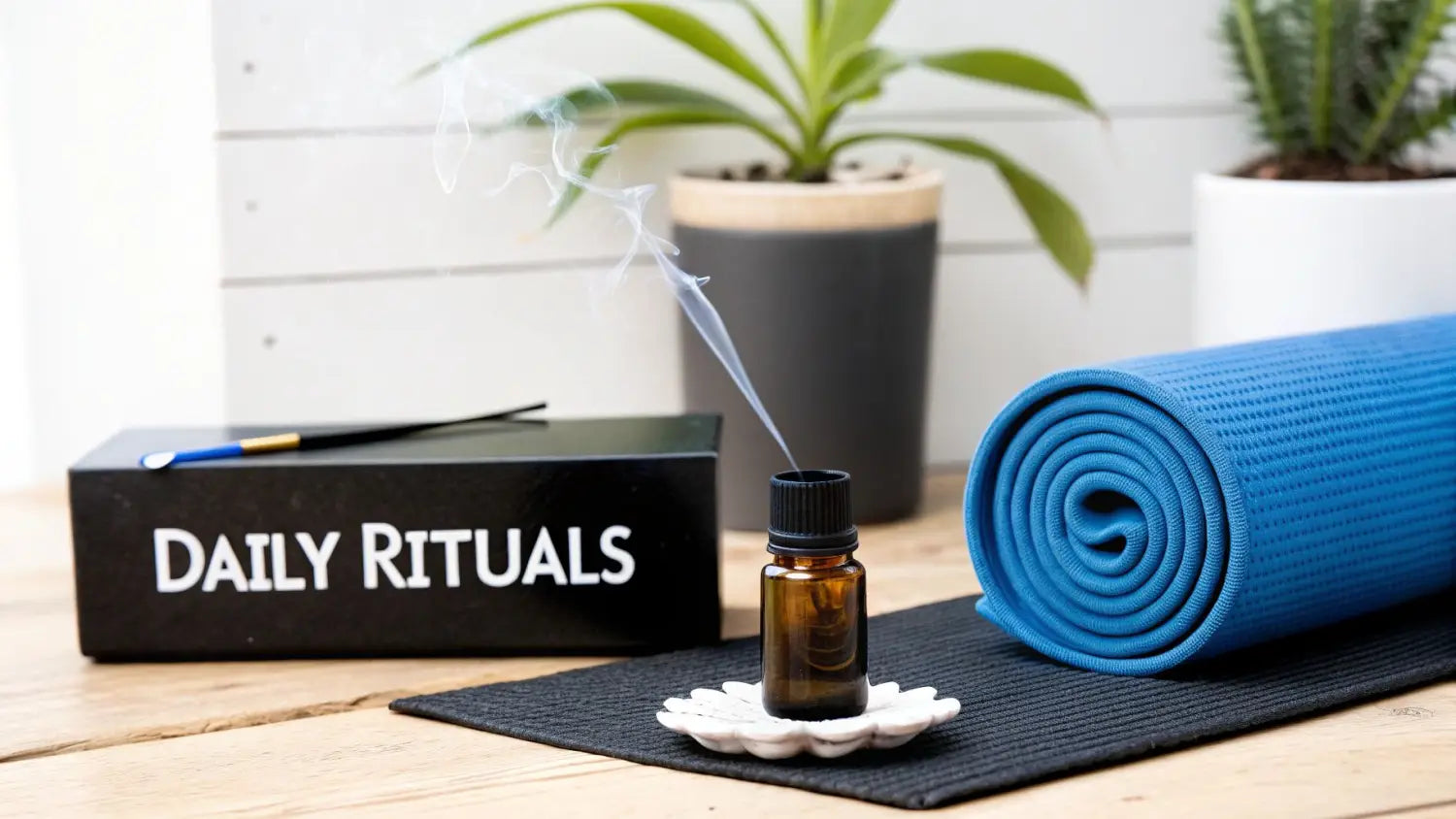
True, lasting change in how we manage anxiety doesn’t come from a quick fix. It’s built through small, consistent habits that support our nervous system day in and day out. When we weave essential oils into these moments, a simple scent can become a powerful anchor, cueing our mind and body to find a state of calm.
Imagine starting your morning not by grabbing your phone, but by spending just five minutes in quiet reflection on a comfortable meditation cushion. As you settle in, a gentle mist carrying Bergamot and Frankincense fills the air from your essential oil diffuser, helping to clear away the mental clutter and set a positive tone for the day.
When you pair a specific aroma with a mindful practice like this, you’re creating a potent sensory link. Over time, your brain learns to associate that scent with peace. Soon, just smelling that blend can trigger the same relaxing response, giving you an instant tool to pull from your pocket whenever stress begins to bubble up.
Crafting Your Personalised Rituals
The real magic of aromatherapy is how beautifully it adapts to your life. There’s no right or wrong way to do it. Your rituals can be as simple or as involved as you like, designed to fit into the pockets of time you already have. The goal is simply to create small, repeatable actions that signal safety and calm.
Maybe your ritual is ending the day with a gentle yoga flow on a supportive yoga mat. As you stretch and breathe in your favourite activewear, the soothing scent of Lavender from your diffuser helps you physically and mentally release the day's tensions, preparing your body for deep, restorative sleep.
A daily ritual doesn't need to be a grand gesture. Even just three deep, mindful breaths with a calming oil on your palms can be enough to interrupt a cycle of anxious thoughts and reset your state.
To get you started, here are two simple diffuser blends—one to greet the day and one to wind down.
-
Morning Calm Blend: Mix 3 drops of Bergamot with 2 drops of Frankincense. This combination is gently uplifting and grounding, perfect for promoting focus and a positive outlook without feeling overstimulating.
-
Evening Unwind Blend: Use 3 drops of Lavender and 2 drops of Roman Chamomile. This is the ultimate relaxation duo, ideal for quieting a busy mind, soothing frayed nerves, and paving the way for a peaceful night.
These recipes are just a starting point, of course. For more inspiration, exploring resources like 5 DIY Essential Oil Blends You Can Try At Home can help you discover new combinations that resonate with you. By pairing the power of scent with mindful practices, you build a holistic system of wellbeing that supports you from sunrise to sunset.
Choosing High-Quality Oils and Understanding Safety
To truly feel the benefits of using essential oils for anxiety, the quality of the oils you choose is everything. Not all bottles are created equal, and honestly, the market can be a bit tricky to navigate. It’s a lot like buying fresh, organic produce – you want the pure, unadulterated stuff to get the best results for your wellbeing.
So, what should you look for? A high-quality oil will always have its proper botanical name printed clearly on the label, like Lavandula angustifolia for Lavender. This small detail is a huge clue to its quality, as different species of the same plant can have completely different effects. The best brands are also really open about where their oils come from and how they're tested, making sure what you get is 100% pure plant extract and nothing else.
Key Safety Guidelines to Remember
While essential oils are completely natural, they are also incredibly concentrated and powerful, so it’s important to use them with respect. Following a few simple safety rules will make sure your experience with aromatherapy is a positive and effective one, giving you the confidence to use your oils safely.
First up, be aware that some oils, particularly citrus ones like Bergamot and Lemon, are phototoxic. This just means they can make your skin more sensitive to the sun if you apply them and then head outside. It’s always a good idea to quickly check the specific safety advice for any new oil you're trying.
It's also vital to be mindful when using essential oils around pets and children. Their little systems are much more sensitive, so it's best to diffuse in a well-ventilated space and for shorter bursts of time.
Finally, it’s always wise to chat with a healthcare professional before starting any new wellness practice, especially if you are pregnant, nursing, or have an existing health condition. This just ensures your journey into using essential oils for anxiety is both safe and supportive.
Having the right tools matters, too. For a little more guidance on that, check out our tips on what to look for when buying a diffuser.
Common Questions About Essential Oils
To wrap things up, let's go through some of the most common questions people have when they start using essential oils for anxiety. Think of this as a quick-reference guide to clear up any lingering doubts, so you can move forward on your aromatherapy journey with confidence.
How Quickly Do Essential Oils Work for Anxiety?
When you inhale a scent, the effect can feel almost instant—often within just a few minutes. This happens because the aromatic molecules take a direct pathway to the emotional centres of your brain.
If you're applying a diluted oil topically to your skin, it might take a little longer, maybe 20 to 30 minutes, to feel the full calming benefits as it absorbs. Just remember, consistency is key. Weaving aromatherapy into a daily ritual is what creates those deeper, more lasting results.
Can I Ingest Essential Oils for Anxiety?
This is a big one, and our advice is firm: we strongly recommend against ingesting essential oils. The only exception is if you are under the direct supervision of a healthcare professional who has advanced training in aromatherapy.
These oils are incredibly concentrated and can be toxic if swallowed. The safest and most effective ways to find anxiety relief are through aromatic methods (like using a diffuser) and topical application (when properly diluted on the skin).
Which Essential Oil Diffuser is Best for a Beginner?
For anyone just starting out, an ultrasonic diffuser is a fantastic choice. They're incredibly user-friendly, safe, and effective at creating a fine, therapeutic mist using just water and gentle vibrations.
When you're choosing one, look for a model that has adjustable mist settings and an automatic shut-off feature for total peace of mind. Our collection of essential oil diffusers includes several beautiful options that are perfect for beginners.
Ready to create a calming atmosphere in your own space? Explore the range of high-quality, easy-to-use diffusers at Wellness Apothecary and find the perfect partner to begin your aromatherapy practice. Visit our Essential Oil Diffusers collection to get started.


