


Struggling to switch off at night? If you've ever found yourself staring at the ceiling when you should be sleeping, you know how frustrating it can be. The good news is that a natural, deeply calming path to better rest might just be a scent away, thanks to the gentle power of essential oils.
Your Path to Restful Nights with Essential Oils
This guide is all about showing you how certain botanical scents can signal to your brain that it’s time to power down, gently easing the mental chatter that often keeps us awake. Think of it as consciously creating a tranquil atmosphere that supports your body's own natural sleep process.
This journey begins with aromatherapy, the beautiful practice of using aromatic plant extracts to support your wellbeing. If you're new to this world, our detailed guide explaining what aromatherapy is is a great place to start.
Creating a Foundation for Rest
The cornerstone of a peaceful bedtime ritual is often a simple essential oil diffuser. By dispersing a fine, fragrant mist into your room, a diffuser can completely transform your bedroom into a sanctuary dedicated to rest. It’s a simple yet profound way to shift the energy of your space from the hustle of the day to a state of nighttime calm.
This guide is designed to be your complete resource for unlocking deeper, more restorative sleep through scent. We'll walk you through:
- The science behind how essential oils influence your mind and body.
- The best essential oils for sleep and their unique benefits.
- Safe and effective ways to weave them into your nightly routine.
- How to build a complete pre-sleep ritual that combines aromatherapy with other calming practices.
By integrating essential oils into your evening, you're not just adding a pleasant fragrance; you're actively engaging your senses to prepare for a night of profound rest and rejuvenation.
Beyond Just Scent
While a diffuser is a fantastic starting point, the principles of aromatherapy can be woven into a much broader wellness routine. In fact, the calming effects of essential oils are amplified when you pair them with other supportive practices.
For example, a few minutes of quiet reflection on a meditation cushion or some gentle stretches on your yoga mat can help release physical tension built up during the day. By combining these mindful movements with the soothing aroma of essential oils, you create a powerful, multi-sensory cue for your body to unwind. This holistic approach prepares you for sleep on every level—physically, mentally, and emotionally.
Ready to begin? Let’s explore how.
How Aromatherapy Prepares Your Mind for Sleep
Have you ever noticed how a particular scent can instantly change your mood, making you feel calm and at ease? It’s not just your imagination; it’s your biology, and it’s a powerful tool for getting your mind ready for deep, restorative sleep.
Think of scent molecules as tiny keys. When you breathe them in, they travel straight to your brain's emotional control centre, the limbic system. This part of your brain is the boss of emotions, memories, and automatic functions like your heart rate and breathing. It's a direct line from your nose to your nervous system.
When you inhale the aroma of calming essential oils for sleep, like lavender or chamomile, these keys fit perfectly into the locks of your parasympathetic nervous system—the part responsible for rest and relaxation. This is your body's natural "rest and digest" mode, the complete opposite of the "fight or flight" stress response.
The Science of Scent and Serenity
Switching on the parasympathetic nervous system has real, physical effects. It helps to lower your heart rate, slow down your breathing, and reduce the amount of stress hormones like cortisol floating around in your system. This creates a ripple effect of calm that tells your mind it’s safe to power down for the night.
I like to think of the brain as a busy city that’s always buzzing. During the day, the traffic is heavy and the noise is constant. Using an essential oil diffuser is like gradually turning all the traffic lights red, quieting the constant hum and allowing the city to settle into a peaceful stillness.
This is remarkably similar to the benefits you get from mindfulness. Just as focusing on your breath during meditation can quiet a racing mind, focusing on a soothing scent can ground you in the present, pulling your focus away from the day's worries. If you're looking to explore this further, you can read all about the scientific benefits of meditation in our guide.
This sensory experience becomes a powerful cue. Over time, your brain begins to associate the specific aroma of your chosen essential oil with the feeling of relaxation and the intention to sleep, making it easier to drift off each night.
A Natural Solution for a Widespread Problem
The struggle for good quality rest is a real issue for so many of us. A recent Australian survey found that nearly a third of adults consistently miss out on the recommended seven to nine hours of sleep, with a staggering 60% saying their sleep is irregular. Aromatherapy offers a gentle, non-drug approach to tackling this. Inhaling oils like lavender can physiologically reduce heart rate and blood pressure, bringing them down to the lower levels needed for truly restful sleep.
Creating a Powerful Synergy for Sleep
But the real magic happens when you combine aromatherapy with other supportive habits. Just as a healthy diet supports your body, the right nutrients can help your mind unwind. Certain nutritional supplements, like those in our Teelixir range, can work beautifully alongside your aromatherapy practice to promote calm from the inside out.
For example, the adaptogenic herbs found in many Teelixir blends help your body become more resilient to stress. This perfectly complements the external calming signals your essential oil diffuser provides. This creates a powerful synergy, preparing both mind and body for a night of deep, restorative rest. By approaching relaxation from multiple angles, you build a much stronger foundation for consistent, quality sleep.
Discover the Best Essential Oils for Deeper Sleep
Stepping into the world of essential oils can feel a bit like wandering through a massive botanical library. But when it comes to sleep, a few key players consistently rise to the top. This is your no-fuss guide to the most effective oils, helping you find the perfect scent to usher you into a peaceful night.
We'll cover the beloved classics like Lavender and Chamomile—famous for calming a busy mind—and explore the deep, grounding aromas of Sandalwood and Cedarwood that invite total relaxation. I'll also introduce you to the uniquely tranquil scent of Blue Lotus, a special flower for creating a profoundly serene atmosphere.
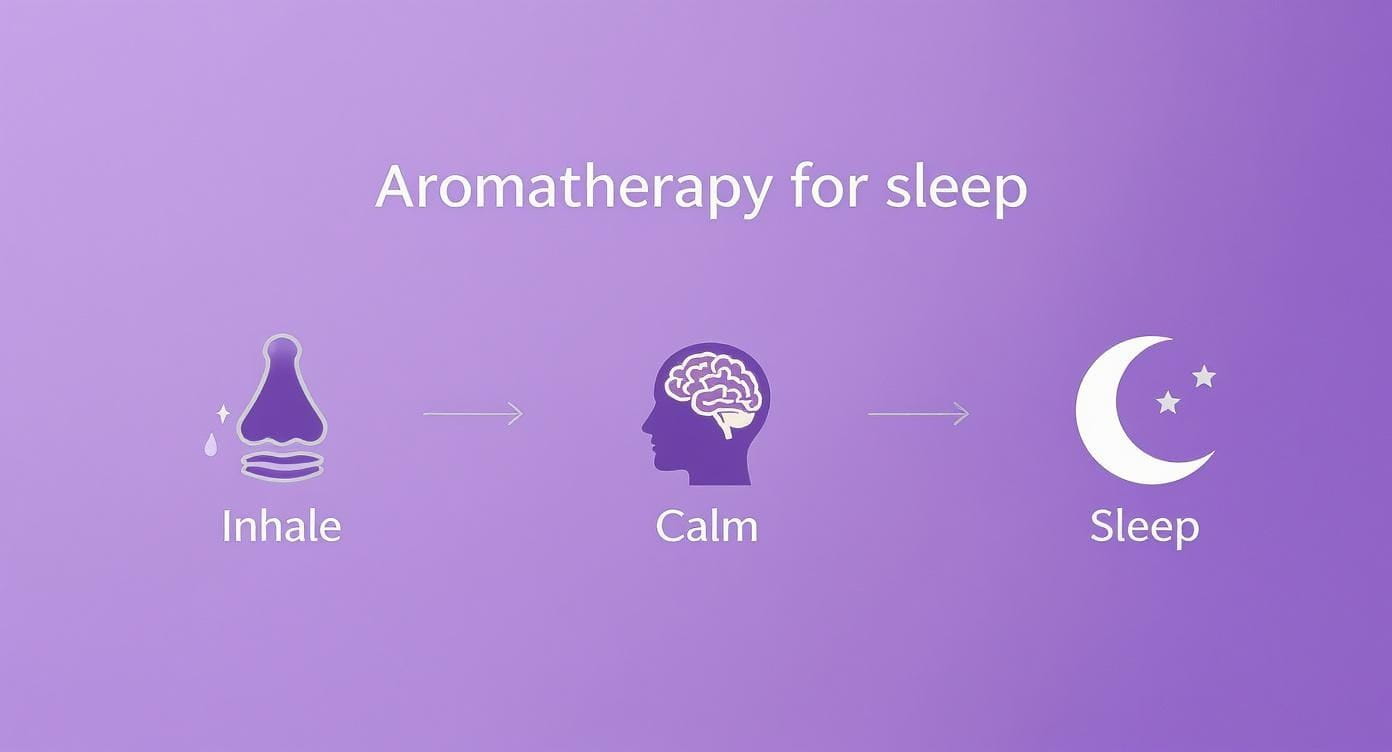
First, let's look at how this all works. Inhaling a calming scent is a direct signal to your brain that it's time to switch off and rest. It’s a simple, powerful process.
Classic Florals for a Calm Mind
When you think of essential oils for sleep, Lavender is almost always the first to come to mind. Its soft, floral, and slightly herbal scent is legendary for its ability to soothe the nervous system. It's the perfect choice for quieting a racing mind and melting away tension, making it so much easier to drift off.
Then there's Roman Chamomile, another floral powerhouse. With a sweet, apple-like aroma, it’s basically a warm hug in a bottle. Chamomile is especially good at easing irritability and bringing on a sense of peace, making it ideal for nights when you feel emotionally frazzled.
In Australia, sleep issues are a huge health concern, and more people are turning to natural solutions. A systematic review of natural sleep interventions looking at trials from 1990 to 2012 found that inhaling essential oils—with Lavender being the most studied—significantly improved sleep quality, often without the side effects that can come with sleeping pills.
Earthy Woods for Deep Grounding
If floral scents feel a bit too light for you, the deep, woody aromas of Sandalwood and Cedarwood offer a wonderfully grounding alternative. Sandalwood has a rich, sweet, and woody fragrance that’s both meditative and emotionally balancing. It helps to quiet all that mental chatter, making it perfect for meditation or a deep, uninterrupted sleep.
Cedarwood brings a softer, warm, and balsamic woody scent that feels comforting and safe. Its aroma is known to have a gentle sedative effect, helping to slow the heart rate and lower blood pressure, which physically prepares your body for rest. Diffusing Cedarwood can make your bedroom feel like a peaceful forest cabin.
These earthy oils are a game-changer if you’re someone who feels stuck "in their head" at night. Their grounding properties help you reconnect with your body and the present moment, anchoring you in a state of calm.
Unique Botanicals for Tranquil States
Beyond the classics, some unique botanicals offer different pathways to tranquility. Blue Lotus is one of these treasures, prized for centuries for its ethereal, floral aroma that encourages a dream-like state of relaxation. While its essence isn't a traditional essential oil, it's perfect for creating a special, meditative atmosphere for deep rest.
Another fantastic choice is Vetiver. Distilled from the roots of a grass, this oil has a complex, earthy, and smoky scent. Known as the "oil of tranquility," Vetiver is incredibly grounding and helps to settle a hyperactive mind, making it a powerful ally against restlessness.
Your Guide to Sleep-Promoting Essential Oils
To help you find your perfect match, here’s a quick-reference table of the top essential oils for sleep. Think about what you need most from your nighttime routine—is it mental calm, physical relaxation, or emotional soothing? This guide makes it easy to decide.
| Essential Oil | Aroma Profile | Primary Sleep Benefit | Best For |
|---|---|---|---|
| Lavender | Floral, fresh, herbaceous | Calms the nervous system and reduces anxiety. | Quieting a racing mind and general relaxation. |
| Roman Chamomile | Sweet, fruity, herbaceous | Soothes irritability and promotes emotional peace. | Winding down after a stressful or emotional day. |
| Sandalwood | Rich, sweet, woody | Quiets mental chatter and fosters a meditative state. | Deep relaxation and preparing for meditation before sleep. |
| Cedarwood | Warm, woody, balsamic | Has a sedative effect, calming the body. | Easing physical tension and feeling grounded. |
| Blue Lotus | Ethereal, sweet, floral | Creates a tranquil, dream-like, and serene state. | A special, meditative wind-down ritual. |
| Vetiver | Earthy, smoky, complex | Deeply grounding and calms a hyperactive mind. | Combating restlessness and nervous energy. |
Choosing the right oil is a personal journey, so don't be afraid to experiment to find the aroma that speaks to your body and helps you get the restorative sleep you deserve.
Ready to drift off with a little help from essential oils? Knowing how to use them is just as important as choosing the right one. It's all about creating a safe and serene bedtime environment.
While there are a few ways to bring these beautiful scents into your evening, the simplest and safest method is inhalation. And for that, a good quality essential oil diffuser is your best friend.
A diffuser gently disperses a fine mist of water and essential oil into your bedroom, letting you breathe in the calming molecules as you wind down. It's a lovely, indirect way to set the mood without overwhelming your senses.
This approach gives you all the soothing benefits without the potential issues of direct skin contact, making it the perfect starting point if you're new to using essential oils for sleep.
Your Guide to Using an Essential Oil Diffuser for Sleep
Setting up your diffuser is the first step in creating your own little sleep sanctuary. Just follow these simple steps to get the most out of every precious drop.
-
Start with Quality Water: Always fill your diffuser's reservoir with clean, room-temperature water up to the fill line. Using filtered or distilled water is best, as tap water can cause mineral buildup over time and affect how well your diffuser works.
-
Add Your Chosen Oil: A good rule of thumb is 3 to 5 drops of essential oil for every 100ml of water. This is a great starting point, and you can adjust slightly depending on your room size and how strong you like the scent. It's always wise to start with less and add more if you need to.
-
Time It Right: Switch your diffuser on about 30 minutes before you plan to go to bed. This gives the aroma enough time to gently fill the space, creating a tranquil atmosphere that sends a clear signal to your brain: it’s time to relax.
Wondering about leaving it on all night? Many modern diffusers have built-in timers or intermittent settings, which are fantastic for both safety and effectiveness. If you want to dive deeper, we cover all the best practices in our guide on whether it's bad to sleep with an oil diffuser on.
Exploring Other Gentle Application Methods
While diffusing is the gold standard for bedtime aromatherapy, there are other beautiful ways to weave these scents into your nightly ritual.
-
DIY Pillow Mist: Make your own gentle linen spray. Just add 10-15 drops of lavender or chamomile oil to a small spray bottle filled with distilled water and a splash of witch hazel (this helps the oil and water mix). A light mist over your pillows and bedding a few minutes before you get in is pure bliss.
-
A Soothing Bedtime Bath: Add 5-10 drops of your chosen essential oil to a tablespoon of a carrier oil (like jojoba or sweet almond) or Epsom salts. Mix it well before adding it to a warm bath. This little step is crucial—it helps the oil disperse safely in the water instead of just floating on top.
The Golden Rule of Topical Application: Dilution
Sometimes, you might want to apply oils to your skin—think pulse points like your wrists, temples, or the soles of your feet. But there’s a non-negotiable rule here: you must never apply undiluted essential oils directly to your skin.
Essential oils are incredibly concentrated plant extracts. Using them "neat" can lead to skin irritation, sensitivity, or even an allergic reaction. Dilution isn't just a suggestion; it's essential for using them safely.
To apply oils topically, you need to dilute them with a carrier oil. These are neutral, plant-based oils that help "carry" the potent essential oil safely onto your skin.
Simple Dilution Guide for Adults:
- Carrier Oils: Jojoba, coconut, sweet almond, or even olive oil from your pantry are all great options.
- Ratio: A safe dilution for general adult use is 2%. That works out to be about 6-10 drops of essential oil per 30ml of carrier oil.
Simply mix them in a small glass bottle or right in the palm of your hand before massaging into your skin. This simple safety step ensures you can enjoy all the calming benefits without any nasty side effects, making your journey to better sleep as safe as it is serene.
Building Your Ultimate Pre-Sleep Sanctuary
A truly restorative night of sleep doesn't just happen by chance; it begins long before your head even touches the pillow. The secret is to create a personal wind-down ritual that gently signals to your body and mind that the day is well and truly done.
This isn't about following a rigid checklist. Instead, think of it as mindfully layering soothing experiences to create an undeniable message of calm.
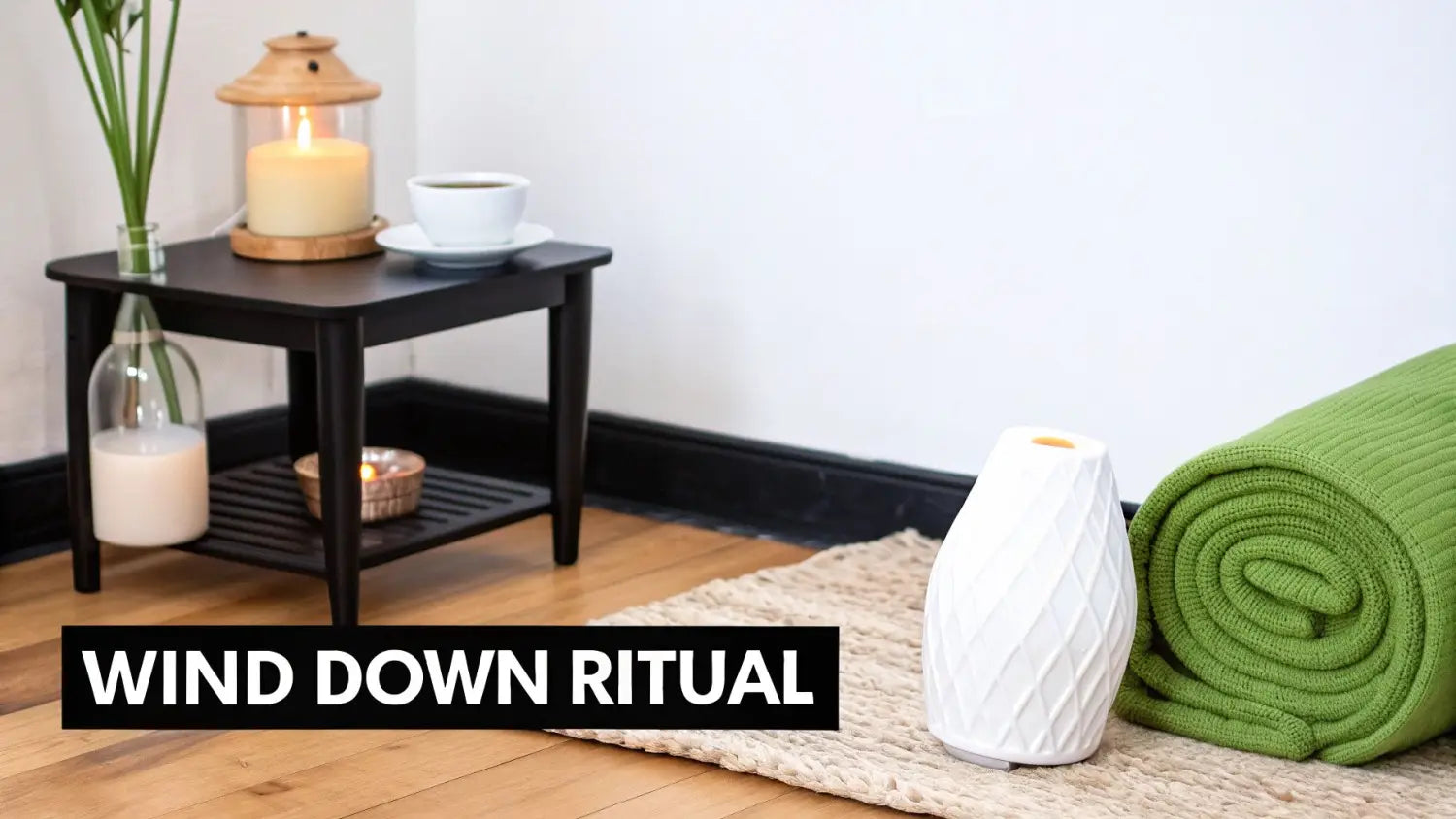
This whole process is about engaging your senses, with aromatherapy as the beautiful, fragrant centrepiece. By combining the power of essential oils for sleep with other gentle practices, you create a powerful, holistic transition from the busyness of the day to the deep peace of the night.
Setting the Scene with Scent
Your ritual should always start with scent. About 30 minutes before you plan to get into bed, switch on your essential oil diffuser. This gives the calming aroma of your chosen oil, like lavender or cedarwood, enough time to really fill your space, transforming it from a simple bedroom into a tranquil haven dedicated to rest.
Over time, this simple act becomes an incredibly powerful trigger. Your brain starts to associate that specific fragrance with relaxation and sleep, making it easier to switch off each evening. It’s the first and most important step in crafting your sanctuary.
Layering Your Sensory Experience
Once the air is filled with a soothing aroma, you can begin to layer in other sensory cues that deepen your state of relaxation. The goal is to create a multi-sensory experience that leaves no doubt in your mind that it’s time to unwind.
Consider weaving some of these elements into your routine:
- A Calming Beverage: Prepare a warm, caffeine-free drink. A gentle Matcha latte (using decaffeinated matcha, of course) or a cup of ethereal Blue Lotus tea can be incredibly comforting, warming you from the inside out and calming your entire system.
- Gentle Movement: Roll out your yoga mat for a few minutes of slow, mindful stretching. Really focus on releasing tension from your neck, shoulders, and hips—all the places we tend to hold the stress of the day.
- Mindful Stillness: From your mat, transition to a supportive zabuton meditation cushion. Spend just five or ten minutes in quiet meditation, focusing on your breath and allowing the calming scent from your diffuser to anchor you in the present moment.
A Sanctuary for Modern Wellness
Creating a pre-sleep ritual isn't an indulgence; it's a vital practice, especially for women navigating the pressures of modern life. In Australia, sleep issues are a huge concern, with recent data showing that a staggering 91% of Australian women report difficulties with sleep.
This widespread sleep crisis highlights just how much we need effective, natural approaches to wellness. Aromatherapy has become a popular part of the solution, with lavender oil noted for its ability to activate the body's "rest-and-digest" mode and calm the mind for better sleep quality. You can learn more about these insights into women's sleep health.
By combining the proven benefits of essential oils with mindful practices like meditation and gentle yoga, you're not just hoping for better sleep—you're actively building the framework for it.
This holistic approach addresses both the mind and the body. The gentle stretches on your yoga mat release physical tension, the quiet moments on your meditation cushion calm mental chatter, and the beautiful aroma from your diffuser soothes your emotional state. Together, they create a powerful synergy that prepares you for deep, rejuvenating rest, night after night.
Got Questions About Using Essential Oils for Sleep?
Stepping into the world of aromatherapy can bring up a few questions. That's completely normal. When you're creating a routine to improve something as vital as your rest, getting clear on the details helps you build a nightly ritual with confidence.
Let’s run through some of the most common queries we hear. These practical answers should help you feel completely at ease as you create your own little sleep sanctuary.
How Quickly Do Essential Oils Actually Work for Sleep?
This is a great question, and the answer has two parts. You'll probably notice an immediate sense of calm almost as soon as you switch on your essential oil diffuser. As the aroma fills the room and you breathe it in, those scent molecules travel straight to your brain's limbic system, which can trigger an initial feeling of relaxation pretty quickly.
That first hit is fantastic for shifting your mindset from a busy, stressful day to a more peaceful, pre-sleep state. But the deeper, more lasting benefits come from making it a habit.
The cumulative effect is where the real magic happens. By using essential oils every night as part of your wind-down ritual, you’re training your brain to associate specific scents with sleep. Over time, this conditioning makes it much easier and quicker to drift off.
Think of it this way: the first night is like a pleasant introduction. But after a week, that beautiful scent becomes a reliable signal to your body and mind that the day is over and it's time for deep rest.
Is It Safe to Leave My Diffuser on All Night?
It might seem like a great idea to have a calming aroma flowing all night long, but it’s generally not necessary—or even recommended. Your body does its most important restorative work during your deep sleep cycles, and you don’t need continuous exposure to essential oils to support that process.
Most modern diffusers, like the ones in our collection, are designed with both safety and effectiveness in mind. They often come with features that make managing your aromatherapy session simple and worry-free.
Best Practices for Night-time Diffusing:
- Use the Timer Function: The ideal approach is to set your diffuser to run for 30 to 60 minutes while you're getting ready for bed. This is plenty of time to fill your space with a tranquil scent and lull you into a state of relaxation.
- Opt for an Intermittent Setting: Many models have an intermittent setting that releases mist for a few minutes, pauses, and then repeats. This is a great choice if you enjoy the aroma for a longer period without it becoming overwhelming.
- Look for Automatic Shut-Off: Always choose a diffuser with an automatic shut-off feature. This turns the device off when the water runs out, which is a crucial safety feature to prevent the unit from overheating.
Following these simple tips ensures you get all the sleep-promoting benefits in the safest way possible.
Are These Oils Safe for My Family and Pets?
Whenever you introduce something new into your home, it’s so important to think about everyone who lives there—including children and your furry friends. When it comes to using essential oils safely around them, the key principles are always proper ventilation, high dilution, and careful selection.
Children have more sensitive systems than adults, so their exposure should be much gentler. Never apply undiluted oils directly to a child's skin. If you're diffusing, just use 1-2 drops in a well-ventilated room and run it for a shorter period. And, of course, always keep the oil bottles well out of their reach.
Pets, particularly cats and dogs, have a much stronger sense of smell and process substances very differently from us. Some essential oils can actually be toxic to them, even when just diffused in the air.
Crucial Safety Guidelines:
- Always Ensure Good Ventilation: Keep the bedroom door open. This gives your pet the freedom to leave the room if the scent becomes too much for them.
- Avoid Certain Oils: Oils like tea tree, pennyroyal, wintergreen, and some citrus oils (in high concentrations) can be harmful to pets. It’s best to stick to pet-safer options like lavender or chamomile, and only in very small amounts.
- When in Doubt, Ask a Pro: Before using any essential oils around your pets or children, it’s always best to consult with your veterinarian or a trusted healthcare professional. They can give you specific advice based on your family's unique needs.
By keeping these safety measures in mind, you can create a peaceful, sleep-promoting environment that is truly safe and comfortable for every member of your household.
Ready to create your perfect pre-sleep sanctuary? Explore our curated collection of high-quality Wellness Apothecary essential oil diffusers and start your journey to deeper, more restorative nights.


