


You’ve spent weeks, maybe months, getting the nursery just right. Every detail is perfect, from the cot to the colour on the walls. But you might be overlooking one of the most important elements—something you can't see, but your baby can definitely feel: the air itself.
A quality humidifier for baby is one of those unsung heroes of the modern nursery. It’s far more than just another gadget; it's a fundamental tool for your little one's comfort and wellbeing.
Creating the Ideal Nursery Environment for Your Baby
As a parent, you pour so much love into creating a safe, nurturing sanctuary for your baby. Every choice is made with care, aiming to build the perfect little haven. If you're looking for some beautiful and functional ideas, there are tons of inspiring newborn nursery ideas to help you curate a gorgeous space in your Australian home.
Beyond the aesthetics, though, is the invisible quality of the air your baby breathes day in and day out. This is where a humidifier shifts from a 'nice-to-have' to a cornerstone of a calm, healthy nursery.
The Challenge of Australian Indoor Air
Let's face it, we rely heavily on climate control here in Australia. Air conditioning gets us through scorching summers, and heating is a must for those chilly winters. While these systems make our homes comfortable, they have a major downside: they strip moisture right out of the air.
This creates an overly dry environment that can be surprisingly harsh on a baby's delicate skin and tiny respiratory system. With over 30% of Australian households running these systems year-round, indoor humidity can easily dip below the healthy 30% mark. This dry air can lead to stuffy noses, scratchy throats, and irritated skin—disrupting precious sleep for everyone.
Maintaining balanced humidity is one of the simplest yet most effective ways to support your infant’s respiratory health, especially during their first year when they are most vulnerable to colds and congestion.
Finding the Nursery’s ‘Goldilocks Zone’
The secret to fighting back against that dryness is to create a ‘Goldilocks zone’ for humidity in the nursery. Experts agree that the sweet spot is somewhere between 40% and 60%.
This range is just right—not too dry, and not too damp. Air within this window helps keep your baby’s nasal passages moist, making it much easier for them to breathe comfortably and clear out any congestion naturally. It's also a game-changer for soothing dry, flaky skin and can bring real relief from the discomfort of baby eczema.
Ultimately, this simple adjustment can mean fewer sniffles, less irritation, and longer, more peaceful stretches of sleep. A reliable humidifier is your best tool for keeping the air in that perfect balance, turning your beautiful nursery into a true haven for rest and growth.
Understanding Different Types of Baby Humidifiers
Stepping into the world of baby gear can feel a bit like learning a new language. When you start looking for a humidifier for baby, you’ll quickly run into terms like “ultrasonic,” “evaporative,” “cool mist,” and “warm mist.” Let’s break these down and focus on what really matters for your little one’s nursery.
At its core, a humidifier's job is simple: add moisture back into the air. But how they do it is what sets them apart, especially when you’re thinking about safety and what’s best for a baby. You can think of it as the difference between a gentle rain and hot steam.
The Two Main Players: Cool Mist vs. Warm Mist
Your biggest decision will be choosing between a cool-mist and a warm-mist model. While both will raise the humidity in a room, paediatricians and child safety experts are almost unanimous in recommending cool-mist humidifiers for nurseries. The reason? It all comes down to safety.
Warm-mist humidifiers, which are often called vaporisers, use an internal heater to boil water and release steam. This creates a pretty obvious burn risk. A curious toddler could easily knock it over or get too close to the hot steam, leading to a serious injury. With a cool-mist model, that danger is completely gone.
For a nursery environment where safety is the number one priority, a cool-mist humidifier is the non-negotiable choice. It provides all the respiratory and skin benefits without the risk of accidental burns.
The flowchart below shows just how a humidifier can turn a dry nursery into the perfect, comfortable space for your baby.
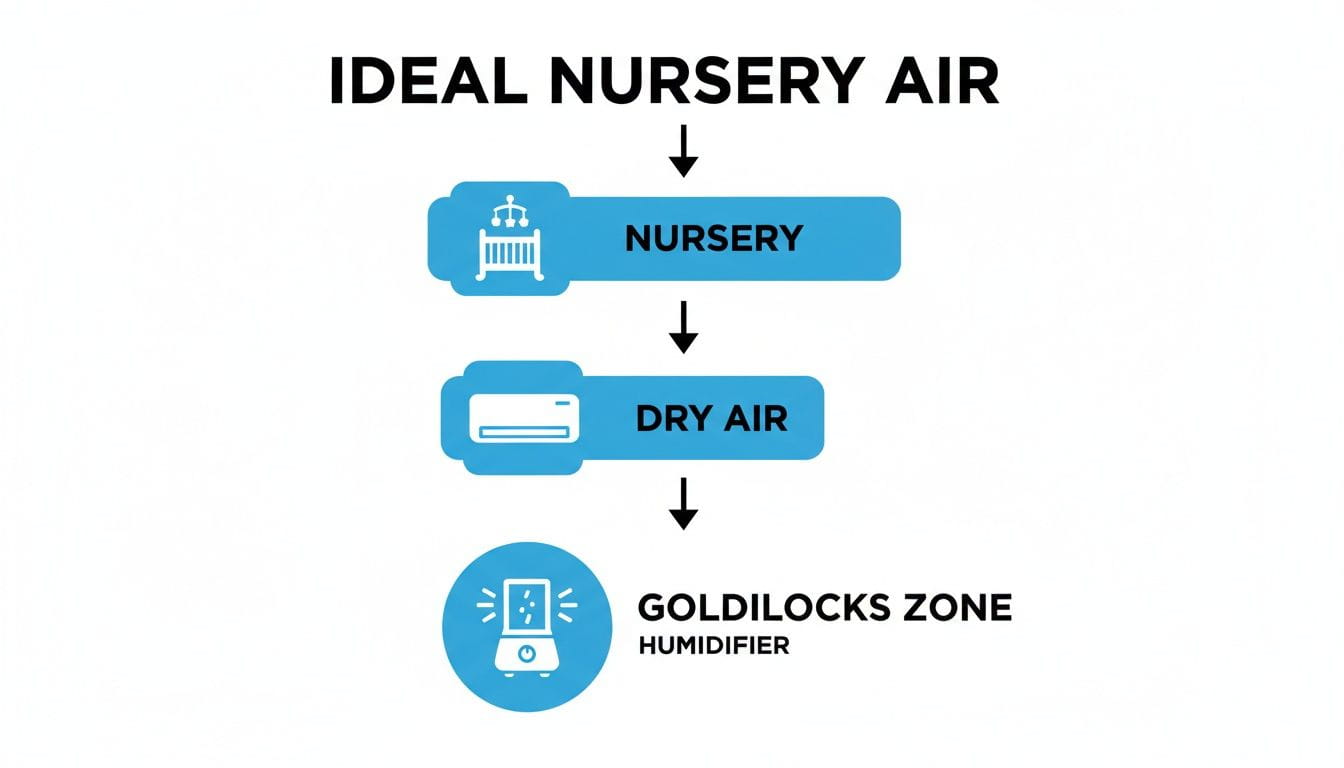
As you can see, when things like air conditioning dry out the nursery air, a humidifier is the key to bringing back balance and creating that ideal ‘Goldilocks zone’ for healthy sleep.
To make the choice even clearer, here’s a quick comparison of the two main types.
Comparing Cool Mist and Warm Mist Humidifiers
| Feature | Cool-Mist Humidifier (Ultrasonic/Evaporative) | Warm-Mist Humidifier (Vaporiser) |
|---|---|---|
| Safety | Safest choice for children. No heating element means no risk of burns. | Burn Hazard. Uses boiling water, creating hot steam that can cause serious burns. |
| Energy Use | More energy-efficient as it doesn't need to heat water. | Uses more electricity due to the internal heating element. |
| Noise Level | Generally very quiet, especially ultrasonic models. | Can be noisier due to the boiling water, sometimes making a gurgling sound. |
| Room Temperature | May slightly cool the room, which can be nice in warmer climates. | Slightly warms the room, which may or may not be desirable. |
| Maintenance | Requires regular, diligent cleaning to prevent mould and bacteria buildup. | The boiling process kills most bacteria and minerals in the water. Still needs cleaning. |
This table really highlights why cool-mist is the hands-down winner for a baby’s room—it delivers all the benefits without any of the risks.
A Closer Look at Cool-Mist Technology
Once you’ve settled on cool-mist, you’ll find two main types of technology: ultrasonic and evaporative. Both are fantastic options for a nursery.
-
Ultrasonic Humidifiers: These are the quiet achievers. Using high-frequency vibrations that are totally silent to our ears, they break down water into an incredibly fine, visible mist. It’s like a mini wellness fog machine, gently and silently adding soothing moisture to the air. Their whisper-quiet operation makes them perfect for light sleepers (babies and parents alike!). Many people wonder how these differ from diffusers; for a better understanding of their unique roles, you can check out our guide on finding the best essential oil diffuser for your home.
-
Evaporative Humidifiers: This type works a bit more like nature does. A fan pulls dry air from the room through a wet wick filter. As the air passes through, it picks up moisture and is then pushed back out as a clean, invisible vapour—kind of like a gentle, humid breeze. One of the big pluses here is that this method is self-regulating. As the room’s humidity increases, the rate of evaporation naturally slows down, making it much harder to accidentally over-humidify the space.
The Health and Wellness Benefits of Perfect Nursery Humidity
Beyond just making the air feel less dry, keeping the humidity in your baby's room just right is an active way to support their health. Think of a good humidifier for baby not as just another appliance, but as a wellness tool working around the clock. It creates an environment where your little one can breathe easier, sleep more soundly, and feel comfortable in their own skin.
When the air stays balanced in that sweet spot of 40-60% humidity, it directly helps their delicate respiratory and immune systems. This one device can be a powerful ally, helping to turn the nursery into a true sanctuary for rest and healthy growth.
Soothing Congestion and Supporting Easier Breathing
One of the first things you'll likely notice is how much a humidifier helps with a stuffy nose. For the first few months of life, babies are "obligate nose breathers," meaning they breathe almost entirely through their tiny noses. When those little passages get dry or clogged with mucus, it can make breathing, feeding, and sleeping a real struggle.
Dry air only makes things worse by thickening mucus and making it harder for their little bodies to clear it out. A cool-mist humidifier gently adds moisture back into the air, which helps thin out mucus. This simple change makes it much easier for your baby to clear their nose, breathe freely, and feed without getting frustrated.
You’ll really see the difference when your baby has a cold. A recent study even found that humidified rooms can help shorten the duration of a baby's cold symptoms. This is a big deal, especially when you consider that respiratory illnesses sideline 1 in 5 infants in Australia each year. If you want to dive deeper into market trends, you can find more insights on the babies humidifier market here.
Nurturing Delicate Skin and Easing Eczema
A baby’s skin is incredibly soft, but it's also much thinner and more sensitive than ours. It loses moisture far more quickly, making it prone to dryness, flakiness, and irritation—especially when the heating or air conditioning is running.
A humidifier for baby provides a constant, gentle source of hydration for their skin. By keeping the humidity at an ideal level, you help protect their skin's natural barrier, keeping it soft and supple.
For babies prone to skin conditions like eczema, balanced humidity is a game-changer. It helps to calm inflammation and reduce the itchy, uncomfortable flare-ups that can disrupt sleep and cause distress.
This continuous environmental support can make a huge difference to your baby's skin health, helping them feel more comfortable day and night.
Promoting Deeper, More Restful Sleep
Everything comes back to sleep, doesn't it? When a baby is comfortable, they sleep better—and so do you. A dry, scratchy throat or a stuffy nose are common culprits that wake a baby during the night. The discomfort is just enough to pull them out of a deep sleep, leading to fussiness and broken rest for everyone.
Running a humidifier ensures the air they breathe is gentle and soothing. This helps prevent their throat and nasal passages from drying out, which means they're less likely to wake up coughing or feeling uncomfortable. Plus, the quiet, consistent hum of many ultrasonic models can act as a gentle white noise, creating an even more calm and peaceful sleep environment.
A humidifier for your baby's nursery supports their health in three key ways:
- Respiratory Comfort: Moist air helps thin mucus, making it easier for babies to breathe, especially when they have a cold.
- Skin Health: It keeps delicate skin hydrated, soothing dryness and reducing irritation from conditions like eczema.
- Better Sleep: By preventing a dry throat and stuffy nose, it helps your baby (and you) enjoy longer, more restorative sleep.
Your Essential Humidifier Safety and Cleaning Guide
A humidifier can be a fantastic wellness tool for your baby's nursery, but its benefits hinge on one crucial rule: it must be kept impeccably clean and used safely. An unmaintained unit can, unfortunately, do more harm than good by potentially dispersing mould or bacteria into the air. This guide is your practical, easy-to-follow checklist to ensure the moisture your baby breathes is always pure and healthy.
Think of your humidifier like any other baby appliance—it needs regular attention to perform at its best. The single most important thing you can do is establish a simple cleaning routine. Thankfully, it’s a quick task that easily slots into your weekly schedule and guarantees your little one reaps all the healthy benefits.
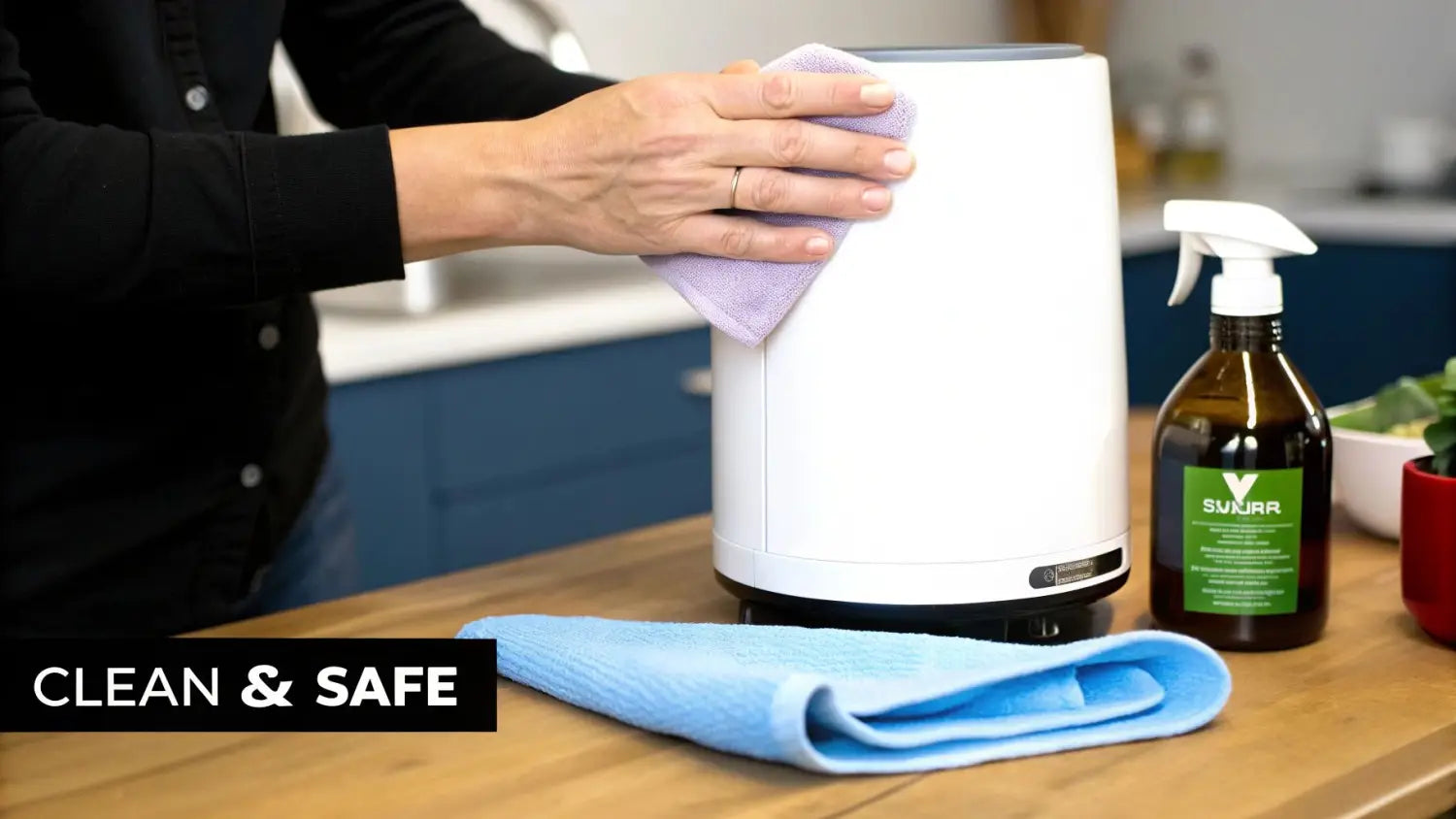
Your Weekly Cleaning Checklist
Consistency is the absolute key to preventing mineral deposits (that chalky scale) and stopping any potential growth of mould or bacteria. The good news is you don’t need any harsh chemicals; a few household staples are all it takes.
Daily Habits (Takes less than 2 minutes):
- Empty and Rinse: Each morning, tip out any leftover water from the tank and base.
- Air Dry: Give the tank a quick wipe with a clean cloth and let it air dry completely before you fill it up again. This simple step is one of the most effective ways to stop that slimy buildup from forming.
Weekly Deep Clean (About 10 minutes):
- Disassemble: Unplug the unit and take apart all the removable pieces, like the water tank.
- Vinegar Soak: Fill the base and tank with a solution of one part white vinegar to one part water. Let it all sit for 20-30 minutes to dissolve any mineral scale.
- Scrub and Rinse: Grab a small, soft brush (an old toothbrush is perfect for this) and gently scrub any nooks and crannies. Rinse every part thoroughly with clean water until the vinegar smell is completely gone.
- Dry Completely: Let all the components air dry before putting the unit back together for its next use.
A clean humidifier is a healthy humidifier. Committing to this simple weekly routine ensures you are enhancing your nursery’s air quality, not compromising it.
The Best Water for Your Baby Humidifier
The type of water you use really does make a difference, especially with ultrasonic models. Tap water, particularly in areas with hard water, is full of minerals like calcium and magnesium. When an ultrasonic humidifier vibrates this water into a fine mist, it can also release those minerals as a fine white dust that settles on furniture and can be inhaled.
While this dust generally isn't considered harmful, switching to purified water is a simple fix that eliminates it entirely and helps keep the unit cleaner for longer.
- Best Choice: Demineralised or distilled water is the gold standard. It's had its mineral content removed, which means no white dust and far less scale buildup inside your machine.
- Good Choice: Filtered water from a household jug or tap filter is a solid second option, as it does reduce some of the mineral content.
Crucial Safety Tips for Nursery Placement
Beyond just keeping it clean, where you put the humidifier is paramount. A humidifier for baby needs to be placed thoughtfully to be effective while also keeping your little one safe, especially as they get more mobile.
Placement and Cord Management:
- Elevated Surface: Always place the humidifier on a flat, waterproof surface, like a dresser or a small table, at least a few feet off the floor. This helps the mist disperse evenly across the room.
- Safe Distance: Keep the unit at least one metre away from the cot. The goal is for the mist to circulate in the room, not to blow directly onto your baby or their bedding.
- Out of Reach: Most importantly, make sure the humidifier and its cord are well out of your baby's reach to prevent it from being pulled down. Tuck the cord away safely behind furniture.
Features for Peace of Mind:
- Auto Shut-Off: Look for a model that automatically turns itself off when the water tank is empty. This prevents the unit from running dry and gives you essential peace of mind overnight.
- Essential Oils: Never add essential oils directly to a standard humidifier's water tank. The oils can degrade the plastic and may be too potent for a baby’s delicate respiratory system. If you're interested in aromatherapy, it’s best to use a separate device designed for that purpose; our guide on diffuser safety in the bedroom offers more detailed advice.
How to Find the Perfect Balance for Your Nursery
Getting the most out of your humidifier for baby is all about mastering a few key details. The goal isn't just to add moisture to the air; it's about creating a perfectly balanced environment that nurtures your little one's comfort and health. When you optimise its performance, the nursery becomes a soothing sanctuary—not a tropical greenhouse.
It all starts with picking the right unit for your space and understanding what its features mean in the real world. You’re looking for that sweet spot where the humidifier runs efficiently without needing constant attention, providing a gentle, steady stream of moisture that helps your baby breathe easier all night long.
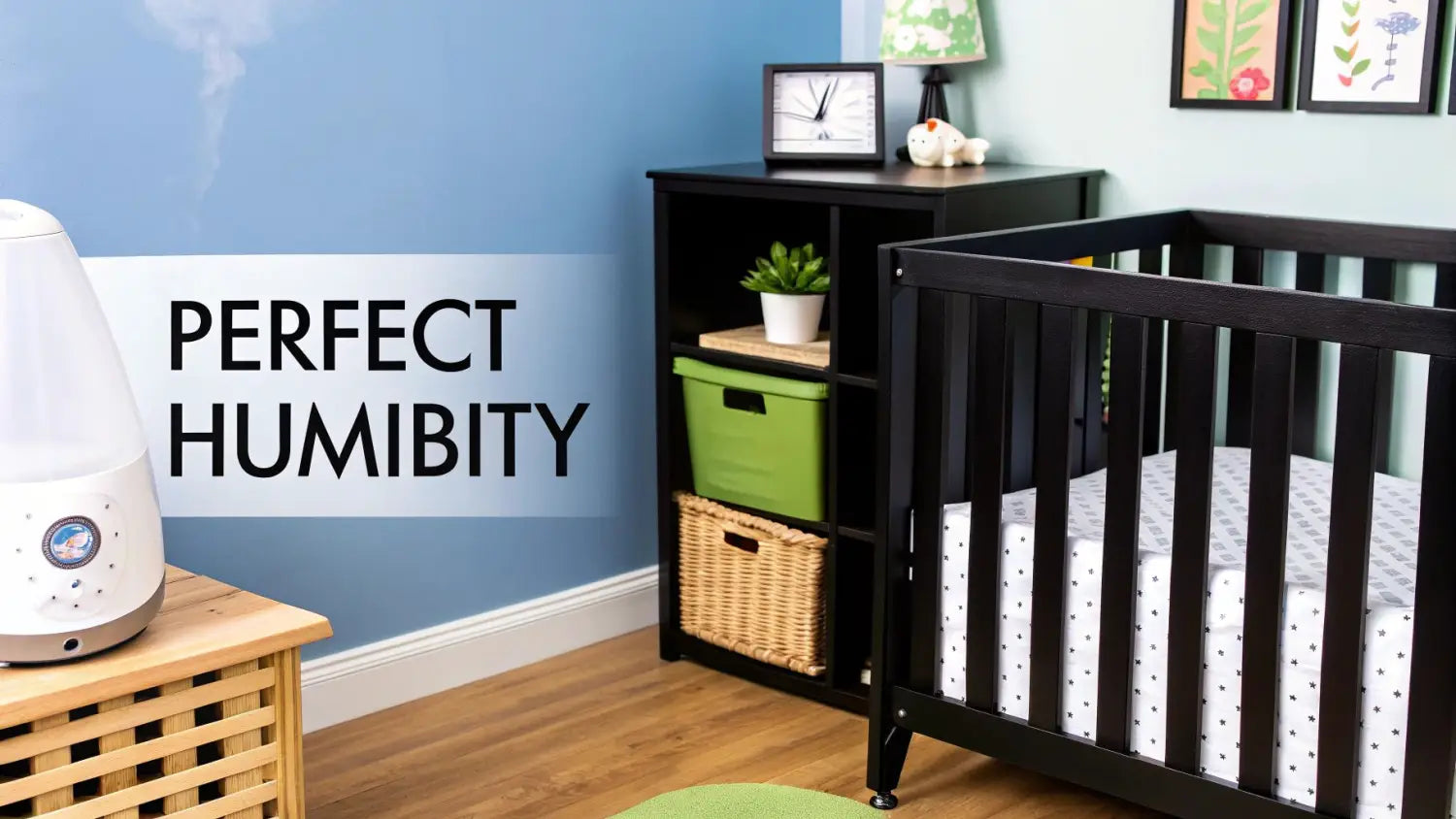
Matching the Humidifier to Your Room Size
You wouldn't use a tiny lamp to light up a huge room, and the same logic applies here. You need a humidifier that’s properly sized for your nursery. A unit that's too small will struggle to make any real difference, while one that’s too powerful will quickly make the room feel damp and clammy.
Just check the manufacturer's recommendations. They’ll usually list the ideal room size in square metres. This simple step ensures the machine can hit your target humidity level without being overworked.
Another key detail is the tank capacity, as this determines how long it can run before you need to refill it. For a nursery, aim for a model with a tank large enough to last at least 10-12 hours. That way, it can run continuously through the night without you having to tiptoe in for a top-up.
Strategic Placement for Optimal Performance
Where you put the humidifier is just as important as which one you choose. The right spot ensures that lovely, soothing mist is distributed evenly throughout the room, creating a consistently comfortable atmosphere.
Just follow these simple rules for placement:
- Keep a Safe Distance: Position the humidifier at least one metre away from your baby’s cot. You want the moisture to circulate in the air, not blow directly onto your baby or their bedding.
- Elevate the Unit: Pop it on a flat, stable, and waterproof surface, like a dresser or a sturdy side table. Elevating the unit helps the mist disperse more effectively into the air instead of just settling on the floor.
- Protect Your Furniture: Try to avoid placing the humidifier directly on or too close to wooden furniture, as the constant moisture could cause damage over time.
Maintaining the ‘Goldilocks Zone’ of Humidity
The ultimate goal is to hit that ‘Goldilocks zone’—not too dry, not too damp, but just right. For a nursery, that’s between 40% and 60% humidity. This range is perfect for keeping tiny nasal passages moist and delicate skin hydrated. But how do you know if you've hit the mark?
The easiest way is with a small, inexpensive tool called a hygrometer. This simple device measures the moisture in the air, giving you a precise reading so you’re not just guessing. Many modern humidifiers even come with a built-in hygrometer that automatically adjusts the mist output to hold your desired level.
You can also watch for simple visual cues. If you notice persistent condensation forming on the inside of the nursery windows, it’s a clear sign that the humidity is too high. Simply turn down the humidifier’s output or run it for shorter periods.
This careful balancing act is exactly what helps little ones sleep better. In fact, one survey found that 72% of parents who used humidifiers reported their babies had fewer sleepless nights due to coughs. To see the full details, you can read the report on humidifier opportunities in Australia. By keeping an eye on the room's conditions, you can confidently create an environment that’s perfectly calibrated for your baby’s comfort and health.
Integrating the Humidifier into a Holistic Family Wellness Routine
A quality humidifier for baby isn't just another gadget for the nursery—it's a cornerstone of your family's entire wellness puzzle. Its job goes far beyond just putting moisture into the air. When you look at it as part of the bigger picture, it becomes a powerful tool for creating a calm, healthy, and nurturing home for everyone.
This is about weaving the benefits of balanced air quality into your daily routines. The quiet, consistent hum of the humidifier can become a wonderfully soothing backdrop, making other wellness practices even more effective. It helps shape a space that feels intentional, peaceful, and supportive of both deep rest and mindful moments.
Creating a Calm Corner
One of the best ways to get the most out of your humidifier is to build a dedicated ‘calm corner’ in the nursery. Think of it as a special spot for quiet moments—a peaceful feed, a gentle story time, or even a moment of reflection for you while your baby naps. Placing the humidifier here ensures the air quality in this tranquil zone is always just right.
Picture this space:
- The humidifier keeps the air perfectly moist, making every breath easy and comfortable.
- A cosy chair for you and your little one to cuddle up in.
- Soft, warm lighting to create a gentle, inviting atmosphere.
- Maybe your favourite Zabuton Meditation Cushion is nearby, ready for your own moments of grounding meditation.
Suddenly, the humidifier is an active participant in your family’s relaxation rituals. It helps build an environment that signals calm and safety to both you and your baby.
Complementing Other Wellness Practices
The right humidity levels can amplify your other wellness efforts, creating a synergy that nurtures the whole family. For instance, while a humidifier manages air moisture, you might use a separate, baby-safe essential oil diffuser for gentle aromatherapy. You can learn more about how to use essential oils for better sleep to support your own much-needed rest and recovery.
By thinking of the humidifier as a foundational element, you start to build a complete wellness ecosystem at home. It’s an investment in a healthier home environment that works alongside other nurturing practices.
This connected approach frames the humidifier not as a standalone item, but as a key player in a lifestyle that puts wellbeing first. It works in harmony with everything from the calming Blue Lotus tea you sip to unwind, to the yoga mat you roll out for a few precious moments of mindful movement. Ultimately, it helps transform your home into a true sanctuary for the entire family.
Your Humidifier Questions, Answered
Even after you're sold on the benefits, bringing a new gadget into your baby's nursery can bring up a few last-minute questions. That’s completely normal. Let’s walk through the most common queries parents have, so you can feel confident you’re creating the perfect, soothing space for your little one.
Getting these details right from the start means you can relax, knowing you're using your humidifier safely and effectively to give your baby all those wonderful, comforting benefits.
Can I Put Essential Oils in My Baby's Humidifier?
This is probably the number one question we hear, but the answer is a definite no—unless your humidifier has a special, separate tray just for aromatherapy. Standard humidifiers aren't built to handle oils. Over time, the oils can eat away at the plastic components, damaging the machine and potentially causing it to malfunction.
Even more importantly, a humidifier’s powerful mist isn’t designed for oils and can create a vapour that's far too concentrated for a baby’s sensitive, developing lungs. If you want to add a gentle scent to the room, your best bet is to use a dedicated essential oil diffuser. They're specifically designed to disperse oils safely and subtly.
Should I Run the Humidifier All Night?
Yes, absolutely. Running a cool-mist humidifier all night long is not only safe, but it's actually the best way to get consistent relief from dry air. This continuous moisture is what helps prevent a scratchy throat or stuffy nose from waking your baby in the middle of the night.
To make it easy on yourself, look for a model with a tank big enough to run for at least 8-12 hours. An auto shut-off feature is also a must-have for peace of mind, as it will simply turn itself off when the water runs out. Set it and forget it.
What's the Difference Between a Humidifier and a Diffuser?
They might look similar sitting on a shelf, but they have completely different jobs. A humidifier’s only goal is to add a significant amount of moisture back into the air to raise the room's overall humidity. It’s all about hydration.
An essential oil diffuser, on the other hand, is made to break down essential oils into tiny micro-particles and disperse them into the air for a gentle scent and aromatherapy benefits. It's all about aroma.
The easiest way to remember it is: a humidifier is for moisture; a diffuser is for scent. While some humidifiers have an add-on oil tray, a proper diffuser will always be more effective and safer for aromatherapy.
How Often Should I Clean My Nursery Humidifier?
This is the one step that is completely non-negotiable. Regular cleaning is crucial for making sure the mist your baby is breathing is pure, healthy, and free from any mould or germs. All it takes is a quick daily habit and a more thorough weekly clean.
Your Go-To Cleaning Routine:
- Daily: Before each use, empty the tank, give it a quick rinse with fresh water, and refill. Simple.
- Weekly: This is when you’ll do a proper deep clean. Use a solution of white vinegar and water to disinfect the tank and base, removing any mineral buildup (that white dust). This simple habit is the single most important thing you can do for safe humidifier use.
Ready to create that perfectly balanced, soothing nursery for your little one? Explore the premium, parent-approved humidifiers at Wellness Apothecary and give your baby the gift of comfortable air. Discover our curated collection of humidifiers today.


