


A truly non-toxic yoga mat is one made from natural, sustainable materials like rubber, cork, or TPE, and is completely free from nasty chemicals like PVC, phthalates, and heavy metals. This simple choice ensures your practice space is a true sanctuary for your health, not a source of hidden toxins.
Why Your Yoga Mat Is Your Most Important Wellness Tool
Think about it: your yoga mat is more than just a piece of equipment. It’s the very foundation of your practice, a personal space you return to for mindfulness and health. It’s where you breathe deeply, stretch your body, and reconnect with yourself. But what if that sacred surface was quietly working against your wellbeing?
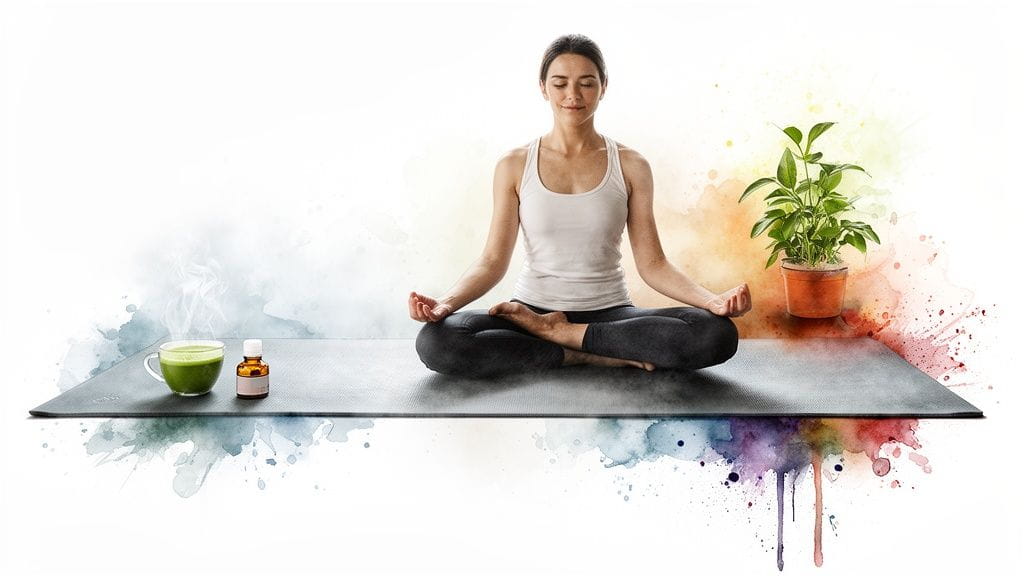
Unfortunately, many standard yoga mats are made from PVC (polyvinyl chloride), a type of plastic that can release harmful chemicals, especially when it warms up with your body heat and movement. This "off-gassing" can introduce toxins right into your personal space—the exact opposite of what a health-focused practice is all about.
Aligning Your Practice with Your Principles
Choosing a mat made from safe, sustainable materials is a powerful act of self-care that goes far beyond your personal health. It’s a mindful decision to support both your body and the planet. This conscious choice fits beautifully with other wellness rituals that elevate your entire journey.
Consider how these holistic pairings create a complete experience:
- Mindful Preparation: Preparing a calming cup of premium matcha green tea powder before your session can help centre your mind and provide gentle, focused energy.
- Atmospheric Purity: Using essential oil diffusers creates a serene, fragrant environment that can deepen your relaxation and focus.
- Grounded Support: Opting for high-quality, eco yoga mats ensures the foundation beneath you is as pure as your intentions.
This kind of awareness is growing, especially among Australian yoga enthusiasts who are increasingly prioritising health and sustainability. The demand for high-end, eco-friendly mats is a huge part of a national shift, with the local market expected to see strong growth.
Your yoga mat isn’t just an accessory; it’s an extension of your commitment to a healthy, conscious lifestyle. When you unroll a non-toxic mat, you are creating a clean, safe space for your body and mind to flourish, free from unwanted chemicals.
By making an informed choice, you align your personal health with the wellbeing of the environment. This guide will walk you through everything you need to know to select a mat that truly supports your goals. If you're looking for more guidance, check out our insights on what to look for in yoga mats.
Decoding Labels: The Chemicals to Avoid in Yoga Mats
Navigating the world of yoga mats can feel like deciphering a complex code. Brands love to throw around appealing but vague terms like “eco-friendly” or “green,” but these labels don't always guarantee a product is truly non-toxic. To make a choice that genuinely supports your wellbeing, you need to know which specific chemicals to leave on the shelf.
Think of it like reading a food label. Just as you’d skip over processed ingredients with names you can't pronounce, you should be wary of certain materials in your wellness gear. This knowledge isn't just for your mat—it empowers you to select better products across the board, from your mat to your women's yoga activewear, ensuring everything aligns with your health goals.
The Problem with PVC
The most common culprit in cheap yoga mats is PVC (polyvinyl chloride). It’s a type of plastic that’s popular for its stickiness, durability, and low cost, which is why it’s so widespread. But this convenience comes at a significant health cost.
PVC is a chlorinated plastic, and its entire lifecycle—from production to disposal—can create highly toxic byproducts called dioxins, which are potent environmental pollutants. During your practice, as your body warms the mat, it can release volatile organic compounds (VOCs) into the air you’re breathing deeply. This process, known as off-gassing, can contribute to respiratory irritation and other health issues, working directly against the deep, cleansing breaths that are so central to yoga.
Choosing a yoga mat is an investment in your personal sanctuary. A mat made from PVC is like building that sanctuary on unstable ground; it may look fine on the surface, but it introduces hidden risks that undermine the very foundation of your wellness practice.
Additives That Compound the Risk
To make rigid PVC soft and flexible enough for a yoga mat, manufacturers add plasticisers—most commonly, a group of chemicals called phthalates. These are known endocrine disruptors, meaning they can interfere with your body's delicate hormonal system.
On top of that, some PVC mats contain stabilisers and pigments made from heavy metals like lead and cadmium, which are known neurotoxins. Another concern is the use of AZO dyes for those vibrant colours, as they can cause skin irritation and allergies on contact. Understanding what different certifications and labels mean is crucial when you're aiming for a pure practice. This mindset extends beyond just yoga mats to other aspects of a healthy lifestyle, such as understanding cleaner labels like 'Non-GMO' in the food you eat.
Here’s a quick guide to the main chemicals you'll want to avoid when shopping for a safe, non-toxic yoga mat.
Common Chemicals in Yoga Mats and Their Health Concerns
A summary of harmful chemicals often found in standard yoga mats and why you should avoid them for a healthier practice.
| Chemical | Commonly Found In | Potential Health Risks |
|---|---|---|
| PVC (Polyvinyl Chloride) | Cheap, "sticky" yoga mats | Releases dioxins, contains phthalates, linked to respiratory and reproductive issues. |
| Phthalates (e.g., DEHP) | Softeners used in PVC mats | Act as endocrine disruptors, potentially interfering with hormonal balance. |
| Heavy Metals (Lead, Cadmium) | Pigments and stabilisers | Neurotoxins that can accumulate in the body and cause long-term damage. |
| Toxic Dyes (AZO dyes) | Brightly coloured synthetic mats | Can cause skin irritation and allergies; some are classified as carcinogenic. |
By familiarising yourself with these harmful substances, you can confidently choose a mat that truly supports your wellbeing. This conscious approach is central to the philosophy at Wellness Apothecary, where every product is selected to help you build a healthier, more mindful life from the ground up.
Exploring The Best Non-Toxic Yoga Mat Materials
Now that you know what to avoid, finding a healthier mat for your practice gets a whole lot easier. Instead of focusing on dodgy synthetics, we can turn our attention to the beautiful, effective, and safe materials that nature and mindful innovation have given us. Picking the right surface is a personal choice, one that reflects both your style of practice and your commitment to your own wellbeing.
This flowchart shows some of the most common toxic offenders lurking in cheap yoga mats.
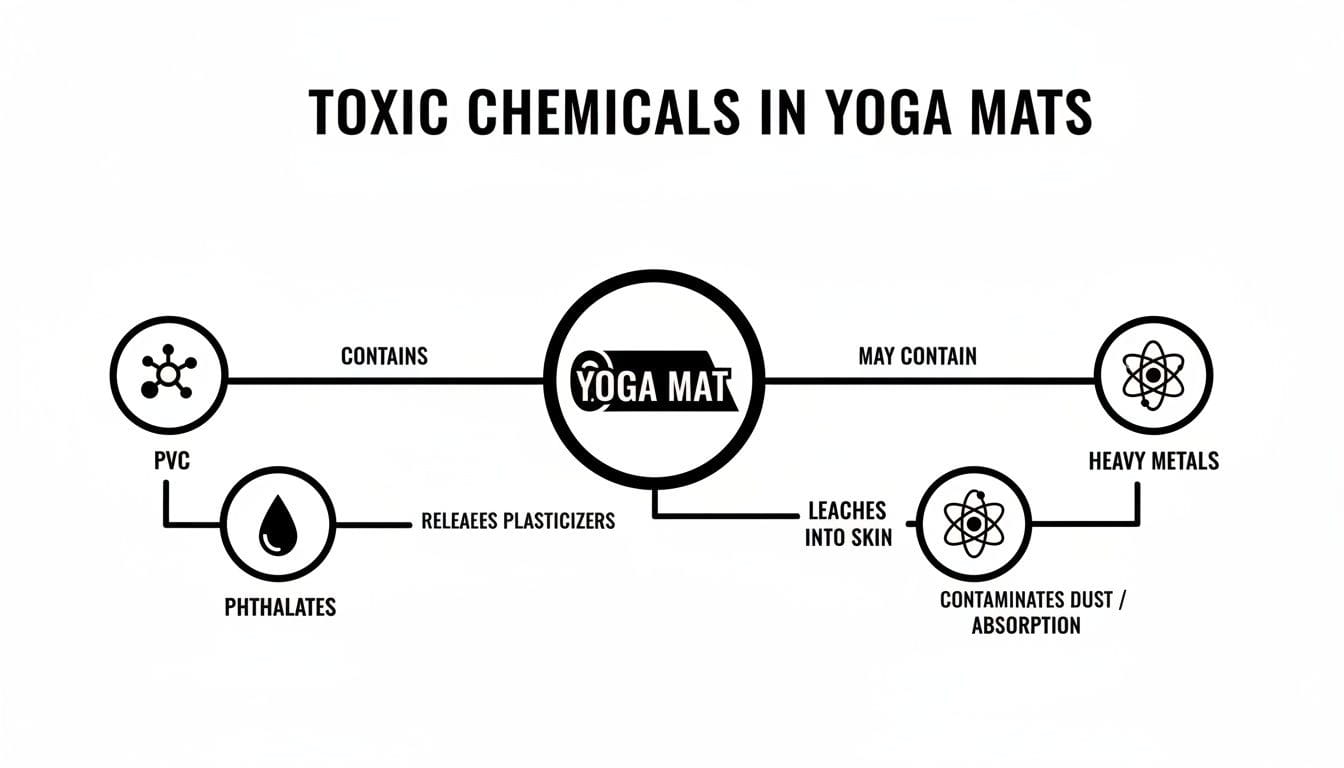
Think of this as a quick cheat sheet for the chemicals—PVC, phthalates, and heavy metals—that have no place on your mat. With that out of the way, let’s get into the good stuff.
Natural Rubber: The Gold Standard For Grip
There's a reason so many serious yogis swear by natural rubber. It's sourced from the sap of rubber trees, making it a renewable resource that delivers incredible grip and supportive cushioning. This makes it perfect for dynamic Vinyasa flows or any practice where you absolutely cannot afford to slip.
Its dense structure is fantastic for supporting your joints, while the naturally non-slip surface keeps you grounded, even in the most challenging poses. That earthy smell when you first unroll it? That's the sign of its natural origins—a world away from the chemical off-gassing of a PVC mat. It’s biodegradable, durable, and a true investment in a high-performance practice that will last for years.
Cork: The Antimicrobial Powerhouse
If you’re a fan of hot yoga or just tend to get a little sweaty, cork is about to become your new best friend. This amazing material has a unique trick up its sleeve: its grip actually improves the more you sweat. Cork contains a waxy substance called suberin, which makes it naturally grippy when wet.
Harvested from the bark of cork oak trees without ever harming the tree itself, cork is one of the most sustainable materials out there. It’s also naturally antimicrobial, meaning it fights off germs and odours all on its own. For a deeper look at why we love it, you can check out our dedicated article here: A deep dive into the benefits of cork yoga mats: are they worth it?.
Jute: The Earthy And Textured Choice
For those who love a grounding, tactile connection to the earth, jute mats offer a really unique experience. This natural plant fibre is well-known for its breathability and durability. Most jute mats blend the fibres with a non-toxic base material, like PER or TPE, to give you the cushioning and grip you need for a comfortable practice.
The result is a mat with an organic, textured feel that provides surprisingly good traction. Jute is fully biodegradable and needs very little processing, making it a brilliant eco-conscious choice that brings a natural element right to your floor work. In fact, choosing sustainable and non-toxic materials is a great habit to get into for all sorts of everyday products, not just your yoga gear.
TPE: The Lightweight And Recyclable Option
Thermoplastic Elastomer, or TPE, is a fantastic, modern alternative to PVC. It’s a man-made blend of plastic and rubber polymers that is created without any of the toxic softeners (like phthalates) or heavy metals found in those cheap, conventional mats.
Yogis love TPE because it’s incredibly lightweight, hypoallergenic, and completely recyclable. These mats hit that sweet spot between performance, affordability, and being kind to the planet. They offer plush cushioning that’s perfect for restorative yoga or for anyone needing extra joint protection, all while being totally free from nasty chemicals.
When you're shopping for a non-toxic yoga mat, a "green" label on the packaging isn't quite enough. To really shop with confidence, you need to look past the marketing slogans and find real proof that a mat is safe and well-made. Learning to spot these genuine indicators will empower you to make a choice that truly aligns with a healthy, holistic lifestyle.
One of the most reliable ways to check if a product is safe is to look for third-party certifications. These aren't just pretty logos; they're earned through rigorous, independent testing that a brand can't fake.
Look for Reputable Certifications
The gold standard for textiles and foams is the OEKO-TEX® Standard 100. When you see this label, it means every single part of the mat—from the core material right down to the dyes and finishes—has been tested and proven to be free from a long list of over 350 harmful substances.
Think of it as a comprehensive health check-up for your mat. It’s an independent guarantee that you aren't bringing unwanted chemicals into your sacred practice space, offering genuine peace of mind.
A brand's commitment to transparency is a powerful indicator of its integrity. When a company openly shares its material sourcing, manufacturing processes, and certifications, it shows they have nothing to hide and are confident in the quality and safety of their products.
Understand Key Labels
Beyond formal certifications, you'll often see specific "free-of" claims on the packaging. Knowing what these mean is crucial for making an informed decision.
- PVC-Free: This is the most important one to look for. It confirms the mat is not made from polyvinyl chloride, that toxic plastic we talked about earlier.
- Phthalate-Free: This tells you the mat doesn’t contain the harmful plasticisers used to make PVC soft, which are known endocrine disruptors.
- Latex-Free: While natural rubber is a fantastic material, some people have latex allergies. This label is vital for anyone with sensitivities, and TPE is often a great alternative.
This dedication to conscious consumerism is at the heart of what we do at Wellness Apothecary, and it’s reflected in everything we offer. For a complete rundown on what to look for, you can check out our guide on the essential checklist for buying a yoga mat.
Ultimately, an authentically non-toxic mat is backed by transparency and proof. A trustworthy brand will be proud to share its certifications and material details. This empowers you to build a wellness routine that is pure from the ground up. By looking for these key indicators, you can ensure your mat is a true foundation for your health.
Caring for Your Eco-Friendly Yoga Mat
Choosing a high-quality, non-toxic yoga mat is a brilliant investment in your practice and your health. To make that investment last, a little bit of care goes a long way. Think of it like any other premium wellness tool—proper maintenance is key to preserving its grip, integrity, and lifespan, ensuring it’s there to support you for years to come.
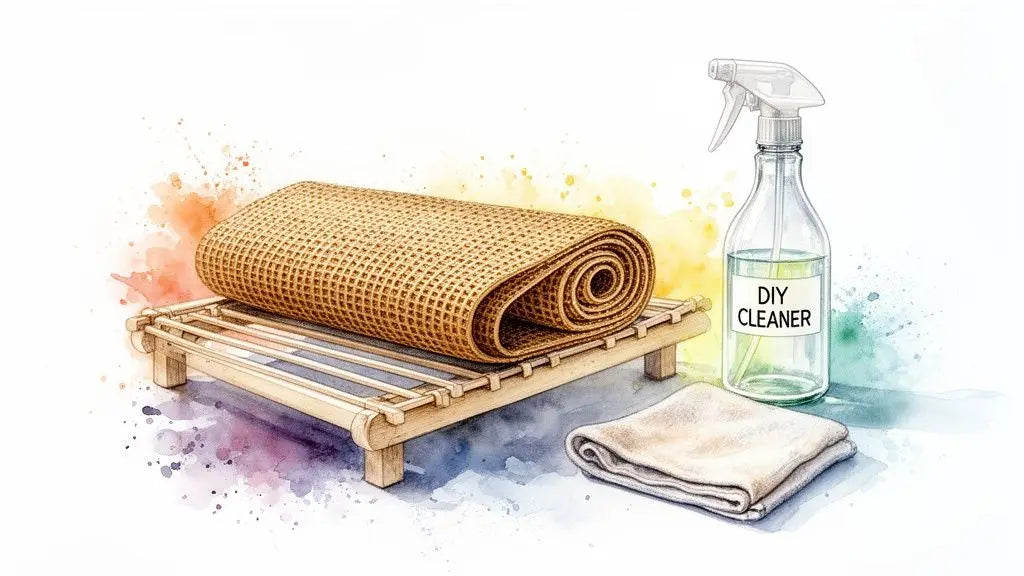
Unlike their synthetic PVC counterparts, eco-friendly mats made from natural materials need a gentler, more mindful approach to cleaning. Harsh chemical sprays can easily damage their delicate surfaces, stripping away that lovely natural grip and causing the materials to break down prematurely.
The good news? Keeping your mat clean is simple and can be done with ingredients you probably already have at home.
Simple DIY Mat Cleaner Recipe
You can whip up an effective and gentle cleaner that keeps your mat fresh without any of the nasty stuff. This simple recipe is perfect for a quick wipe-down after each session.
What You'll Need:
- A spray bottle
- Distilled or filtered drinking water
- White vinegar
- Optional: A few drops of tea tree or lavender essential oil for their antimicrobial properties.
Instructions:
- Fill the spray bottle about three-quarters full with water.
- Top it off with a splash of white vinegar (a ratio of about 4:1 water to vinegar works well).
- Add 3-5 drops of your chosen essential oil.
- Shake it gently before each use. Simply spritz your mat and wipe it down with a soft, damp cloth.
Material-Specific Care Instructions
Different non-toxic materials have their own unique needs. Following the right care routine will help preserve their specific qualities and feel.
- Natural Rubber: After cleaning, always hang your rubber mat to dry completely, but keep it out of direct sunlight. The sun's UV rays can cause the natural rubber to break down and become brittle over time.
- Cork: Cork is naturally antimicrobial, which is fantastic because it means less frequent deep cleaning. For a quick refresh, a simple wipe with a damp cloth is often all it needs. For deeper cleans, use the DIY spray and let it air dry fully before rolling it up.
- Jute & TPE: These materials are quite resilient. A gentle wipe-down with your DIY cleaner after practice is perfect. Just be sure they are completely dry before you store them to prevent any moisture buildup.
Smart Storage and End-of-Life
How you store your mat is just as important as how you clean it. Rolling it up loosely and securing it with one of our yoga straps and carry bags protects it from dust, scuffs, and physical damage. This simple step helps maintain its shape and surface for the long haul.
Finally, when your mat does reach the end of its journey, its eco-friendly nature really shines. Many natural materials like rubber, cork, and jute can be recycled, composted, or repurposed into handy things like garden kneeling pads or shoe liners.
This sustainable end-of-life cycle is a core part of a modern wellness routine, which might even include advanced recovery tools like portable ice baths to support the body’s natural cycles. To find more wellness tips, head over to our wellness blog.
It’s Time to Roll Out a Purer Practice
You’ve just taken a huge step towards making a powerful choice for your health and your practice. Deciding to switch to a non-toxic yoga mat is so much more than a simple purchase—it’s a genuine act of self-care and a commitment to a purer, more mindful way of living. Every time you step onto your mat, choosing a beautiful, safe alternative like natural rubber, cork, or TPE is a tangible way to honour your body.
Your wellness journey is a beautiful tapestry woven from all the little conscious decisions you make. It’s the supportive surface beneath your feet, but it’s also the nourishing vegan protein powder you choose for recovery. It’s in the clean, chemical free water filters you use to stay hydrated and the quiet moments you carve out just for yourself. Each small choice adds up to a much bigger picture of vitality and balance.
Choosing a non-toxic yoga mat finally aligns your physical practice with your deepest wellness intentions. It creates a truly safe space where you can breathe deeply and move freely, knowing your foundation is as clean and pure as your goals.
I invite you to take this next step with confidence and joy. When you feel ready, take a look at our curated collection of sustainable yoga mats and thoughtfully selected accessories. You’ll find everything you need to build a practice that genuinely supports and uplifts you, right from the ground up.
Build Your Complete Wellness Ritual
Creating a truly supportive practice is about more than just your mat. It’s about crafting an environment that nourishes every part of your being.
- Elevate Your Space: Set a calming mood with our premium essential oil diffusers. Filling your room with soothing aromas like blue lotus is a beautiful way to help you focus and relax.
- Support Your Body: Complement your active lifestyle with high-potency Teelixir supplements, designed to boost vitality and help your body recover.
- Deepen Your Stillness: Find comfort and proper alignment in your meditation with our ergonomic meditation cushions, perfect for helping you find your centre.
By bringing these elements together, you create a complete ritual that nurtures your body, mind, and spirit. It all starts today, by making conscious choices that reflect your commitment to a healthier, more vibrant life.
Frequently Asked Questions About Non-Toxic Yoga Mats
Stepping into the world of non-toxic wellness can feel a little overwhelming, especially with so much information out there. We get it. To help clear things up, we’ve put together answers to some of the most common questions we hear about choosing a safer yoga mat.
Are TPE Yoga Mats Really Non-Toxic And Safe?
Yes, TPE (Thermoplastic Elastomer) is a great choice if you're looking for a safe and non-toxic mat. While it's a synthetic blend, it’s made without the nasty chemicals like phthalates, latex, or heavy metals that you often find in cheaper PVC mats.
TPE is also recyclable, which makes it a far more conscious choice for the planet. On top of that, it offers fantastic cushioning and grip, giving you a wonderful balance of performance and peace of mind for your practice.
Why Does My New Non-Toxic Mat Have A Smell?
If you’ve just unrolled a new natural rubber mat, you might notice a distinct, earthy scent. Don't worry! This is the natural aroma of the rubber itself and is a world away from the harmful chemical "off-gassing" that comes with PVC mats.
The smell is completely harmless and usually fades within a few days to a week. To help it along, just unroll your mat and let it air out in a well-ventilated room, but keep it out of direct sunlight.
A slight, natural scent from a rubber mat is a good sign—it’s an authentic reminder that your mat comes from a plant, not a chemical factory. This is a key difference between a truly natural product and a synthetic one pretending to be clean.
That natural aroma is nothing like the chemical odour from a PVC mat, which can signal the release of unwanted toxins into your space.
How Do I Choose The Right Material For My Yoga Style?
The best mat for you really comes down to your personal practice. Your mat should be there to support your movement, not distract from it.
Here’s a quick guide:
- For Hot Yoga: A cork mat is perfect. Its grip actually gets better with moisture, and it's naturally antimicrobial, so it stays fresh even after the sweatiest sessions.
- For Dynamic Flow: Natural rubber mats provide unbeatable non-slip grip and durability. They give you a stable, grounded foundation for a powerful vinyasa practice.
- For Gentle or Restorative Yoga: A thicker TPE mat offers that extra bit of cushioning you need to hold poses longer and protect your joints. For even more support, consider using yoga blocks and bricks.
Are Non-Toxic Yoga Mats More Expensive?
While mats made from high-quality, sustainable materials like natural rubber or cork can have a higher price tag upfront compared to cheap PVC mats, they offer much greater long-term value.
That price reflects ethical sourcing, safer manufacturing, and superior durability. Think of it as a worthwhile investment in your health and in a product that will support your practice for many years to come.
Ready to find the perfect foundation for your practice? Explore our complete collection of beautiful and safe non toxic yoga mats in Australia.
At Wellness Apothecary, we believe your practice should be as pure as your intentions. Explore our non-toxic yoga mats and find the perfect partner for your wellness journey.


