


The Pilates ring is one of the best ways to add targeted resistance to your workout, helping you deepen muscle engagement and build serious core strength. This simple tool, often called a magic circle, is perfect for sculpting those hard-to-reach muscles and improving stability, all from the comfort of your own home. It’s an incredibly accessible, low-impact method for levelling up your fitness routine, especially when you're dressed for success in comfortable women's yoga activewear that moves with you.
The Magic Circle and the Rise of Mindful Movement
The Pilates ring is a deceptively simple piece of equipment that delivers profound results. Its main job is to add resistance, which forces your muscles to work harder and more precisely through every single movement.
This isn't about heavy lifting; it's about control, alignment, and waking up those deep stabiliser muscles that often get neglected in other types of exercise. By squeezing the ring between your thighs, ankles, or hands, you create an isometric contraction that builds strength without putting strain on your joints.
This focus on controlled, mindful movement is a huge reason for Pilates' soaring popularity here in Australia. There’s been a clear shift away from high-impact, high-stress workouts towards more restorative practices. In fact, recent data shows that in 2023, more than 1.1 million Australians participated in Pilates, reflecting a massive cultural move towards workouts that connect mind and body. This trend highlights a collective desire for fitness that not only builds physical strength but also helps manage stress. You can explore more about this fitness obsession and its impact on Australian wellness culture.
Why the Ring Is a Game-Changer for Home Fitness
For many of us, the real appeal of the Pilates ring is its versatility and how easy it is to use at home. It effectively transforms any space into a mini-studio, letting you get a challenging, full-body workout with just one piece of equipment.
When you pair it with a quality yoga mat, it provides the foundation for countless exercises that improve:
- Core Stability: The ring gives you tactile feedback, helping you engage your deep core muscles correctly to support your spine.
- Postural Alignment: By strengthening the muscles that hold you upright, the ring helps correct imbalances caused by daily habits like slumping over a desk.
- Targeted Toning: It’s brilliant at isolating specific muscle groups, like the inner thighs, glutes, and upper arms, for focused sculpting.
The true strength of the Pilates ring is its ability to make every movement more intentional. It bridges the gap between simply going through the motions and truly connecting with your body, making your home practice incredibly effective.
Ultimately, bringing pilates ring exercises into your routine is about enhancing the quality of your movement. It’s a tool that encourages precision over speed, helping you build a resilient, balanced, and gracefully strong physique.
Sculpt Your Core with Essential Ring Exercises
A strong, stable core is the absolute heart of Pilates, and the magic ring is your best friend for taking that work to a deeper level. It adds a whole new dimension of resistance that helps you connect with your abdominal muscles in a way you just can't without it—from the surface-level rectus abdominis (your "six-pack") to the deep transverse abdominis that wraps around your spine like a natural corset.
The key with these exercises is to focus on slow, controlled, and mindful movements. Trust me, you'll get far more out of five precise, perfect reps than you will from twenty rushed ones.
This quick guide shows exactly how the Pilates ring works its magic, using resistance to build stability and, in turn, sculpt your muscles.
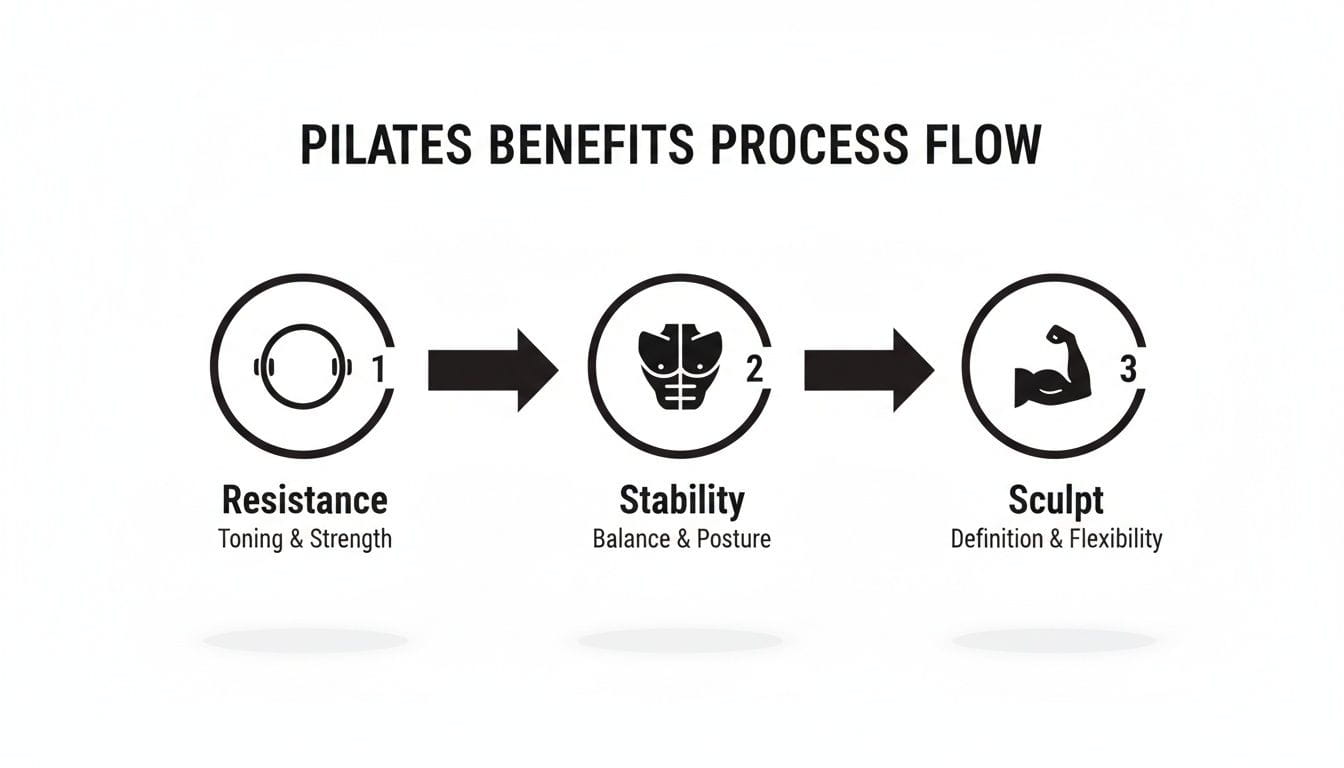
As you can see, the ring’s resistance is the starting point. That resistance forces your muscles to work harder to maintain stability, and that focused effort is what leads to a beautifully sculpted, toned physique.
The Hundred with Inner Thigh Squeeze
This is a classic Pilates move for a reason—it’s an absolute powerhouse for building endurance and deep core strength. Popping the ring between your thighs not only wakes up your adductors (inner thighs) but also gives you fantastic feedback to keep your core firing and your lower back safe.
- Start by lying on your back with your knees bent and feet flat on the mat.
- Place the Pilates ring between your inner thighs, just up from your knees. Your arms should be long by your sides, palms facing down.
- Take a deep breath in to prepare. As you breathe out, curl your head, neck, and shoulders off the mat, feeling your abs engage. At the same time, lift your legs into a tabletop position (shins parallel to the floor). If you feel strong, you can extend your legs out to a 45-degree angle for a bigger challenge.
- Now, start pumping your arms up and down with energy. Breathe in for five pumps and out for five pumps. All the while, maintain a gentle but constant squeeze on the ring.
- The goal is to complete 10 full breath cycles for a total of 100 pumps.
Common Mistake to Avoid
So many people strain their necks in this position. Keep your gaze toward your knees and imagine you're holding a small orange between your chin and your chest to keep the space open. If your neck gets tired, it’s completely fine to place one hand behind your head for support or even lower your head back down to the mat and keep pumping.
Seated Oblique Twists with the Ring
These are brilliant for carving out your waistline and building that crucial rotational strength. Holding the ring between your hands adds tension through the upper body, making sure your entire core is working together as a team.
- Sit up tall on your mat, knees bent and feet flat on the floor. Hold the ring out in front of your chest, gripping the padded handles with both hands. Keep your elbows slightly bent.
- Engage your core and lean back just enough that you feel your abs switch on. The trick here is not to round your lower back—keep your spine nice and long.
- Breathe in at the centre. As you breathe out, twist your torso to the right, keeping the ring aligned with the centre of your chest. Inhale back to the middle, then exhale as you twist to the left.
- Make sure the movement comes from your ribcage, not just from swinging your arms. Aim for 10-12 twists on each side.
Pro-Tip: Want to dial it up a notch? Lift your feet off the floor into a tabletop position. This demands much more stability from your deep core muscles to stop your hips from rocking.
Leg Lowers with Ring Squeeze
This movement is fantastic for targeting the lower abdominals, which can be a notoriously tricky area to strengthen. Squeezing the ring between your ankles does more than just engage your inner thighs; it helps you stay in control and stops your lower back from arching off the mat.
- Lie on your back and place the Pilates ring securely between your ankles.
- Extend both legs straight up towards the ceiling, so you’re making a 90-degree angle at your hips. If your lower back feels tender, slide your hands underneath it for a bit of extra support.
- Inhale as you slowly and with great control, lower your legs towards the floor. Here's the important part: only go as low as you can while keeping your lower back pressed firmly into the mat. The second you feel it start to lift, you’ve gone too far.
- Exhale and use your lower abs to pull your legs all the way back up to the start.
- Keep a consistent, gentle squeeze on the ring for the entire movement. Complete 8-10 repetitions with focus and precision.
If you’re looking to get started, you can find a high-quality, durable Powertrain Pilates Ring designed specifically for home workouts right here.
Achieve Full-Body Toning with the Magic Circle
While the Pilates ring is a true champion for core work, its real magic lies in its ability to sculpt and strengthen your entire body. Moving beyond the abs, this versatile tool adds targeted resistance to create lean, toned muscles everywhere—from your legs and glutes to your chest and arms. Let's dive into some key pilates ring exercises that deliver a fantastic full-body workout.
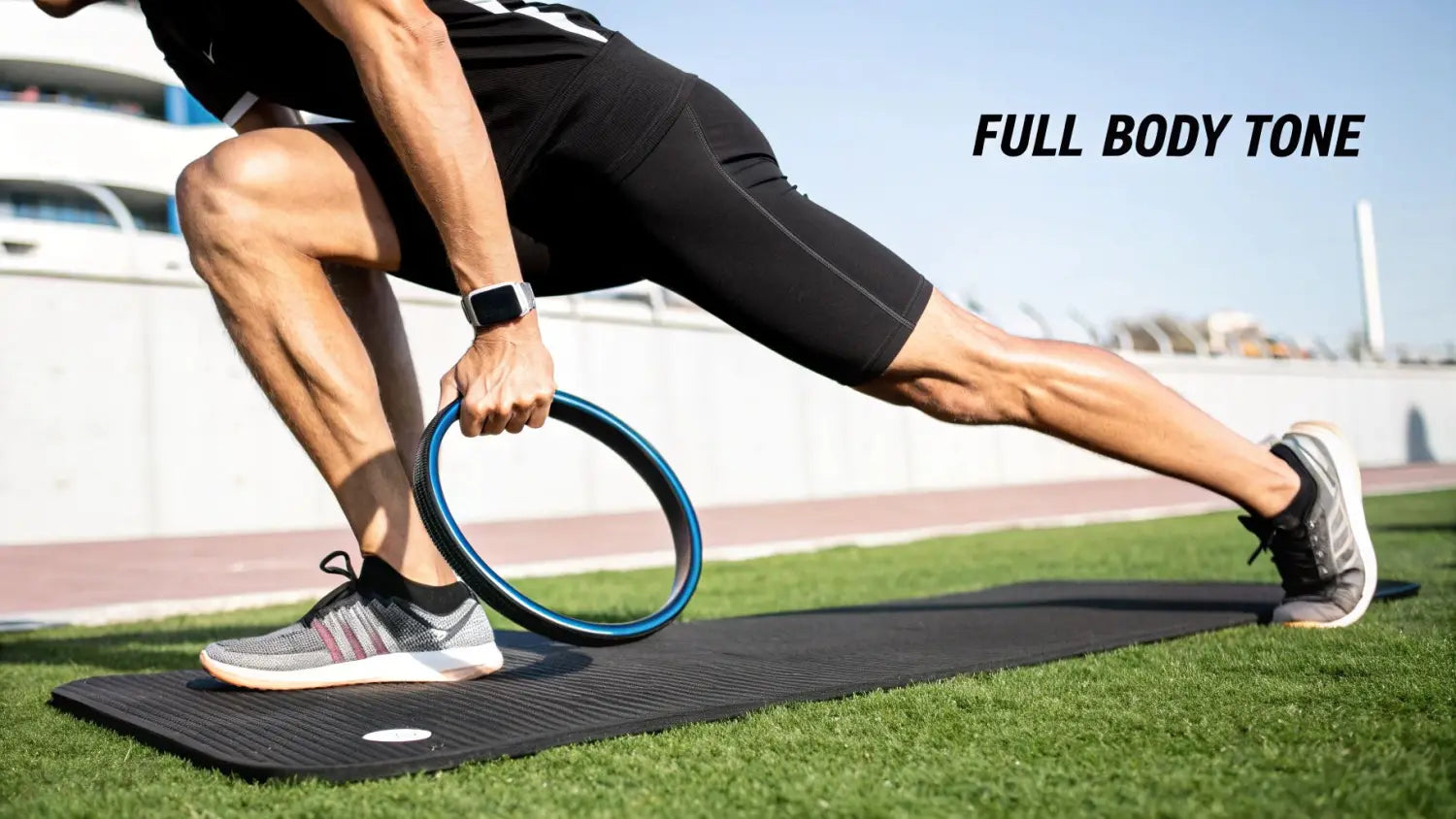
The ring’s unique design gives you a way to add resistance to movements that are often tricky to target with bodyweight alone. Think of it as a guide providing constant feedback, ensuring you switch on the right muscles with precision and control. It's this focused engagement that makes these exercises so incredibly effective for toning and building functional strength.
The appeal of this low-impact, high-results approach is growing quickly across Australia. Interestingly, Victoria leads the nation in Pilates enthusiasm, with women making up about 90% of participants. While it’s especially popular among those aged 45-64, younger demographics are also embracing its benefits. It's not just a female-dominated space, either; men, from athletes to tradies, now account for 20-25% of clients, using the ring for cross-training and injury prevention. You can discover more insights into Australia's Pilates participation trends and see just how broad its appeal has become.
Lower Body Pilates Ring Exercises
Strengthening your lower body is about so much more than aesthetics—it’s fundamental for stability, power, and everyday movement. The Pilates ring is exceptional at isolating and firing up the muscles of the inner thighs, glutes, and hamstrings.
Inner Thigh Squeeze in Bridge
This move combines a classic glute bridge with an adductor squeeze, working your entire posterior chain while giving your inner thighs some serious attention.
- Lie on your back with your knees bent, feet flat on the floor about hip-width apart. Place the Pilates ring between your upper thighs.
- Inhale to prepare. As you exhale, press through your heels to lift your hips off the mat into a bridge position.
- At the top, give the ring three firm, pulsed squeezes.
- Inhale as you slowly lower your hips back down with control. Aim for 12-15 repetitions.
Standing Outer Thigh Press (Abduction)
This exercise hones in on the outer thighs and gluteus medius, a key muscle for hip stability and preventing knee pain.
- Stand tall with your feet together. Place the ring around the outside of your ankles, holding onto a wall or chair for balance if you need it.
- Engage your core and shift your weight onto your left leg, keeping a soft bend in the knee.
- Exhale and press your right leg out to the side against the ring's resistance. Focus on starting the movement from your hip and glute.
- Inhale as you slowly return your leg to the centre. Complete 10-12 reps before switching sides.
The key to these lower-body exercises is slow, deliberate movement. The ring provides resistance in both directions—on the press and the release—so make sure you control the return journey to maximise muscle engagement.
Upper Body Pilates Ring Exercises
The magic circle is just as effective for toning your upper body. It creates resistance for pushing and pulling movements that sculpt the chest, back, shoulders, and arms. To learn more about how resistance training works, our guide on how to use resistance bands covers similar principles and is a great resource.
Chest Press
This is a fantastic exercise for strengthening the pectoral muscles and the fronts of the shoulders.
- Sit or stand with a tall, straight spine. Hold the ring in front of your chest with both hands on the padded handles, elbows bent and pointing outwards.
- Take a deep breath in. As you exhale, squeeze the ring, feeling your chest muscles engage to bring your hands closer together.
- Hold the squeeze for a moment before inhaling to release the tension slowly.
- Perform 12-15 repetitions, really focusing on the contraction in your chest.
Overhead Triceps Press
Target the back of your arms with this simple yet powerful movement.
- Sit tall on your mat or a chair. Hold the ring overhead with your hands on the inside of the ring, palms facing outwards.
- Inhale to prepare, keeping your shoulders relaxed and down, away from your ears.
- Exhale as you press your hands outwards against the ring, activating your triceps.
- Inhale as you slowly release the pressure. The goal is to feel the work in the back of your arms, not your neck. Complete 12-15 reps.
A complete fitness routine balances strength work with proper recovery. After a challenging session with your Pilates ring, consider a portable ice bath to reduce muscle soreness and inflammation. Pairing your physical practice with nutritional support, such as Teelixir medicinal mushrooms, can also enhance vitality and aid your body's natural recovery processes, creating a truly well-rounded approach to your health.
Create Your Ideal Home Pilates Sanctuary
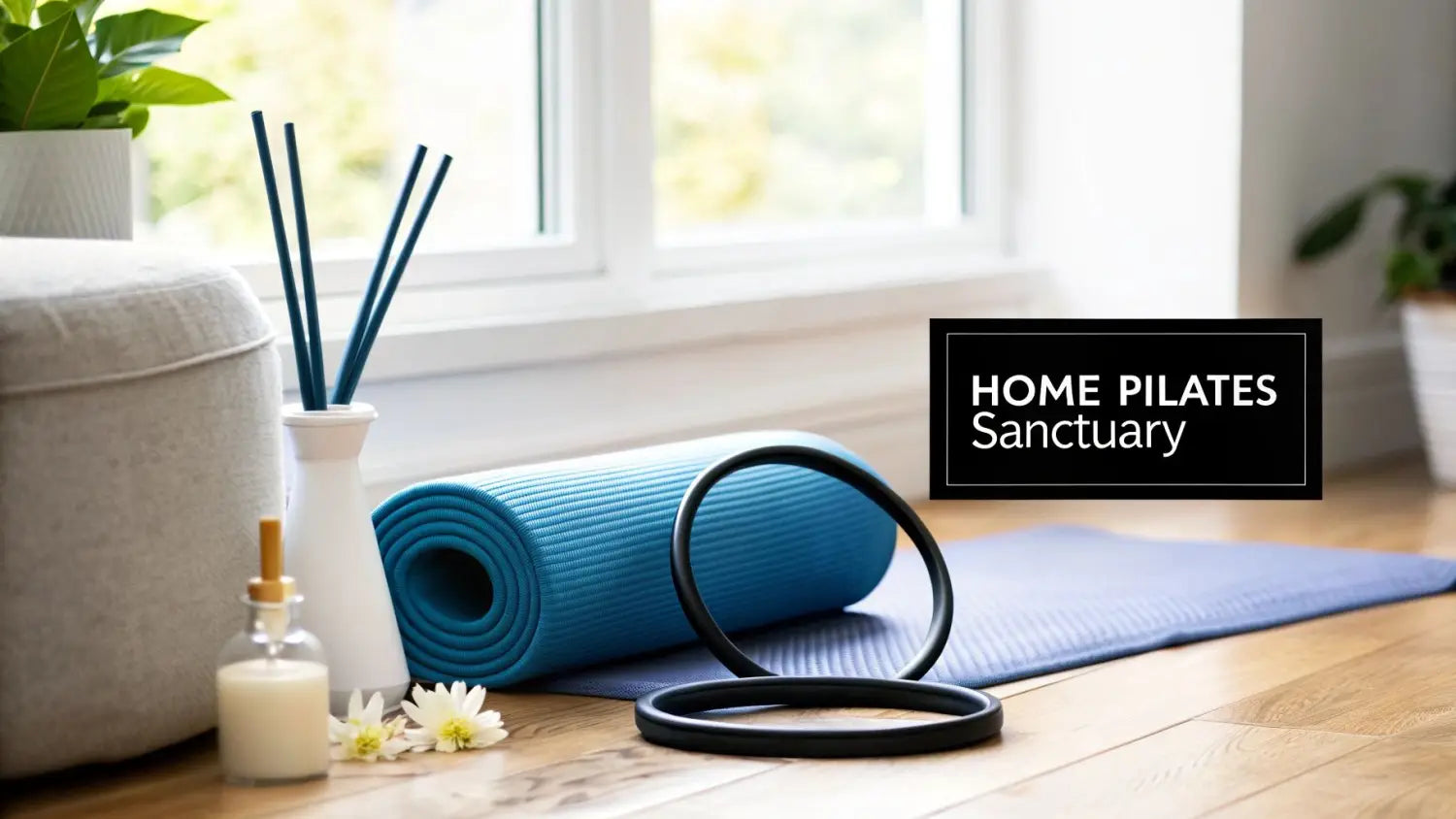
There's something transformative about carving out a small corner of your home and dedicating it to your wellness. It can completely shift how you approach your pilates ring exercises. It’s less about just clearing a space on the floor and more about creating a personal ritual.
This little sanctuary signals to your mind and body that it's time to connect, focus, and move with real intention. Suddenly, your practice feels less like a chore and much more like an act of self-care.
The absolute foundation of any good home practice is what’s underneath you. A supportive, non-slip surface is non-negotiable for both comfort and safety, letting you hold your form without sliding around or putting nasty pressure on your joints. The right mat gives you the stability for every single movement, from a slow, controlled roll-up to a challenging bridge pose.
Setting the Foundation for Your Practice
Think of your mat as your own personal workout island; it’s worth finding one that feels just right. You'll want something with enough padding to protect your spine during floor work, but still firm enough to keep you stable in standing movements.
When you're piecing your space together, a few key elements make all the difference:
- A quiet corner: Try to find a low-traffic spot where you won't be easily disturbed. It's so much easier to stay consistent when your space is always ready and waiting for you.
- Good lighting: I always find natural light is best—it’s a genuine mood and energy booster. If that’s not an option, go for soft, warm lighting to create a calm, inviting atmosphere.
- Supportive flooring: The base of it all is a high-quality mat. Investing in a durable yoga mat provides that perfect blend of cushioning and grip, so you can focus purely on your movements.
Elevating the Atmosphere for Mindful Movement
Once your physical space is sorted, you can start layering in sensory elements that help deepen your focus and relaxation. The idea is to build an environment that calms your nervous system before you even give that Pilates ring its first squeeze.
This is where the power of scent truly comes into its own. Aromatherapy is such a simple but powerful tool for setting the mood. Using an essential oil diffuser with calming scents like lavender or grounding frankincense helps your mind switch gears from the hustle of the day to the focus of your practice. The gentle aroma helps quiet all that mental chatter, allowing for a much deeper mind-body connection during your exercises.
By intentionally designing your environment, you're not just preparing for a workout; you're cultivating a holistic experience. This approach turns your home into a personal studio where physical strength and mental clarity are nurtured together.
Bringing in other mindful props can be the final touch for your sanctuary. Placing a meditation cushion nearby is a wonderful invitation to take a few moments for quiet reflection before or after your session. This simple act of bookending your physical practice with stillness reinforces that link between movement and mindfulness, turning every workout into a complete wellness ritual.
Enhance Your Practice and Care for Your Gear
Getting the most out of your pilates ring exercises isn’t just about mastering the movements. To see real progress, you need to think about smart integration, listening to your body, and of course, looking after your equipment. Small tweaks here and there can lead to huge gains in strength, flexibility, and overall well-being.
One of my favourite ways to keep a workout feeling fresh is by creating challenging circuits. Instead of doing isolated sets, try combining three or four ring exercises into a continuous flow with hardly any rest.
For example, you could move directly from Inner Thigh Squeezes in a bridge position to Seated Oblique Twists, and then finish with a Chest Press. This approach keeps your heart rate elevated and really builds muscular endurance.
Fueling Your Body for Peak Performance
What you do off the mat is just as crucial as the exercises themselves. Think of it this way: proper nutrition gives you the energy to perform and provides the building blocks for recovery. Your body simply needs the right fuel to repair muscle tissue and sustain your practice over the long haul.
Consider weaving these nutritional strategies into your routine to support your Pilates journey:
- Sustained Energy: A pre-workout drink like matcha green tea can give you a calm, focused energy boost without the coffee jitters, thanks to its L-theanine content. It's a perfect way to centre your mind before a session.
- Joint and Recovery Support: To help maintain joint health and support your vitality, supplementing with Teelixir medicinal mushrooms can offer powerful adaptogenic benefits. This helps your body manage stress and recover more efficiently.
This holistic approach, connecting physical effort with mindful nutrition, ensures your body is fully supported from the inside out.
Keeping Your Equipment in Top Condition
Proper care will keep your Pilates gear hygienic, functional, and durable for years to come. A simple cleaning routine after each session is all it takes to prevent the buildup of sweat and bacteria—essential for both your equipment and your skin.
For your Pilates ring, a quick wipe-down with a damp cloth and a mild soap-and-water solution is usually all you need. Be sure to avoid harsh chemicals that could degrade the padded handles. For your yoga mat, use a dedicated mat spray or a similar gentle cleaning solution and let it air dry completely before rolling it up.
Pro-Tip: Always store your ring and mat in a cool, dry place away from direct sunlight. Extreme temperatures can cause the materials to become brittle and crack over time.
The shift towards accessible, at-home fitness has really driven growth in the Australian Pilates equipment market. While average monthly gym fees are around $74.37, a versatile Pilates ring offers a premium workout for a fraction of that initial cost. This makes it a smart investment for managing health issues like back pain, which impacts a staggering 16% of Australians annually. You can read more about the Pilates equipment market trends and this move towards home-based wellness.
If you want to diversify your workout even further, exploring other gear like resistance bands is a great way to add new challenges and keep your muscles guessing.
Your Questions About the Pilates Ring, Answered
As you start playing with pilates ring exercises, you'll naturally have a few questions. Whether you're just getting started or looking to go deeper with your practice, getting clear answers makes all the difference. Let's tackle some of the most common queries so you can move forward with confidence.
Think of the Pilates ring as a tiny personal trainer. It gives you instant physical feedback, showing you exactly where you need to engage and stabilise. This little dialogue between your body and the ring is what makes it such a brilliant tool for building real strength and awareness.
How Often Should I Use My Pilates Ring?
When it comes to results, consistency always beats intensity. Aim to use your Pilates ring 2-4 times per week, making sure to schedule rest days in between. This gives your muscles the perfect rhythm of work and recovery they need to repair and grow stronger.
On your "off" days, think about complementary movement. You could do some light cardio, enjoy a long walk, or simply have a good stretch on your yoga mat. The most important thing is to listen to your body. If you're feeling particularly sore, an extra rest day or a gentle mobility session is always a smart move. The goal is a sustainable habit that energises you, not one that leaves you feeling drained.
Can a Pilates Ring Help with Weight Loss?
While Pilates is famous for sculpting long, lean muscles and improving posture, it can absolutely be a valuable part of a weight loss journey. The resistance from the ring dials up the intensity of every movement, helping you build metabolically active muscle. The more muscle you have, the more calories your body burns, even when you’re resting.
Of course, the ring is a tool for toning and strengthening, not a magic bullet for weight loss. For the best results, you'll want to pair your Pilates practice with a balanced, nutrient-rich diet and regular cardio. Fuelling your workouts with something like a clean vegan protein powder can also support muscle repair and help you feel full, making it easier to stick with your overall wellness goals.
Is the Pilates Ring Good for Beginners?
Absolutely. In fact, the magic circle is one of the best props for anyone new to Pilates. It provides tangible resistance that helps you feel the right muscles firing up, which takes a lot of the guesswork out of finding proper form. It gently guides you to engage your core, stabilise your pelvis, and maintain alignment in a way that’s often tricky with bodyweight exercises alone.
The magic circle provides a gentle yet firm reminder to stay connected to your centre. It doesn't allow for sloppy movements, teaching you control and precision from your very first session. This foundational strength is invaluable as you progress.
Our guide also includes plenty of modifications for every exercise, so you can start at a level that feels safe and comfortable for you. As you get stronger and more confident, you can easily progress the movements to keep challenging yourself.
What's the Difference Between a Ring and a Band?
This is a great question, as they're both fantastic resistance tools. A Pilates ring is a rigid circle that gives you resistance in two main ways: when you squeeze it inward (adduction) and when you press outward against it (abduction). This makes it exceptional for targeting specific muscle groups like the inner and outer thighs, chest, and arms with focused, controlled contractions.
Resistance bands, on the other hand, are elastic. They offer progressive resistance—the more you stretch them, the harder the exercise gets. This makes them incredibly versatile for a huge range of dynamic pulling and pushing movements that often mimic everyday actions. Many people find that using both a ring and bands in their routine gives them the most well-rounded approach to building strength.
At Wellness Apothecary, we believe in providing the tools you need to build a strong, balanced, and mindful practice from the comfort of your home. Explore our curated collection of high-quality wellness products to support every aspect of your journey.


