


Your yoga mat yoga practice is so much more than just a workout; it's a sacred time you carve out to connect with yourself. A quality mat is like your own personal sanctuary, a defined space where the noise of the outside world melts away, letting you turn your focus inward to your breath and body. It's the grounding force for every single pose, from powerful standing sequences to deeply restorative stretches on the floor.
The Foundation of Your Wellness Journey
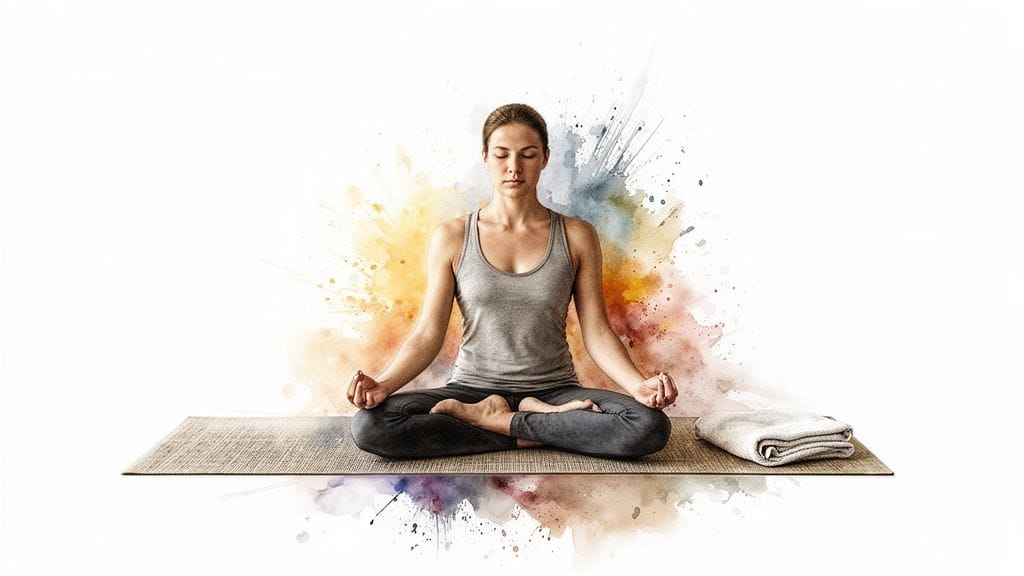
Think of your yoga mat as your most trusted partner in your practice. It’s that consistent, supportive surface waiting for you every time you decide to show up for yourself. This simple rectangle of material can instantly transform any spot—a corner of your living room, a patch of grass in the park, or a studio floor—into a dedicated space for mindful movement. It gives you a non-slip surface for stability, cushioning for your joints, and a clear, physical boundary for your practice.
This connection to a physical space helps build a powerful mental ritual. The simple act of rolling out your mat signals to your mind and body that it's time to shift gears, to breathe a little deeper, and to move with intention. It’s this ritualistic element that elevates a simple exercise session into a truly holistic wellness experience.
More Than Just Equipment
Choosing the right mat is really the first step in nurturing a practice you'll love and stick with. When a mat feels good under your hands and feet, it genuinely encourages you to come back to it day after day. It becomes a familiar comfort, a place where you can explore your limits, discover your strength, and find those precious moments of profound stillness.
Your mat isn't just an accessory; it's the anchor for your entire practice. It provides the physical and energetic support needed to explore movement, find balance, and cultivate a deeper connection with yourself.
The growing focus on personal wellness has really put a spotlight on having the right tools for the job. In Australia, the yoga mat market jumped from around USD 45 million in 2019 to over USD 62 million in recent years, a shift driven by the huge increase in people practising at home. This shows a wider understanding that a good mat is a direct investment in your own health and wellbeing. Find out more about Australian wellness trends.
Supporting Your Holistic Lifestyle
Your practice is often the cornerstone of a broader, more conscious way of life. The intention you bring to your mat can create a ripple effect, influencing other areas of your life, from mindful eating to creating a peaceful home. It all starts with making choices that align with your values, like opting for one of the beautiful eco yoga mats available today.
By choosing the right foundation, you're not just getting ready for a series of poses. You're setting the stage for:
- Enhanced Stability: Letting you hold tricky poses with more confidence and ease.
- Improved Comfort: Protecting your knees, wrists, and spine during any floor work.
- Mental Focus: Creating a dedicated space that helps minimise distractions.
- Personal Expression: Choosing a mat with a colour and texture that truly resonates with you.
Ultimately, your journey begins with that first step onto the mat. It’s a commitment to your physical health and your mental clarity, all supported by a surface that makes your practice possible.
Choosing Your Mat's Material: A Conscious Connection
The material of your yoga mat is where your practice truly begins. It’s the surface that connects your body to the earth, the foundation for every pose. Choosing the right one isn't just about grip or cushioning; it’s a chance to align your wellness journey with your values, bringing a non-toxic, conscious element to your daily ritual.
When you start looking, you’ll find that many standard mats are made from PVC (polyvinyl chloride). It’s a synthetic plastic that’s popular for its durability and sticky grip. While it gets the job done, PVC isn’t biodegradable, and its production can be tough on the environment. This realisation has led so many of us to search for more mindful alternatives.
Another common option you'll see is TPE (thermoplastic elastomer), a blend of rubber and plastic. TPE is often seen as a step up from PVC because it's recyclable and free from some of the more harmful toxins. But for those of us wanting a truly natural foundation for our practice, the journey doesn't end there.
Embracing Natural and Eco-Friendly Materials
For a practice rooted in mindfulness, eco-friendly materials offer a powerful, grounding connection to the natural world. These options are not only better for the planet but often provide a far superior practice experience, blending high performance with total peace of mind.
- Natural Rubber: Sourced directly from rubber trees, this is a long-time favourite for its incredible grip. Its open-cell structure creates a non-slip surface that’s perfect for holding poses securely, even when things get a bit sweaty. Better yet, it’s a renewable resource and completely biodegradable.
- Cork: Harvested from the bark of cork oak trees—a process that doesn't harm the tree at all—cork is a wonderfully sustainable choice. It has natural antimicrobial properties, which means it helps keep your mat clean and smelling fresh. The best part? Cork’s grip actually improves with moisture, making it ideal for hot yoga or a dynamic flow.
- Jute: This natural fibre comes from the jute plant and is often woven with other materials to create a beautifully textured, earthy mat. Jute is incredibly strong and biodegradable, offering a unique, breathable surface that enhances your sense of stability and connection to the ground.
Choosing a mat made from sustainable yoga mats like natural rubber or cork isn't just about buying a piece of equipment. You're making a conscious choice to support the planet, ensuring your practice honours ahimsa—non-harm—in every sense of the word.
Making a Choice That Feels Right
Ultimately, selecting the right material is a personal decision that balances performance, ethics, and how it feels beneath your hands and feet. A vinyasa lover might need the unbeatable grip of a natural rubber mat, while someone with sensitive skin may gravitate towards the clean, antimicrobial feel of cork.
To help you decide, we've put together a detailed guide on finding the best non toxic yoga mats in Australia.
The goal is to find a mat that inspires you to show up, for yourself and for your practice. When you unroll a surface that feels good and reflects your values, you deepen the intention behind every movement.
Matching Your Mat To Your Movement Style
Finding the perfect yoga mat is a bit like choosing the right pair of shoes for your favourite sport. You wouldn’t hit the pavement in hiking boots, and likewise, the ideal mat depends on how you move. Think of thickness, texture and grip as the features that either elevate or trip up your practice.
When you match your mat to your style, you’re creating a seamless extension of your body. That means more confidence in each pose, a firmer foundation for balance and a greater sense of ease from start to finish. Paired with comfortable women's yoga activewear, the right mat completes your setup.
To help you zero in on the perfect thickness, check out our Yoga Mat Thickness Guide below. It highlights common thicknesses and when they shine.
Yoga Mat Thickness Guide
Use this table to find the ideal mat thickness based on your primary yoga style, personal comfort, and stability needs.
| Thickness | Best For Yoga Styles | Key Benefits | Considerations |
|---|---|---|---|
| 3 mm | Dynamic flows (Vinyasa, Ashtanga) | Excellent floor feedback, stable base | Minimal cushioning for joints |
| 4 mm | Power Yoga, Hot Yoga | Balance of grip and slight padding | May feel firm during floor work |
| 5 mm | Restorative, Yin, Gentle Hatha | Plush support, joint protection | Less ground connection in standing |
| 6 mm+ | Therapeutic sessions, injury recovery | Maximum comfort, full cushioning | Can be bulky and reduce stability |
Use this as a starting point. Your body and style will guide any fine-tuning, whether you edge up to a thicker pad or slim down for sharper balance.
Dynamic Flows And Stability
In energised practices—think Vinyasa, Ashtanga or Power Yoga—every transition tests your equilibrium. That’s why many movers reach for a mat in the 3–4 mm range. It’s akin to choosing solid ground over soft sand when you’re sprinting. You feel locked in, able to press into Warrior III without that unsettling wobble.
Grip is the unsung hero here. A high-traction surface on a sustainable mat stops sweat from sending your hands and feet sliding. In a fast sequence, that security lets you lean into each pose, knowing your foundation won’t betray you.
Restorative Practices And Cushioning
When the pace slows for Yin, Restorative or Hatha, your focus shifts from heat to stillness. Poses are held, often with knees and hips grounded. Here, a mat of 5 mm or more is your best friend—a plush landing pad that cradles your joints.
That extra cushion invites you to soften into long holds, releasing tension rather than bracing against the floor. It’s like wrapping yourself in a gentle embrace, soothing your body so you can fully melt into each stretch.
Making The Right Choice
Sometimes you have clear priorities—maybe you crave maximum grip, eco-credentials or a mat you can rinse clean easily. Use this decision tree to see which material matches your main focus.
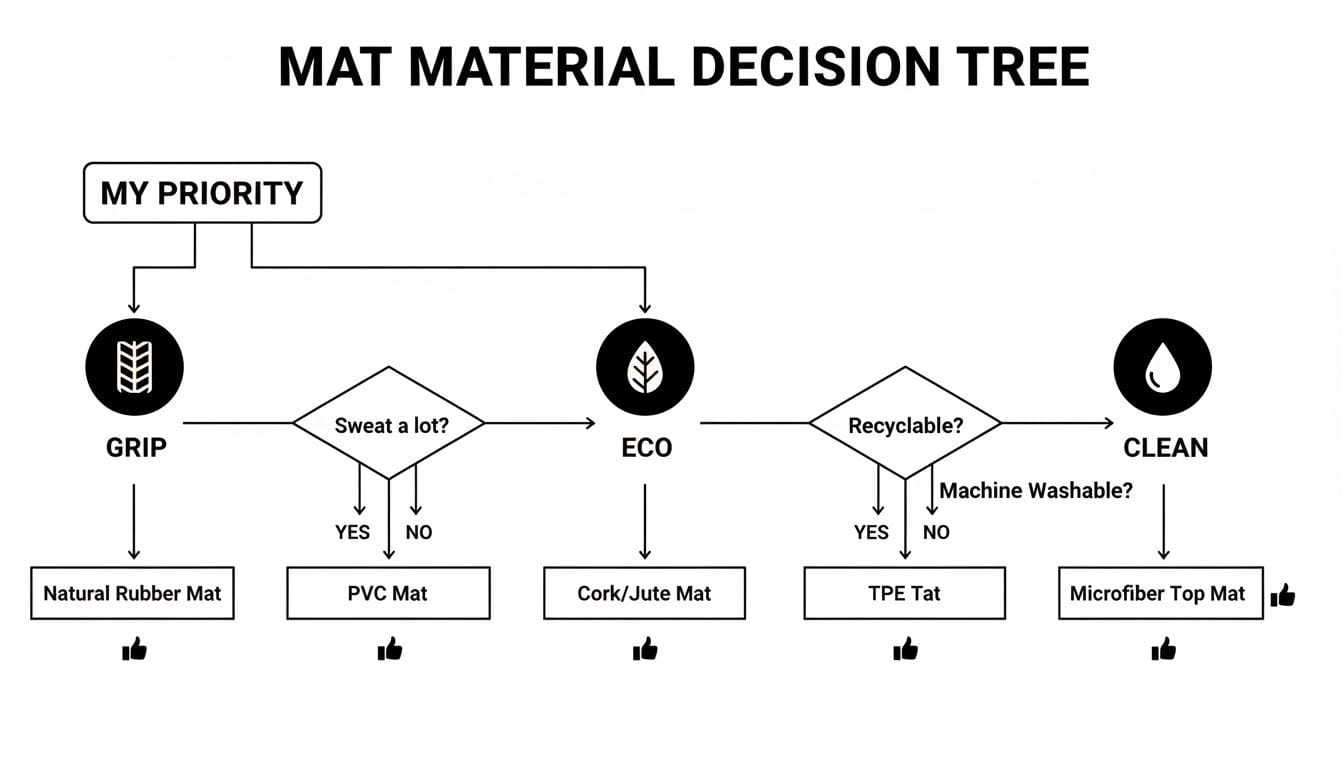
Ultimately, the best mat meets you where you are. Whether you need rock-solid stability for a high-octane flow or cloud-like cushioning for quiet surrender, your mat choice sets the stage. For those on the move, our foldable yoga mat guide breaks down lightweight, portable options that are perfect for travel. By aligning your mat with your movement, you build a practice that’s safe, effective and deeply enjoyable.
Proper Care To Preserve Your Practice Space
Think of your yoga mat as an investment in your personal wellness. A well-loved mat has seen you through countless flows, stretches, and moments of stillness. Like any valued tool, it needs a little care to maintain its grip, integrity, and clean surface.
Regular cleaning does more than just extend the life of your mat. It ensures your personal practice space remains a fresh, hygienic, and inviting sanctuary. Over time, a neglected mat can build up sweat, oils, and bacteria, leading to unpleasant odours and material breakdown. A simple, consistent cleaning routine is all it takes to protect both your health and your investment.
This ritual of care can even become a mindful practice in itself, a way of honouring the space where you connect with your body and breath.
Post-Practice Cleaning
After every session, a quick wipe-down is a non-negotiable. This simple step prevents the daily accumulation of grime and keeps your mat ready for your next flow.
You can easily whip up a DIY cleaning spray that’s both effective and beautifully aromatic. A homemade spray lets you sidestep harsh chemicals that might damage eco-friendly materials like natural rubber. Plus, it’s a wonderful way to bring a little aromatherapy into your cool-down.
To make your own, just follow this simple recipe:
- Fill a small spray bottle about three-quarters full with filtered water.
- Top it off with one-quarter white vinegar, a fantastic natural disinfectant.
- Add 5-10 drops of your favourite essential oils, like Blue Lotus or Lavender.
Simply give your mat a light mist, wipe it down with a soft cloth, and let it air dry completely before you roll it up. This small act leaves your mat feeling fresh and can fill your space with a soothing scent, especially when paired with one of our elegant essential oil diffusers.
Deep Cleaning For Different Materials
Every few weeks, or more often if you’re a fan of hot yoga, your mat will thank you for a deeper clean. The right method really depends on what your mat is made of.
- Natural Rubber & Jute Mats: You'll want to avoid submerging these materials, as soaking can cause them to break down. Stick to your DIY spray or a manufacturer-approved cleaner. Always wipe, never soak.
- TPE & PVC Mats: These are generally more robust and can handle a thorough wash. You can gently hand-wash them in a tub with cool water and a tiny amount of mild soap. Be sure to rinse them completely to remove all soap residue, which can make the mat slippery.
- Cork Mats: Cork is naturally antimicrobial, so it does a lot of the work for you and requires less intensive cleaning. A simple wipe with a damp cloth is usually plenty. For a deeper clean, you can also use your DIY vinegar and water spray.
Important Takeaway: Always double-check the manufacturer's care instructions before attempting a deep clean. Using the wrong method can void warranties and ruin the special texture and grip of your high-performance yoga mat yoga surface.
Smart Storage Solutions
How you store your mat is just as important as how you clean it. Proper storage protects it from physical damage, helps it keep its shape, and prevents annoying creases or cracks from forming over time.
A big one: never leave your mat in direct sunlight. UV rays can cause colours to fade and can make natural materials like rubber become brittle.
Always make sure your mat is completely dry before rolling it up to prevent mould and mildew from making a home there. A great tip is to roll it with the top side (the side you practice on) facing out. This helps it lie flat and ready when you unroll it for your next session.
For effortless transport and protection, think about grabbing one of our dedicated yoga straps and carry bags. They keep your mat secure, clean, and easy to carry while you’re on the move.
Creating Your Complete Yoga Sanctuary
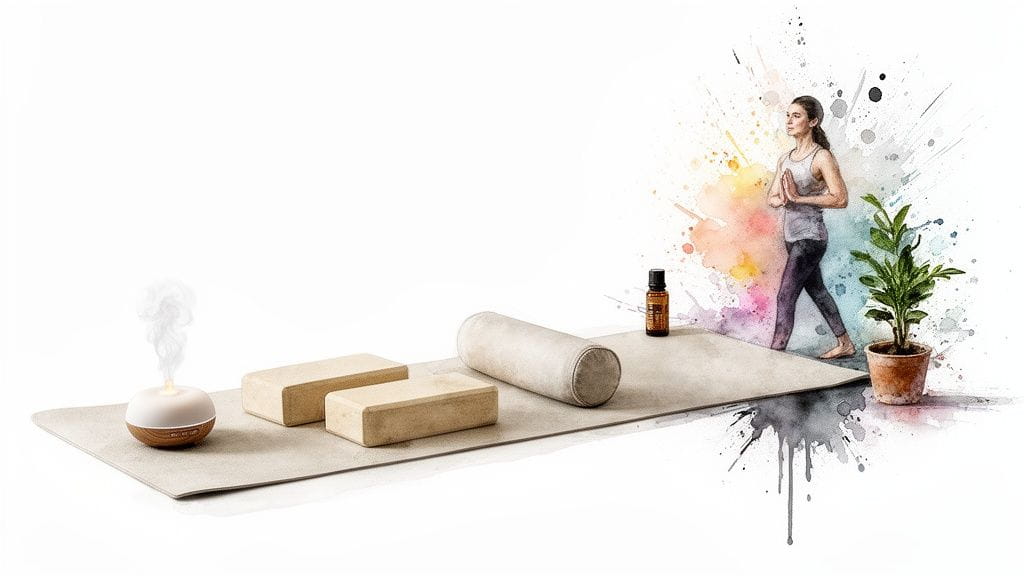
While your yoga mat yoga practice is the heart of it all, the space around you can completely transform your state of mind. Your practice doesn't have to be confined to the four corners of your mat. By thoughtfully setting up your environment, you can build a personal sanctuary that nurtures both body and soul, turning every session into a mini-retreat.
This is about looking beyond the mat and inviting in other elements that can support and deepen your experience. From props that make poses more accessible to sensory details that calm your nervous system, each addition helps you build a nest of comfort and intention.
Amplifying Your Practice With Props
Yoga props aren't crutches; they're intelligent tools for exploration and support. They help you meet your body exactly where it is on any given day, allowing you to find better alignment, sink deeper into stretches, and hold restorative poses for longer.
Using props wisely can make your practice more sustainable, beneficial, and intuitive.
- Yoga Blocks: These are brilliant for bringing the floor closer to you. In standing poses like Triangle or Half Moon, a block under your hand gives you stability and stops you from collapsing. Our range of supportive yoga blocks and bricks can make challenging postures feel both achievable and safe.
- Bolsters and Cushions: For a Yin or Restorative practice, a bolster is a game-changer. Popping one under your knees in Savasana can release lower back tension, while using one to support your torso in a gentle backbend creates a beautiful heart-opening experience.
- Yoga Straps: Straps are fantastic for safely improving your flexibility. They can help you bind in certain poses, extend your reach in seated forward folds, or gently guide your leg in a reclined hamstring stretch—all without straining.
By welcoming these tools into your practice, you empower yourself to adapt the poses to your unique body, fostering a sense of curiosity rather than frustration.
Grounding Your Mind Before You Begin
The moments before you flow into your first Sun Salutation are just as important as the practice itself. Creating a pre-practice ritual helps you shift gears from the busyness of your day into a state of mindful presence.
One of the best ways to ground yourself is through seated meditation. Taking just a few minutes to sit quietly can calm the mental chatter and help you set a clear intention for your session. To make this more comfortable, try using dedicated meditation cushions, which are designed to help you maintain a supported, upright posture.
To really round out your sanctuary, think about elements that engage all your senses. A gentle, calming scent can instantly shift the energy in a room. To learn more, you can read about how to create a serene atmosphere with natural options. Paired with soft ambient light, this sends a clear signal to your body and mind that it's time to unwind.
A true sanctuary engages all the senses. Combining physical comfort with calming sounds and scents creates a multi-layered experience that allows the mind to settle, making your on-mat practice more focused and restorative.
Enhancing Post-Session Recovery
Your commitment to your wellbeing doesn't stop when you roll up your mat. What you do after your practice can have a huge impact on your recovery and the benefits you feel. While a gentle cool-down and Savasana are non-negotiable, modern recovery tools can take your recuperation to the next level.
Cold water therapy, for instance, is gaining serious traction for its ability to reduce inflammation, soothe sore muscles, and boost circulation. Weaving this into your post-yoga routine can speed up muscle repair, especially after a strong Vinyasa or Power Yoga session.
A portable ice bath is an incredibly accessible way to explore this. These clever tools let you experience the powerful benefits of cold immersion right at home, helping you recover faster and feel completely invigorated. This final step turns your yoga practice into a full-circle wellness ritual, supporting your body from warm-up all the way through recovery. You can find everything you need to build your personal sanctuary in our curated collections home page.
Integrating Yoga Into A Holistic Lifestyle
True wellness isn't just about what you do on your yoga mat. It's a beautiful harmony between mindful movement and the intentional way you nourish your body off the mat. This philosophy is at the very core of what we do here at the Wellness Apothecary. Your mat is the cornerstone of your practice, but how you fuel, hydrate, and recover is what truly completes the picture of vibrant health.
One of the most fundamental, yet often overlooked, parts of both performance and recovery is mindful hydration. Staying properly hydrated is crucial for maintaining muscle elasticity and joint health, especially when you’re flowing through different asanas. Using high-quality, chemical free water filters ensures the water you're drinking is pure and supports your body's natural detoxification processes. It’s a simple change that helps you feel your best, both during and after your practice.
Fuelling Your Body For Peak Performance
What you eat has a direct line to your energy levels, your strength, and your body's ability to repair itself. A powerful yoga mat yoga session demands the right fuel, and thoughtful supplementation can make a real difference in how you feel and progress.
If you're looking to repair muscle tissue after a strong vinyasa flow, supplementing with a high-quality protein source is key. A clean, plant-based option like our vegan protein powder gives your body the essential building blocks it needs to recover effectively, without any of the unnecessary fillers. You can even supercharge it with a scoop of high-quality matcha green tea powder for an antioxidant boost.
The Power Of Adaptogens And Herbal Support
To help your body build resilience against the stressors of daily life, it's worth exploring the world of functional mushrooms and adaptogens. These remarkable botanicals help your system adapt to both physical and mental demands, promoting a sense of balance from within.
Integrating adaptogens into your routine is like giving your body an internal support system. They help you manage stress more effectively, which can deepen your mental clarity both on and off the mat.
Our Teelixir collection offers a curated range of potent functional mushrooms, each with unique benefits for energy, immunity, and focus. Simply adding these to your morning smoothie or tea is an easy way to elevate your entire wellness routine. For more inspiration on creating a calming atmosphere, explore our guide on using an aromatherapy oil diffuser.
For those looking to truly deepen their practice and embrace a holistic lifestyle, immersive experiences like yoga retreats can offer profound benefits. These focused getaways provide the perfect environment to integrate all aspects of wellness—movement, nourishment, and mindfulness—into a cohesive, enriching experience that you can carry back into your daily life. By viewing your mat as just the starting point, you open the door to a complete lifestyle that nurtures your entire being.
A Few Common Questions About Yoga Mats
Stepping onto the mat can sometimes bring up a few practical questions. To help you feel completely at ease with your choice, we’ve put together some answers to the queries we hear most often about choosing and looking after your mat.
How Do I Break In A New Yoga Mat?
Some mats, especially those made from natural rubber, can feel a bit slick straight from the packaging. Don't worry, this is normal. The best way to break in your new mat is simply to use it. Your regular practice will naturally wear down the initial protective film, improving its grip over time.
If you’d like to speed things up, you can give it a gentle wipe-down with a solution of water and white vinegar before your first session. Just be sure to let it air dry completely afterwards.
What Is The Best Way To Clean My Mat?
How you clean your mat really comes down to its material. For most eco-friendly mats like natural rubber or jute, a simple homemade spray works beautifully:
- Mix three parts water with one part white vinegar in a spray bottle.
- Add a few drops of a calming oil like Blue Lotus for its natural antibacterial properties.
- Lightly spritz your mat, wipe it down with a damp cloth, and hang it up to air dry.
This simple ritual not only cleans your mat but also freshens your practice space. To create an even more calming atmosphere, try adding a few drops of lavender from our essential oil diffusers collection to your room after you've finished.
Can I Use My Yoga Mat For Other Workouts?
Absolutely! While it's designed for a yoga mat yoga practice, your mat is a wonderfully versatile surface for other low-impact movements like Pilates, stretching, or bodyweight circuits.
However, if you're planning on doing high-intensity interval training (HIIT) while wearing shoes, it’s best to switch to a more durable fitness mat. This will help you avoid scuffing or damaging your yoga mat’s delicate surface. Feel free to explore our Pilates accessories for gear that complements all your mindful movement practices.
Think of your mat as your foundation. For gentle, barefoot movements, it's perfect. For more intense, high-impact activities, consider a surface specifically designed to handle that kind of wear and tear.
How Often Should I Replace My Yoga Mat?
There’s no hard and fast rule here, as it really depends on how often you practise and the mat's material. The best guide is to look for signs of wear and tear, like thinning spots where your hands and feet go, a noticeable loss of grip, or little pieces flaking off.
A well-cared-for, high-quality mat can easily last for several years, becoming a trusted partner on your journey toward a more balanced life.
At Wellness Apothecary, we believe the right tools can truly elevate your entire practice. Explore our complete range of high-performance yoga mats and find the perfect foundation for your wellness journey.


