


Your home yoga practice doesn't start with the first pose. It begins the moment you decide where to unroll your mat. Creating a dedicated space—even a tiny one—is a powerful first step. It's about carving out a small pocket of peace that's just for you.
Crafting Your Perfect At-Home Yoga Sanctuary
Turning a simple corner into a personal sanctuary is the most important thing you can do to build a consistent home practice. This simple act sends a clear signal to your mind: it's time to disconnect from the daily chaos and reconnect with yourself. The space you create has a huge impact on your ability to focus and relax.
You don't need a huge room. Honestly, all you really need is enough space to stretch your arms and legs out without hitting a coffee table. Look for a quiet spot away from the main traffic areas of your home, like the kitchen or hallway. A corner of your bedroom or a quiet part of the living room can work perfectly.
Setting the Mood for Mindfulness
Once you've picked your spot, the first job is to declutter it completely. A clear space really does help create a clear mind. Tidying the area physically reinforces your intention to focus purely on your practice.
With the area cleared, you can start to bring in elements that encourage a sense of calm and presence.
- Aromatherapy: Introducing calming scents can instantly shift the energy of a room. An essential oil diffuser with a few drops of lavender or sandalwood can help melt away stress before you even step on the mat.
- Sound: A gentle playlist of ambient music or even just nature sounds can make a world of difference. The right audio helps drown out distracting noises and guides you into a more meditative headspace.
- Lighting: If you can, practise in soft, natural light. For evening sessions, dim the overheads and use a warm lamp to create a gentle, inviting glow.
The move towards home-based wellness isn't just a fleeting trend. By 2025, it's estimated that 3.2 million Australians were doing mat-based yoga every week. The post-pandemic world saw a 50% boom in at-home yoga, with online stores picking up a huge chunk of sales as more people started creating their own wellness retreats at home.
The most crucial piece of equipment for your new sanctuary is a quality mat. It's your foundation, giving you the grip and support you need for a safe, comfortable practice. Investing in a good eco yoga mat ensures your space is not only calming but also safe and sustainable from the ground up.
Choosing Your Mat and Essential Yoga Props
Picking the right gear for your home yoga practice is the first step, but it shouldn't be stressful. Think of your mat and props as supportive partners—they’re there to enhance every movement, making your practice safer, deeper, and far more enjoyable. A great mat is your personal space, giving you the stability and comfort to explore poses with confidence.
The material of your yoga mat is a pretty big deal. A lot of standard mats are made from PVC (Polyvinyl Chloride), which can have some undesirable chemicals. We always recommend looking for healthier, more sustainable alternatives like natural tree rubber, cork, or TPE (Thermoplastic Elastomer). They perform beautifully without the harsh additives.
Natural rubber, for example, has an incredible grip. It’s a total game-changer for dynamic Vinyasa flows where you need to feel securely planted. On the other hand, a slightly thicker mat offers more cushioning, which can be a real relief for your joints, especially in restorative or floor-based poses. Cork mats are another brilliant option; they're naturally antimicrobial, and their grip actually increases with moisture, making them perfect for a sweaty session.
Finding Your Perfect Match in Mat and Props
Choosing your gear is a personal journey. What works for a high-intensity power yoga class is very different from what you'd want for a gentle, meditative practice.
- For Dynamic Flows: Grip is everything. A non-slip surface is non-negotiable for poses like Downward Dog to prevent your hands and feet from sliding. A natural rubber or high-quality TPE mat from our curated collection of sustainable yoga mats is a great choice.
- For Sensitive Joints: Look for more cushioning. A mat that’s 4mm or thicker will provide a much gentler surface for your knees, wrists, and spine.
- For Deeper Stretches: Props are your best friends. Supportive yoga blocks and bricks can "bring the floor up to you," making poses like forward folds much more accessible and comfortable.
This simple visual guide is a great reminder of how to set up a tranquil space before you even unroll your mat.
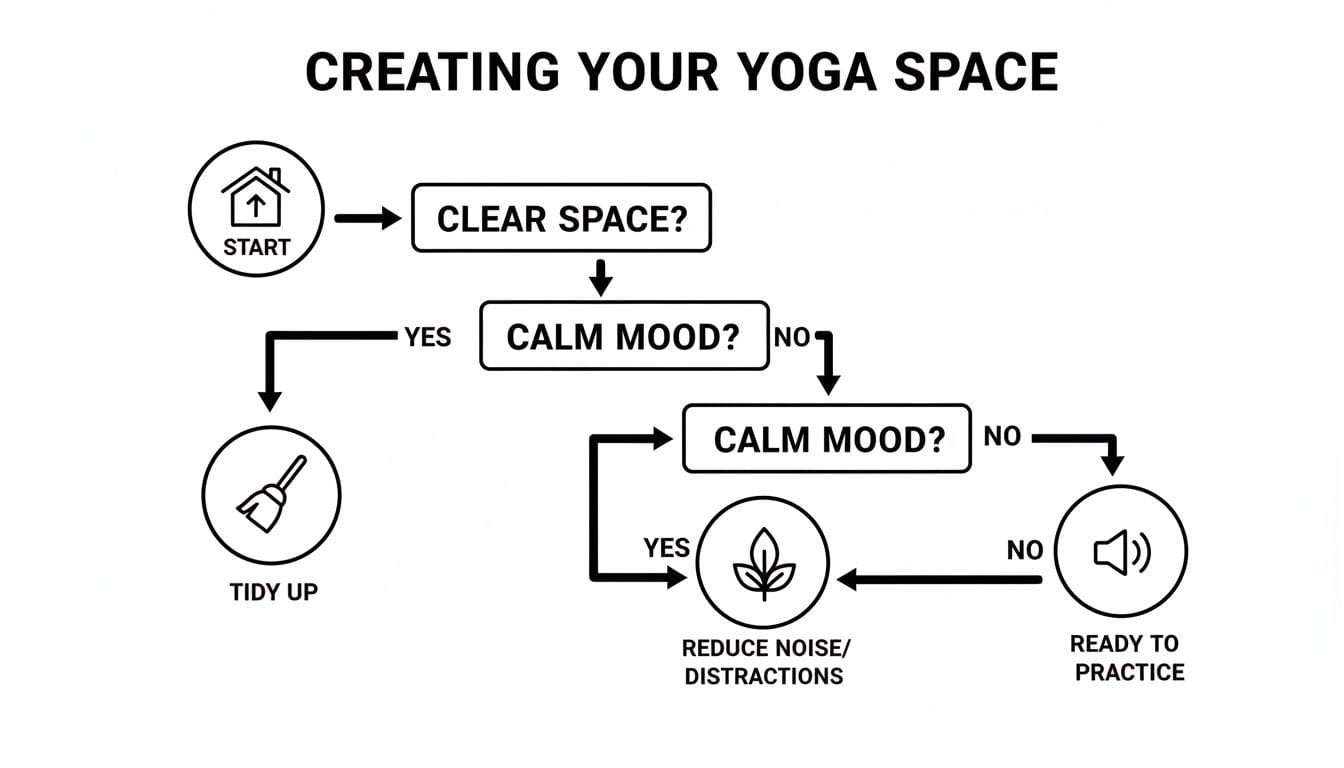
As the flowchart shows, creating a peaceful practice environment really comes down to two things: clearing physical clutter and calming your mind.
More Than Just a Mat
While the mat is the centrepiece, other props can seriously deepen your practice. Comfortable meditation cushions provide support for seated postures, encouraging better alignment and letting you sit for longer without fidgeting. Likewise, yoga straps and carry bags are fantastic for gently extending your reach in hamstring stretches without forcing or straining. You can learn more about getting the most out of these tools in our article on choosing and using yoga blocks.
A quality mat is a true investment in your wellness journey. It provides a safe, stable foundation that protects your joints and elevates your entire practice, turning a simple routine into a restorative ritual.
The growing focus on wellness in Australia really backs this up. The yoga mat market has seen incredible growth, hitting around 62 million USD in 2024. This trend is driven by practitioners looking for quality gear, with 48% of Australians now choosing non-slip varieties. This boom is part of a larger movement, particularly among women aged 35-55, who now make up 42% of new yoga adopters looking for calming routines supported by premium equipment. You can read the full research on the yoga mat market trends for more detail.
Yoga Mat and Prop Selection Guide
To help you decide, here’s a quick breakdown of the most common gear and what it's best suited for.
| Gear Type | Best For | Key Feature | Wellness Apothecary Link |
|---|---|---|---|
| Natural Rubber Mat | Vinyasa, Hot Yoga | Superior non-slip grip | Sustainable Yoga Mats |
| Cork Mat | Sweaty Practices | Antimicrobial, grip increases with moisture | Sustainable Yoga Mats |
| Thick (4mm+) TPE Mat | Restorative, Yin, Sensitive Joints | Extra cushioning and joint support | Sustainable Yoga Mats |
| Yoga Blocks (Cork/Foam) | All Levels, Deeper Stretches | Brings the floor closer, supports alignment | Yoga Blocks and Bricks |
| Yoga Strap | Beginners, Tight Hamstrings | Extends reach safely in stretches | Yoga Straps and Carry Bags |
| Meditation Cushion | Seated Poses, Meditation | Elevates hips for better spinal posture | Meditation Cushions |
Choosing the right gear really comes down to your personal practice style and what your body needs. Don't be afraid to experiment to find what feels best for you.
A Gentle First Flow for Your Home Practice
So, you’ve got your gear sorted. It’s time to unroll that mat and finally begin. This gentle sequence is all about building confidence and getting in tune with your body. We're aiming for a flowing routine, not just a static list of poses.
Your first session should feel empowering, safe, and completely yours.
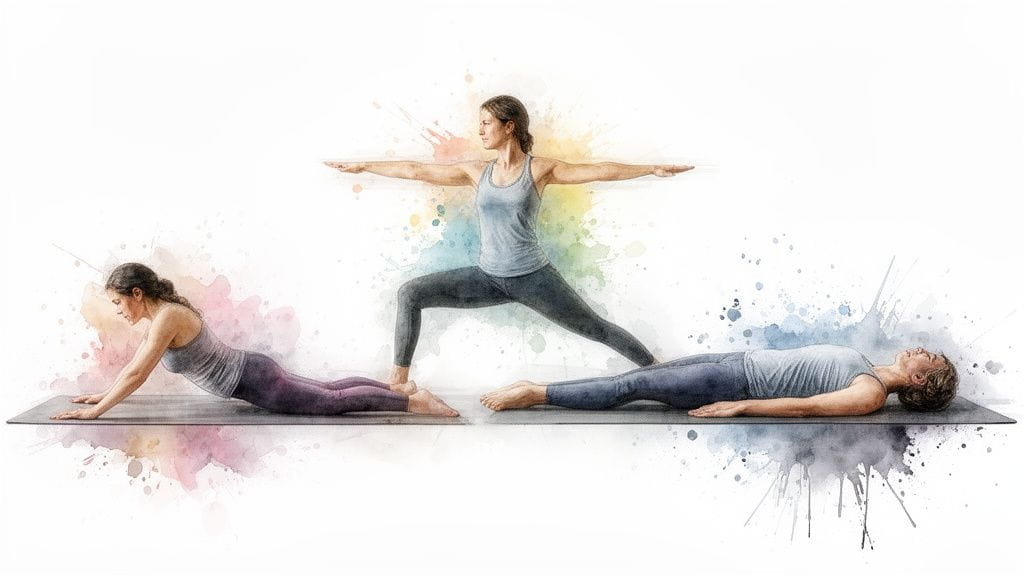
We’ll start with the breath, which is the anchor for any good yoga practice. Find a comfortable seat on your mat, close your eyes, and just notice the rhythm of your inhales and exhales. This simple act of awareness is brilliant for quieting the mind and getting you ready to move.
Awakening the Spine and Body
Before jumping into standing poses, it's so important to gently wake up the body. A simple warm-up lubricates the joints and primes your muscles, which really helps reduce the risk of strain.
A fantastic, gentle start is the classic Cat Cow Stretch to get some movement into your spine.
Come onto your hands and knees in a tabletop position.
- On an inhale, drop your belly towards the mat, lift your gaze, and arch your back into Cow Pose.
- On an exhale, round your spine up towards the ceiling, tucking your chin to your chest for Cat Pose.
Keep this fluid movement going for 5-10 breath cycles. Let your breath guide you. It’s a simple flow, but it’s amazing for releasing tension in the back and neck. You'll feel much more prepared and centred for what comes next.
Building Confidence with Standing Poses
From your tabletop, slowly make your way into a standing forward fold at the top of your mat. Hang out here for a moment with a generous bend in your knees, letting your head feel heavy. Then, slowly roll all the way up to stand, one vertebra at a time, until you arrive in Mountain Pose (Tadasana).
Mountain Pose is your home base for all standing postures. Stand tall, ground down through your feet, and imagine a line of energy shooting from your soles all the way through the crown of your head.
From here, we'll step into Warrior II (Virabhadrasana II):
- Step your left foot back about one metre, turning it so it's parallel to the back edge of your mat.
- Your right foot should still point forward. Try to align your right heel with the arch of your left foot.
- Bend your right knee until it’s directly over your ankle. A good check is to make sure you can still see your big toe.
- Extend your arms out parallel to the floor, gazing softly over your right fingertips.
Hold this powerful pose for five deep, steady breaths. Feel strong and stable. The right clothing can make a world of difference here; you want to feel totally unrestricted. Having stylish and comfortable women's yoga activewear allows you to move freely without any annoying distractions.
Remember, alignment is always more important than how deep you go into a pose. Focus on how it feels in your body rather than trying to match a perfect picture. Use props like yoga blocks to bring the floor closer to you if you need.
Cooling Down and Finding Stillness
After you've done Warrior II on both sides, it's time to cool down. Come back to a seated position on your mat for a few gentle stretches, like a seated forward fold to give your hamstrings a nice release.
Now for the final, and arguably most important, pose of any practice: Savasana, or Corpse Pose. Lie flat on your back, let your feet fall open naturally, and rest your arms by your sides with your palms facing up. Close your eyes and let your body get heavy and completely relax into the mat.
Stay here for at least 5-10 minutes. Let go of controlling your breath and just be. This is where your body really gets to soak up all the benefits of your practice. It's a journey of creating balance, and this gentle flow is the perfect place to start.
Integrating Wellness Rituals Beyond the Mat
A truly fulfilling yoga practice doesn't just end when you roll up your mat. The real magic happens when you weave supportive wellness rituals into your daily life, amplifying the benefits you cultivate during your session. These moments before and after your flow are powerful opportunities to deepen your connection to your body and mind.
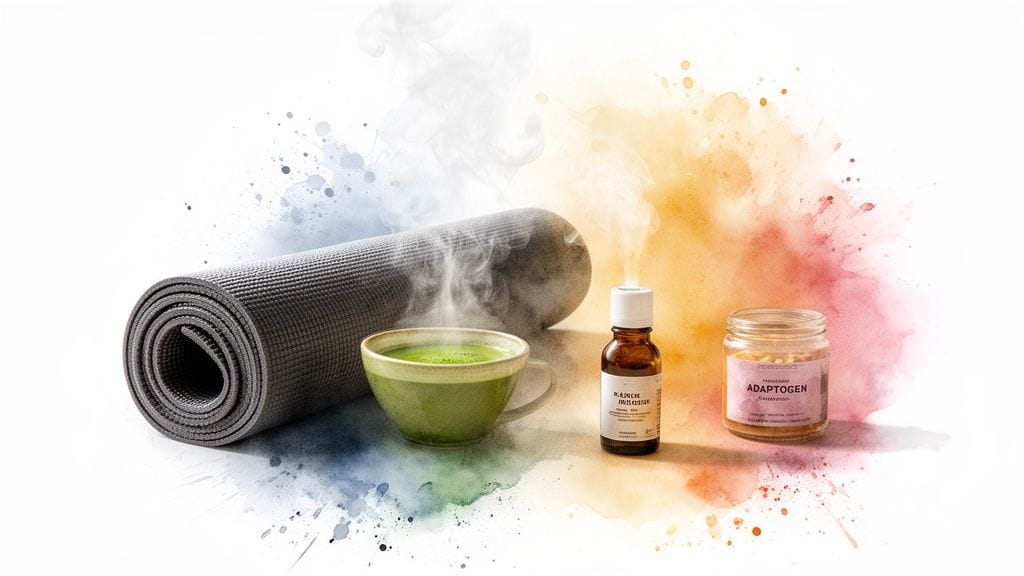
Creating a pre-practice ritual can completely shift the tone of your session. Instead of rushing onto the mat with a busy mind, taking five minutes to mindfully prepare can make a world of difference. For many, this looks like sipping a warm cup of high-quality Matcha green tea powder, which contains L-theanine to promote calm alertness, sharpening your focus for the movements ahead.
Nourishing Your Body Post-Practice
What you do after Savasana is just as important as the practice itself. Your body has worked hard, and it needs the right support to recover, repair, and build strength. This is where mindful nutrition and recovery techniques come into play.
A smoothie fortified with a clean, plant-based vegan protein powder is an excellent way to replenish your muscles. This simple act provides the essential amino acids your body needs for recovery, ensuring you feel strong for your next session.
Furthermore, incorporating adaptogens can help your body manage stress and maintain energy. Adding a scoop of functional mushrooms from our Teelixir nutrition supplements range into your post-yoga routine can support overall vitality and resilience.
Deepening Recovery and Relaxation
Beyond nutrition, physical recovery methods can significantly reduce muscle soreness and inflammation. For those who enjoy a more vigorous practice, tools like portable ice baths are becoming a popular way to soothe tired muscles and speed up the healing process.
Your wellness ecosystem extends to your mental state too. To truly wind down, you might explore gentle relaxation aids. Many people find calming herbs helpful, and you can discover our Blue Lotus collection as a natural way to ease into a state of tranquility after your practice.
Building a holistic self-care routine means seeing your time doing yoga with a mat as the centrepiece, not the entirety, of your wellness journey. It's about creating a supportive structure that nurtures you from the inside out.
Beyond the physical poses, deepening your understanding of pranayama can also enhance your practice. You can explore resources that discuss the power of breathwork to integrate this crucial element into your daily life, both on and off the mat. This creates a complete approach where movement, nutrition, and mindful recovery work together.
Maintaining Your Gear and Your Motivation
The real magic of yoga happens through consistency—both in how you care for your mat and how you show up for yourself. Think of your mat as your sacred space; keeping it in great shape is about protecting your investment and your health. Just as crucial is nurturing the drive to step onto it, especially on those days when motivation is low.
A clean mat is a happy mat. After a particularly sweaty session, a simple wipe-down can stop bacteria and oils from building up. For a more thorough clean, a gentle, natural spray works wonders. We’ve put together a full guide with step-by-step advice on how to properly clean and maintain your yoga mat to make sure it lasts for years.
When you're not practising, roll your mat up and store it in a cool, dry spot. Keep it out of direct sunlight, as the heat can cause certain materials to break down over time.
Staying Inspired on Your Yoga Journey
Let's be real: motivation isn't a constant. It ebbs and flows. The secret is to build a habit that can ride out those waves. Forget pressuring yourself into hour-long sessions every single day. Instead, start small.
- Schedule It In: Treat your yoga time like any other non-negotiable appointment. Even 15 minutes on the mat can completely reset your day.
- Focus on the Feeling: Remember that incredible sense of calm and accomplishment you feel after a practice? Let that be your reason for showing up, not just ticking a box.
- Journal Your Progress: Take a moment to jot down how you feel after each session. Noting the small wins—like holding a pose a bit longer or feeling less stiff—can be incredibly encouraging.
This shift towards personal wellness is clear when you look at the growth of home practice in Australia. Yoga mat sales in the country hit a staggering $65 million AUD in 2024 and are on track to reach $90 million AUD by 2032. This boom was kickstarted by a 60% increase in home practice between 2020-2022, a trend largely driven by middle-aged women looking for effective ways to manage stress. You can find more insights into the Australian yoga mat market trends here.
The goal is to make your yoga with mat practice a cherished and consistent part of your life, not just another chore on your to-do list. Find what feels good for you and let it evolve naturally.
If you ever feel like you've hit a plateau, don't get discouraged. It’s a totally normal part of any long-term practice. Try a new style of yoga online, connect with a digital community for support, or simply give yourself a well-deserved day of rest. Listen to your body, be kind to yourself, and never forget why you started this journey in the first place.
Your Questions on Home Yoga Practice Answered
When you're starting something new like a home yoga practice, it’s natural to have a few questions. Let's get them out of the way so you can roll out your mat and start with confidence.
How Often Should I Practise as a Beginner?
This is probably the most common question we hear. The simple answer? Consistency is far more important than how long you practise for.
Aim for two to three sessions a week to start. Even if you only manage 15-20 minutes each time, you're building a powerful habit. The goal is to create a routine that feels sustainable, not a chore that burns you out.
Your body is your best teacher, so listen to it. As you start to feel stronger and more flexible, you can slowly add more time or another session to your week.
Is an Expensive Yoga Mat Really Worth It?
Honestly, a quality mat is an investment in your safety and comfort. The biggest differences between a cheap mat and a premium one come down to grip, cushioning, and what it’s made of.
A good mat with a reliable non-slip surface is a game-changer, especially for foundational poses like Downward Dog where you need stability. Better mats also offer more cushioning to protect your joints and are usually made from more durable, non-toxic materials.
While any mat will get you started, investing in a high-performance, non toxic yoga mat in Australia can genuinely improve your practice. Plus, it gives you peace of mind that you aren't breathing in harmful chemicals like PVC.
Do I Really Need Props Like Blocks and Straps?
Not at all! You can absolutely begin with just yourself and your mat. But it’s helpful to think of props as tools that make yoga more accessible, not as crutches.
A block, for instance, can "bring the floor closer" in a forward fold if your hamstrings are tight. A strap can help you gently deepen a stretch without forcing or straining your muscles. Our range of Pilates accessories includes everything you might need.
Props are all about supporting proper alignment. Good alignment is the key to preventing injury and getting the real benefits from each posture. They empower you to modify poses to suit your body’s unique needs on any given day.
How Do I Stay Energised and Hydrated for My Practice?
Proper hydration is foundational, not just for yoga but for life! Sipping on clean water throughout the day is the best way to prepare your body for movement. Using one of our chemical free water filters is a great way to ensure you're drinking the purest water possible.
If you need a gentle energy boost, a small snack about an hour before you hit the mat can make a huge difference. Many people we know find that a scoop of vegan protein powder in a smoothie or a warm bowl of matcha provides clean, sustained energy without that heavy, sluggish feeling.
At Wellness Apothecary, we believe a strong foundation is the key to a lasting wellness practice. From supportive mats to nourishing supplements, we have everything you need to create a mindful and empowering home yoga routine. Explore our curated collections and begin your journey today.


