


Picture a tea that effortlessly weaves together ancient wisdom with our modern search for wellness. That’s the world of blue lotus flower tea, a beautiful botanical also known as the 'Egyptian Dream Flower'. In our non-stop world, it’s no surprise so many Australians are turning to this gentle herbal infusion to find a moment of peace and mindfulness.
Discover the Ancient Calm of Blue Lotus Flower Tea
In the search for balance, sometimes the oldest remedies hold the key to modern calm. Blue lotus flower tea isn't just a drink; it’s an invitation to slow down, take a deep breath, and check in with yourself. Its story stretches back millennia, from sacred rituals along the Nile to a treasured spot in today's wellness routines across Australia.
This guide will walk you through everything there is to know about this remarkable flower. We'll dive into its rich history, look at the science behind its calming effects, and show you how to create a mindful tea ritual that genuinely soothes the soul. It’s an experience perfectly suited to a life of intention, whether you’re unwinding after a long day or settling in for meditation on one of our supportive meditation cushions.
What You Will Learn
We’ve designed this guide to build your understanding step-by-step, turning simple curiosity into confident practice. Here's what we'll cover to make blue lotus a meaningful part of your wellness toolkit.
- Historical Significance: We'll journey back to ancient Egypt to see why this flower was so central to their spiritual ceremonies.
- Active Compounds: You'll learn about the natural alkaloids that give the blue lotus its unique, serene properties.
- Mindful Preparation: Discover how to brew the perfect cup and turn it into a calming, personal ritual.
- Wellness Integration: Find practical tips for weaving this tea into your yoga, meditation, or daily relaxation practices.
Beyond its fascinating past, blue lotus flower tea acts as a natural way to quieten a busy mind and relax the body. You can learn to cultivate immediate calm with mindful practices that deepen its soothing effects.
For centuries, this flower has been celebrated for its ability to promote a state of peaceful awareness and deep relaxation. It acts as a gentle bridge between a busy mind and a tranquil spirit, making it a perfect companion for anyone seeking a moment of stillness.
This guide is for everyone, whether you're just hearing about blue lotus for the first time or you're a seasoned wellness enthusiast. As you read on, you’ll quickly see why this timeless botanical has captivated people for thousands of years. Start your journey by exploring our ethically sourced Blue Lotus collection and discover its serene power for yourself.
Tracing the Roots of an Ancient Wellness Flower
To really get to know blue lotus flower tea, we need to travel back a few thousand years to the fertile banks of the Nile River. Here, the beautiful water lily, Nymphaea caerulea, wasn't just another plant. It was a cornerstone of ancient Egyptian culture, spirituality, and everyday life—a powerful symbol woven into the very fabric of their civilisation.
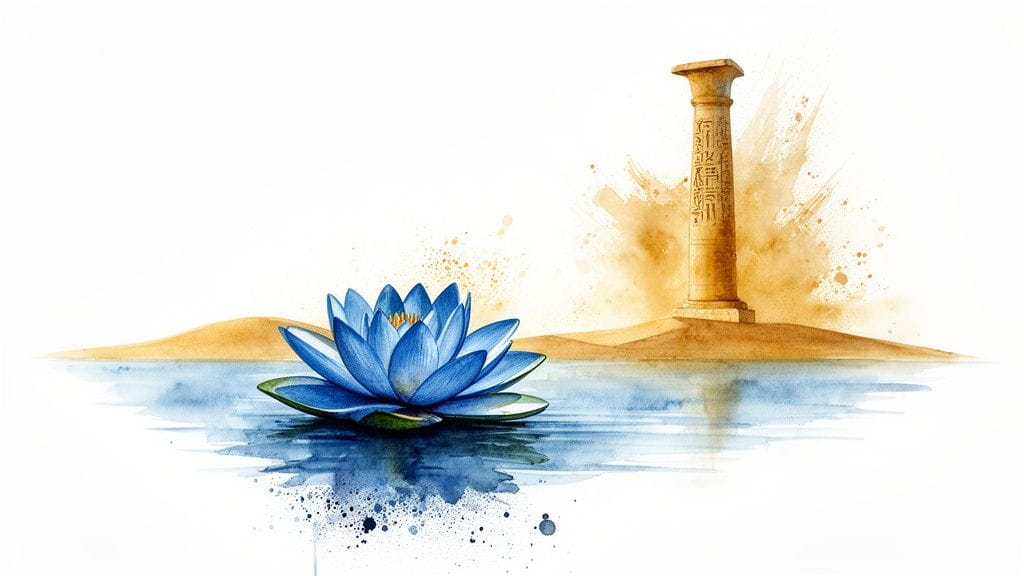
The Egyptians saw the flower’s daily cycle as a mirror of their deepest beliefs. As the blue petals opened with the morning sun and closed again at dusk, they saw a living metaphor for creation, death, and rebirth. This profound connection made the blue lotus a sacred symbol of the sun god Ra and a key part of how they understood the afterlife.
You can see it everywhere in their art, from towering temple columns and intricate tomb paintings to delicate jewellery and sacred papyri. These aren't just pretty decorations; they're a testament to the flower's central role in both grand ceremonies and intimate social gatherings.
A Flower for Ceremony and Celebration
In ancient Egypt, blue lotus was a key ingredient in rituals designed to elevate consciousness and connect with the divine. It was famously infused into wine, a practice believed to induce a state of heightened awareness, gentle euphoria, and deep relaxation. This wasn't a party drink as we might think of it today, but a respected elixir used to open the mind during spiritual ceremonies and social events.
But its use wasn't just for the elite. The flower’s calming properties were likely widely known and used by many to soothe anxiety and encourage restful sleep, making it one of the earliest known botanicals for mental and emotional wellbeing. This ancient reverence is what connects it directly to its modern use as a tool for mindfulness, often paired with accessories like yoga blocks and bricks to deepen a restorative practice.
This historical illustration captures the vibrant blue-to-violet petals and prominent yellow centre, features you'll see highlighted again and again in Egyptian art.
From Ancient Ritual to Modern Wellness
The journey of the blue lotus from the Nile to our teacups is a story of timeless appeal. While its use in Egyptian rituals dates back to at least 1300 BCE, its adoption in Australia has seen a major modern revival. This resurgence picked up speed in 2021, when 55% of wellness product sales shifted online during lockdowns. This, in turn, boosted demand for herbal teas by 40%, according to retail analytics. You can dive deeper into the full report on these market insights to see the trends.
This ancient flower resonates so deeply with people today for the same reasons it was cherished millennia ago: its ability to foster a state of calm introspection. The same desire for peace and a deeper connection to self that motivated the Egyptians now inspires people to brew a cup of blue lotus tea.
It serves as a gentle reminder to slow down, breathe, and find a moment of stillness in a busy world. This enduring legacy is why it remains such a captivating botanical for anyone on a path to greater wellbeing. To discover more ways to support your health journey, feel free to explore our holistic wellness collections.
Understanding How Blue Lotus Promotes Serenity
So, what’s the secret behind blue lotus flower’s famous ability to calm the mind and soothe the spirit? It’s not magic, but a fascinating dance between natural compounds found within its delicate petals. Two key alkaloids, apomorphine and nuciferine, are the main players behind its serene effects.
Think of your brain as a complex communication network. To feel happy, calm, or relaxed, specific messages need to be sent and received. Apomorphine and nuciferine act like skilled messengers, gently guiding this network towards a state of peaceful clarity.
They work together to create a feeling of well-being that’s both uplifting and grounding, without the heavy sedation you might get from other calming agents. This unique balance is precisely why blue lotus is so cherished for meditation, relaxation, and creative focus.
The Role of Apomorphine
Apomorphine is what’s known as a dopamine agonist. That might sound a bit technical, but the idea is actually quite simple. Imagine the dopamine receptors in your brain are like locks, and dopamine is the key that unlocks feelings of pleasure, motivation, and happiness.
Apomorphine acts like a master key that can also fit these locks, gently activating your dopamine system. This helps to elevate your mood and create a subtle sense of euphoria and contentment, making it much easier to let go of persistent worries.
The Calming Influence of Nuciferine
While apomorphine lifts the spirits, nuciferine brings a profound sense of calm. Its job is to help quiet mental chatter and ease feelings of anxiety. If apomorphine is the uplifting melody, nuciferine is the soothing bassline holding it all together.
It encourages a state of relaxed awareness, helping you feel present and at ease without feeling drowsy. This is a game-changer for anyone who struggles to switch off a busy mind at the end of the day or before a meditation session. Many people find this clarity-inducing effect in other functional botanicals too, which is why we value high-quality herbs in our range of Teelixir nutrition supplements.
The synergy between apomorphine and nuciferine is what makes blue lotus so unique. One compound gently elevates mood while the other quiets the noise, creating a perfect equilibrium for deep relaxation and mental peace.
To make these ideas even clearer, let's look at how each compound contributes to the experience of drinking blue lotus flower tea.
The Key Compounds Behind Blue Lotus Flower's Effects
Here’s a simple breakdown of the primary alkaloids in Blue Lotus and the wellness benefits they’re known for.
| Compound | Mechanism of Action | Reported Effects on Well-being |
|---|---|---|
| Apomorphine | Dopamine Agonist | Enhances mood, promotes feelings of happiness, and can act as a gentle, natural sedative. |
| Nuciferine | Aporphine Alkaloid | Induces a sense of calmness, helps quiet anxious thoughts, and supports mental clarity. |
Ultimately, the serenity that blue lotus tea offers comes from this beautiful biochemical partnership. It doesn't force relaxation on you; instead, it creates the ideal internal environment for you to find it yourself.
This natural support system can be a wonderful addition to any wellness practice. Whether you're seeking to deepen your meditation on one of our premium non-toxic yoga mats in Australia or simply unwind before bed, the alkaloids in blue lotus work in harmony to guide you toward a calmer state of being.
Crafting Your Own Mindful Tea Ritual
Making a cup of blue lotus tea is so much more than a simple to-do list item. Think of it as a chance to create a mindful pause in your day. This isn't about quickly fixing a drink; it's about transforming the simple act of brewing into a calming ritual that gently tells your mind and body it's time to unwind.
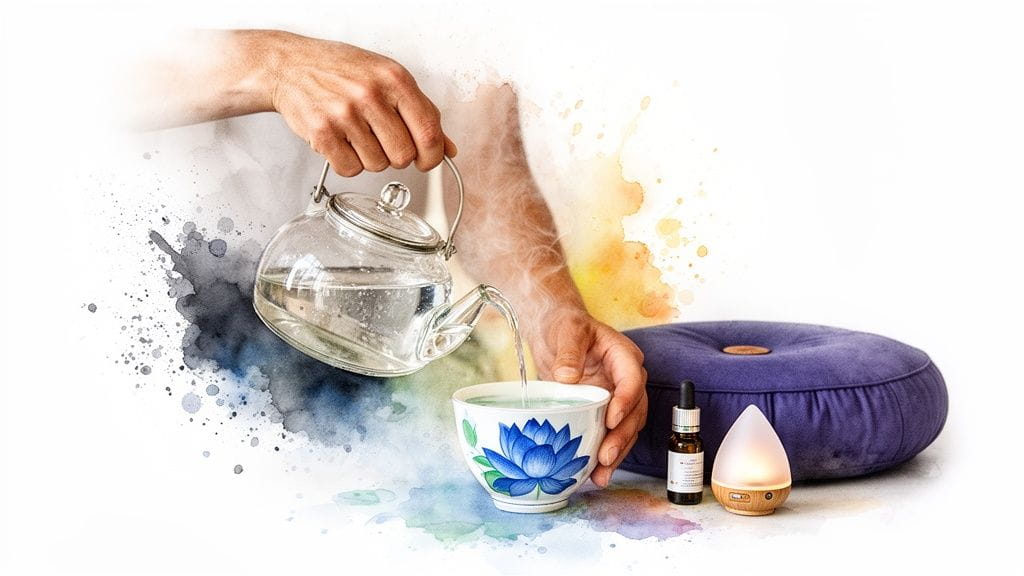
Here, we'll walk you through how to create this little sanctuary of peace right in your own home. By paying attention to dosage, water temperature, and steeping time, you can brew a perfectly balanced cup that truly honours the delicate nature of this special flower.
Preparing Your Perfect Cup
The idea is to gently coax the beneficial compounds from the petals without being too harsh. A little care in your preparation goes a long way and will absolutely shape your final experience with the tea.
Here’s a simple method to get you started:
- Measure Your Flowers: For your first time, it’s best to start with a gentle dose. Use 1 to 2 whole flowers (which is about 1-2 grams) for each cup of water. This gives you a chance to get familiar with its subtle effects.
- Heat Your Water: Bring fresh, clean water to a near boil, then let it sit and cool for a minute or two. The sweet spot for the temperature is around 80-90°C. Water that's boiling is just too aggressive for the delicate alkaloids in blue lotus.
- Steep with Patience: Pop the flowers into your cup or teapot and pour the hot water over them. Let them steep for 5 to 7 minutes. You’ll notice the water slowly turning a lovely pale golden or light amber colour.
- Savour the Moment: Strain the tea into your favourite mug. You can add a small touch of natural sweetener like honey if you like, but many people prefer its pure, earthy-floral flavour all on its own.
The real secret to a beautiful brew is gentle heat and patience. Rushing the process with boiling water can diminish the very properties you’re trying to enjoy, leaving you with a less fragrant and effective tea.
Elevating Your Tea Ritual
Now that you’ve got the brewing basics down, let's look at a few ways to turn this simple process into a genuinely restorative ritual. It’s all about creating an environment that encourages deep relaxation and a bit of introspection.
Setting the right atmosphere can profoundly deepen the calming effects of your blue lotus tea. Try to engage all your senses to create a complete experience that helps you unplug from the day's stressors.
- Create a Soothing Ambience: Dim the lights and maybe light a candle. The soft, flickering light can help quieten a busy mind and signal that it's time to shift from a hectic day to a peaceful evening.
- Engage Your Sense of Smell: Make the atmosphere even more calming by using an essential oil diffuser with relaxing scents like lavender, chamomile, or frankincense. The combination of aromas can create a powerful feeling of tranquillity.
- Find Comfortable Support: Don't just perch on any old chair. Settle onto a comfortable meditation cushion or a cosy armchair where your body can completely relax. Physical comfort is a cornerstone of mental peace.
- Disconnect from Distractions: Put your phone away. Turn off the TV. This time is just for you. Allow yourself to be fully present with your cup of tea, noticing its warmth, its scent, and its flavour.
By bringing these small elements into your practice, you transform a simple drink into a holistic wellness ritual. It becomes a dedicated moment to nurture your mind, body, and spirit—a powerful anchor of calm in your routine. For more brewing tips, you can also check out our detailed guide on how to make herbal tea.
Integrating Blue Lotus into Your Wellness Routine
The real magic of blue lotus flower tea isn't about creating a whole new wellness routine from scratch. Instead, its beauty lies in how easily it weaves into the practices you already cherish, deepening the moments of calm you’re already seeking. Think of it as a gentle amplifier for your favourite self-care activities.
Whether you’re a dedicated yogi, a busy professional needing to decompress, or a creative soul looking for a spark, this ancient botanical can find a natural place in your life. It’s all about making its serene benefits accessible and practical for anyone on a path to a more centred existence.
For Yogis and Meditators
For those who practise yoga, a warm cup of blue lotus tea can be a beautiful prelude to your session. Sipping it beforehand helps quiet the mind's constant chatter, making it easier to drop into your body and connect with your breath and movement. It prepares your internal landscape for a more present and focused practice.
The tea truly shines when enjoyed just before Savasana. As you settle onto your eco-friendly yoga mat, its calming effects can deepen your relaxation, allowing your body to release tension and soak up the benefits of your practice. This small addition can transform your final resting pose into a profoundly restorative experience.
For Easing Out of a Stressful Day
Let’s be honest, transitioning from a demanding day of meetings and deadlines into a peaceful evening can feel jarring. Blue lotus tea can serve as the perfect bridge. Creating a simple ritual around brewing a cup signals to your mind and body that the workday is officially over, and it's time to unwind.
Its gentle, non-sedating properties help melt away the day's stress without leaving you feeling groggy. This allows you to be fully present for your evening, whether you’re spending time with family, curling up with a book, or simply enjoying a quiet moment to yourself. For an extra boost, consider a scoop of high-quality vegan protein powder earlier in the day to support your body's recovery from stress. It's a powerful and mindful tool for keeping burnout at bay.
For Creatives and Dreamers
Creativity often flows best from a state of relaxed focus, and this is where blue lotus can be a wonderful ally. For writers, artists, or musicians, a cup of tea can help dissolve those frustrating mental blocks and encourage a more gentle, flowing state of mind.
It’s the perfect companion for activities like journaling, painting, or brainstorming new ideas. The tea fosters a subtle sense of connection to your inner world, making it easier to tap into your intuition and let inspiration emerge naturally.
For Modern Recovery and Rituals
Blue lotus also beautifully complements many contemporary wellness practices. Imagine the comforting warmth of a fragrant tea after the invigorating shock of a session in a portable ice bath. This contrast of hot and cold can create a deeply grounding and restorative experience for the body.
Its calming nature also harmonises perfectly with sound baths or breathwork sessions. Enjoying a cup beforehand can make you more receptive to the healing frequencies of sound bowls or the deep rhythm of your own breath. This synergy is gaining notice; in the wellness landscape of Australia, the blue lotus flower tea market is experiencing steady growth, reflecting Aussies' deepening embrace of ancient herbal remedies for modern stress relief. This surge aligns perfectly with the ethos of businesses like Wellness Apothecary, where herbal teas blend into routines for yoga practitioners and professionals seeking calm. You can discover more insights about the Australian blue tea market here. By connecting blue lotus to your existing routines, from your yoga flow in our stylish women's yoga activewear to your evening wind-down, its benefits become a natural and integrated part of your life.
How to Choose High-Quality Blue Lotus Safely
When it comes to botanicals like blue lotus, not all products are created equal. To really connect with the serene qualities of this ancient flower, it's so important to choose a high-quality, pure product from a supplier you can trust. Getting this right is the key to a safe and beautiful experience, free from unwanted additives or contaminants.
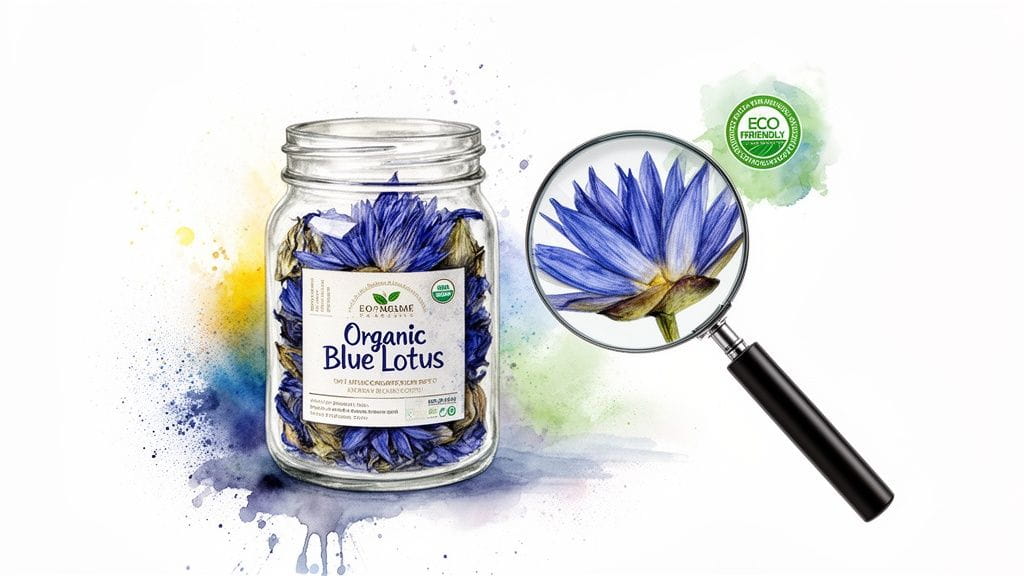
This focus on purity doesn't just stop with the herbs themselves. It’s just as important to brew them with clean water. Using chemical free water filters ensures that the delicate flavour and beneficial compounds of your blue lotus tea aren't masked by impurities lurking in your tap water.
What to Look For in a Premium Product
When you’re buying dried blue lotus flowers, there are a few simple signs of quality. Think of it like choosing fresh vegetables at the market—your senses are your best guide.
- Vibrant Colour: Look for flowers that have kept their gorgeous deep blue-to-violet hues. If they look dull, brown, or faded, it’s likely a sign of age or poor storage, which means less potency.
- Rich Aroma: Open the bag and take a deep breath. The flowers should have a distinct, rich floral scent that's a little sweet and almost otherworldly. A weak or musty smell is a red flag that the product is old or low-grade.
- Whole Flowers: Opt for whole, intact flowers rather than crushed petals or powders. Whole flowers are a much better indicator of careful harvesting and handling, plus you can be sure you're getting the real deal.
Thinking about how to choose your blue lotus safely connects to the wider conversation around natural and organic products and why they matter. Choosing an ethically sourced, organic blue lotus means it was grown without synthetic pesticides or fertilisers, giving you a much cleaner ingredient for your mindful rituals.
Safety and Responsible Usage
While blue lotus is celebrated for its gentle nature, using it responsibly is the key to a positive experience. It’s always a good idea to start with a low dose, like one flower per cup of tea, just to see how your body responds.
Most people don’t experience any side effects, but some might feel a bit of mild drowsiness or light-headedness, especially if they use a larger dose. For this reason, it’s best to avoid driving or operating heavy machinery after your tea until you know how it affects you.
It is strongly recommended that pregnant or breastfeeding individuals, or anyone with a pre-existing medical condition, consult with a healthcare provider before using blue lotus or any new herbal supplement.
Your well-being is everything. By choosing a reputable source and practising mindful consumption, you can safely explore the serene world of blue lotus tea. We've taken great care to source only the best; you can learn more about our Orku Dried Blue Lotus Flowers on our product page.
Common Questions About Blue Lotus Flower Tea
As you step into the world of blue lotus, it's completely normal to have a few questions. To help you feel confident and clear, we've gathered some of the most common queries we hear. Think of this as your quick-reference guide, designed to give you straightforward answers so you can enjoy this beautiful botanical with total peace of mind.
Is Blue Lotus Flower Tea Legal in Australia?
Yes, blue lotus (Nymphaea caerulea) is completely legal to buy, own, and enjoy across Australia. It isn't listed as a controlled substance, which means you can easily find it for use in herbal teas and extracts.
To make sure you're getting a pure and authentic product, always choose a trusted supplier like Wellness Apothecary who prioritises quality and ethical sourcing.
What Does Blue Lotus Tea Taste Like?
Blue lotus tea has a really unique and lovely flavour. Most people describe it as earthy and floral, with a soft, sweet undertone. It's much smoother and less bitter than a lot of other herbal teas, and its beautiful fragrance is a big part of the whole experience.
Many people love it just as it is, but a little touch of honey can really bring out its natural sweetness. If you enjoy teas with a vibrant character, you might also like our premium matcha green tea powder.
The flavour is often called ethereal and calming, a perfect match for its gentle effects. Unlike a strong black tea, its delicate nature invites you to slow down and sip mindfully.
How Often Can I Drink Blue Lotus Tea?
For most people, enjoying a cup of blue lotus tea a few times a week is a wonderful way to wind down. It fits perfectly into an evening relaxation ritual.
While it's generally considered very safe, it’s always wise to practise moderation with any herbal product. The most important thing is to listen to your body and see how you feel.
Of course, there are certain times when you should be more mindful of any herbal tea. For a closer look at this, you can read our guide on herbal tea and pregnancy.
Will It Cause a Positive Drug Test?
It is highly unlikely. Standard drug tests are designed to look for specific illicit drugs and prescription medications.
The active compounds in blue lotus, apomorphine and nuciferine, are not on the list of substances these tests screen for. So, drinking blue lotus tea shouldn't lead to a positive result on a typical drug test.
Ready to create your own calming ritual? Explore the ancient serenity of this beautiful botanical with Wellness Apothecary and discover our high-quality, ethically sourced products designed to support your journey to balance and wellbeing.
Visit us at https://wellnessapothecary.au to begin.


